Search API
Since the beginning of 2025, five countries in Europe have reported human cases of West Nile Virus (WNV) infection: Bulgaria, France, Greece, Italy, and Romania.
In week #31, the European CDC reported that the highest number of cases, 43, occurred in the Latina province of Italy.
As of July 31, 2025, a total of 89 cases of WNV infection have been confirmed (Bollettino N. 3) in Italy this year, including eight fatalities.
In addition to WNV, other mosquito-borne diseases, Chikungunya and Dengue, have been reported in Italy in 2025.
Before visiting Italy this summer for events such as the Jubilee of Youth, the U.S. CDC recommends speaking with a travel vaccine advisor at least one month before departure about immunization options.

The Jubilee, also known as the Holy Year, has been taking place in Rome, Italy, since December 2024 and will continue until January 6, 2026.
Significant events are planned throughout various months during this period. For example, on June 15, 2025, Pope Leo XIV addressed a large gathering of children, young people, and adults who had come to Rome for the Jubilee of Sport.
According to the UK's Foreign Travel Advice issued on July 30, 2025, Rome is expected to be very busy during the Jubilee of Youth, which will be held from July 28 to August 3, 2025.
If you are planning to travel to Rome during this time, please refer to the Jubilee 2025 - Holy Year information in the Safety and Security section. Check the official Jubilee website or download the Jubilee app for a calendar of events.
The UK advises that before you travel to Italy, check that you have appropriate travel insurance for local treatment or unexpected medical evacuation. This is particularly important if you have a health condition or are pregnant.
Additionally, at least 8 weeks before your trip, consult with a travel advisor about disease protection options for West Nile virus, Dengue, and Chikungunya.
The U.S. CDC states measles is a health risk when visiting Italy in 2025.

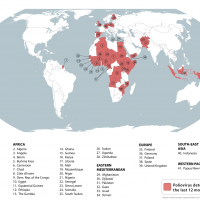
The European Centre for Disease Prevention and Control (ECDC) recently highlighted cases of Oropouche virus disease in Europe that are linked to international travel, as noted in their Communicable Disease Threats Report.
As of July 25, 2025, the ECDC has reported that Germany confirmed one imported case of Oropouche virus disease. This case involved a person who had traveled to Dominica between January 24 and February 7, 2025.
France also reported one imported case in an individual who visited Brazil in March 2025.
Additionally, the United Kingdom recorded three imported cases among travelers returning from Brazil during March and April 2025.
Throughout 2024, there were a total of 44 imported cases of Oropouche reported in EU countries, with Spain accounting for the highest number at 23 cases. Most cases had a travel history to Cuba, and one case was linked to Brazil.
The ECDC assesses the risk of infection for EU/EEA citizens traveling to countries in the Americas affected by the Oropouche as moderate.
They state, "The likelihood of human exposure to Oropouche virus in the EU/EEA is considered very low. This is despite the potential for further cases to be imported, as the competent vectors typically found in the Americas are absent from continental Europe.'
'To date, there has been no reported secondary transmission. Therefore, the risk of locally acquired Oropouche virus disease in the EU/EEA is low.'
In the United States, there were 103 cases of Oropouche fever reported in individuals in Florida who had traveled to an endemic area, such as Cuba, in 2024.
As of July 31, 2025, there are no Oropouche vaccines available.

The Independent State of Samoa has temporarily closed schools due to a significant spike in Dengue fever cases in this South Pacific Ocean country.
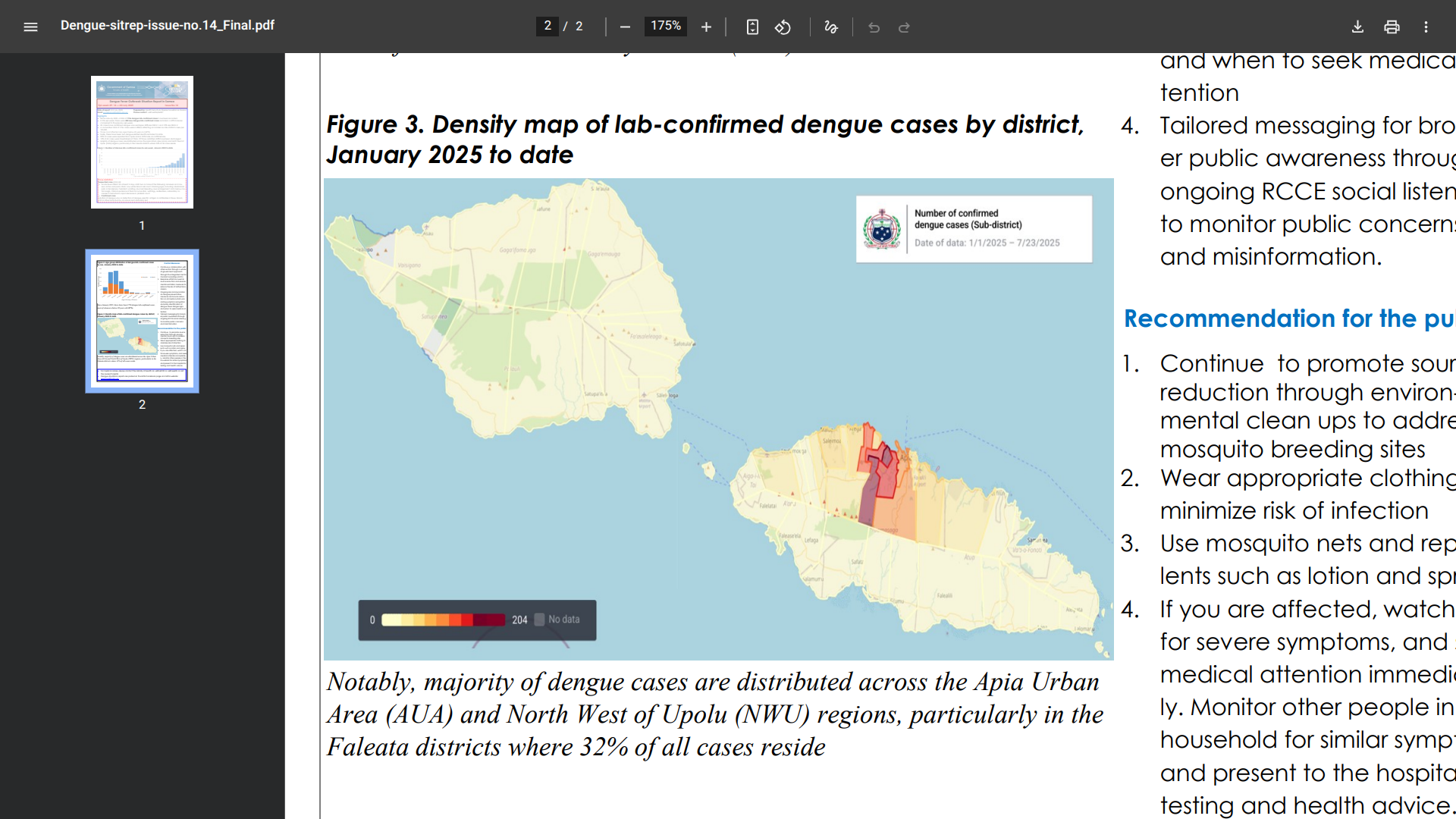
The Government of Samoa, Issue No.14, indicates the most affected areas include Northwest Upolu and the Apia Urban areas, although the mosquito-transmitted virus has spread across the country.
According to a post on Facebook, Caretaker Prime Minister Tuala Tevaga Ponifasio announced that schools will reopen following a thorough fumigation process.
In the statement, he said, "The closure of all schools nationwide will last one week, from July 28 to August 1, 2025, while school fumigation programs are carried out."
From January to July 20, 2025, Samoa recorded 1,756 laboratory-confirmed cases of Dengue, with hospital reports indicating an average of over 100 new cases each week.
The Ministry of Health has confirmed the presence of two of Dengue's four serotypes circulating in the country: DENV-1 and DENV-2.
Samoa, with about 200,000 residents and a featured vacation destination, is located west of American Samoa, which is also confronting a Dengue outbreak in 2025.
To alert all international travelers of this active health risk, the U.S. CDC updated its Dengue Travel Health Advisory in 2025. While Dengue vaccines have been approved, access is currently limited by country.
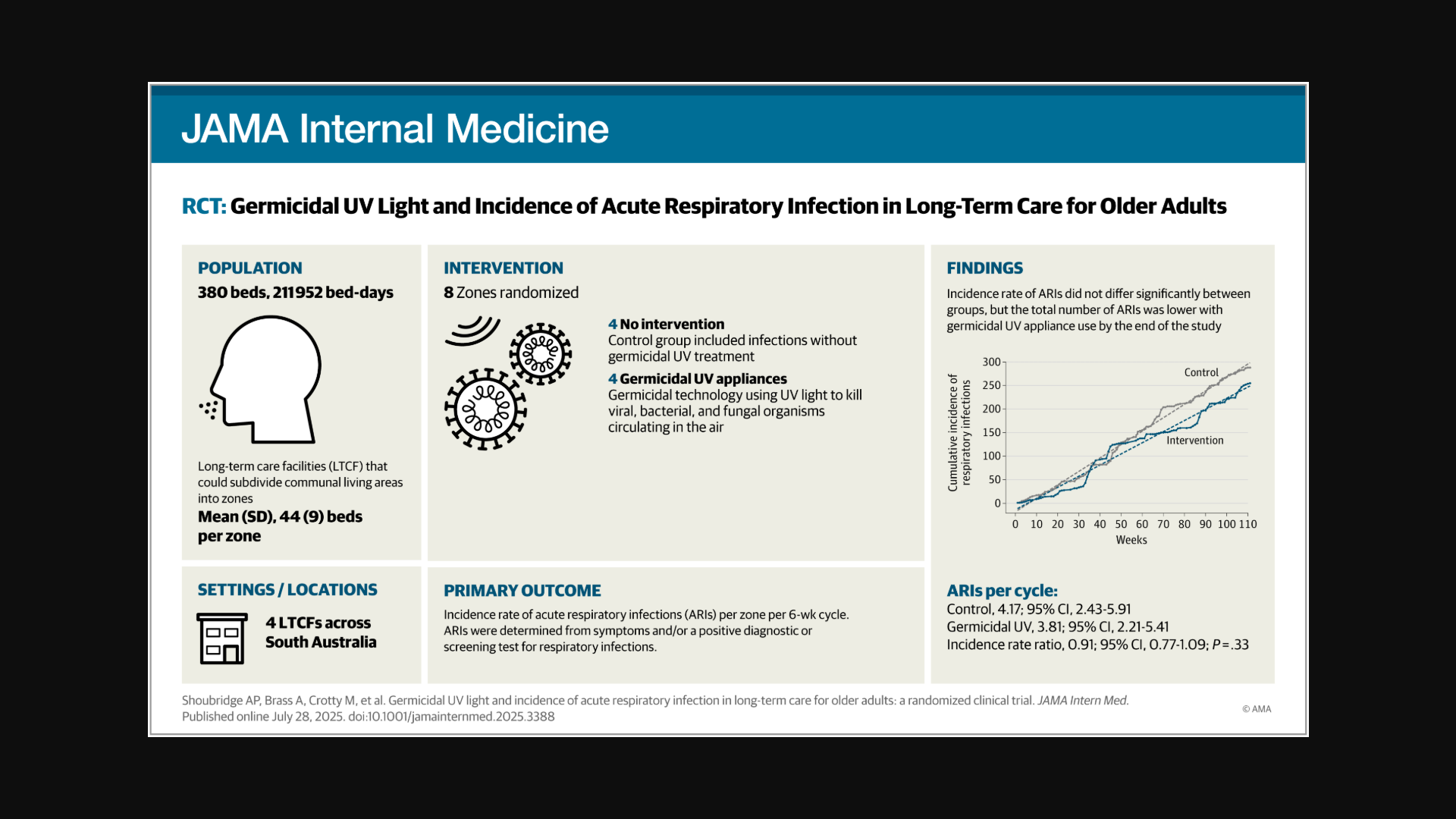
With the 2025-2026 Influenza and Respiratory Syncytial Virus seasons launching in the United States, a debated innovation recently recieved positive data on how it can passively reduce respiratory diseases.
The new study published in JAMA Internal Medicine trialled commercially available germicidal ultraviolet (GUV) appliances in senior care facilities, finding they reduced rates of viral respiratory infections by about 12.2%.
GUV appliances, which purify the air with UV-C light rays and deactivate harmful micro-organisms like viruses and bacteria.
“Some of the key advantages of germicidal ultraviolet air-treatment appliances are that they are easily installed into existing facilities and cost-effective to use,” says lead author Dr Andrew Shoubridge from Flinders University and SAHMRI’s Microbiome and Host Health Programme, in a press release on July 28, 2025.
“When used in conjunction with existing infection control measures, they could be transformative in reducing rates of seasonal respiratory viral infections and protecting residential aged care facilities against emerging pathogens.”
This randomized clinical trial tested commercially available LAF Technologies GUV appliances that are already used in a wide range of clinical and commercial settings, including hospitals.
The appliances can be mounted to ceilings or walls, fitted into ventilated AC systems, are harmless to people, and have already proven to reduce levels of airborne pathogens in laboratory and hospital settings.
Senior author of the study, Professor Geraint Rogers, conceived this world-first trial and the transformative adaptation of this technology to reduce respiratory viral outbreaks in vulnerable older Australians.
“Our study aimed to explore new ways in which to protect aged care residents from harmful outbreaks of viruses, without disrupting their day-to-day activities.
“Based on our findings, it’s difficult to see why you wouldn’t install these appliances in aged care facilities.”
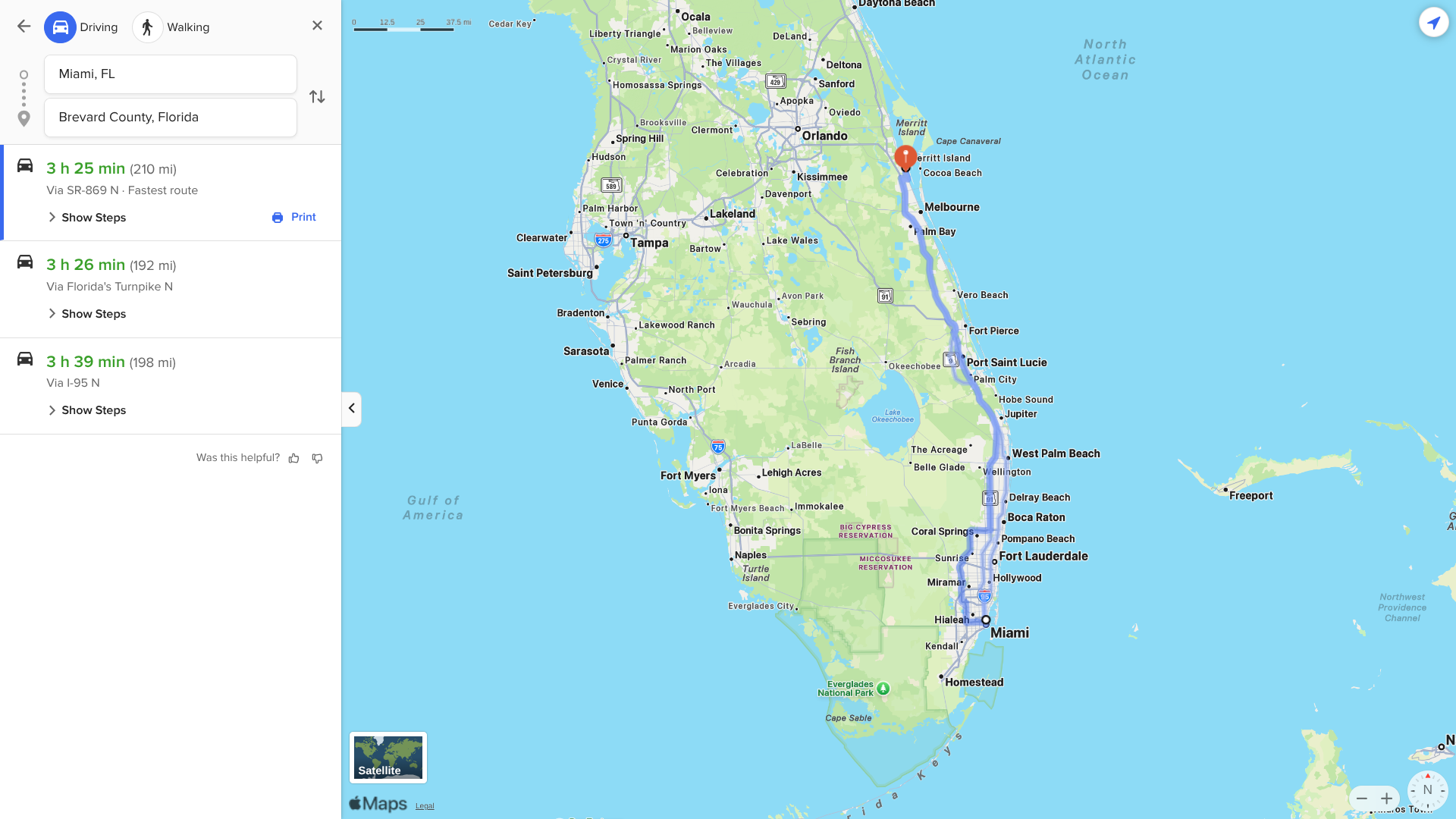
While Dengue Fever cases have traditionally been centered in the Miami-Dade County area, new data from the Florida Department of Health (DOH) indicates virus-carrying mosquitoes are circulating in Brevard County, over 200 miles to the north.
The DOH-Brevard initially informed residents of a confirmed human case of locally-acquired Dengue in early July 2025, and a second case during the week ending July 26, 2025..
This area of central Florida is known as the Space Coast, home to the Kennedy Space Center and Cape Canaveral Space Force Station.
Tourists frequent this coastal area, which includes the cities of Melbourne and Cocoa Beach. Furthermore, it is about 100 miles east of Orlando.
In 2025, 118 cases of travel-related dengue fever were reported among individuals, with 59 cases related to travelers from Cuba.
Since Dengue vaccines are unavailable in Florida, DOH-Brevard reminds the community to avoid being bitten by mosquitoes by taking basic precautions, such as wearing long-sleeved shirts and pants, and eliminating standing water.
As of July 29, 2025, only Puerto Rico is authorized to offer the first-generation Dengue vaccine (Dengvaxia®) to children in the United States.
When Ebola and Marburg outbreaks have occurred over the decades, diagnosing cases has been a significant challenge for healthcare workers.
To address this essential need, Aptitude Medical Systems announced its second major partnership with the Biomedical Advanced Research and Development Authority (BARDA), with $9 million in funding to develop the Metrix Filovirus Panel.
This collaboration leverages Aptitude's next-generation molecular diagnostics platform, Metrix®, which has been advanced through a prior BARDA partnership valued at up to $61.9 million.
This rapid next-generation molecular diagnostic device aims to detect and differentiate Ebolavirus and Marburgvirus species.
"Point-of-care diagnostics are essential for effectively addressing outbreaks of high-consequence pathogens like Ebolavirus and Marburgvirus species," added JP Wang, PhD, CTO, President, and Executive Chairman of Aptitude, in a press release on July 28, 2025.
It is a small, portable platform, making it appropriate for use in remote and more traditional point-of-care settings, generating results in 30 minutes or less from venous or fingerstick blood samples.
As of July 29, 2025, there are no active Ebola and Marburg outbreaks in Africa, and Ebola vaccines and antibody therapies have been approved for use by various countries.
