
Disease X
Disease X July 2025
Disease X was first included in the World Health Organization (WHO) Blueprint for Epidemics in February 2018, with the primary goal of accelerating the development of medical countermeasures, including those for diseases such as Zika, MERS, and Ebola. According to the WHO, Disease X represents the knowledge that a serious international epidemic could be caused by a pathogen currently unknown to cause human disease. Based on the WHO's announcement in 2020, COVID-19 was recognized as the first Disease X.
On October 14, 2025, the Global Preparedness Monitoring Board's global report for 2025 outlined preparedness priorities to protect people worldwide from future pandemics and other health crises; it calls for scaled-up investment in primary health care, real-time risk assessment, and international cooperation to ensure local and global communities are ready to prevent and respond to the next pandemic.
On May 20, 2025, the World Health Assembly adopted a Pandemic Agreement to make the world more equitable and safer from future pandemics. On April 4, 2025, the WHO's Global Health Emergency Corps (GHEC) announced a framework designed to strengthen countries' emergency workforce, coordinate the deployment of surge teams and experts, and enhance collaboration between governments, which was tested.
On March 15, 2024, the WHO's "Science in 5: Disease X" episode #114 was published. Ana Maria Henao-Restrepo, Co-Lead of the R&D Blueprint for Epidemics, outlines the R&D needs that the world needs to address and how to prevent and prepare for the next pandemic. On February 14, 2024, at the World Government Summit, the WHO's Director commented that the planet is "unprepared" for a Disease X outbreak or future pandemics.
Disease X Coalition for Epidemic Preparedness Innovations
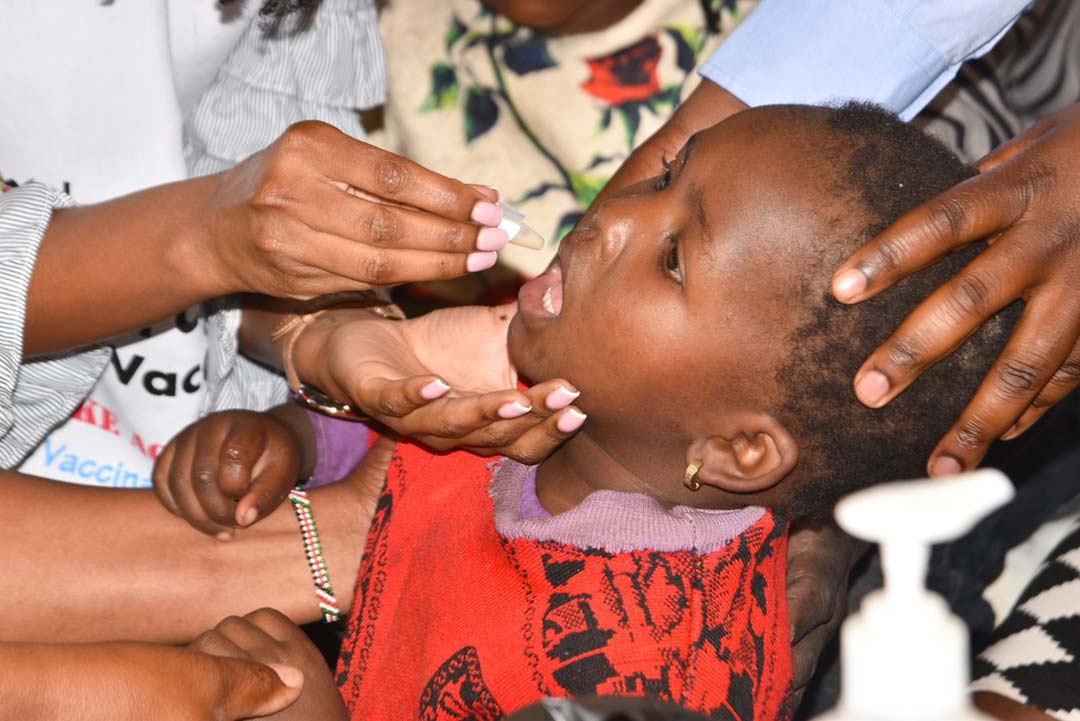
Disease X is expected to be caused by a "pathogen X" that is likely to be a zoonotic disease or infection, which can be transmitted between humans and animals, most likely an RNA virus, according to Richard Hatchett, CEO of the Coalition for Epidemic Preparedness Innovations (CEPI). CEPI's $3.5 billion, 5-year plan lays out a roadmap to compress vaccine development timelines to 100 days. Disease X is a priority disease for CEPI's research and development investments. "Compressing vaccine development against emerging pathogens down to 100 days will be critical to combating future pandemic threats", explained Dr. Jakob Cramer, Director of Clinical Development at CEPI. The CEPI, founded in 2017, established a Centralized Laboratory Network comprising ten laboratories to standardize immunological assays, provide testing support to vaccine developers, identify the immune correlates of vaccine protection, and facilitate the approval and dissemination of the most promising vaccine candidates. On January 23, 2024, Serum Institute of India Pvt. SII Ltd. joined CEPI's network of vaccine producers in the Global South.
On January 8, 2025, CEPI awarded Micron Biomedical $3.7 million to advance research into an innovative needle-free vaccine administration technology that could overcome critical vaccine access challenges. The new CEPI award will be used to study Micron's microarray technology in combination with a Next-Generation vaccine platform technology developed by CastleVax. On July 24, 2025, CEPI awarded POP BIO up to $1.5 million to advance research into POP BIO's SNAP™ (Spontaneous Nanoliposome Antigen Particleization) protein vaccine platform. The technology has been designed to develop potent nanoparticle vaccine candidates while simultaneously purifying antigens rapidly. If the project is successful, the SNAP platform has the potential to be adapted quickly for developing vaccine candidates against other pathogens, including a Disease X.
Disease X Pandemic Preparedness Plan United States
The U.S. National Institutes of Allergy and Infectious Diseases (NIAID) developed a Pandemic Preparedness Plan to prepare for future public health emergencies caused by infectious diseases. While it is recognized that pathogens other than viruses could lead to public health emergencies, the NIAID Pandemic Preparedness Plan focuses on viruses that could cause epidemics or pandemics. With a mandate to anticipate next-generation threats, DARPA has helped lay technological foundations for ending COVID-19 and preventing future pandemics. On June 5, 2023, H.R. 3832 - the Disease X Act of 2023, 118th U.S. Congress (2023-2024) - was introduced by Rep. Lori Trahan and Dan Crenshaw (R-TX-02). This U.S. bill expands the Biomedical Advanced Research and Development Authority (BARDA) priorities to include viral threats that could cause a pandemic. "Disease X is the culmination of what amounts to a conceptual shift in how the country prepares for infectious disease threats to enhance resiliency in a truly proactive manner," said Dr. Amesh Adalja, Senior Scholar and Project Director for the Disease X Medical Countermeasures Program Project at the Johns Hopkins Center for Health Security. A One Health approach has also been proposed, which provides a comprehensive way to address the underlying issues contributing to the spread of Disease X.
The U.S. Government Policy for Oversight of Dual-Use Research of Concern and Pathogens with Enhanced Pandemic Potential was updated on May 6, 2024. This Policy addresses oversight of research on biological agents and toxins that, when enhanced, can potentially pose risks to public health. The Implementation Guidance was also updated. According to the US CDC, these updates include gain-of-function research that seeks to alter the functional characteristics of a pathogen.
In February 2024, the US NIH All of Us Research Program confirmed over 1 billion genetic variants, including about 275 million previously unreported ones. This program enables the study of human biology at an unprecedented scale.
Disease X Pandemic Legal Limits in the United States
On May 20, 2025, the WHO announced regarding national sovereignty, the Agreement states that: "Nothing in the WHO Pandemic Agreement shall be interpreted as providing the Secretariat of the World Health Organization, including the Director-General of the World Health Organization, any authority to direct, order, alter or otherwise prescribe the national and/or domestic law, as appropriate, or policies of any Party, or to mandate or otherwise impose any requirements that Parties take specific actions, such as ban or accept travellers, impose vaccination mandates or therapeutic or diagnostic measures or implement lockdowns."
In February 2024, the BMJ published an analysis by Stanford Law of 65 laws adopted in 24 states from January 2021 to April 2023, which imposed limits on pandemic-related restrictions. They found substantive restrictions on officials during health emergencies. For example, four states adopted prohibitions on requiring vaccines or proof of vaccination, five prohibited mask mandates, seven limited officials' ability to close businesses, and 11 restricted the ability to restrict religious gatherings. Another group of reforms imposed procedural constraints on the exercise of public health power, such as shortening the number of days a governor's emergency declaration can remain in effect without the legislature's confirmation. They concluded, 'This federalist design (of U.S. laws) is a considerable impediment to implementing nationwide community mitigation measures for pandemics.'
U.S. Global Health Security Strategy
The U.S. Global Health Security Strategy was announced on April 16, 2024, to promote a collaborative, multisectoral, and transdisciplinary One Health approach that recognizes the interconnection between humans, animals, plants, and their shared environment, as well as the importance of coordination across government, business, and civil society.
U.S. Preparedness Plan For Infectious Disease Outbreaks
In 2015, the U.S. Government Accountability Office (GAO) recommended that the Department of Transportation (DOT) create a national aviation preparedness plan for infectious disease outbreaks. In July 2022, the GAO reported that federal leadership was needed to advance research on disease transmission in air travel, including real-world situations and the effectiveness of mitigation efforts. Furthermore, the GAO recommended that Congress direct the Federal Aviation Administration to develop a research strategy, which the U.S. Congress had not done as of March 2024. According to a report from the GAO dated April 18, 2024, the Department of Health and Human Services (HHS) failed to respond effectively or coordinate a national response to the 2022 mpox outbreak. Moreover, HHS still lacks a coordinated, department-wide after-action program to identify and resolve recurring emergency response challenges.
On May 6, 2024, the Biomedical Advanced Research and Development Authority (BARDA), a component of the U.S. Department of Health and Human Services (HHS), announced two hubs for its next-generation BARDA Accelerator Network: one targeting diagnostics and medical devices, and the other focusing on therapeutics and vaccines. The Vaccine Innovation and Therapeutic Acceleration Launchpad Hub is led by Start2 Group, a global accelerator and startup ecosystem platform based in Cambridge, Massachusetts. On June 13, 2024, BARDA awarded up to $500 million in Project NextGen funding for clinical trials of vaccines.
Research and Development of Vaccines and Monoclonal Antibodies for Pandemic Preparedness Network
Albert Einstein College of Medicine has received a five-year, $14 million per year grant from the National Institute of Allergy and Infectious Diseases (NIAID) to participate in a broad national effort to develop "plug-and-play" vaccines and antibody-based therapies against a wide range of emerging viruses. The Einstein-led consortium, PROVIDENT (Prepositioning Optimized Strategies for Vaccines and Immunotherapeutics Against Diverse Emerging Infectious Threats), will bring together 13 academic, government, and industry teams to conduct four projects.
WHO Pandemic Agreement
The ninth International Negotiating Body (INB9) meeting ended in March 202. WHO Member States agreed to resume negotiations on the draft agreement in May 2024 to finalize a WHO Pandemic Agreement. The U.S. is committed to contributing to the Pandemic Fund, which has included $700 million to date. The United States Agency for International Development (USAID) plans to provide a $250 million contribution to the Pandemic Fund, pending notification from Congress.
World Bank Pandemic Fund
The World Bank Pandemic Fund is a financial intermediary fund (FIF) for pandemic prevention, preparedness, and response (PPR), officially established by the FIF Governing Board at its inaugural meeting in September 2022 under the International Health Regulations (IHR) (2005), and any amendments or enhancements thereof, as well as other internationally endorsed legal frameworks, including the Pandemic Agreement by the member states of the WHO.
Europe Health Emergency Preparedness and Response
The Health Emergency Preparedness and Response (HERA) department aims to prevent, detect, and rapidly respond to health emergencies. Created in the aftermath of the recent pandemic, HERA will anticipate threats and potential health crises through intelligence gathering and building the necessary response capacities.
India National Institute of One Health
The National Institute of One Health (NIOH) is a collaborative, multidisciplinary approach that unites human, animal, and environmental health sectors. It recognizes the interconnectedness of these domains, aiming to optimize health outcomes and address challenges across the sectors. Thirteen Ministries/Departments coordinate and synergize their activities to realize the objectives of the NOHM. The Indian Council of Medical Research (ICMR) and the Indian Council of Agricultural Research (ICAR) jointly decided to establish the NIOH in Nagpur, India. Two research projects have already started to study zoonotic diseases in Central India.
Nuclear Threat Initiative
In March 2021, the Nuclear Threat Initiative partnered with the Munich Security Conference to conduct a tabletop exercise on reducing high-consequence biological threats, such as mpox.
Potential Disease X Risks
The Lancet Infectious Diseases published a study on April 16, 2024, highlighting the impact of infectious diseases on global health. Globally, in 2019, an estimated 704 million disability-adjusted life years (DALYs) were associated with 85 different pathogens. Three leading pathogens were responsible for more than 50 million DALYs each in 2019: tuberculosis (65·1 million), malaria (53·6 million), and HIV / AIDS (52·1 million).
Potential Disease X Vaccines
Bacille Calmette-Guerin (BCG) Vaccine—Data indicate non-specific protective effects against other respiratory tract infections and a balanced immune response comprising pro- and anti-inflammatory mediators. BCG has been used to prevent and treat various diseases, including tuberculosis and bladder cancer.
Project NextGen
Project NextGen is a U.S. government program focused on developing the next generation of vaccines and therapeutics. An initial investment of $5 billion accelerated and streamlined the rapid development of next-generation vaccines and treatments through public-private collaborations.
Disease X News
June 13, 2024 - HHS Secretary Xavier Becerra stated, "We are making progress on developing cutting-edge treatments, such as vaccines administered as a nasal spray or as a pill. The Biden-Harris Administration won't stop until we have the next generation of innovative vaccines, therapeutics, and other tools to protect against COVID-19 or any other pathogen that could threaten the American public."
January 23, 2024 - Adar Poonawalla, CEO of the Serum Institute of India, said in a press release, '...This (CEPI) collaboration will enable us to respond more rapidly and equitably to public health disease outbreaks, particularly in Global South countries where access to life-saving vaccines can be limited.'
January 17, 2024 - This Disease X session is linked to the Partnership for Health System Sustainability and Resilience and the Collaborative Surveillance Initiative of the World Economic Forum.
November 27, 2023 - Since October 2023, the WHO has been monitoring data from Chinese surveillance systems, which show an increase in respiratory illnesses among children in northern China. The journal Nature published an article titled "What's behind China's mysterious wave of childhood pneumonia?"
September 19, 2023 - CEPI and Bio Farma have entered into a 10-year partnership to accelerate the rapid manufacturing of outbreak vaccines at Indonesia's leading vaccine manufacturer. Indonesia's collaboration will help bring cutting-edge mRNA and viral vector quick-response vaccine manufacturing technologies to the Association of Southeast Asian Nations region, thereby reserving manufacturing capacity to supply Global South countries during future outbreaks and pandemics, and combating the type of devastating inequity witnessed during the recent pandemic.
September 19, 2023—The CEPI Centralized Laboratory Network, which consists of ten laboratories, standardizes immunological assays to help prepare for future disease outbreaks.
July 26, 2021 - Cambridge University Press: Disease X: A hidden but inevitable creeping danger. The COVID-19 pandemic was not the first to wreak havoc on the world, and it will not be the last. Thus, we must prepare for the next outbreak as soon as possible.