Search API

cAD3-Marburg Vaccine

cAD3-Marburg Vaccine

The cAD3-Marburg vaccine candidate is being developed by the National Institute of Allergy and Infectious Diseases (NIAID), part of the U.S. National Institutes of Health (NIH). This vaccine uses a modified chimpanzee adenovirus, cAD3. cAD3 is not replicable and cannot infect cells. Instead, it displays a glycoprotein on the surface of the Marburg Virus (MARV) to induce immune responses against the virus.

The peer-reviewed journal The Lancet published a study on January 28, 2023, that concluded that the first-in-human clinical trial of the cAd3-Marburg vaccine showed the agent is safe and immunogenic, with a safety profile similar to that of previously tested cAd3-vectored filovirus vaccines. In addition, 95% of participants produced a glycoprotein-specific antibody response four weeks after a single vaccination, and 70% remained at 48 weeks. RV 507 was a Phase I, open-label study that conducted dose escalation of VRC-MARADC087-00-VP, a cAd3 vector vaccine encoding the wild-type glycoprotein from Marburgvirus. It has demonstrated rapid immunity within one week in non-human primates and safety and immunogenicity in humans in Phase 1 trials.

The NIAID plans to conduct further trials of the cAd3-Marburg vaccine in Ghana, Kenya, Uganda, and the United States. An Albert B. Sabin Vaccine Institute-sponsored Phase 2, Randomized, Double-blind, Placebo-Controlled Trial to Evaluate Safety, Tolerability, and Immune Responses of an Investigational Monovalent Chimpanzee Adenoviral-Vectored Marburg Virus Vaccine in Healthy Adults. The candidate is currently in Phase 2 trials in Uganda and Kenya, and no safety concerns have been reported. In September 2024, Sabin launched a clinical trial in the Republic of Rwanda. As of October 31, 2024, Sabin's Marburg vaccine has not demonstrated clinical benefit for vaccine recipients.

In early December 2025, Sabin sent more than 640 doses of cAd3-Marburg to Ethiopia to support the country's response to its first-ever outbreak of Marburg virus disease.

The Maryland-based NIAID conducts and supports research at the NIH, throughout the United States, and worldwide to study the causes of infectious and immune-mediated diseases and develop better means of preventing, diagnosing, and treating them. Other NIAID-related materials are available on the NIAID website.

cAD3-Marburg Indication

Marburg virus is in the same family as Ebola, causing a rapidly progressive febrile illness that leads to shock and death in many infected individuals. Human outbreaks begin when the virus jumps from the animal host to the human. In sub-Saharan Africa, bats are most likely the primary source of human infection. MARV symptoms are similar to those of Ebola, including fever, headache, chills, rash, abdominal pain, vomiting, and diarrhea. As the disease progresses, patients suffer from multiple organ dysfunction, delirium, and significant bleeding from the gastrointestinal tract or other sites that may result in death.

Marburg Vaccine Candidates

Marburg disease protective vaccine candidates are in clinical development, but none have been FDA-approved in the U.S.

cAD3-Marburg News

December 4, 2025 - Sabin Vaccine Institute's Investigational Marburg Vaccine Delivered to Ethiopia for Outbreak Response.

October 31, 2024 - Over 1,700 vaccines have already been delivered to Rwanda, with the first shipment of doses arriving just nine days after the outbreak was declared on September 27. The initial part of the trial focused mainly on health workers, a group that suffered the most casualties in this outbreak.

March 22, 2023 - Since the first WHO Disease Outbreak News published on February 25, 2023,  eight additional laboratory-confirmed cases of MVD have been reported in Equatorial Guinea.

February 15, 2023 - A news article was published by the journal Nature: Marburg virus outbreak: researchers race to test vaccines.

January 28, 2023 - Marburg vaccine shows promising results in a first-in-human NIH-funded clinical study. The RV 507 trial of this cAd3-Marburg vaccine showed the agent is safe and immunogenic, with a safety profile similar to previously tested cAd3-vectored filovirus vaccines. In addition, 95% of participants produced a glycoprotein-specific antibody response four weeks after a single vaccination, and 70% remained at 48 weeks. 

October 13, 2022 - An introduction to the Marburg virus vaccine consortium, MARVAC.

cAD3-Marburg Clinical Trial 2023

Phase 1 clinical trial enrolled 40 healthy adult volunteers. They received a single dose of either a low dose of the vaccine (1x10^10 particle units) or a higher dose (1x10^11 particle units). For safety, the volunteers were enrolled in a dose-escalation plan. Three participants received the lower dose. After no severe adverse reactions were observed after seven days, the trial enrolled the remaining 17 volunteers. The same procedure was also used for the higher-dose group. Volunteers were monitored for adverse reactions to the investigational vaccine and evaluated at regular intervals for 48 weeks to track their immune responses.

This is a multicenter, double-blinded, placebo-controlled, Phase II study to evaluate the safety, tolerability, and immunogenicity of a single dose of the cAd3-Marburg vaccine in healthy adults up to 70 years of age in Uganda and Kenya. The study will enroll 125 eligible participants, randomized 4:1 to receive the cAd3-Marburg vaccine at a dose of 1.0 × 10^11 PU intramuscularly in the deltoid muscle on Day 1, or placebo (0.9% sodium chloride (NaCl) solution). Participants will be screened for eligibility up to 28 days before enrollment. Enrollment will be staggered, starting with healthy adults 18 to 50 (inclusive). Upon enrollment of a minimum of 25 younger adult participants (sentinel), the safety data will be reviewed by the independent DSMB up to 7 days post-vaccination of these 25 sentinel participants. Progression to enrollment of the older adults (>50 to 70 years of age) will be dependent on the unblinded review of the Data Safety Monitoring Board (DSMB). Safety and immunogenicity will be assessed on Days 1, 8, 15, 29, 85, and 169 and conclude at the end of the study visit on Day 366.

0 min read
Availability: 
Ethiopia
Generic: 
cAD3-Marburg
Clinical Trial: 
https://www.niaid.nih.gov/clinical-trials
Drug Class: 
Adenovirus Vector Vaccine
Condition: 
Last Reviewed: 
Friday, December 5, 2025 - 10:20
Status: 
Manufacturer Country ID: 
FDA First In Class: 
Yes
Location tags: 
Pneumonia death rates in 2023
Pneumonia, influenza, COVID-19 mortality above the epidemic threshold
Marburg outbreak
cAd3-Marburg vaccine candidate at Walter Reed Army Institute of Research Clinical Trials Center
0 min read

The Nigeria Centre for Disease Control (NCDC) recently reported its ongoing diphtheria outbreak had recorded 38 deaths in the country.

On January 20, 2023, NCDC confirmed it has responded to diphtheria cases in Lagos and Kano States and is monitoring the situation in Osun and Yobe States.

Diphtheria is a bacterial infection caused by the corynebacterium species that affect an individual's nose, throat, and sometimes, skin. It spreads quickly between people through:

  • Direct contact with infected people,
  • Droplets from coughing or sneezing,
  • Contact with contaminated clothing and objects.

Over the past five decades, diphtheria has reduced dramatically worldwide.

And since diphtheria is a vaccine-preventable disease, the NCDC childhood immunization schedule recommends three doses of pentavalent vaccine (diphtheria toxoid-containing vaccine) are recommended for children early in life.

Furthermore, the NCDC announced on January 23, 2023, all healthcare workers with a high level of exposure to diphtheria should be vaccinated.

The U.S. CDC stated in December 2022 to ensure you are up-to-date on all routine vaccines before visiting Nigeria, including for Diphtheria-Tetanus-Pertussis.

Additionally, the CDC has issued Travel Advisories regarding Nigeria's Mpox, yellow fever, polio, and measles outbreaks.

Vaccines available at travel clinics and pharmacies in the U.S. prevent these diseases.

Vaccine Treats: 
Image Caption: 
U.S. CDC Disease Outbreaks Nigeria 2023
Live Blog Update Author: 
Location Tags: 
0 min read

Moderna, Inc. today announced that its investigational mRNA vaccine candidate for the respiratory syncytial virus (RSV) mRNA-1345, has been granted Breakthrough Therapy Designation by the U.S. Food and Drug Administration (FDA) for the prevention of RSV-associated lower respiratory tract disease (RSV-LRTD) in adults aged 60 years or older.

Moderna also confirmed it intends to submit a license application to the FDA for regulatory approval in the first half of 2023.

"The FDA's Breakthrough Designation for mRNA-1345 further emphasizes the significant health impact of RSV in older adults and the high unmet need," said Stéphane Bancel, Chief Executive Officer of Moderna, in a press release on January 30, 2023. 

Moderna's mRNA platform has demonstrated two positive Phase 3 infectious disease trial results."

This designation is granted to expedite the development and review of drugs intended to treat a serious condition and when preliminary clinical evidence indicates the drug or vaccine may demonstrate substantial improvement over available therapy on a clinically significant endpoint.

mRNA-1345 was previously granted Fast Track designation by the FDA in August 2021.

RSV can cause severe disease, with an estimated 5.2 million cases and nearly half a million hospitalizations in adults 60 years or older reported across high-income countries in 2019, says the U.S. Centers for Disease Control and Prevention.

Each year in the U.S., approximately 60,000-120,000 older adults are hospitalized, and 6,000-10,000 die due to RSV infection.

As of January 30, 2023, the FDA has not approved any RSV vaccine candidates but authorized RSV antibody treatments.

Image: 
Image Caption: 
from Pixabay
Live Blog Update Author: 
Location Tags: 
0 min read

The Pan American Health Organization (PAHO) recently confirmed the Aedes aegypti mosquito is the primary source of dengue transmission in Limón, Costa Rica, including the coastlines along the Caribbean Sea.

As of January 30, 2023, the PAHO's data dashboard indicates 18 dengue cases have been confirmed this year, with about 7,400 in 2022.

Geographically, this dengue outbreak has impacted Talamanca and Guacimo areas.

In the Region of the Americas, 46 countries and territories reported dengue cases in 2022.

While the U.S. Centers for Disease Control and Prevention (CDC) Level-1 Travel Advisory in 2022 does not identify Costa Rica as a dengue risk, it says this mosquito-spreading disease is an ongoing risk in many parts of Central America, Mexico, and the Caribbean.

However, the UK's National Travel Health Network and Centre website confirm dengue fever risks will continue in Costa Rica this year. And the number of reported cases of dengue is increasing.

The worst affected areas are Limon and Puntarenas.

If you're in Costa Rica, you should take steps to avoid being bitten by mosquitoes, says the UK.

Furthermore, dengue is a vaccine-preventable disease, with two authorized vaccines available in certain countries in 2023. 

Local media (Costa Rica Star) recently reported Sanofi Pasteur's Dengvaxia® vaccine is sold in pharmacies in Costa Rica for approximately $130. Three doses are required to fully protect people against the serotypes found in the country in 2023.

Vaccine Treats: 
Image: 
Image Caption: 
PAHO Jan. 30, 2023 Costa Rica Dengue Cases
Live Blog Update Author: 
Location Tags: 
0 min read

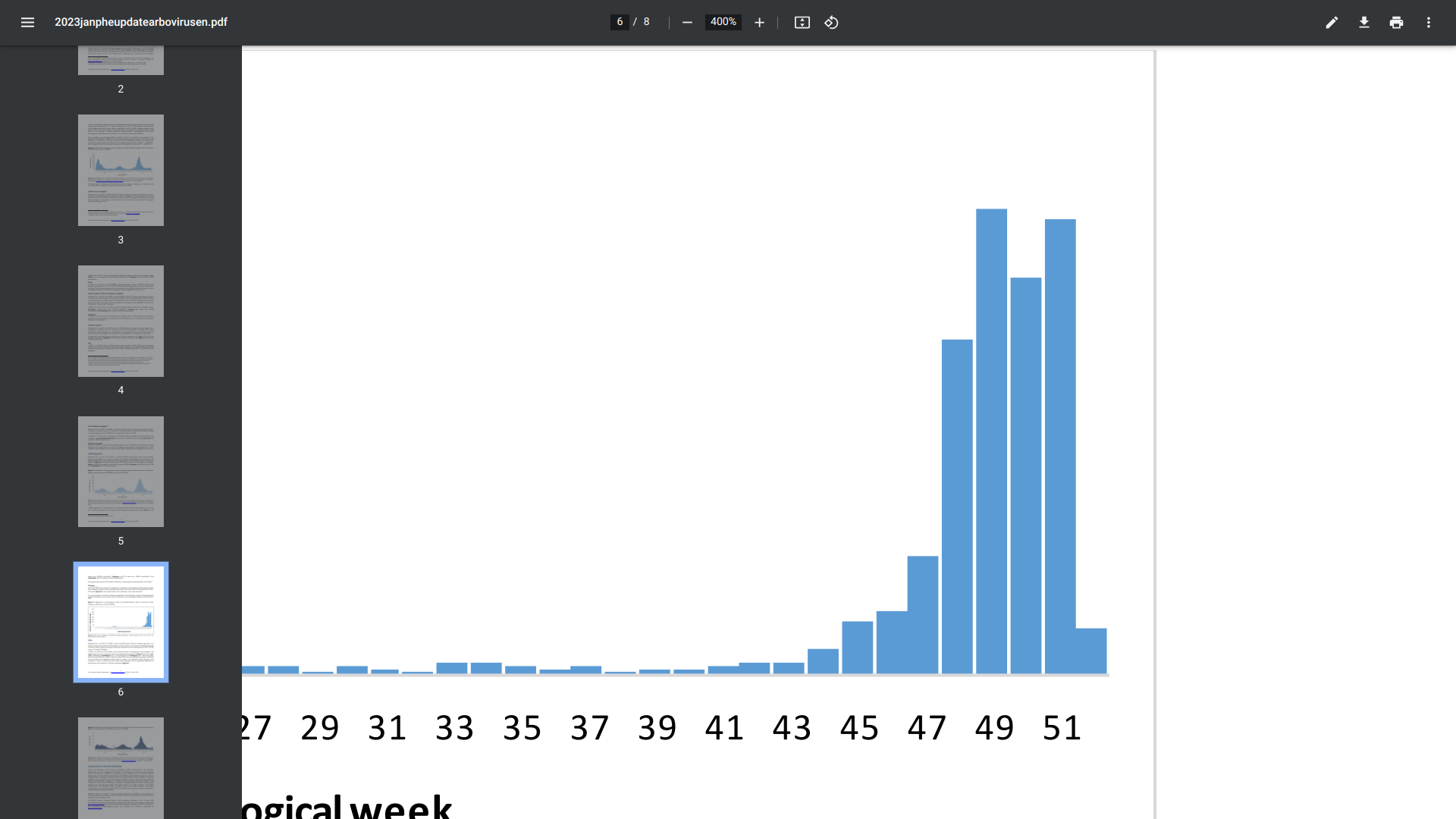
The Pan American Health Organization (PAHO) updated its Arboviral Situation Summary stated is very important for the Southern Hemisphere to be prepared to intensify prevention and control actions in the face of any increase in Chikungunysa virus (CHIKV) cases in 2023.

On January 25, 2023, the PAHO highlighted the Republic of Paraguay's increase in CHIKV cases in late 2022.

After a normal start, the number of CHIKV cases reported weekly in the last three weeks averaged 750 cases. This data compares with 576 in 2021.

Throughout 2022, Paraguay's neighbor Brazil led all Southern Hemisphere countries with 265,265 suspected chikungunya cases.

Since 2004, outbreaks of CHIKV have become more frequent and have been identified in over 110 countries in Asia, Africa, Europe, and the Americas. 

Chikungunya is a viral disease transmitted to humans through the bites of mosquitoes infected with the CHKV, says the World Health Organization (WHO). Severe symptoms and deaths from chikungunya infections are rare and usually related to other coexisting health problems.

Mosquitoes transmit the Chikungunya virus.

Most patients recover fully from the infection; however, people at extremes of the age spectrum are at higher risk for severe disease.

Newborns infected during delivery and older people with underlying medical conditions may become severely ill, and CHIKV infection can increase the risk of death.

Once an individual is recovered, available evidence suggests they will likely be immune from future infections.

As of January 29, 2023, the U.S. Food and Drug Administration (FDA) has not approved any chikungunya vaccine candidates currently conducting late-stage clinical trials.

However, Valneva SE completed the rolling submission of the Biologics License Application to the U.S. FDA on December 23, 2022, for VLA1553, a monovalent, single-dose, live-attenuated chikungunya vaccine.

From a traveling perspective, the United Kingdom stated in December 2022, before traveling, check the 'Entry requirements' section for Paraguay's current entry restrictions and requirements.

And all travelers to and from Bolivia, Brazil, Peru, and Venezuela are obliged to present an International Yellow Fever Vaccination Certificate to authorize their entry and exit of the country.

There are two yellow fever vaccines available worldwide.

Vaccine Treats: 
Image: 
Image Caption: 
PAHO Jan. 25, 2023 Chikungunya trend report
Live Blog Update Author: 
Location Tags: 

Syphilis Vaccines

Syphilis Vaccines 2024

As of April 2024, the U.S. Food and Drug Administration (FDA), the United Kingdom's NHS, and the European Medicines Agency (EMA) have not approved a syphilis prevention vaccine. The U.S. National Institute of Allergy and Infectious Diseases (NIAID) funds Sexually Transmitted Infection (STI) cooperative vaccine research centers (CRCs) to advance the development of syphilis vaccine concepts. In their pursuit of a syphilis vaccine, the CRCs are investigating the structure of proteins on the outer membrane (layer) of T. pallidum bacteria as potential vaccine targets and developing the tri-antigen vaccine featured at the STI & HIV World Congress. The continued prevalence and severity of Syphilis and Congenital Syphilis (CS) in women and infants highlights the need for an effective preventive vaccine, says the World Health Organization (WHO).

Syphilis Vaccine Candidates

April 6, 2023 - Frontiers in Immunology published Syphilis vaccine: challenges, controversies, and opportunities. "In this review, researchers describe what is known about the Treponema pallidum subspecie pallidum (TPA) immune response and the main mechanisms this pathogen uses to evade it. They also emphasize the importance of integrating this knowledge, in conjunction with the characterization of outer membrane proteins, to expedite the development of a syphilis vaccine that can protect against TPA infection.

March 1, 2023 - The U.S. NIAID seeks applicants who can develop advanced vaccines for STI pathogens with limited product development pipeline candidates.

December 12, 2022 - A study showed that immunization with a TprC/TprK/Tp0751 tri-antigen cocktail protects animals from progressive syphilis lesions and substantially inhibits the dissemination of the infection.

July 28, 2022 - The journal Frontiers in Immunology published: Notes on syphilis vaccine development. Herein, we overview current technologies and approaches employed in syphilis vaccinology and possible directions to develop a vaccine that could be pivotal to future syphilis control and elimination initiatives.

November 25, 2021 - Original Research: Two Potential Syphilis Vaccine Candidates Inhibit Dissemination of Treponema Pallidum. These results provide novel and critical information for understanding the pathogenic mechanisms of spirochetes and the development of spirochete-specific subunit vaccines. Furthermore, these findings indicate that Tp0136 and Tp0663 are promising syphilis vaccine candidates.

Syphilis Cases in the United States

The U.S. Centers for Disease Control and Prevention (CDC) confirmed that the rate of congenital syphilis among American Indians and Alaska Natives was triple the rate for African Americans and nearly 12 times the rate for white babies in 2022. The CDC reported over 3,700 CS cases in 2022, a one-year increase of 30%. In 2021, the state of California led Primary and Secondary Syphilis case reports.

Syphilis Testing

On February 8, 2024, new CDC syphilis testing recommendations were issued supporting a diagnosis of syphilis, including serologic testing and methods for the identification of the causative agent Treponema pallidum.

National Syphilis and Congenital Syphilis Syndemic Federal Task Force

Announced in 2023, the National Syphilis and Congenital Syphilis Syndemic Federal Task Force is utilizing HHS agencies, its expertise, and its stakeholder network to respond to the U.S. syphilis and congenital syphilis epidemic. 

Syphilis Treatments

The U.S. HHS Healthy People 2030 goal focuses on reducing women with syphilis who can also pass the virus to their children during pregnancy. The CDC's Vital Signs report published on November 7, 2023, confirmed about 88% of CS cases could be prevented by timely testing and adequate treatment during pregnancy. The Syphilis in Pregnancy Study (SIPS) is monitoring the outcomes of pregnant people diagnosed with and treated for syphilis, as well as the health outcomes of their infants. 

A new study presented at IDWeek 2023 found a single dose of benzathine penicillin G (BPG) is effective against early syphilis regardless of HIV status. The U.S. CDC recommends a single injection of BPG, indicating it can cure early syphilis and primary, secondary, and latent infections. However, three BPG doses at 1-week intervals for more severe infections, including late latent syphilis and latent syphilis of unknown duration. Bicillin L-A® is the first-line recommended treatment for syphilis and the only recommended treatment option for some patients. Benzathine penicillin G is the WHO and CDC's only recommended treatment for syphilis during a woman's pregnancy.

On January 10, 2024, the FDA's website confirmed the agency would temporarily allow the importation of Laboratoires Delbert's injectable benzathine penicillin G, Extencilline, Powder, and diluent for reconstitution for injection, 1,200,000 units and 2,400,000 units with Foreign, non-U.S. Labeling to Address Supply Shortage.

The University of California, San Francisco, led a phase 4 clinical trial that concluded the combined incidence of syphilis was lower by two-thirds with doxycycline postexposure prophylaxis than with standard care.

Syphilis Outbreaks

Syphilis is a curable bacterial sexually transmitted infection (STI). If untreated, it can cause serious health issues, says the WHO. People can get syphilis by direct contact with a syphilis sore during vaginal, anal, or oral sex, and syphilis can spread from a mother with syphilis to her unborn baby. The U.S.Health Resources and Services Administration (HRSA), in partnership with the Indian Health Service (IHS), noted in July 2023 the rate of syphilis within highly impacted jurisdictions in Alaska, Arizona, Montana, Nebraska, New Mexico, Oregon, and South Dakota.

Japan's National Institute of Infectious Diseases reported 14,906 syphilis cases in 2023, a record high for the third consecutive year. Tokyo accounted for the most cases, with 3,658, followed by Osaka (1,967).

Syphilis News

January 10, 2024—The U.S. FDA is allowing the importation of penicillin to combat an increase in syphilis cases in the U.S.

November 22, 2023 - The JAMA Network published - 90% of Congenital Syphilis Cases Could Have Been Prevented.

November 7, 2023 - The U.S. CDC published - Syphilis in Babies Reflects Health System Failures.

September 15, 2023 - Dr. Helen Fifer, senior author and lead microbiologist for bacterial sexually transmitted infections at the UK Health Security Agency, said in a press release, "We are seeing record levels of STIs (London), including syphilis."

April 2, 2023 - The Washington Post reported reasons syphilis is surging among the U.S.

6 min read
Last Reviewed: 
Wednesday, April 10, 2024 - 08:10
Description: 
Syphilis vaccines continue to be developed, but no vaccine candidate has been US FDA approved.
0 min read

The Kaiser Family Foundation's (KFF) recent analysis of the Household Pulse Survey says there is still a great deal of uncertainty about long COVID and whether there will be increased long COVID cases.

Estimates of the effects of long COVID on the workforce range from about 500,000 to as many as 4 million people, as of January 26, 2023.

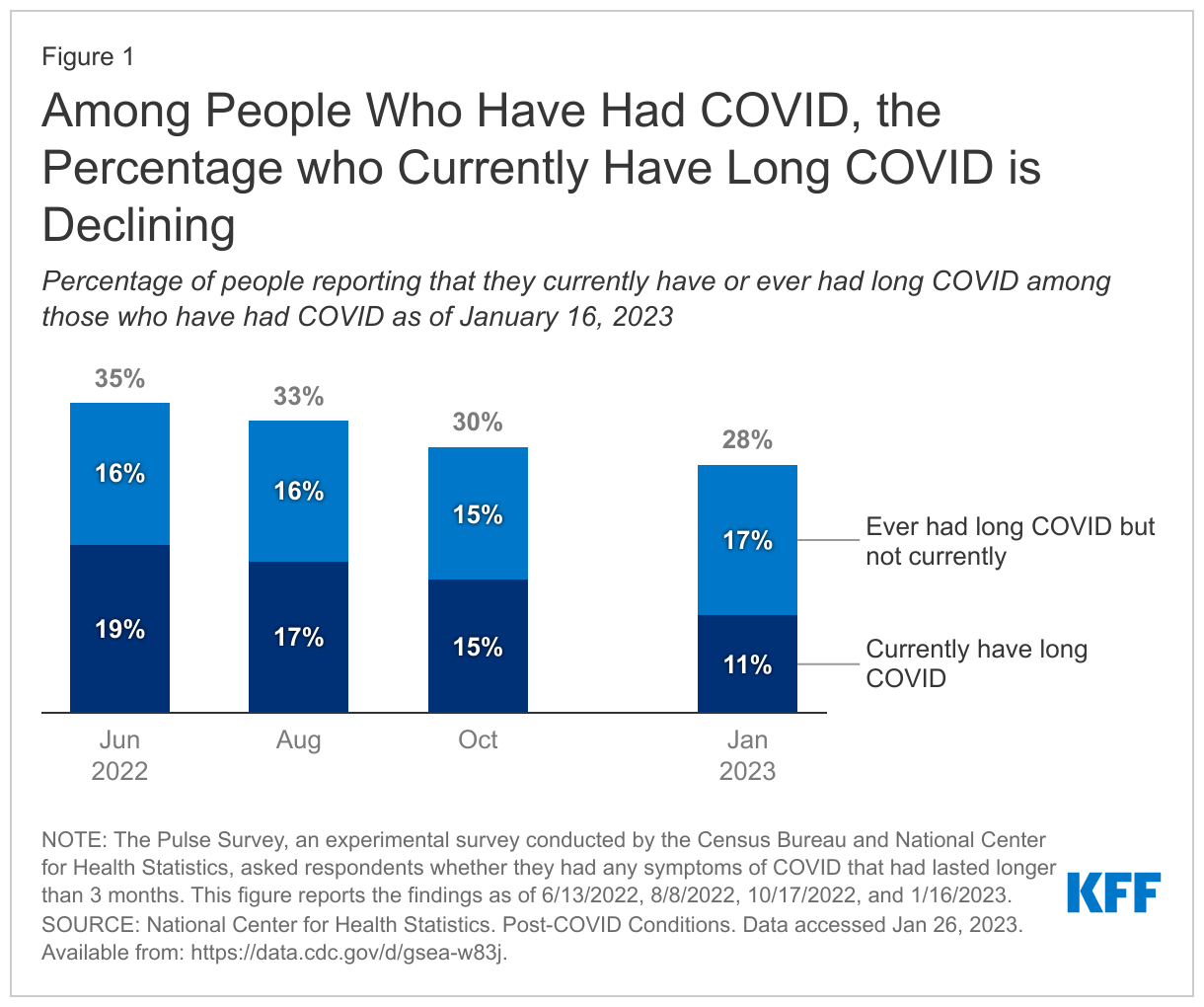
The recent KFF online survey administered by the Centers for Disease Control and Prevention found that the percentage of respondents who have had COVID-19 and currently report long COVID symptoms declined from 19% in June 2022 to 11% in January 2023.

And the share of people who have ever reported long COVID fell from 35% to 28% over the same period.

Among people with long COVID, 79% report having limitations to their day-to-day activities, and 27% characterize the limitations as significant. 

Previously, the Department of Health and Human Services released in August 2022, a National Research Action Plan on long COVID aimed at providing a call to action for public and private researchers to accelerate their work.

And the federal RECOVER initiative aims to understand how people recover and why some people don’t. 

Vaccine Treats: 
Image: 
Image Caption: 
KFF Jan 2023 the Percentage who Currently Have Long COVID is Declining
Live Blog Update Author: 
Location Tags: 
Zika Virus Caribbean Islands
Zika virus confirmed in Barbados Puerto Rico Costa Rico