Search API
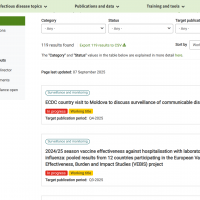
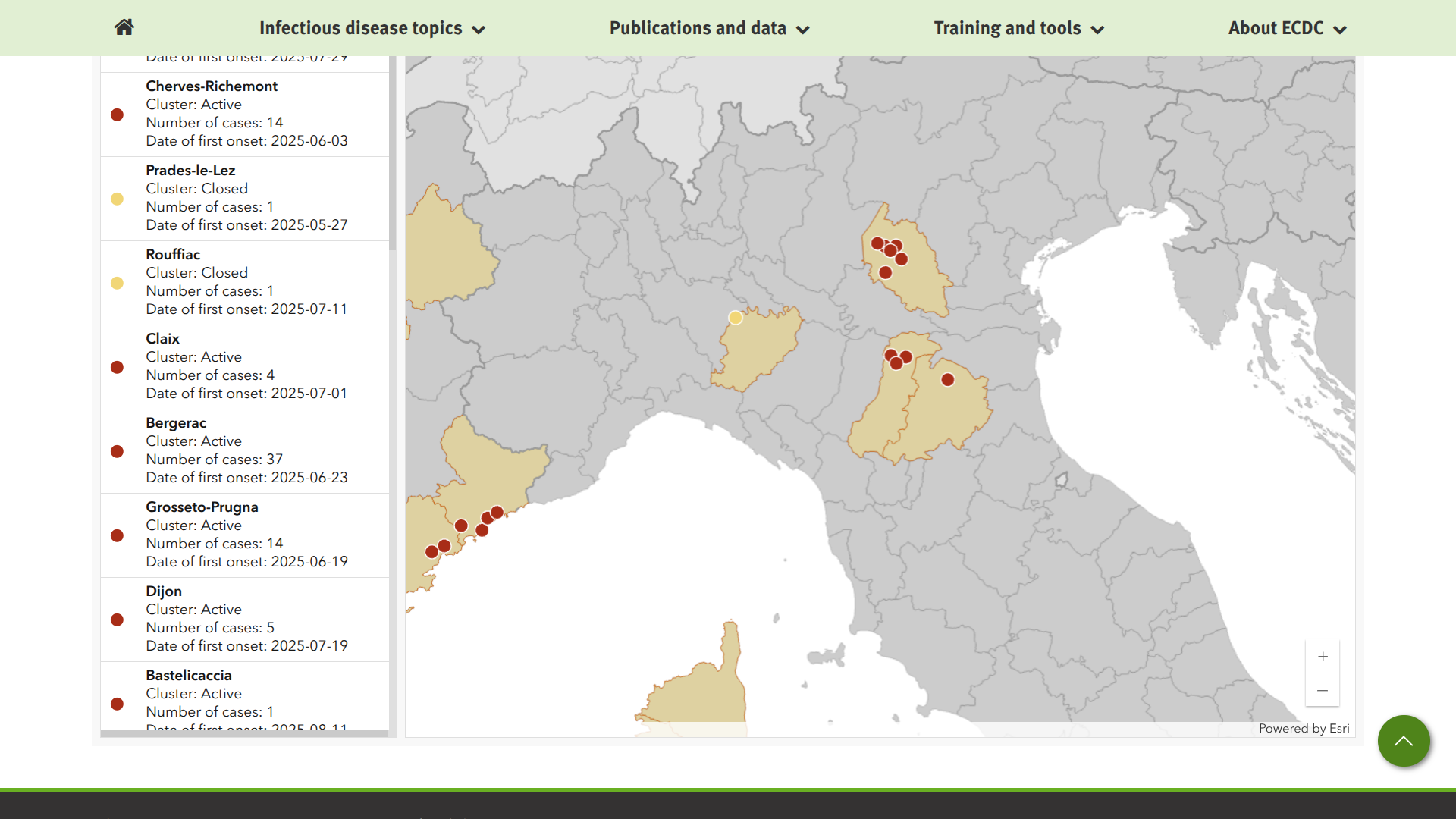
Since the beginning of 2025, two European countries have reported cases of chikungunya virus disease: France and Italy.
According to the ECDC's Epidemiological summary Week #36, based on data submitted up to September 3, 2025, Italy reported 44 new locally acquired cases of chikungunya virus disease last week.
The total number of locally acquired, mosquito-transmitted cases in Italy is now 107.
The largest cluster of chikungunya cases is located in northern Italy in Carpi, San Prospero, and Soliera.
While the U.S. CDC has not issued a Travel Health Advisory focused on Italy's chikungunya outbreak, approved vaccines are available in Italy and throughout Europe that can prevent this viral disease.
The National Department of Health (NDoH), in collaboration with the World Health Organization (WHO) and partners, has confirmed the first human case of paralytic poliomyelitis (cVDPV2) in Papua New Guinea in 2025.
The case involves a 4-year-old unvaccinated boy from Lae, Morobe Province, who developed acute flaccid paralysis (AFP).
This marks a pivotal moment in the country's polio response, confirming that the virus has transitioned from being detected in the environment to directly impacting children.
A total of 28 positive samples were reported this year.
"Polio is preventable. The vaccines are safe, effective, and free," said Dr. Sevil Huseynova, WHO Representative in PNG, in a media statement on August 28, 2025.
"But we must act together—with urgency and unity. WHO stands ready to support every province, every health worker, and every community."
To combat the spread, Papua New Guinea launched a nationwide Supplementary Immunization Activity (SIA) in August 2025, targeting children under 10 years with the novel oral polio vaccine (nOPV2).
The campaign has been extended to September 5 to help provinces reach the critical 95% coverage target. As of August 26, national coverage stands at 41.2%, with Hela Province leading at 91%.
A second round of SIA is scheduled from September 29 to October 17, which will include both nOPV2 and Inactivated Polio Vaccine (IPV) to provide stronger and longer-lasting protection.
Over 9 million doses of nOPV2 and 4 million doses of IPV have been secured, along with additional stocks of measles-rubella, pentavalent vaccines, Vitamin A, and deworming tablets.
According to the U.S. CDC, travelers to Papua New Guinea are at increased risk of exposure to poliovirus and should be protected with the IPV. The CDC suggests IPV booster doses for some travelers.

Since the first outbreak of the Zaire Ebola virus was identified in 1976 in Africa, numerous outbreaks have been declared by the World Health Organization (WHO).
The WHO published a Disease Outbreak News on September 5, 2025, regarding the ongoing Ebola virus disease (EVD) outbreak in the Democratic Republic of the Congo (DRC).
As of September 4, 2025, 28 suspected cases, including 15 deaths (case fatality ratio: 54%), have been reported from three areas of the Bulape health zone (Bulape, Bulape Com, and Dikolo) and the Mweka health zone.
Although the affected district is a hard-to-reach rural area relatively far from the two main urban centres of Mbuji Mayi and Kananga, population movements between different parts of the province are frequent, especially between Bulape and Tshikapa.
Among the deaths, four are unvaccinated health-care workers.
This is the 16th Ebola outbreak in the DRC. The last EVD outbreak in the country was declared on August 15, 2022, in Beni city, North Kivu province.
In accordance with the recommendations of the Strategic Advisory Group of Experts on immunization, the Ervebo vaccine is recommended during a Zaire EVD outbreak for contacts and potential contacts of confirmed/suspected cases, as well as for frontline workers.
The DRC's Ministry of Health, with support from WHO and partners, is implementing public health response measures to contain the outbreak.
Ebola is a serious, often fatal illness transmitted to humans through close contact with the blood or secretions of infected wildlife and then spreads through human-to-human transmission.
The WHO assesses the overall public health risk posed by the current EVD outbreak as high at the national level, moderate at the regional level, and low at the global level. No travel restrictions have been issued.
As of September 8, 2025, Ebola vaccines and therapies are unavailable in the USA.

According to the French Polynesian health ministry, a chikungunya virus epidemic is currently underway in the French overseas departments of Réunion and Mayotte.
As of September 7, 2025, the ministry's website states that anyone who has visited Réunion or Mayotte in the three weeks preceding their arrival in French Polynesia is likely to have introduced the virus into the country.
Consequently, visitors are encouraged to report to the country's health authorities upon arrival in French Polynesia.
These travelers can identify themselves by completing an online form for health authorities, accessible at this link.
French Polynesia comprises 121 islands and atolls in the South Pacific Ocean, including vacation favorites such as Tahiti and Bora Bora.
Additionally, several countries were recently included in a Level 2 Travel Health Advisory.
Furthermore, the southern coast of France has become a hotspot for locally acquired chikungunya.
This disease, transmitted by virus-carrying mosquitoes, causes fever and pain that can develop into arthritis and sometimes become severe in individuals with certain underlying health conditions. Additionally, there are specific health risks for pregnant women and infants.
From a disease prevention perspective, chikungunya vaccines have been approved over the past two years. They are commercially available at travel clinics and pharmacies in the USA, throughout Europe, and the United Kingdom.

In response to the United States' recent naval operation off the coast of the Bolivarian Republic of Venezuela, vacationers to the southern Caribbean Islands may make alternative plans this fall season.
These vacation destinations include Trinidad and Tobago, Grenada, Barbados, and the islands of Aruba, Curaçao, and Bonaire.
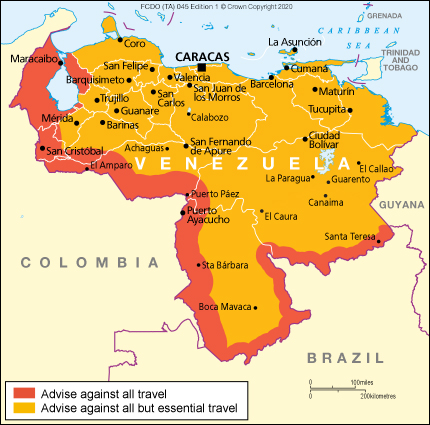
As of September 7, 2025, both the US Department of State and the UK government have updated their high-level travel advisories for Venezuela.
The US State Department writes, Do not travel to or remain in Venezuela due to the high risk of wrongful detention and civil unrest. All US citizens and Lawful Permanent Residents in Venezuela are strongly advised to depart immediately.
Additionally, no US embassy or consulate is operating in Venezuela, and the US government cannot provide routine or emergency consular services to US citizens in Venezuela.
Previously, the UK Foreign, Commonwealth & Development Office advised against travel within 80km of the Venezuela-Colombia border.
From a health perspective, if you plan to visit Venezuela in 2025, the US Centers for Disease Control and Prevention (CDC) recommends various routine and travel vaccinations before traveling to this South American country.
And since March 2025, the CDC has reported cases of Oropouche virus disease in Venezuela.

The British Medical Journal (BMJ) recently confirmed that 300,000 people have become eligible for a shingles vaccination.
BMJ says shingles is caused when the varicella zoster virus, which reactivates, often decades after initial infection.
NHS England has announced that from September 1, 2025, immunosuppressed adults aged 18 to 49 will be newly eligible to receive the vaccine, marketed as Shingrix®.
The vaccine is currently available to people aged 65 to 79 and severely immunosuppressed people aged over 50. This group includes people with conditions such as leukaemia or lymphoma, or those who are undergoing chemotherapy.
The rollout to all severely immunosuppressed adults follows advice from the Joint Committee on Vaccination and Immunisation, which found that the risk of hospitalisation from shingles or those resulting in post-herpetic neuralgia was similar in younger immunosuppressed age groups to those who were already eligible.
Dr Amanda Doyle, National Director for Primary Care and Community Services at NHS England, commented in a press release, "Shingles can be seriously debilitating for older people and those with a severely weakened immune system, so following the latest expert guidance, the NHS is now expanding the potentially lifesaving jab to all severely immunosuppressed adults."
"The vaccine is safe and effective and significantly reduces the chance of developing shingles and becoming seriously unwell, so I'd urge anyone newly eligible to come forward for their protection as soon as possible.
As of September 6, 2025, in the United States, this shingles vaccine is generally available at retail pharmacies.

A significant increase in hepatitis A virus (HAV) infections has been reported in Austria, Czechia, Hungary, and Slovakia in 2025.
The Czechia State Institute of Health recently reported its multi-month HAV outbreak had reached 1,348 cases, with 15 people having died from the liver disease this year.
The State Health Institute (SZÚ) reported on September 3, 2025, that the majority of HepA cases have been recorded in Prague (436), Central Bohemia (202), and the Moravian-Silesian Region (118).
According to the European Centre for Disease Prevention and Control (ECDC), the increase in HAV infections is primarily affecting adults experiencing homelessness, individuals who use or inject drugs, and those living in poor sanitary conditions who have limited access to healthcare.
Local cases have also been reported among members of the Roma communities in both Czechia and Slovakia.
According to media reports, Prague was the most visited destination in Czechia, attracting about 1.2 million visitors in 2024.
"This outbreak reminds us that hepatitis A can cause serious illness and death, especially among people with limited access to healthcare and basic hygiene," said Ole Heuer, Head of Unit for One Health Related Diseases at ECDC, in a media release.
"We need to strengthen outreach, provide access to vaccination in groups more likely to be exposed, and ensure basic sanitation, especially in response to the increase in cases. More than health measures, they are equity measures."
Hepatitis A is a vaccine-preventable acute infection of the liver caused by a small, non-enveloped hepatotropic virus classified in the genus Hepatovirus within the family Picornaviridae.
The U.S. CDC recommends vaccination for unvaccinated travelers one year old or older traveling to Czechia.
And unvaccinated travelers who are over 40 years old, are immunocompromised, or have chronic medical conditions planning to depart for a risk area in less than 2 weeks should receive the initial dose of vaccine and, at the same appointment, receive immune globulin.
As of September 6, 2025, HAV vaccines are generally available at health clinics and pharmacies in Europe and the United States.

The U.S. Centers for Disease Control and Prevention (CDC) today reissued its Level 2, Practice Enhanced Precautions, Travel Health Advisory for chikungunya outbreaks in countries/territories located in the Indian Ocean.
On September 5, 2025, the CDC confirmed outbreaks of chikungunya in Bangladesh, Kenya, Madagascar, Somalia, and Sri Lanka.
Other outbreaks have occurred in Africa, the Americas, Asia, Europe (specifically in France), the Caribbean, and the Indian and Pacific Oceans.
Chikungunya disease is caused by the chikungunya virus and is transmitted to humans through the bites of infected mosquitoes. Most people infected with the chikungunya virus develop symptoms, according to the CDC.
If you are pregnant, consider reconsidering travel to the affected areas, especially if you are nearing the delivery of your baby. Mothers infected around the time of delivery can pass the virus to their baby before or during delivery.
Newborns infected in this way or by a mosquito bite are at risk for severe illness, including poor long-term outcomes.
The CDC advises vaccination (VIMKUNYA) for most travelers visiting an area with a chikungunya outbreak in September 2025.
Across the USA, local experts do offer their advice on eligibility for mpox and other travel vaccines.
