Search API
With the winter months ahead, most hikers are not focused on catching Lyme disease. However, once the snow melts, millions of people will once again not have access to a vaccine.
There are currently no approved human vaccines for Lyme disease.
To address this significant health risk, Pfizer Inc. and Valneva SE today announced that they have completed recruitment for the Phase 3 clinical trial Vaccine Against Lyme for Outdoor Recreationists (VALOR) for Lyme disease vaccine candidate VLA15.
The VALOR trial, initiated in August 2022, has enrolled 9,437 participants five years of age and older at sites where Lyme disease is highly endemic across the U.S., Europe, and Canada.
As part of the primary vaccination series, participants receive three doses of VLA15 or a saline placebo (1:1 ratio) within the first year and one booster dose approximately one year after completion of the primary immunization.
The trial builds on previous positive Phase 1 and 2 trial results and includes adult and pediatric participants to confirm the efficacy, safety, lot consistency, and immunogenicity of VLA15.
"Lyme disease is the most prevalent vector-borne infectious disease in the United States and Europe, can sometimes even lead to long-lasting consequences," said Annaliesa Anderson, Ph.D., Senior Vice President and Head Vaccine Research and Development, Pfizer, in a press release on December 4, 2023.
"If approved, a vaccine could prevent the disease and ease the burden of acute, severe, and sometimes persistent consequences in adults and children."
"We look forward to progressing the trial with the goal of submitting a Biologics License Application to the U.S. Food and Drug Administration and Marketing Authorization Application to the European Medicines Agency in 2026, subject to positive data."
VLA15 is an alum-adjuvanted formulation administered intramuscularly and has demonstrated a strong immune response and a satisfactory safety profile in pre-clinical and clinical trials.
This investigational multivalent protein subunit vaccine uses an established mechanism of action for a Lyme disease vaccine that targets the outer surface protein A (OspA) of Borrelia burgdorferi, the bacteria that cause Lyme disease.
OspA is a surface protein the bacteria expresses when present in a tick. Blocking OspA inhibits the bacterium's ability to leave the tick and infect humans.
The vaccine candidate covers the six most common OspA serotypes expressed by the Borrelia burgdorferi sensu lato species prevalent in North America and Europe.

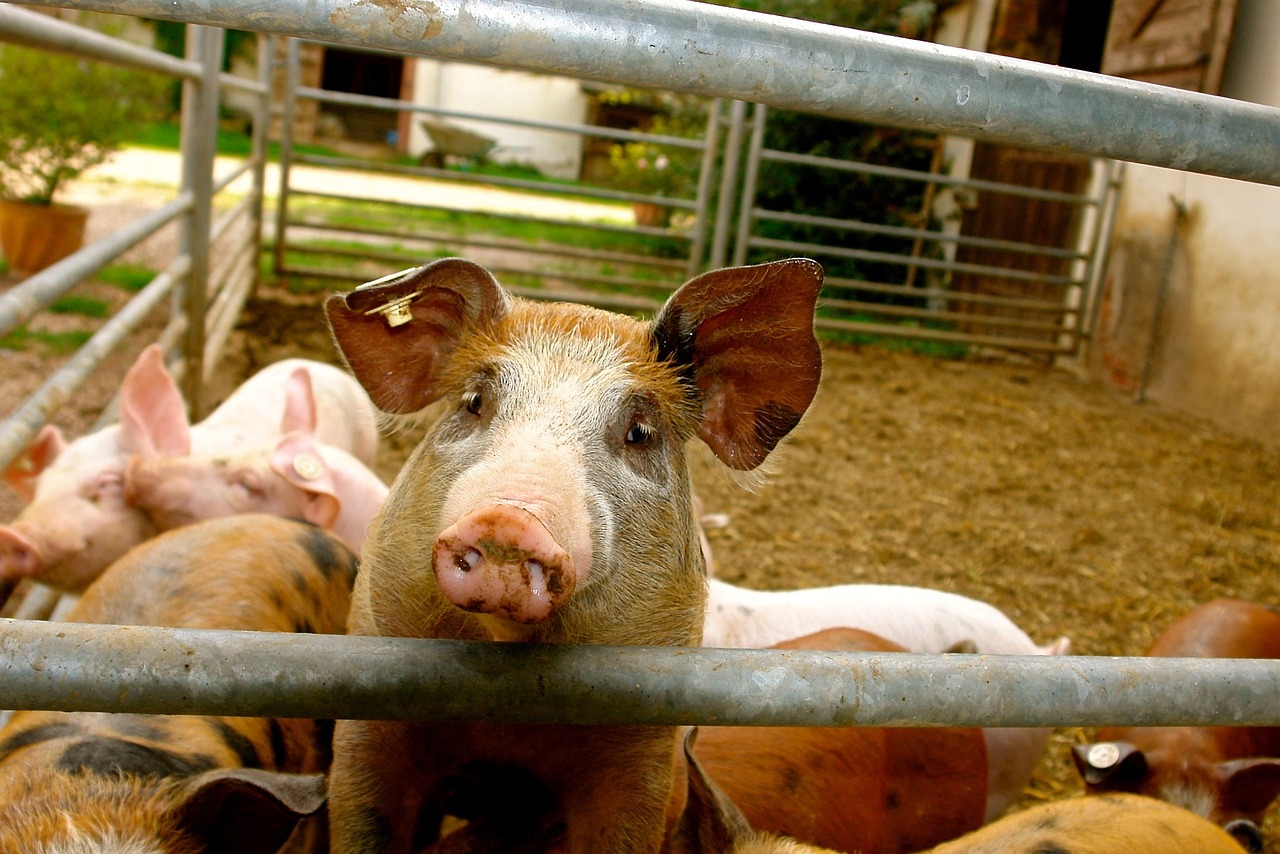
The U.K. Health Security Agency (UKHSA) announced today that it has detected a confirmed human case of influenza A(H1N2)v, known as swine flu.
Influenza A(H1) viruses are enzootic in swine populations in most regions of the world. There have been a total of 50 human cases of influenza A(H1N2)v reported globally since 2005.
In August 2023, the U.S. confirmed a human infection with a novel influenza A(H1N2) variant virus in Michigan.
This is the first Influenza A(H1N2)v detection of this flu strain in a human in the U.K.
The individual concerned experienced a mild illness and has fully recovered.
The individual was tested by their G.P. after experiencing respiratory symptoms. Influenza A(H1N2)v virus was detected by UKHSA using polymerase chain reaction testing and characterized using genome sequencing.
The source of their infection has not yet been ascertained and remains under investigation. Close contacts of the case are being followed up by UKHSA and partner organizations.
Any contacts will be offered testing as necessary and advised on any necessary further care if they have symptoms or test positive.
The case was detected as part of routine national flu surveillance undertaken by UKHSA and the Royal College of General Practitioners.
Chief Veterinary Officer Christine Middlemiss commented in a press release on November 27, 2023, "We know that some diseases of animals can be transferred to humans – which is why high standards of animal health, welfare, and biosecurity are so important."
"In this case, we are providing specialist veterinary and scientific knowledge to support the UKHSA investigation. Pig keepers must also report any suspicion of swine flu in their herds to their local vet immediately."
As of 2023, the U.S. FDA and the U.K have not approved a swine flu vaccine.
While the World Health Organization (WHO) Influenza Update N° 456 says respiratory syncytial virus (RSV) activity was generally low or decreasing globally, new data indicates the United States is seeing measurable increases.
The U.S. Centers for Disease Control and Prevention (CDC) RSV detection graphs showed increases throughout the U.S. as of October 27, 2023.
The National Respiratory and Enteric Virus Surveillance System (NREVSS) reports that the weekly percentage of RSV polymerase chain reaction (PCR) test positivity was 10.9% as of October 21, 2023.
During the 2022–2023 RSV season, positive test results peaked in November.
From an age perspective, the Weekly Emergency Department Visits chart clearly indicates that the most affected by this RSV season have been children under one-year-old.
In 2022, the JAMA Network conducted an Original Investigation that found 96 (95% CI, 92-99) RSV deaths among children younger than one year. And a study published by the Journal of Infectious Diseases determined that RSV-related deaths in infants <1 year peaked at about one month.
Furthermore, a meta-analysis of eleven studies published in October 2023 found that the meta-estimate of RSV-positive tests among pregnant women was 3.4% (95% CI: 1.9; 54).
According to the CDC, RSV has geographic trends in the U.S.
Florida's RSV season is longer than the rest of the country and has distinct regional patterns.
The Florida Department of Health reported as of week #42, October 21, 2023, RSV activity was increasing in hospital admissions and emergency room rates, with current outbreaks in Martin (1), Pinellas (2), and Volusia (1).
Fortunately, for the first time, there are approved RSV vaccines and passive immunizations available in the U.S. this season.


While there are no approved human vaccines for Lyme disease, results from a new study show a booster dose can produce a strong immune response in children, adolescents, and adults.
France-based Valneva SE and Pfizer Inc. today announced positive pediatric and adolescent immunogenicity and safety data for their Lyme disease vaccine candidate, VLA15, when given as a booster.
The VLA15-221 Phase 2 clinical trial showed a strong anamnestic antibody response for all serotypes in pediatric (5 to 11 years of age) and adolescent participants (12 to 17 years of age), as well as in adults (18 to 65 years of age), one month after administration of a booster dose (month 19).
Depending on the primary vaccination schedule (month 0-2-6 or month 0-6), participants seroconverted after the booster dose, yielding seroconversion rates of 95.3% and 94.6% for all outer surface protein A (OspA) serotypes in all age groups, respectively.
Additionally, OspA antibody titers were significantly higher one month after the booster dose compared to one month after the primary schedule, with 3.3- to 3.7-fold increases (Geometric Mean Fold Rises) in adults, 2.0- to 2.7-fold increases in adolescents and 2.3- to 2.5-fold increases in children for all serotypes.
“Protection against Lyme disease is important for anyone who lives or spends time outdoors in areas where Lyme disease is endemic. This data from the VLA15-221 study is vital to improve our understanding of how vaccination may help to protect both adults and children from this potentially devastating disease,” commented Annaliesa Anderson, Ph.D., Senior Vice President and Head of Vaccine Research and Development at Pfizer, in a press release on September 7, 2023.
These results follow six-month antibody persistence data in children and adults reported for the VLA15-221 study in December 20222 and positive immunogenicity and safety data reported in April 20223.
Pfizer aims to submit a Biologics License Application to the U.S. Food and Drug Administration and a Marketing Authorisation Application to the European Medicines Agency in 2026, subject to positive Phase 3 data.

The Lancet Infectious Diseases recently published results from a phase 1 clinical trial of a Lyme disease vaccine candidate, showing that Valneva's VLA15 produces a strong but waning immune response against six common strains of the Borrelia burgdorferi bacterium found in Europe and the United States.
Valneva Austria researchers led this company-sponsored, partially randomized, observer-masked study of the novel, multivalent outer surface protein A (OspA) subunit vaccine candidate.
OspA is one of the most dominant surface proteins expressed by the bacteria when present in a tick.
VLA15 produced immune responses for all strains, but responses were greater in the higher-dose adjuvanted groups. And one month after the third dose, responses declined, reaching baseline by one year.
And a booster dose given 13 months after the first dose triggered a strong immune response for about six months.
This study's findings are good news since Lyme borreliosis is the most common tick-borne disease in the northern hemisphere.
In Europe, there are estimated to be more than 200,000 cases each year. And in the U.S., approximately 30,000 patients per year.
In a related commentary also published by The Lancet, Nicole Bézay, and colleagues reported Valneva's novel vaccine represents a milestone in our fight against Lyme disease."
Initially developed by France-based Valneva SE, New York-based Pfizer, Inc. is VLA15's current development and commercialization collaboration.
Pfizer previously indicated it could submit a Biologics License Application in 2025 and Marketing Authorization Application in Europe in 2026, subject to positive data.



Atea Pharmaceuticals, Inc. today announced that the U.S. Food and Drug Administration granted Fast Track designation to bemnifosbuvir for treating COVID-19.
Bemnifosbuvir (AT-527) is an oral, direct-acting antiviral drug candidate, a nucleotide polymerase inhibitor that targets the SARS-CoV-2 RNA polymerase, a highly conserved gene that is unlikely to change as the coronavirus mutates and variants continue to emerge.
Recent in vitro data confirmed that bemnifosbuvir is active with similar efficacy against all variants of concern and variants of interest that have been tested, including Omicron subvariants BA.4 and BA.5.
Bemnifosbuvir is being evaluated in the global Phase 3 SUNRISE-3 registrational trial for the treatment of COVID-19 in outpatients at high risk for disease progression regardless of vaccination status.
This evaluation includes patients over the age of 80, patients 65 years or older with at least one major risk factor, and anyone over the age of 18 who is immunocompromised.
Jean-Pierre Sommadossi, Ph.D., Chief Executive Officer and Founder of Atea Pharmaceuticals, commented in a press release on April 25, 2023, "Due to the limitations of current antiviral treatments, including drug-drug interactions and potential risks for genotoxicity and reproductive toxicity, as well as the ability of the virus to evade vaccines and monoclonal antibodies, new treatment options are urgently needed."
CoronavirusToday publishes COVID-19 antiviral and antibody therapy news.