Search API
A pertussis (whooping cough) outbreak has once again been reported in the Argentine Republic.
As of mid-October, data up to Epidemiological Week 41 confirm that the Argentine health ministry reported 333 cases of whooping cough in the country. The confirmed cases for the year are distributed across 17 jurisdictions.
The region with the highest number of cases is the Central Region, where 260 cases were reported, of which 167 correspond to the province of Buenos Aires and 50 to the Autonomous City of Buenos Aires.
The Southern Region follows, with 58 cases registered within the framework of the outbreak currently affecting the city of Ushuaia in Tierra del Fuego.
The highest cumulative incidence during the 2025 outbreak has been recorded in Tierra del Fuego, which is located in the southern area.
This number exceeds the confirmed cases reported for the same period in 2021, 2022, and 2023.
Given its high contagiousness, the Ministry of Health is currently working with provincial authorities to ensure timely care for people with acute respiratory illness symptoms and their close contacts, to limit the spread of the disease.
The Ministry says it is essential to keep in mind that vaccination is the primary prevention strategy and one of the most effective interventions for reducing morbidity and mortality in infants and other vulnerable groups.
Pertussis is included in Argentina's National Immunization Schedule.
As of October 21, 2025, the U.S. CDC states international travelers should check the vaccines and medicines list and visit their healthcare provider at least a month before visiting Argentina, a country with about 45 million residents, which is located in the southern area of South America.

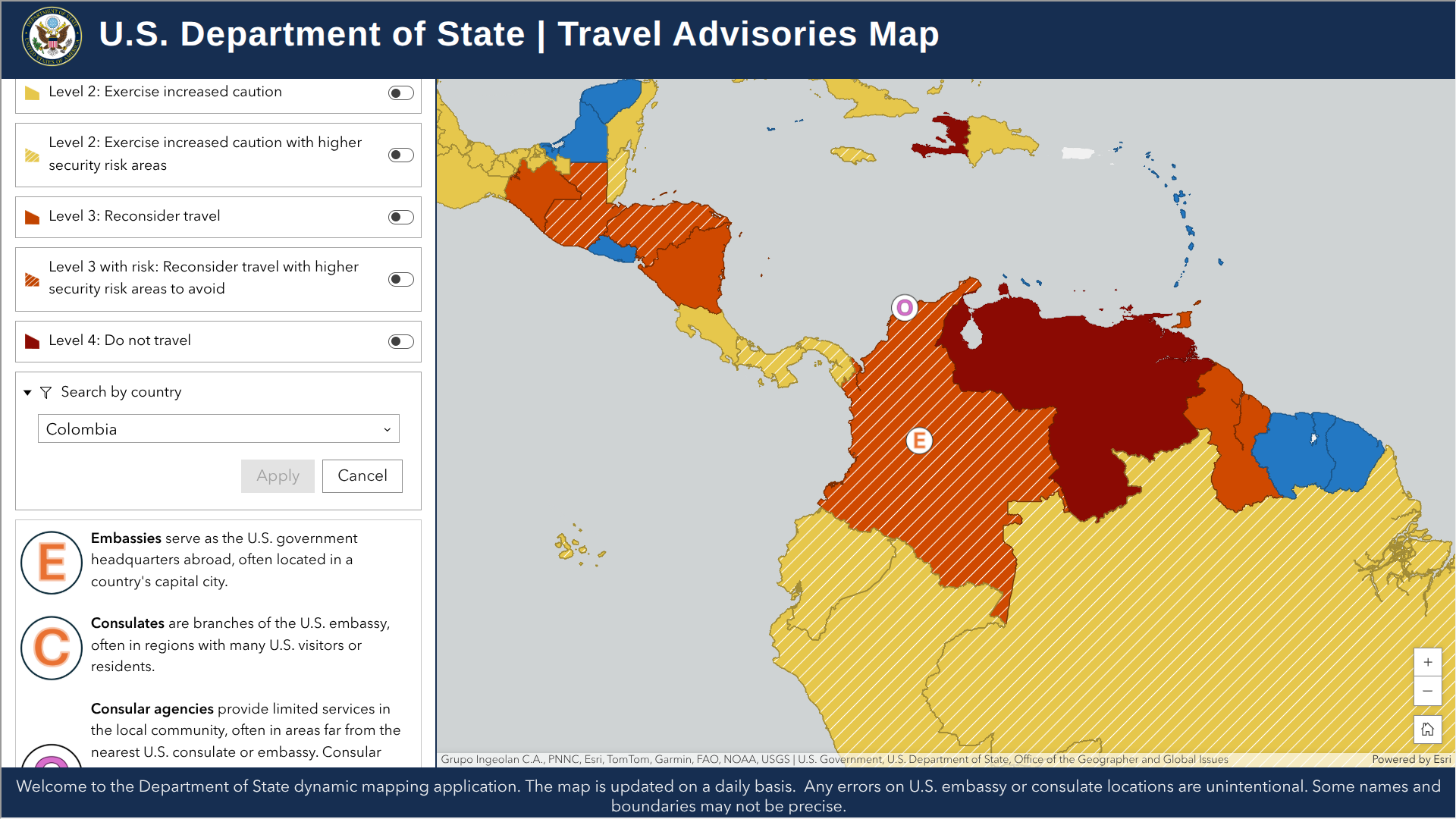
Two United States agencies recently updated travel advisories focused on discouraging international travelers from visiting the Republic of Colombia this year.
From a health perspectovem the U.S. Centers of Disease Control and Prevention (CDC) published a Level 2 Travel Health Notice in September 2025, stating there is an increased number of mosquiteo-transmitted yellow fever cases in Colombia.
According to a Facebook post, as of October 19, 2025, a total of 136 confirmed yellow fever cases (60 deaths), have been reported in Colombia during 2024/25. The majority of cases have been reported in Tolima Department with 116 cases and 45 deaths.
The CDC has also included Colombia in its Level 1 dengue and measles notices in 2025.
The CDC advices everyone planning a visit to Colombia speak with a travel vaccine expert about their immuinzation options before departing abroad.
Seperately, the U.S Department of State has issued a Level 3, Reconsider travel to Colombia due to crime, terrorism, civil unrest, and kidnapping.
The State Department advices visitors to not visit Arauca, Cauca (excluding Popayán), and Norte de Santander departments due to crime and terrorism. And anywhere near the Colombia-Venezuela border region.
If you do visiting Colombia in 2025, the government suggests enrolling in the Smart Traveler Enrollment Program to receive digital messages from the U.S. Embassy in Bogota and make it easier to locate you in an emergency.
The UK Health Security Agency and the Centre for Climate and Health Security recently reconfirmed that there are approximately 20 species of ticks that are endemic to the United Kingdom (UK).
As of October 7, 2025, the data presented on the UKHSA dashboard focuses specifically on the Ixodes ricinus tick, commonly known as the sheep tick, castor bean tick, or deer tick. These ticks feed on humans and are the primary vector for the bacterial infection Lyme disease in the U.K.
Annually, disease carrying ticks generally peak between May and June.
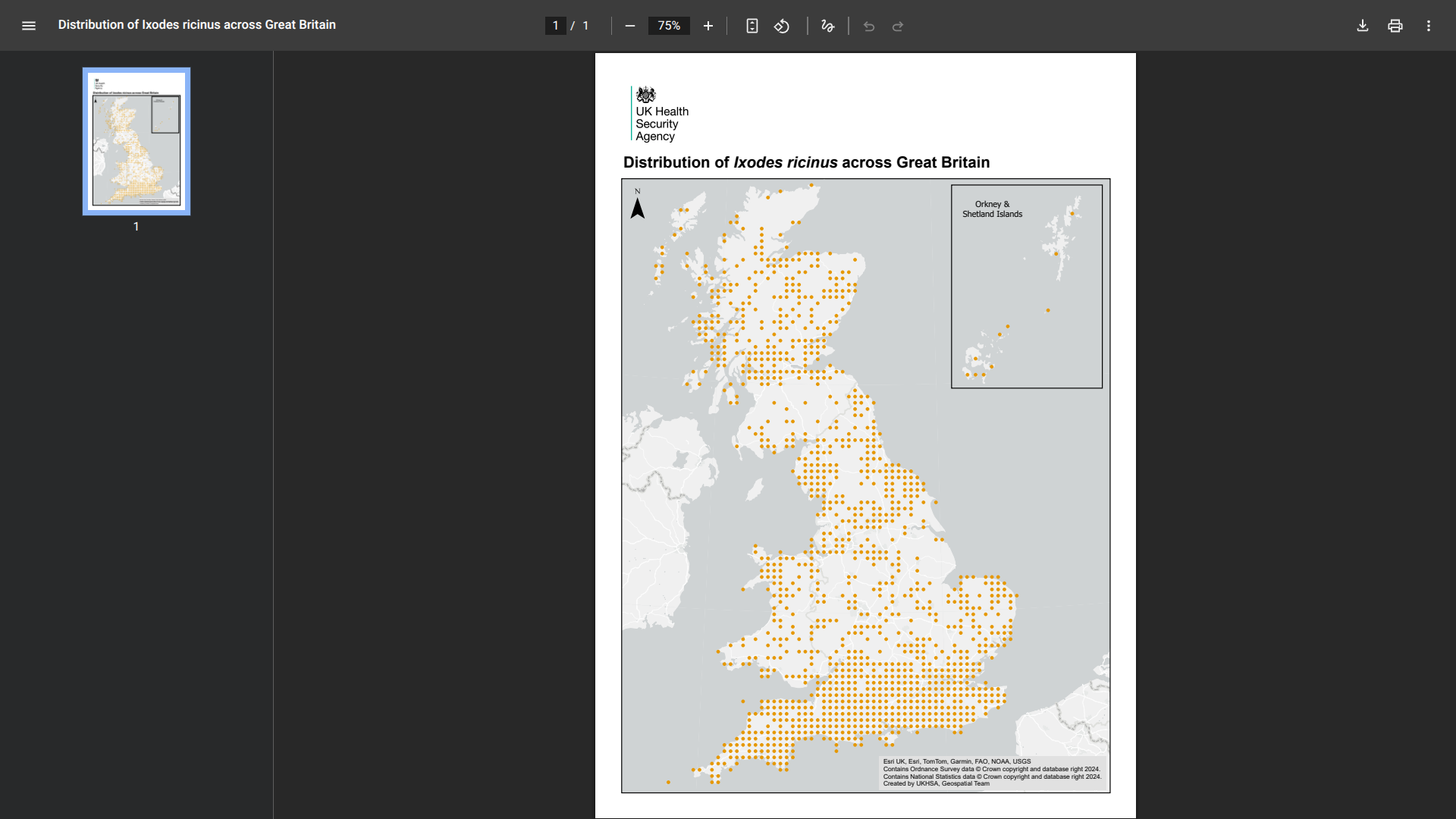
This UKHSA map shows the distribution of the tick Ixodes ricinus across Great Britain. The tick has a wide distribution from southern England up to northern Scotland including the offshore islands of Wales and Scotland.
Although not present everywhere, the map shows greater coverage of presence records across all areas of southern England below a line from the Severn to the Thames, with areas of tick presence in East Anglia, North Yorkshire Moors, the Lake District and North Wales.
In Scotland, the tick is present is most of the Highland Glens, as well as part of Galloway and the Outer Hebrides.
The Tick Surveillance Scheme was set up in 2005 to map and monitor ticks across the UK.
While there are no Lyme disease vaccines available for people in 2025, an innovative vaccine candidate (VLA15) is making progress in phase 3 clinical research.
The last Ebola Zaire patient in the Democratic Republic of the Congo (DRC) was recently discharged, marking a milestone in the efforts to end the this African country's 16th outbreak.
If no new cases are detected, this Ebola outbreak will be declared over in early December 2025.
In total, 64 cases (53 confirmed and 11 probable) have been reported since the outbreak was declared in Bulape health zone, in Kasai Province.
According to the World Health Organization (WHO), despite the challenges of distance, poor roads, and limited infrastructure, the Ministry of Health, with strong support from partners, acted swiftly to scale up outbreak response measures.
For example, more than 35,000 people have been vaccinated against Ebola in Bulape.
"The recovery of the last patient just six weeks after the outbreak was declared is a remarkable achievement that shows how strong partnership, national expertise, and determination have contributed to overcoming challenges to save and protect lives," said Dr. Mohamed Janabi, WHO Regional Director for Africa, in a press release on October 19, 2025.
In mid-September, the U.S. Centers for Disease Control and Prevention (CDC) issued Health Alert Network Health Advisory CDCHAN-00524 stating that the risk of Ebola spread to the United States is currently considered low.
The CDC says the ERVEBO® vaccine is approved for preventing the Ebola Zaire virus disease. However, it should only be given to people who meet specific criteria, such as visiting an outbreak zone.
Additionally, two approved treatments treat Ebola virus infection: Inmazeb™ and Ebanga™.
The Los Angeles County Department of Public Health (LACDPH) recently announced it is investigating the first case of locally acquired dengue fever in a resident of the San Gabriel Valley.
The infected person reported no history of travel to areas where the mosquito-transmitted dengue virus is endemic, such as Mexico or Central America.
As of October 15, 2025, the LACDPH stated 'while the potential risk for widespread dengue virus transmission in Los Angeles County remains low, this case highlights the presence of infected mosquitoes locally and underscores the importance of preventive measures to control the spread of this virus.'
LA's first confirmed case of locally acquired dengue was reported in September 2024.
During the 2024 mosquito season in LA County, between July and November, a total of 14 cases were confirmed, which is extremely rare for a region where mosquitoes had not previously transmitted the virus.
"Dengue is preventable, and community action is our strongest defense. Preventing mosquito bites and mosquito breeding is the best way to stop local transmission of dengue," said Muntu Davis, MD, MPH, Los Angeles County Health Officer, in a press release.
"People should follow these simple steps to reduce their exposure to mosquitoes and risk for mosquito bites: 1) Use insect repellent on you and your family; 2) Remove items that hold standing water around your home where mosquitoes can lay eggs and breed; and 3) Use, install, or repair window and door screens to prevent mosquitoes from entering your home," stated Dr. Davis.
The County stated San Gabriel Valley residents who have symptoms of dengue should see their healthcare provider, as a blood test is the only way to confirm dengue infection.
The San Gabriel Valley is located just east of the City of LA.
Similar to Florida, where local cases of dengue have been confirmed along the southeast coast in 2025, LACDPH urges healthcare providers to consider dengue in patients with acute febrile illness and test for and report suspect cases of mosquito-borne diseases.
As of October 19, 2025, dengue vaccines are only available in Puerto Rico and various countries outside the United States.

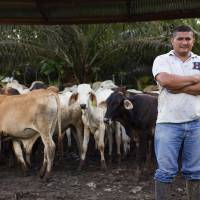
According to the European Center for Disease Prevention and Control, chikungunya is not endemic in mainland EU/EEA. However, since the beginning of 2025, and as of mid-October 2025, two countries in Europe have reported cases of the mosquito-transmitted chikungunya virus disease: France (734) and Italy (364).
Furthermore, in the Communicable disease threats report, week 42, during the past week, France has reported 34 new locally acquired cases of chikungunya virus disease, and Italy has reported 11.
In Italy, chikungunya cases were confirmed in Carpi, San Prospero, Soliera, Novellara, Cavezzo, Modena, Nonantola, Correggio, Novi di Modena, and Cesenatico.
As of October 19, 2025, the U.S. CDC has not issued a Travel Health Notice regarding Italy's chikungunya outbreak, but the agency does say all travelers to Italy should take steps to prevent mosquito bites.
When departing from the USA abroad, chikungunya vaccines are commercially offered at various travel pharmacies.
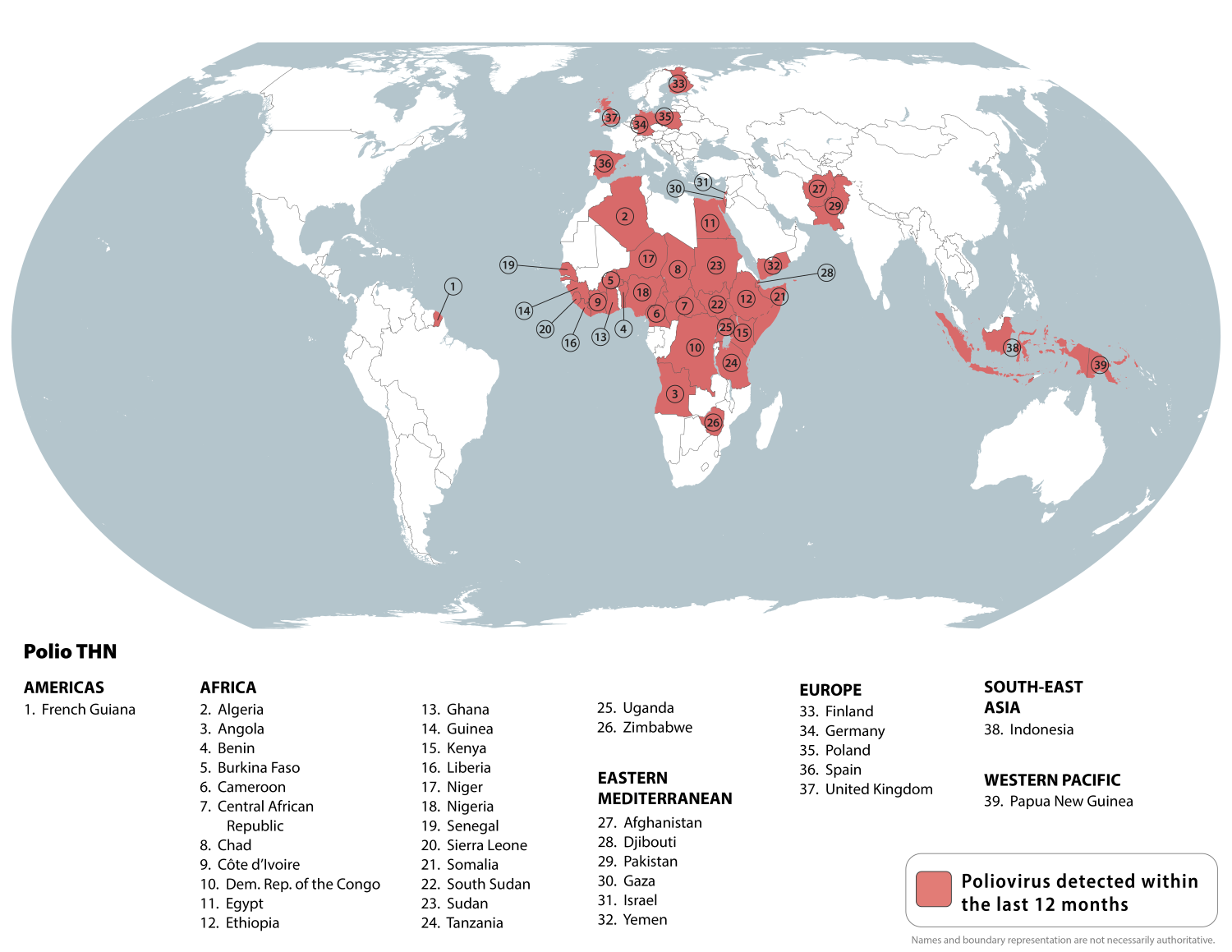
When the U.S. CDC reissued a Level 2 - Practice Enhanced Precautions, Travel Health Notice in August 2025, it identified 39 countries at-risk for the spread of poliovirus.
According to recent reports, polio cases continue to be reported this year.
As of October 16, 2025, the Global Polio Eradication Initiative (GPEI) confirmed five new polio cases over the past week.
One wild poliovirus type 1 (WPV1) case in Afghanistan (Uruzgan) and vaccine-derived cases in Nigeria (2), Angola (1), and Laos (1).
With the latest case, Afghanistan now has seven WPV 1 cases in 2025, after confirming 25 for all of 2024.
Nigeria's cases of circulating vaccine-derived poliovirus type 2 are now at 37 for the year, while Angola has 12.
Additionally, the GPEI also published an action plan on polio.
The 2026 Action Plan, developed through extensive consultation and grounded in the latest data, sets out how GPEI will focus activities where they will have the most significant impact, making deliberate, sometimes challenging choices to minimize risk, safeguard hard-won gains, and maintain progress toward a polio-free world.
Both the GPEI and the CDC say polio is a vaccine-preventable disease.
As of October 18, 2025, the CDC recommends that before any international travel, you make sure you are up to date on your polio vaccines, which are available at travel clinics and pharmacies in the USA.