Search API

0 min read

It has been about three decades since the U.S. Food and Drug Administration approved the first monoclonal antibody. Since then, antibody engineering has dramatically evolved. 

The recent pandemic was the first time monoclonal antibody-based therapies were produced in significant quantities to combat a new infectious disease. Globally, clinics administered hundreds of thousands of antibody injections over the first two years of the pandemic.

Antibody therapy worked... until it didn't.

The U.S. CDC says the infectious virus's rapid evolution outpaced the benefits derived from antibodies.

According to Michael Dumiak's article published by IAVI on April 25, 2024, this experience and other issues have researchers assessing the future of antibody therapies for treating or preventing infectious diseases, including some of the most complicated pathogens, such as HIV and antibiotic-resistant bacteria.

A potential application is blocking mother-to-child transmission of HIV during birth and through the breastfeeding period.

"We are in the position that if you want more antibodies for infectious disease, you need to be very cautious," says Rino Rappuoli, scientific director of the Biotecnopolo di Siena Foundation in Italy.

The unedited, complete IAVI article is posted at this link.

Note: As of May 5, 2024, the U.S. FDA has not approved an HIV vaccine candidate.

Vaccine Treats: 
Image: 
Image Caption: 
by Jimmy Ho
Live Blog Update Author: 
Location Tags: 
Vaccine: 
Include in VBT newsletter: 
0 min read

Although antiretroviral treatment (ART) can help manage the impact of the Human Immunodeficiency Virus (HIV), it is not a cure. People living with HIV need to take the treatment for their entire lives to suppress viral replication and protect their immune systems.

To address this clinical need, ACTG, a global clinical trials network focused on HIV and other infectious diseases, today announced the opening of A5374, a phase 1/2a study evaluating the safety, tolerability, and antiviral effect of a novel combination regimen that includes therapeutic T-cell vaccines, two broadly neutralizing antibodies (3BNC117-LS, 10-1074-LS), and an immune-system boosting treatment among people living with HIV who started ART during acute HIV infection.

This study hypothesizes that this combination regimen will be safe and result in a more extended period of viral control during a closely monitored pause in ART (known as an analytic treatment interruption) compared to placebo.

The approach being studied in A5374 is part of a potential path toward enabling the immune system to manage HIV in the absence of ART for weeks or months.

“We expect that controlling HIV in the absence of ART will require a combination of novel treatments to decrease the number of cells harboring HIV and simultaneously stimulate the immune system to keep the virus from replicating,” said ACTG Chair Judith Currier, M.D., M.Sc., University of California Los Angeles in a press release.

“A5374 is a pivotal trial, and we hope it will provide us with important insights into how to boost the immune system to control HIV.”

ACTG says carefully monitored analytic treatment interruptions are an essential part of HIV cure clinical trials. They can help determine whether a research intervention can reduce latent HIV (HIV that is “hidden” in different cells and tissues but not replicating) or increase immune function and delay or prevent latent HIV from actively replicating.

While there are no U.S. FDA-approved HIV prevention vaccines today, clinical development accelerated in 2023, with vaccine candidates utilizing innovative technologies such as mRNA.

Vaccine Treats: 
Image: 
Image Caption: 
ACTG is the largest HIV clinical trials network
Live Blog Update Author: 
Location Tags: 
Vaccine: 
Include in VBT newsletter: 
mpox
JYNNEOS vaccine is effective against mpox Clade 2
vaccine travel alert 2024
DRC outbreaks include cholera, measles, mpox, dengue, yellow fever in 2024.
BCG vaccine
US FDA approved BCG vaccine prevents tuberculosis in 2024
yellow fever vaccine
Yellow fever vaccination required for many travelers in 2024

MTBVAC Tuberculosis Vaccine

MTBVAC Tuberculosis Vaccine Clinical Trials, Dosage, Indication, Side Effects

Biofabri, S.L. MTBVAC (BBV169) is a live-attenuated M. tuberculosis (TB) vaccine candidate that has been evaluated in Phase 3 clinical trials. MTBVAC is the first vaccine against TB derived from a human source and has demonstrated safety, efficacy, and immunogenicity in preclinical and clinical studies. MTBVAC was designed by the research group of Dr. Carlos Martín Montañés from the Department of Microbiology at the University of Zaragoza, Spain, and Brigitte Gicquel from the Institut Pasteur, Paris. This vaccine is designed to provide improved efficacy compared to the 100-year-old Bacille Calmette-Guérin (BCG) vaccine, which is used for TB treatment. MTBVAC is the only vaccine against TB in clinical trials based on a genetically modified form of the pathogen, Mycobacterium tuberculosis, isolated from humans. Unlike BCG, it contains all the antigens present in strains that infect humans.

MTBVAC is based on a rationally attenuated M. tuberculosis clinical isolate belonging to modern lineage four that conserves most of the T cell epitopes described for TB, including the antigens ESAT6 and CFP10 of the RD1, while incorporating two independent stable genetic deletions of the phoP and fadD26 genes. MTBVAC stimulates specific immune responses that mimic natural tuberculosis infection without causing disease. A uniquely attenuated M. tuberculosis strain was generated by genetic engineering, with an antigen repertoire similar to that of virulent M. tuberculosis and containing known human T cell epitopes present in M. tuberculosis but absent in BCG.

In a phase 1/2 study, MTBVAC had acceptable reactogenicity and induced a durable CD4 cell response in infants. MTBVAC completion of Phase 2 dose-finding trial and a double-masked, controlled Phase 3 clinical trial in newborns started in 2023, comparing the vaccine with the current BCG vaccine. Bharat Biotech International Limited, in collaboration with Biofabri, has begun a series of clinical trials to evaluate the safety, immunogenicity, and efficacy of MTBVAC in India.

On February 26, 2025, IAVI and Biofabri announced that the first doses of MTBVAC were administered in the IMAGINE (Investigation of MTBVAC toward Accelerating Global Immunization for a Neglected Epidemic) Phase 2 clinical trial. The trial's first participants were vaccinated at Be Part Research Limited in Paarl, South Africa. The IMAGINE trial is a large-scale safety and efficacy clinical trial of the TB vaccine candidate MTBVAC. The study is funded by Open Philanthropy, the Bill & Melinda Gates Foundation, and the German Federal Ministry of Education and Research through the KfW Development Bank. Results are expected to be published in 2025. If MTBVAC is shown to be efficacious, Biofabri, IAVI, and other partners will collaborate to ensure a sufficient and affordable supply of MTBVAC is available for low- and middle-income countries.

Biofabri was founded in 2008 and is part of Zendal, a Spain-based biopharmaceutical group comprising seven companies focused on researching, developing, manufacturing, and marketing high-value-added products in the healthcare industry. MTBVAC was designed by the Spanish researcher Carlos Martin from the University of Zaragoza and Brigitte Gicquel, Ph.D., of Institut Pasteur.

MTBVAC Vaccine Indication

MTBVAC is being developed for two purposes: as a more effective, potentially longer-lasting vaccine than BCG in newborns, and to prevent TB disease in adults and adolescents, for whom there is currently no effective vaccine. Tuberculosis is an infectious disease caused by the bacterium Mycobacterium tuberculosis (M. tuberculosis). M. tuberculosis in inhaled droplets enters the alveolar passages of exposed humans, contacting resident cells, and is ingested by the alveolar macrophages.

MTBVAC Vaccine News

February 26, 2025 - Lewis Schrager, M.D., head of IAVI's TB vaccine development efforts, stated in a press release, "Because MTBVAC is a single-shot vaccine, we are hopeful that, if proven effective, MTBVAC could prevent millions of cases of TB disease, particularly in persons living in some of the world's most difficult-to-reach locations."

March 23, 2024 - Bharat Biotech International Limited, in collaboration with Biofabri, has started a series of clinical trials to evaluate the safety, immunogenicity, and efficacy of MTBVAC in India.

December 18, 2023 -  IAVI and Biofabri announced that the Bill & Melinda Gates Foundation has awarded IAVI US$55 million to conduct a Phase IIb trial assessing the safety and efficacy of the MTBVAC vaccine.

January 4, 2021 - Article - MTBVAC vaccination protects rhesus macaques against aerosol challenge with M. tuberculosis and induces immune signatures analogous to those observed in clinical studies.

January 2016 - The MTBVAC vaccine is safe and immunogenic and confers protective efficacy against Mycobacterium tuberculosis in newborn mice.

MTBVAC Vaccine Clinical Trials

Two Phase 2 trials of MTBVAC have been completed, one sponsored by Biofabri and supported by the European and Developing Countries Clinical Trials Partnership in infants in South Africa, and one hosted by IAVI and supported by the U.S. National Institutes of Health and the U.S. Department of Defense through its Congressionally Directed Medical Research Program.

In India, Phase 2 Clinical Trial Protocol [BIO/CT/24/000042] for the Mycobacterium Tuberculosis (Live Attenuated) Vaccine. As of March 30, 2024, the revised Phase II protocol should be submitted to CDSCO for approval.

A phase 3 trial (NCT04975178) is underway to evaluate the efficacy, safety, and immunogenicity of MTBVAC compared to BCG in healthy, HIV-unexposed, and HIV-exposed uninfected newborns in tuberculosis-endemic regions of sub-Saharan Africa. This randomized, double-blind, controlled trial aims to enroll 7120 newborns who have not received BCG vaccination and have not been exposed to Mycobacterium tuberculosis. The trial is being conducted at six sites, including four in South Africa, one in Madagascar, and one in Senegal.

A Phase 2 study in HIV-infected adults started in 2024 to determine whether MTBVAC is safe in this population. This ongoing trial at 16 sites in South Africa – involving the vaccination of 276 adults – is evaluating safety and immunogenicity in HIV-negative and HIV-positive adults and adolescents vaccinated with MTBVAC. 

Phase 2b/3 trials in adolescents and adults are planned for 2025 in various regions worldwide.
0 min read
Generic: 
BBV169
Drug Class: 
Vaccine
Last Reviewed: 
Thursday, November 13, 2025 - 14:15
Brand: 
MTBVAC
Status: 
Manufacturer Country ID: 
FDA First In Class: 
Yes
Location tags: 
0 min read

According to the WHO Regional Office for Europe and the European Centre for Disease Prevention and Control, an estimated 229,000 people were diagnosed with tuberculosis (TB) in the European Region in 2022.

Of these cases, about 83% were reported with pulmonary TB.

Furthermore, there were approximately 18,000 TB-related deaths among HIV-negative individuals in the European Region in 2022.

This represents a 6% increase in deaths compared to 2021.

In 2022, HIV prevalence in incident TB cases was estimated to be 12%, with an estimated 28,000 cases of co-infection in the Region. 

Also of concern are signs that the management of TB and HIV co-infection is suboptimal. Only 48% of patients with both TB and HIV in the WHO European Region who started TB treatment in 2021 had been cured. 

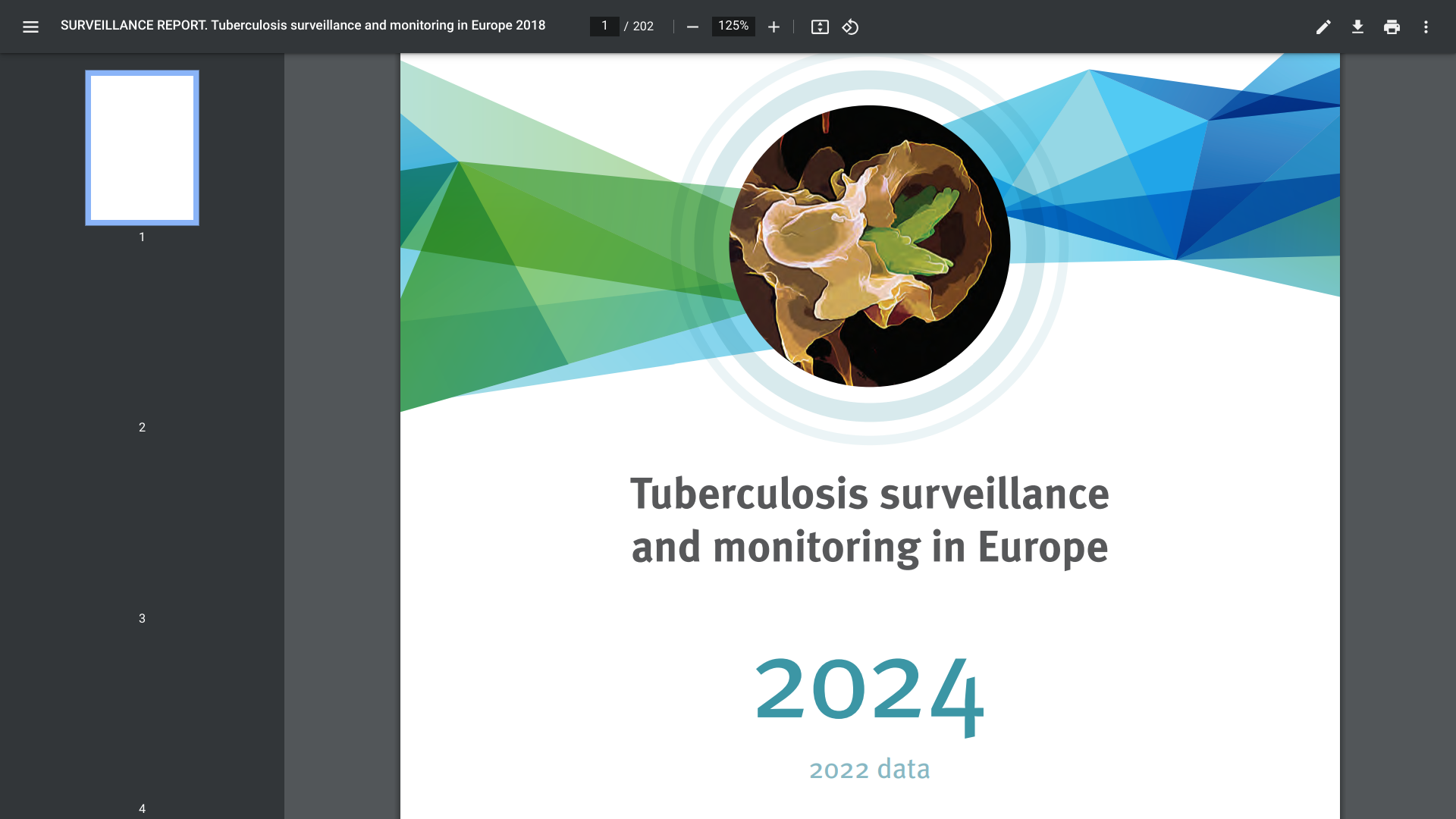
The TB surveillance and monitoring report published on March 21, 2024, also revealed that nearly 7,000 excess deaths from tuberculosis occurred in the WHO European Region between 2020 and 2022, compared to pre-2020 estimates.

This report stated that increased mortality was a direct result of the recent pandemic and would not have occurred if TB diagnosis and treatment efforts had not been disrupted during the pandemic.

To expedite efforts to reach the end TB targets, WHO and ECDC recommend scaling up initiatives to actively identify and treat missing cases of TB by strengthening TB testing, making preventive treatment options (vaccines) available to all those who need them, and implementing up-to-date, short, and fully oral treatment regimens.

Dr Hans Henri P. Kluge, Regional Director at WHO/Europe, commented in a press release, “The report also reveals another evolving, preventable tragedy - the prevalence of drug-resistant TB continues to rise. We urge national authorities to strengthen TB testing programs, diagnose promptly, and apply the latest WHO guidelines.”

Throughout Europe, versions of the TB-prevention Bacille Calmette-Guérin (BCG) vaccine remain available as of March 2024.

Vaccine Treats: 
Image: 
Image Caption: 
ECDC Tuberculosis Report 2024
Live Blog Update Author: 
Location Tags: 
Include in VBT newsletter: 
TB vaccine
M72/AS01E vaccine candidate has been in development since the early 2000
ACIP
Merck V116 is an investigational, 21-valent pneumococcal conjugate vaccine in Phase 3 development