Search API
The U.S. CDC recently published new guidance on Measles during the summer of 2023. Measles outbreaks are occurring in all World Health Organization regions.
Over the past year, measles outbreaks have been reported in the European, African, Eastern Mediterranean, Western Pacific, and Southeast Asian regions.
On June 21, 2023, Health Alert Network Health Advisory (CDCHAN-00493) offered guidance for measles prevention to international travelers and to be on alert for future measles cases in 2023.
The measles virus is contagious and easily spread while flying in an airplane or riding in buses or trains.
As of June 8, 2023, CDC has been notified of 16 confirmed U.S. measles cases across 11 jurisdictions, with 88% linked to international travel.
Based on current estimates, twice as many Americans are planning to travel internationally in 2023 compared with 2022. Many countries and popular travel destinations
To prevent measles infection and spread from importation, all U.S. residents should be up to date on their measles vaccinations, especially before international travel, regardless of the destination.
As of June 22, 2023, various measles vaccines are authorized worldwide.

The U.S. Centers for Disease Control and Prevention (CDC) recently confirmed an outbreak of extensively drug-resistant (XDR) typhoid fever continues to occur in 2023.
As of June 16, 2023, the CDC's Level 1 - Practice Usual Precautions notice says cases of XDR typhoid fever have been reported worldwide, mostly among travelers returning from Pakistan.
If you are visiting Pakistan or other countries in South Asia where typhoid is common, protect yourself by getting a typhoid fever vaccination before your trip.
In the U.S., two types of typhoid fever vaccines are available.
If you were vaccinated in the past, ask your doctor or pharmacist if it is time for booster vaccination, says the CDC.
And take extra care to follow safe food and water guidelines during your trip and wash your hands thoroughly with soap and water before eating or touching food.
Do not prepare food for others if you become ill.
If you get sick while traveling, seek medical care.
The strains (kind) of Typhi that cause XDR typhoid fever do not respond to most antibiotics used to treat the disease, says the CDC.
Visit Getting Health Care During Travel to learn how to connect with a doctor or medical services during your trip.
If you get sick after returning to the U.S., seek medical care, and tell your healthcare provider where and when you traveled.
As of June 21, 2023, typhoid fever vaccine news is posted by Vax-Before-Travel.

The U.S. Department of State recently issued two travel advisories that indicate Australia and New Zealand are prime destinations for a summer vacation in 2023.
This is essential news since the FIFA Women’s World Cup 2023 will occur across Australia and New Zealand in nine cities from July 20 through August 20, 2023.
On June 16, 2023, the State Department issued a Level 1: Exercise Normal Precautions notice for Australia.
And a similar travel advisory was issued for New Zealand.
Before visiting these countries in 2023, the U.S. government suggests enrolling in the Smart Traveler Enrollment Program to receive alerts during an emergency.
From a health perspective, dengue outbreaks are a risk in this area.
The U.S. CDC says to check the travel vaccines and medicines list and visit your healthcare provider at least a month before visiting these countries in 2023.

The U.S. CDC's Advisory Committee on Immunization Practices (ACIP) workgroup focused on polio and poliovirus today proposed updated guidance regarding vaccinations in the U.S.
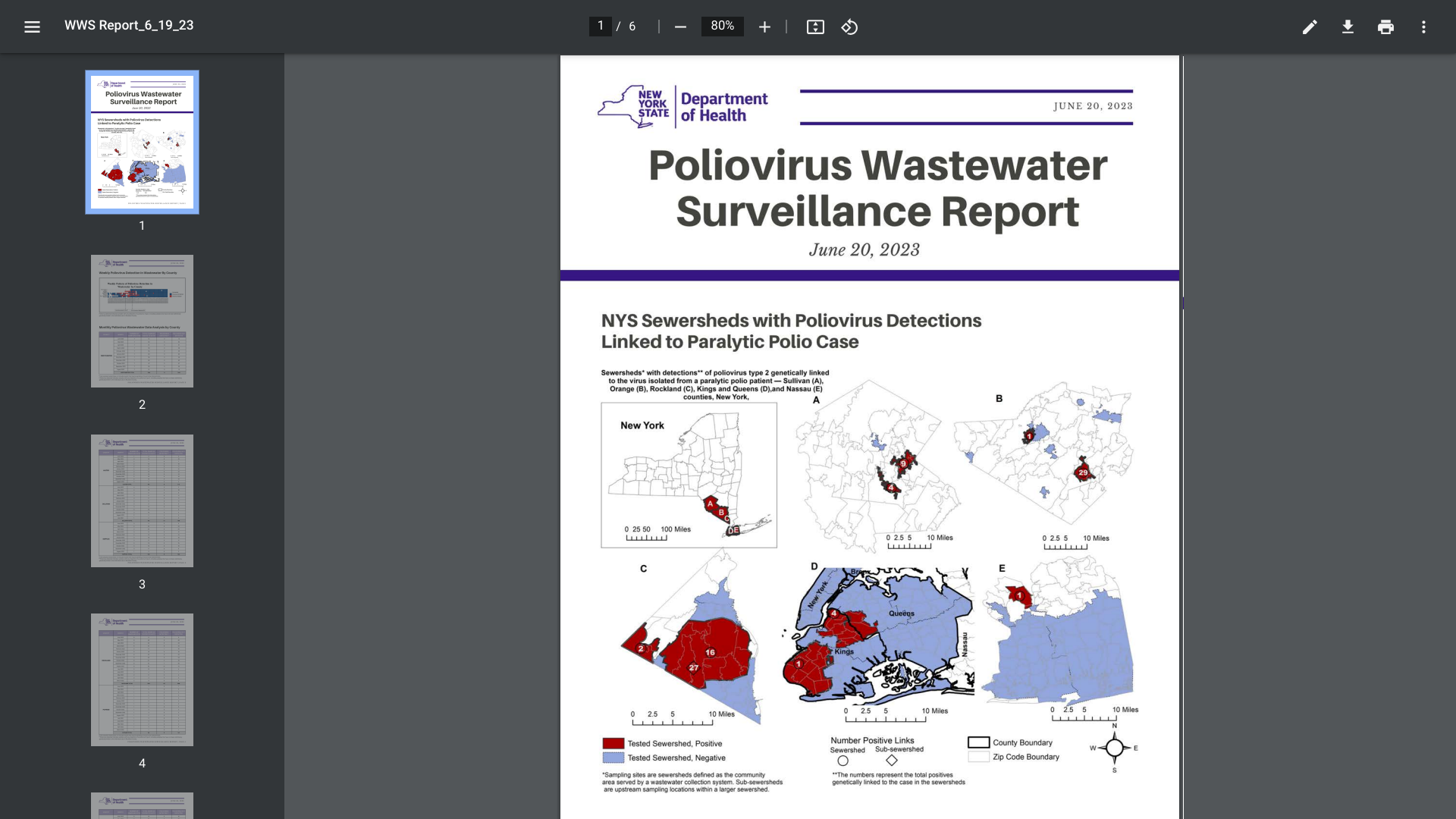
The ACIP began debate on updating its vaccination recommendation following one paralytic polio case in an unvaccinated adult in Rockland County, NY was confirmed in 2022.
Furthermore, wastewater testing confirmed poliovirus detections in several New York counties in 2022 and 2023.
The CDC stated this finding likely indicated about 1 to 2 thousand people in southern New York had mostly asymptomatic infections.
As of June 21, 2023, the ACIP committee is voting on this language: Adults who have received a primary series of tOPV or inactivated poliovirus vaccine (IPV) in any combination and are at increased risk of poliovirus exposure may receive another dose of IPV.
And the available data do not indicate the need for more than a single lifetime booster dose with IPV for adults.
Sanofi Pasteur's single-antigen Imovax Polio® (Ipol®) is a highly purified IPV with enhanced potency, says the U.S. FDA
Furthermore, this CDC guidance would apply to adults at increased risk of exposure to poliovirus, including travelers who are going to countries where polio is epidemic or endemic.
Globally, several countries have reported polio outbreaks in 2023. To alert international travelers, the CDC recently reissued a polio alert.
GSK plc today announced new data from the AReSVi-006 phase III trial evaluating the efficacy of a single dose of AREXVY™ against lower respiratory tract disease caused by the respiratory syncytial virus (RSV) in adults aged 60 years and older over multiple RSV seasons and after annual revaccination.
The results presented on June 21, 2023, show that one dose of AREXVY is efficacious against RSV-LRTD and severe LRTD over two full RSV seasons.
In a press release, Tony Wood, Chief Scientific Officer of GSK, stated, "These data show the efficacy of a single dose of our vaccine over two RSV seasons against RSV-LRTD, including in the populations most at risk due to age or underlying medical conditions."
"This reinforces our confidence in its potential to make a significant public health impact."
"We look forward to discussing these results with regulators and vaccine recommending bodies and collecting more data from the ongoing clinical development program."
As of June 2023, there are two approved RSV vaccines for older people in the U.S.
UPDATE - The ACIP voted to recommend AREXVY on June 21, 2023.

Brazil recently notified the World Health Organization (WHO) of a fatal laboratory-confirmed human case of infection with a swine-origin influenza A(H1N1) variant (v) virus in the state of Paraná.
The patient was a 42-year-old woman with underlying medical conditions who lived near a swine (pig) farm.
She developed a fever, headache, sore throat, and abdominal pain on May 1, 2023, and was hospitalized with a severe acute respiratory infection.
On May 4, the patient was admitted to the Intensive Care Unit, and she passed away on May 5, 2023.
Ongoing investigations reported that the patient did not have any direct contact with pigs, however, two of her close contacts worked at the swine farm.
The two contacts did not develop respiratory disease and tested negative for influenza.
To date, no human-to-human transmission associated with this case has been identified in Brazil.
This is the first human infection caused by an influenza A(H1N1)v virus reported in 2023 in Brazil and the third human infection reported in the state of Parana (2021 and 2022).
WHO assesses the risk of international disease spread through humans and/or community-level spread among humans posed by this event as low. The risk level will be amended if warranted by the investigations currently being conducted by national authorities.
As of June 20, 2023, there is no swine vaccine for Influenza A(H1N1)v infection currently licensed for use in humans.
And seasonal flu shots are generally not expected to protect people from influenza viruses that normally circulate in pigs.


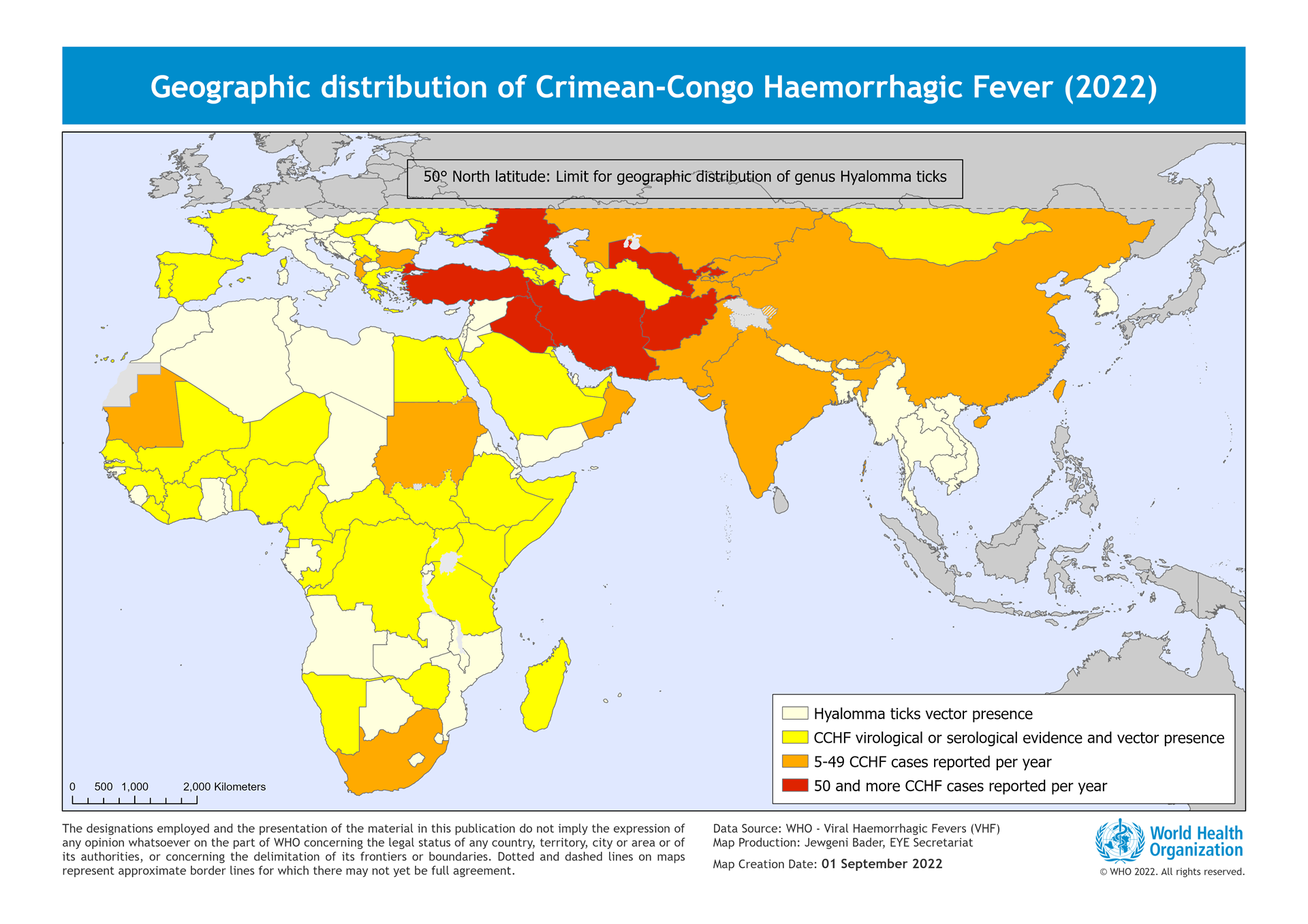
News18 recently reported the U.K.'s Science, Innovation, and Technology Committee was informed the Crimean-Congo hemorrhagic fever (CCHF) is highly likely heading in its direction, thanks to climate change.
We don't know what will arrive until it does, was a comment shared during the meeting on June 14, 2023.
Last year, the U.K. Health Security Agency confirmed a case of CCHF in England in a woman who had recently traveled to Central Asia. This was only the third case of CCHF imported to the U.K.
Outbreaks have been confirmed in Iraq, Namibia, and Pakistani in 2023. In Iraq, there were 219 confirmed cases of CCHF from January 2022 to late June 2022.
First described in the Crimean Peninsula in 1944, CCHF is endemic in all of Africa, the Balkans, the Middle East, and Asia, according to the World Health Organization (WHO).
The WHO says CCHF is a viral disease spread via ticks with a fatality rate of between 10 and 40%.
Human-to-human transmission of CCHF has been reported following close contact with blood, secretions, or other bodily fluids of infected persons. And cases have been reported among health workers caring for infected people.
Regarding preventive vaccines, the WHO published an overview of CCHF vaccine candidates.
And in March 2023, eBioMedicine published a study that supported further development of the ChAd platform expressing the CCHFV GPC to seek an effective vaccine against CCHFV.
In the U.K., no licensed human vaccine or approved medication targeting CCHF is available as of June 20, 2023.