Search API
When the U.S. Food and Drug Administration approved Pfizer Inc.'s ABRYSVO™ Respiratory Syncytial Virus vaccine on August 21, 2023, for use in pregnant women to prevent lower respiratory tract disease (LRTD) and severe LRTD caused by RSV in infants from birth through six months of age, it initiated questions regarding a previous FDA approval.
On July 17, 2023, the FDA approved AstraZeneca and Sanofi's Beyfortus™, a single-dose, long-acting monoclonal antibody (mAb) designed to protect children from LRTD through their first and second RSV season.
Beyfortus has been approved in Canada, Europe, Japan, and the United Kingdom.
With two RSV prevention solutions approved by the FDA, expecting mothers are seeking guidance on 'best practices.'
Hopefully, the U.S. CDC's Advisory Committee on Immunization Practices (ACIP) meeting on September 22, 2023, will add clarity to this clinical decision.
Led by Dr. Grace Lee (Chair) and Dr. Sarah Long (RSV Workgroup Chair), this ACIP's meeting agenda will review and opine on preferred recommendations regarding RSV prevention for pregnant women.
Another consideration is 'when' to become immunized.
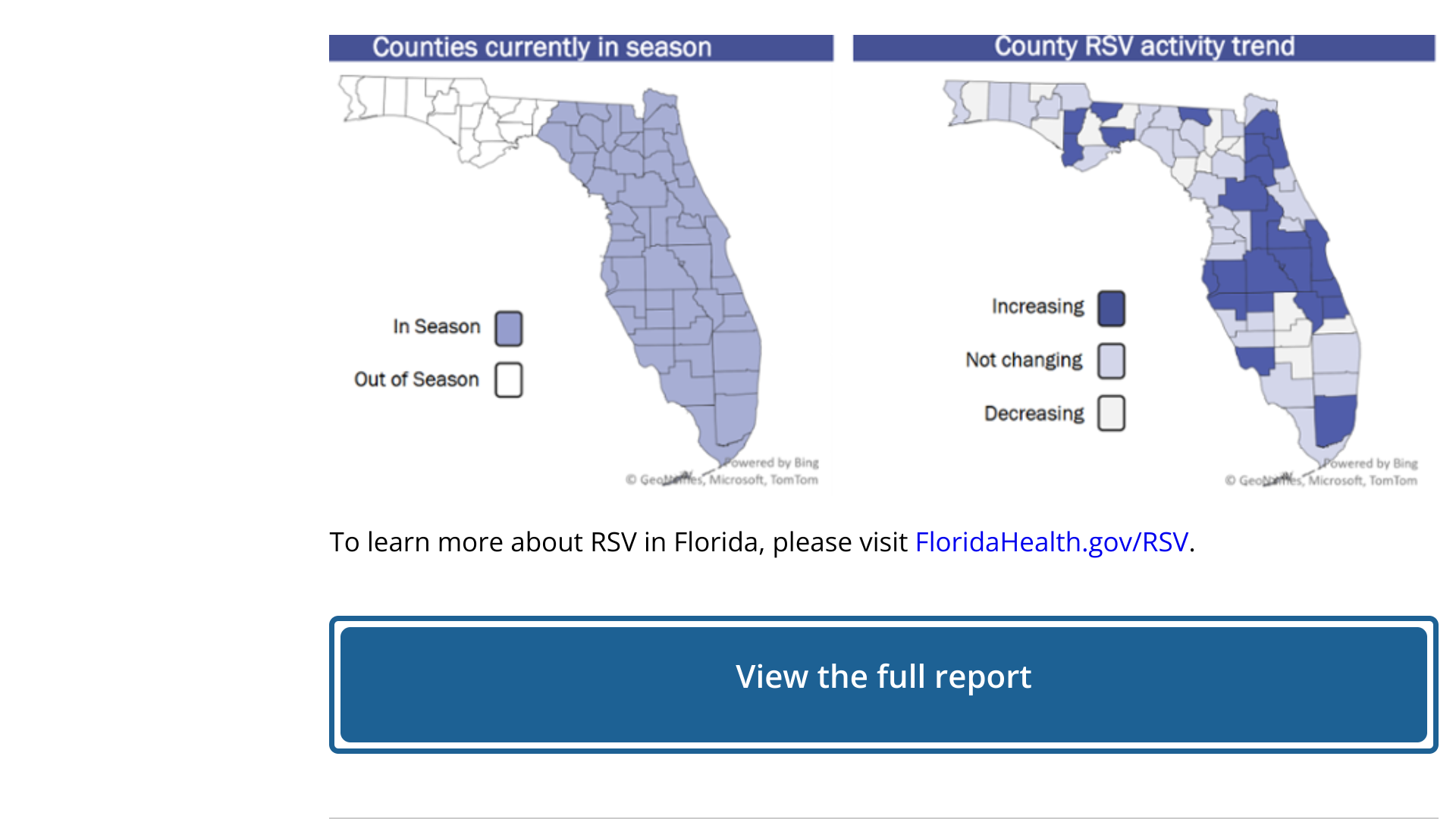
RSV seasons in the U.S. generally start in Florida and then spread nationwide.
This means that to optimize RSV protection, make a protection selection before this respiratory virus is detected in your area.
The ACIP develops recommendations regarding U.S. immunizations, which are then ratified or not by the CDC's Director Mandy K. Cohen, MD, MPH.
This ACIP digital meeting is open to the public at this IBM link and starts at 10:00 AM ET this Friday, September 22.


Malaria was eliminated as a public health threat in the United States in the mid-1950s, recent locally-acquired cases refreshed the awareness of this mosquito-transmitted disease.
The species of Anopheles mosquitoes biologically capable of transmitting malaria have been found throughout the U.S.
The U.S. CDC published a Morbidity and Mortality Weekly Report on September 8, 2023, confirming eight malaria cases were reported in Florida (seven) and Texas (one) from May 18–July 17, 2023.
As of August 2023, no additional autochthonous P. vivax cases have been detected in Florida or Texas, and there has been no evidence of infected Anopheles mosquitoes since early June.
Although the risk for autochthonous malaria in the U.S. remains very low, U.S. clinicians need to consider a malaria diagnosis in patients with an unexplained fever, especially in areas where autochthonous malaria has been recently reported, wrote the CDC.
The recent cases underscore the potential for imported malaria cases from outbreak areas with competent vectors to produce local mosquito transmission of malaria parasites.
Before traveling internationally to areas where malaria is endemic, travelers should consult their healthcare provider regarding recommended malaria prevention measures, including potentially taking malaria prophylaxis.
Furthermore, malaria is preventable with vaccines available in Africa but not in the U.S.
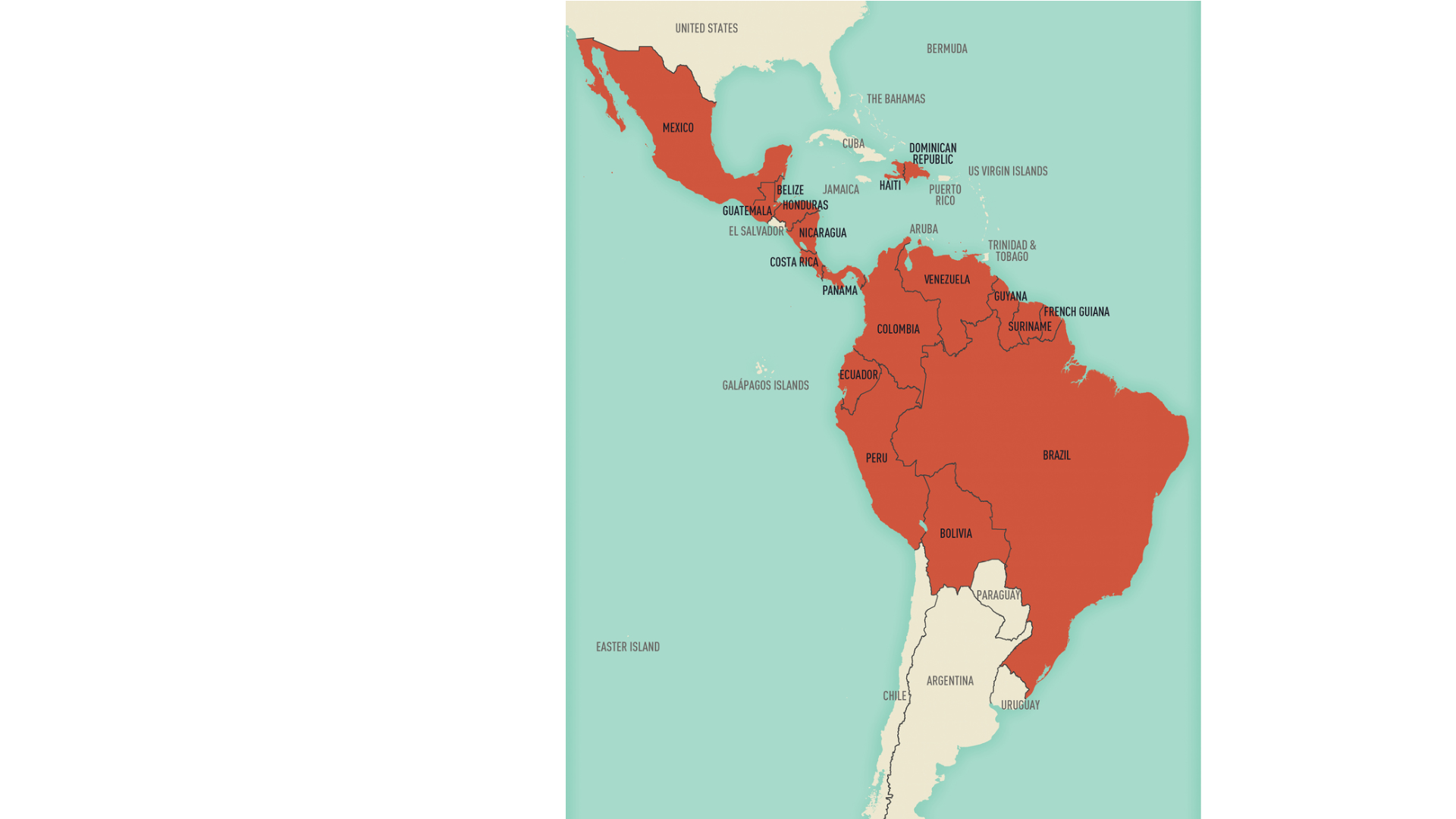
Separately, the Pan American Health Organization (PAHO) called on Member States to maintain surveillance, early detection, and timely treatment of malaria cases in the Americas.
On September 7, 2023, the PAHO reported between 2022 and 2023, Argentina, Bahamas, and Jamaica reported sporadic cases of imported malaria and local transmission, including in areas where this disease had not previously been reported.
The Centers for Disease Control and Prevention (CDC) today announced it is preparing for co-circulating influenza virus, SARS-CoV-2, and respiratory syncytial virus (RSV) during the 2023-2024 season.
The CDC stated on September 5, 2023, that vaccines can provide life-saving protection against all three viral respiratory diseases.
Furthermore, the CDC recommends these vaccines for older adults, who are at a higher risk of severe illness from these diseases.
For example, the CDC recently published a Health Advisory about increased RSV activity in the Southeastern United States, including Georgia and Florida.
During a Clinician Outreach and Communication Activity (COCA) Call on September 19, 2023, CDC presenters will provide updates about the latest recommendations and clinical considerations for administering influenza, COVID-19, and RSV vaccines to seniors this year.
This COCA Webinar link is https://www.zoomgov.com/j/1606020154, ID: 160 602 0154, and Passcode: 493303.
According to the CDC, clinicians play a vital role in ensuring that older adults protect themselves by encouraging them to stay up to date on vaccinations.

The Centers for Disease Control and Prevention (CDC) today announced a Health Alert Network Health Advisory CDCHAN-00498 to notify clinicians and caregivers about increased respiratory syncytial virus (RSV) activity in the Southeastern United States.
Historically, such regional increases have predicted the beginning of the RSV season in the U.S.
Across both prepandemic and pandemic years, RSV circulation began in Florida, said the CDC on September 5, 2023.
The Florida Department of Health segmented reports into five RSV regions, each with its own RSV season.
As of week #35, September 2, 2023, Florida's RSV activity had increased admission, positivity, and emergency room rates, but no current outbreaks.
In anticipation of the onset of the 2023-2024 RSV season, the CDC encourages clinicians to prepare to implement new RSV prevention options.
A new monoclonal antibody product, Beyfortus™ (Nirsevimab-alip), protects infants and some young children at higher risk for severe RSV disease. Its availability in the U.S. is expected in October 2023.
Also, two new RSV vaccines are available to protect older adults from severe RSV disease: RSVPreF3 (Arexvy, GSK) or RSVpreF (Abrysvo, Pfizer), based on shared clinical decision-making between the healthcare provider and the patient.
Furthermore, the CDC recommends healthcare personnel, childcare providers, and staff at long-term care facilities should stay home and not go to work when they have a fever or symptoms of respiratory infection to reduce the spread of respiratory infections, including RSV.
While many in the United States are watching the weekly increase in Dengue virus cases reported in Florida and Puerto Rico, this mosquito-carrying disease is creating havoc in Asia.
According to the World Health Organization (WHO)'s Dengue Situation Report #1, Bangladesh has joined its neighbor India in confirming Dengue has become endemic, with yearly peaks in cases and deaths around the monsoon season.
As of August 27, 2023, the upsurge in Dengue cases started around the last week of April.
This year's total has reached 119,133 cases, and 569 related deaths have been reported from all 64 districts in Bangladesh.
This makes it the largest outbreak of Dengue ever reported in Bangladesh.
Tested samples indicated DENV-2 (62%) and DENV-3 (29%) are the primary circulating serotypes.
The WHO stated it is leading partners to support the national authorities to mount a coordinated response to the outbreak. The government has requested immediate support for test kits, IV fluids, and laboratory equipment for early detection and better case management.
Additionally, the U.S. CDC has deployed one expert from its Dengue Branch in Puerto Rico to provide technical assistance in the field of clinical case management.
This situation report summarizes the status of the outbreak and some of the support being provided.
As of September 4, 2023, there have been no reports of a Dengue vaccination program in Bangladesh. There are two Dengue vaccines in use in certain countries.

As the summer of 2023 comes to a close, disease-carrying mosquitoes in Florida are not taking a break.
According to the Florida Department of Health's week #34 report, 21 new dengue virus cases were reported last week.
On August 28, 2023, twenty new dengue cases were reported this week in persons who had international travel. There are now 244 travel-associated dengue cases reported in Florida this year.
These dengue-infected visitors primarily came from Cuba (165) and Brazil (13).
Additionally, and more concerning, one new locally acquired dengue was reported last week in Miami-Dade County. In 2023, 16 cases of locally acquired dengue have been reported this year, with Miami-Dade confirmed 12 patients.
This data is positive news compared to 2022 when 68 locally acquired dengue cases were reported.
Furthermore, it appears the malaria outbreak in the Sarasota area has subsided. No cases of locally acquired malaria were reported last week.
In 2023, seven cases of locally acquired malaria have been reported.
While the U.S. CDC has not issued a travel advisory for these mosquito-carry diseases, various alerts have been issued by Escambia, Jefferson, Nassau, Orange, Polk, St. Johns, Walton, Broward, Manatee, Miami-Dade, and Sarasota counties.
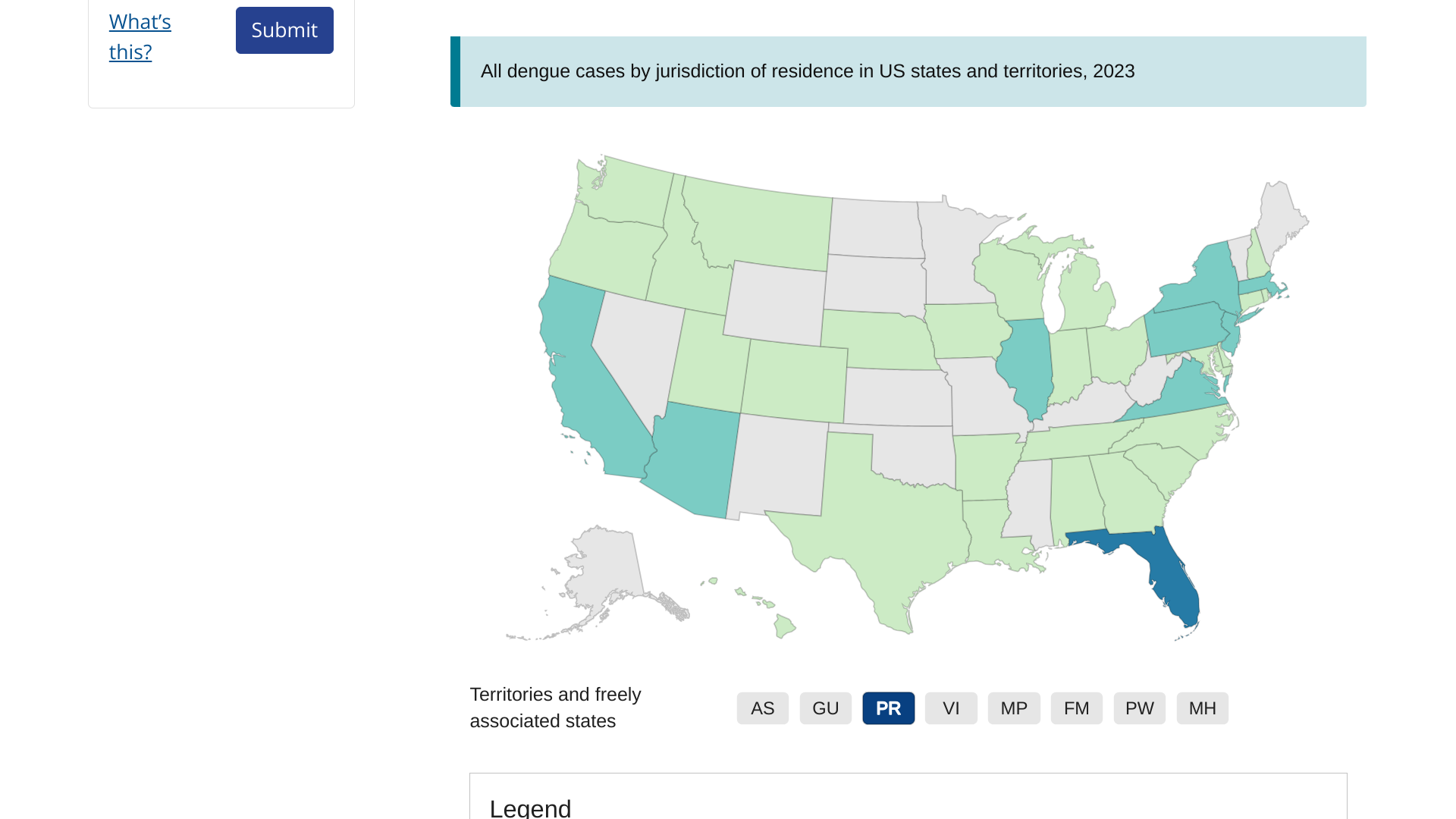
In total, the CDC has confirmed 642 dengue cases in 38 jurisdictions this year, including San Juan, Puerto Rico with 41 cases.
From a disease prevention perspective, one dengue vaccine is approved for use in the U.S. The Dengvaxia® live attenuated tetravalent chimeric vaccine requires pre-admission testing.
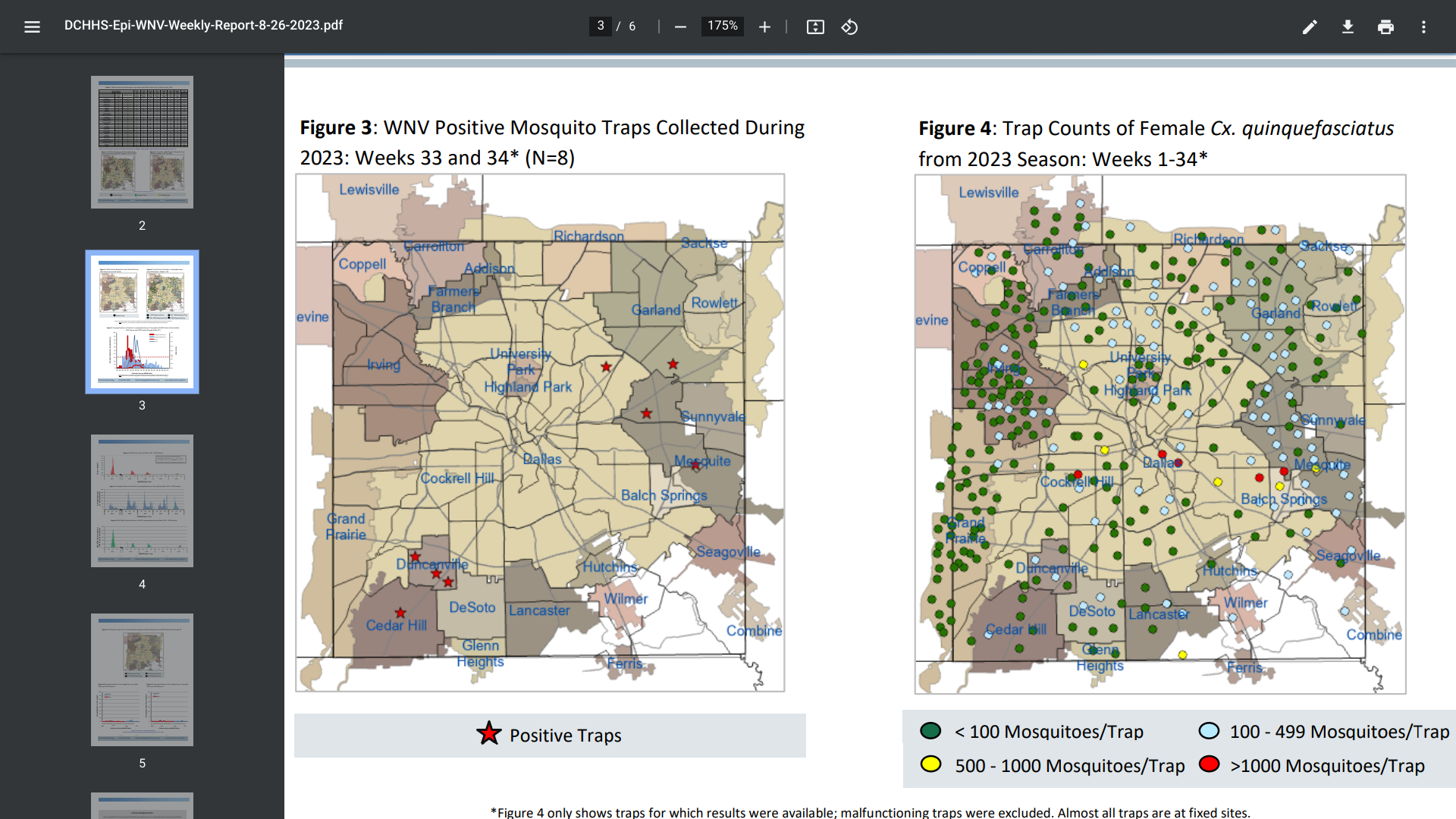
The Dallas County Health and Human Services (DCHHS) recently reported additional Dengue and West Nile virus (WNV) cases, as Aedes albopictus and Aedes aegypti mosquitoes are currently circulating in the area.
As of Week #34, ending August 26, 2023, DCHHS reported that one hundred eighty-eight mosquito traps tested positive for WNV.
And 15 human WNV cases and one human death have been reported in 2023.
Additionally, four travel-related Dengue cases have been reported this year in Dallas.
"It's important for people to be aware that there are many diseases transmitted by mosquitoes found in Texas," said Texas DSHS Commissioner Jennifer Shuford, MD, MPH, in a July 2023 press release.
"Most of these diseases cause mild illness, but in rare instances, diseases like dengue or Zika can cause severe illness."
To service residents, DCHHS provides free or low-cost public health and social services to low-income residents of Dallas County.
Philip Huang, MD, MPH, DCHHS's Director, says Dallas County has been at the forefront of the local response to major public health issues and emergencies, including Dengue, Mpox, West Nile, and Zika viruses.
Throughout the U.S., West Nile virus has been detected in 36 states, mainly in the southwest.
And the state of Florida has reported both travel-related and locally acquired dengue cases in 2023.