Search API

UNICEF recently announced an agreement to secure supplies of the R21/Matrix-M™ malaria vaccine. The long-term agreement signed with Serum Life Sciences for 2024 – 2028 is conditional on vaccine pre-qualification from the World Health Organization.
Under the four-year agreement, UNICEF expects to begin delivering the R21/Matrix-M vaccine in mid-2024.
This procurement agreement will help boost the global malaria vaccine supply and accelerate equitable access for children and families.
“It is heartbreaking and unacceptable that almost half a million children die of malaria every year. This agreement is a critical step towards protecting more children from this deadly disease,” said the Director of UNICEF Supply Division, Leila Pakkala, in a press release on October 12, 2023.
The R21/Matrix-M vaccine includes Novavax AB proprietary saponin-based Matrix-M adjuvant and is licensed to and manufactured by the Serum Institute of India Private Ltd.
The R21 was created by the University of Oxford Jenner Institute.
The R21/Matrix-M and RTS,S (Mosquirix™) malaria vaccines are the first vaccines developed against a parasitic disease. Both act against Plasmodium falciparum, the deadliest malaria parasite globally and the most prevalent in Africa.
UNICEF is the world’s largest single vaccine buyer, procuring more than two billion doses of vaccines annually for routine child immunization and outbreak response on behalf of nearly 100 countries.
Although malaria was eliminated in the United States in the mid-1950s, approximately 2,000 malaria cases are imported into the country from regions with endemic disease transmission each year, according to the U.S. CDC.
Anopheles mosquito species can transmit malaria. However, locally acquired mosquito-transmitted cases have not been identified in the U.S. since 2003.
In mid-2023, eight malaria cases (Plasmodium vivax) were identified in Florida and Texas. In both states, the locally-acquired cases occurred in the vicinity of an imported malaria case.
The U.S. reports about 1,900 travel-related malaria cases annually.
The CDC has issued various malaria outbreak alerts for endemic countries, including Costa Rica.

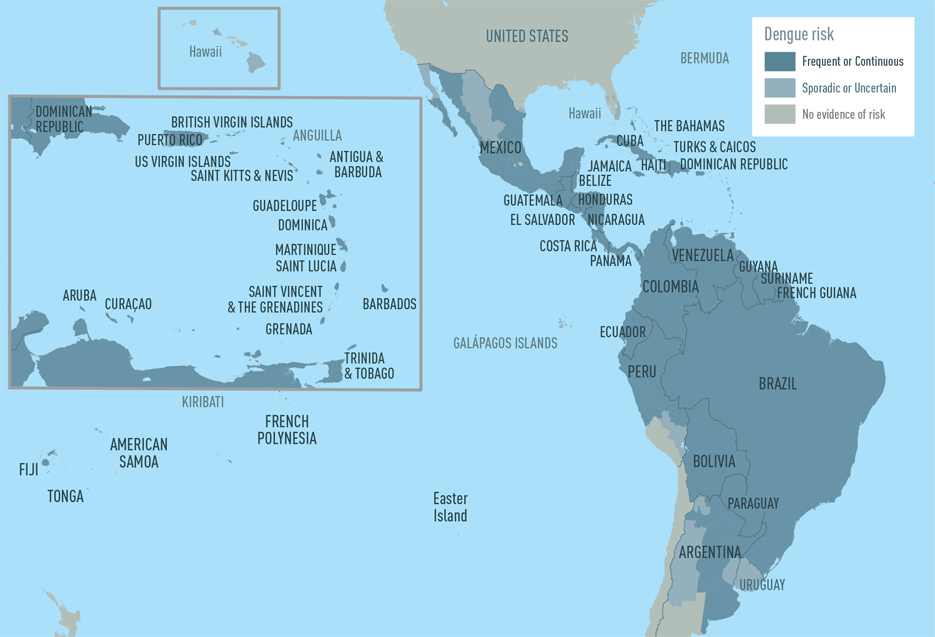
Throughout 2023, the Florida Health Department has been reporting travel-related and locally acquired dengue cases. Dengue is a vectorborne infectious disease spread by infected mosquitoes and endemic in about 125 countries.
During week #40, Florida reported 32 new dengue cases.
As of October 7, 2023, Florida's Arbovirus Surveillance report confirmed 17 new travel-associated Dengue cases. In 2023, there have been 351 dengue cases associated with international travelers, led by Miami-Dade County with 207.
Over sixty-two percent (220) of these dengue cases are related to visitors from Cuba.
Of more concern to health officials is the recent increase in locally acquired dengue cases.
Furthermore, there were 15 new cases of locally acquired dengue last week. This data increases 2023's total to 53 cases, with Miami-Dade County reporting 47 locally acquired cases.
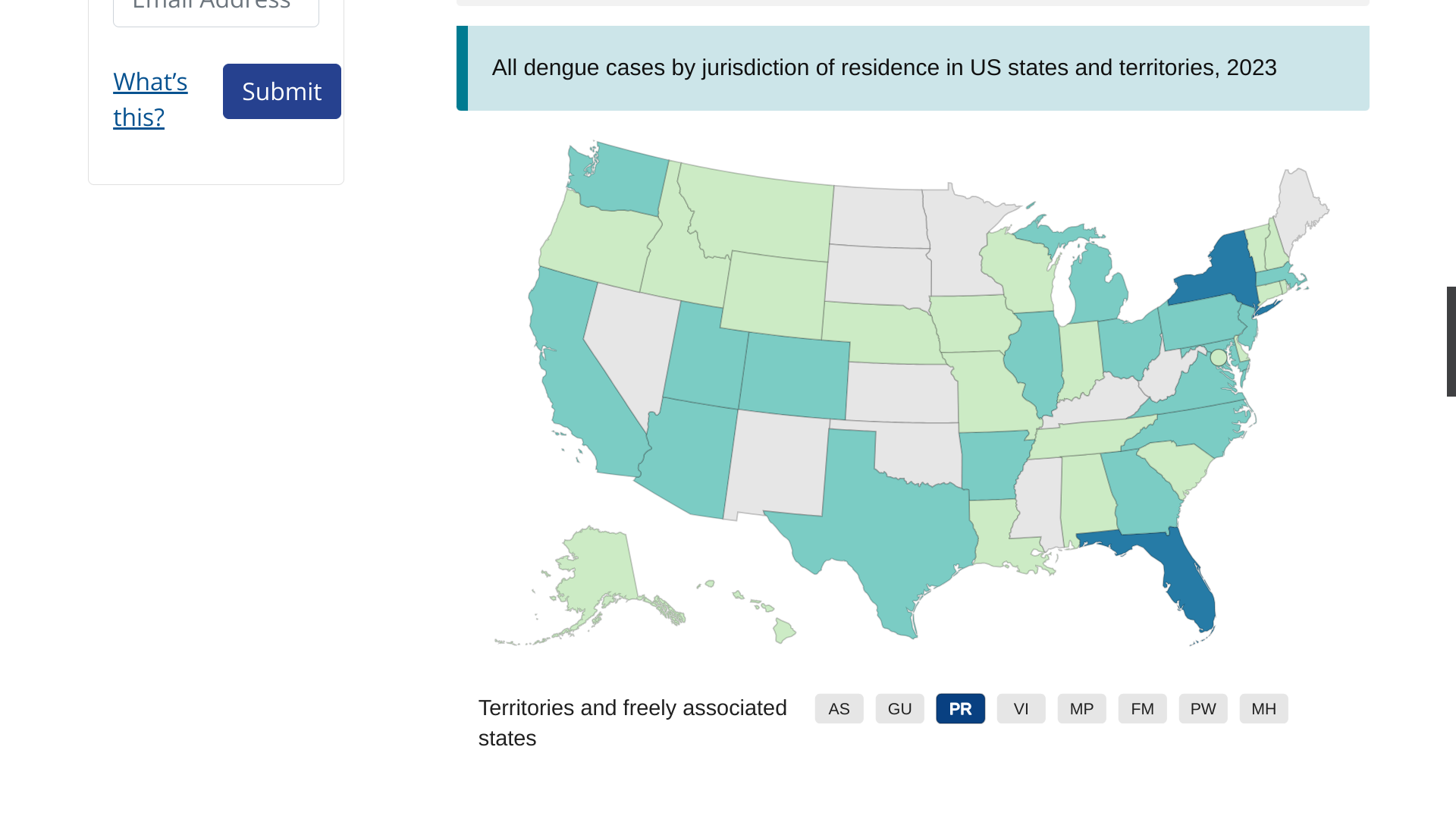
According to the Centers for Disease Control and Prevention, there have been 1,289 dengue cases reported by 48 U.S. jurisdictions in 2023. In addition to Florida, New York has reported 90 dengue cases this year.
About 3.4 million dengue cases have been reported in the Region of the Americas so far this year.
As of October 11, 2023, two dengue vaccines are available globally, but only one is licensed in the U.S. Sanofi Pasteur's Dengvaxia® vaccine is available for certain people following a diagnostic test review.

The Arkansas Department of Health (ADH) today announced it identified a case of locally acquired malaria in a resident who resides in Saline County and has no international travel history.
ADH stated in a press release on October 4, 2023, that this is the only known locally acquired case of malaria in Arkansas and the 11th in the United States in 2023
Earlier in 2023, the U.S. Centers for Disease Control and Prevention (CDC) confirmed seven locally acquired malaria infections in Florida, one in Texas, and one in Maryland.
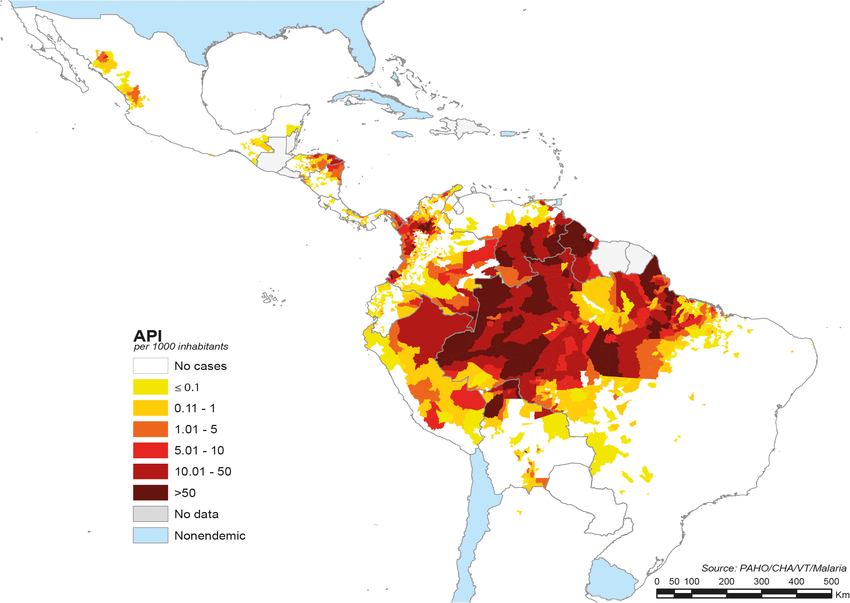
On September 7, 2023, the Pan American Health Organization estimated that approximately 41 million people are living in areas where the risk of infection by malaria is considered moderate to high in 21 Latin American countries.
The CDC has issued various outbreak alerts for malaria-endemic countries, including Costa Rica.
According to the CDC, malaria is a vaccine-preventable disease caused by four species of protozoan parasites of the genus Plasmodium. These disease-carrying mosquitoes are found throughout the Americas.
There are two malaria vaccines in use in Africa in 2023. However, they are not available in the U.S.
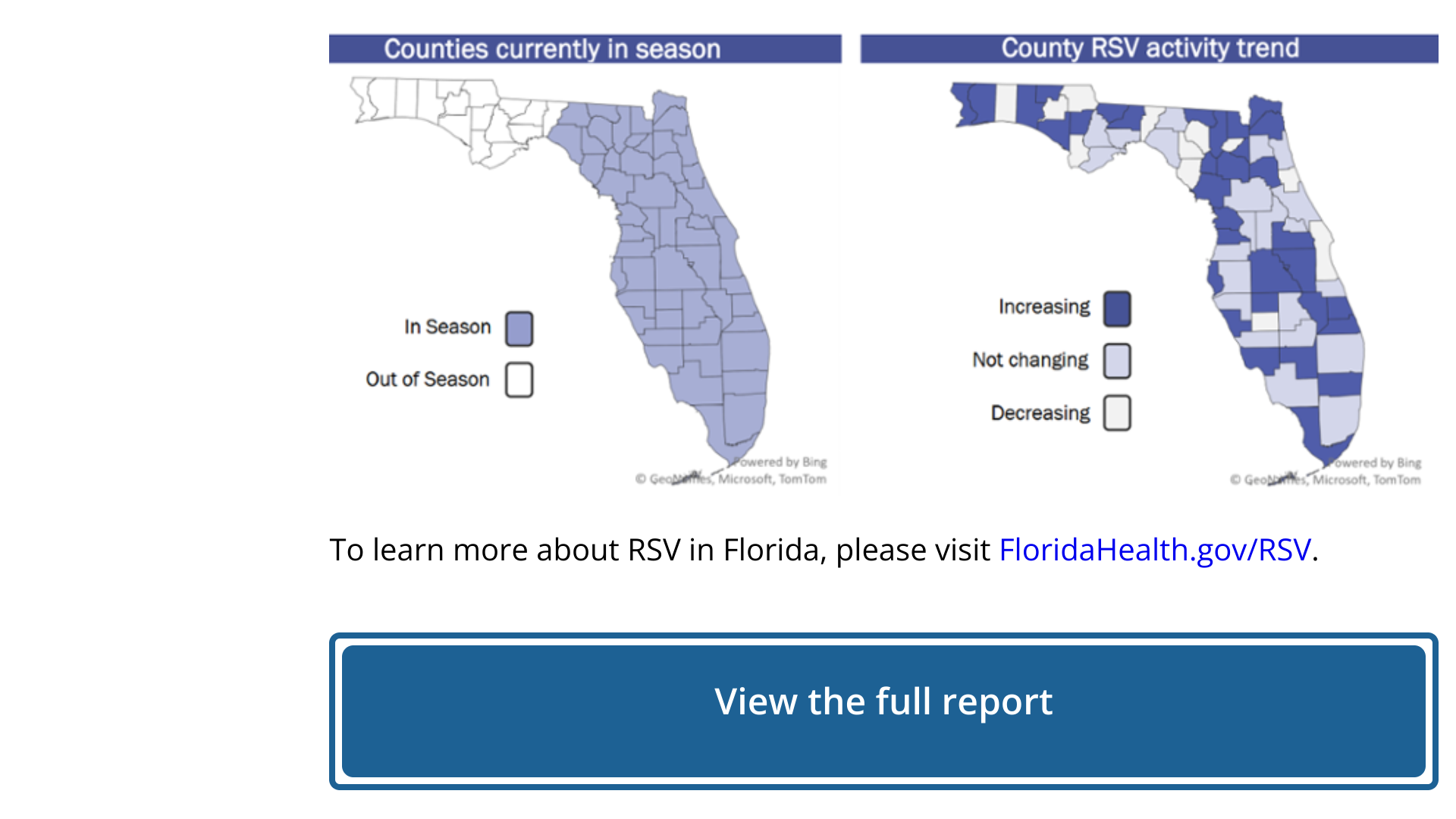
Across both prepandemic and pandemic years, the respiratory syncytial virus (RSV) outbreaks in the United States began in Florida, the southeast, and later in the north and west regions.
Florida's RSV season is longer than the rest of the U.S. and has distinct regional patterns, says the U.S. Centers for Disease Control and Prevention (CDC).
The Florida Department of Health reported as of week #39, September 30, 2023, RSV activity was increasing with higher test positivity, hospital admissions, and emergency room rates, with three previous outbreaks but no current RSV outbreak.
Furthermore, NREVSS data show Florida's PCR positivity 3-week moving average was about 7.7% as of September 28, 2023.
Globally, the World Health Organization (WHO) Influenza Update N° 454 indicates RSV activity was found to be generally low, except in some parts of Western Australia and some Central and temperate South American countries.
Additional WHO and CDC RSV outbreak data are posted at Precision Vaccinations.
As of October 4, 2023, RSV vaccines and monoclonal antibody therapies are available in the U.S.
With the World Health Organization's (WHO) recent recommendation of a second dengue vaccine, this increased access may help reduce dengue outbreaks globally. About 4 billion people live in areas with a risk of dengue.
In the United States, the CDC confirmed that 44 U.S. jurisdictions had reported about 997 dengue cases as of September 27, 2023.
During the summer of 2023, dengue outbreaks have been reported by the U.S. CDC in Florida, New Jersey, New York, and Puerto Rica.
In Florida, the Department of Health issued a statewide mosquito-borne illness advisory in June 2023.
As of September 30, 2023, 38 locally acquired dengue cases have been reported this year, primarily in Miami-Dade County. Additionally, 334 travel-associated dengue fever cases were reported, primarily in people arriving from Cuba and Brazil.
Over one thousand miles to the north, New York has reported 74 dengue cases, and New Jersey has confirmed 35 this year.
In the Caribbean Sea, the U.S. territory of Puerto Rica has reported 442 cases.
Anyone who lives in or travels to dengue-endemic areas is at risk for infection. According to the CDC, the four dengue viruses are spread to people through the bite of an infected Aedes species mosquito.
The CDC has issued various Travel Health Advisories regarding dengue outbreaks in 2023. Before visiting the areas, the CDC suggests discussing dengue vaccination options with a healthcare provider.
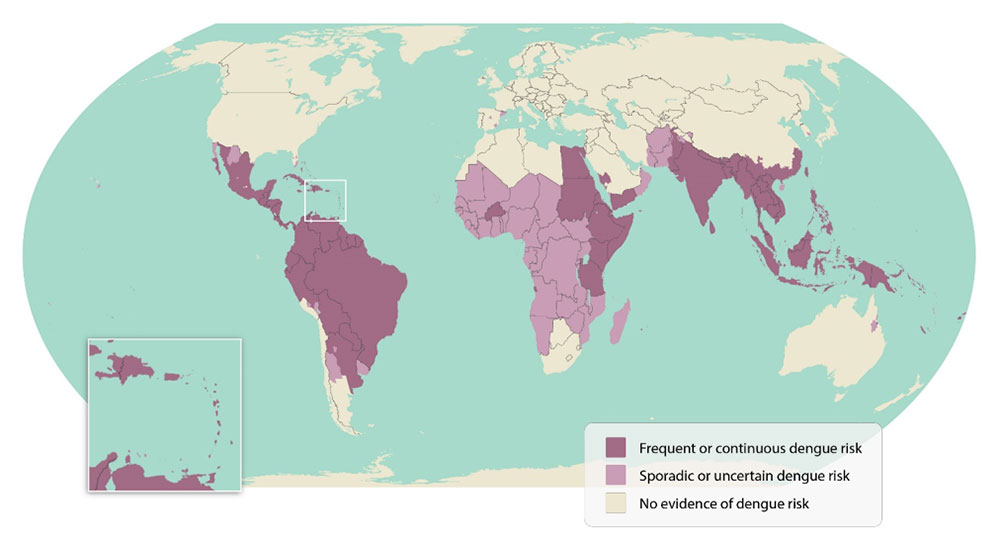
Dengue outbreaks continue to pose significant public health burdens in endemic countries and, unfortunately, may continue to increase in incidence as disease-carrying mosquitoes expand geographically, according to the World Health Organization (WHO).
To reduce the severity of dengue outbreaks, the WHO today announced the live-attenuated quadrivalent dengue vaccine Qdenga® (TAK-003) developed by Takeda has been confirmed to demonstrate efficacy against all four serotypes of the dengue virus in baseline seropositive children (4-16 years) in endemic countries.
And against serotypes 1 and 2 in baseline seronegative children.
The WHO's Strategic Advisory Group of Experts on Immunization (SAGE) on Immunization recommended on October 2, 2023, that Qdenga be considered for introduction in settings with high dengue disease burden and high transmission intensity to maximize the public health impact and minimize any potential risk in seronegative persons.
The SAGE now recommends introducing Qdenga to children aged 6 to 16.
The vaccine should be introduced within this age range about 1-2 years before the age-specific peak incidence of dengue-related hospitalizations.
Qdenga should be administered in a 2-dose schedule with a 3-month interval between doses.
The WHO will consider the SAGE recommendation and update its paper on dengue vaccines to include final guidance on using Qdenga in public vaccination programs.
"The global impact of dengue cannot be overlooked as the incidence continues to rise. This week, the WHO's SAGE provided important recommendations for the use of QDENGA in preventing dengue," commented Gary Dubin, M.D., president of the Global Vaccine Business Unit at Takeda, in a press release on October 3, 2023.
While approved for use in Brazil and various European countries, Qdenga is unavailable in the U.S.
On July 11, 2023, Takeda announced that the Company has voluntarily withdrawn Qdenga's U.S. Biologics License Application following discussions with the U.S. Food and Drug Administration on aspects of data collection.
However, the Dengvaxia® vaccine is both FDA and WHO-recommended where appropriate.
As of September 13, 2023, 44 U.S. jurisdictions had reported about 997 dengue cases this year. Throughout the summer of 2023, dengue outbreaks have been reported in southern Florida and Puerto Rica.
Note: This article was updated on October 3, 2023, to include the Company's press release.
Some countries are reporting increased dengue outbreaks in Central and South America, Mexico, and the Caribbean during 2023. Dengue can become severe within a few hours. Severe dengue is a medical emergency, usually requiring hospitalization.
The U.S. Center for Disease Control and Prevention (CDC) issued a Level 1 Travel Health Notice on September 25, 2023, to alert international travelers of this mosquito-transmitted health risk.
According to the CDC, dengue is endemic in about 125 countries.
The countries listed below have recently reported higher-than-usual dengue cases, and travelers visiting these countries may be at increased risk of catching this serious disease.
Argentina
Colombia
Cuba
Guadeloupe
Guatemala
Jamaica
Martinique
Nicaragua
Panama
Peru
In the U.S., 44 jurisdictions have reported about 880 dengue cases in 2023. The majority of these dengue cases were detected in Florida and Puerto Rico.
Since October 2022, two dengue vaccines have been authorized in various countries.