Search API
HilleVax, Inc. today announced the completion of enrollment of the NEST-IN1 clinical trial for children, with over 3,000 subjects enrolled in six countries.
NEST-IN1 is the company’s ongoing Phase 2b trial for HIL-214, its investigational virus-like particle-based vaccine candidate for preventing moderate-to-severe norovirus-related acute gastroenteritis in infants (AGE).
This study was last updated on April 7, 2023. Topline safety and clinical efficacy data from NEST-IN1 are expected in the first quarter of 2024.
“I am excited to announce the completion of enrollment of our NEST-IN1 study, which brings us one step closer to topline results in the first quarter of 2024,” said Rob Hershberg, MD, Ph.D., Chairman and CEO of HilleVax, in a press release on April 25, 2023.
“There are no approved vaccines for norovirus, which results in approximately 700 million cases of acute gastroenteritis and 200,000 deaths per year.”
Norovirus is a very contagious virus that causes vomiting and diarrhea. Anyone can get infected and sick with norovirus, says the U.S. CDC.
Globally, norovirus is estimated to result in approximately 700 million cases of AGE and 200,000 deaths per year, resulting in over $4 billion in direct health system costs and $60 billion in societal costs per year.

ImmunityBio, Inc. today announced the opening of a clinical trial to study its investigational Tri-Ad5 vaccine combination and its IL-15 superagonist N-803 for people with a hereditary condition known as Lynch syndrome.
An estimated 1 in every 300 people may be carriers of a mutation in a gene associated with Lynch syndrome.
This Phase 2b clinical trial, sponsored by the National Cancer Institute (NCI), will study whether Tri-Ad5, in combination with N-803, works to prevent colorectal and other cancers in study participants.
Tri-Ad5 vaccines target three tumor-associated antigens: brachyury, carcinoembryonic antigen, and mucin-1.
The vaccine combination studies whether activating dendritic cells and training the immune system to recognize those proteins will destroy the precancer cells before the cancer advances.
N-803 is designed to enhance the effects of the vaccines by increasing the proliferation and activation of natural killer and T cells, thereby increasing the potential for cancer prevention in study participants.
"We are excited to partner with the NCI on this important cancer vaccine study to potentially prevent or delay the onset of cancer for people who carry the gene associated with Lynch syndrome," said Patrick Soon-Shiong, M.D., Executive Chairman and Global Chief Scientific and Medical Officer at ImmunityBio, in a press release on April 25, 2023.
"Lynch syndrome affects tens of thousands of people each year, and the average age of cancer diagnosis for them is just 44."
"People known to have the gene for Lynch syndrome can be followed closely by their doctors with regular examinations and scans to watch for cancer development, but, currently, there is no treatment that prevents cancer development in these patients."
Lynch syndrome is one of the most common hereditary cancer syndromes, says the U.S. CDC.
Not only can people with Lynch syndrome develop colorectal cancer some twenty years before the average age of diagnosis for this cancer, but they are also at an increased risk of developing multiple types of other cancers, including endometrial, stomach, ovarian, pancreas, ureter, and renal pelvis, biliary tract, brain, and small intestinal cancers.
Colorectal cancer is the second-deadliest cancer type in the U.S., and approximately 3% to 5% of the 153,000 cases of colorectal cancer annually are thought to be due to Lynch Syndrome.
As are 2% to 3% of all cases of endometrial cancer.
"The Tri-Ad5 vaccine trial will be the largest Lynch syndrome cancer prevention study done in the U.S.," commented Asad Umar, D.V.M., Ph.D., a senior advisor to the director for translational research in NCI's Division of Cancer Prevention and a scientific lead for the trial.
Note: ImmunityBio is also conducting a bladder cancer vaccine study.

Invivyd, Inc. today announced that the U.S. Food and Drug Administration (FDA) had cleared its Investigational New Drug (IND) application for VYD222, a monoclonal antibody (mAb) candidate.
Invivyd is developing VYD222 to prevent COVID-19 in vulnerable populations, such as immunocompromised people.
"We are pleased that the FDA has cleared our IND for VYD222, and we are excited by the progress we've made in our ongoing Phase 1 VYD222 clinical trial," commented Dave Hering, CEO of Invivyd, in a press release on April 25, 2023.
"We have completed dosing of the first cohort and have moved to the second dosing cohort, with initial readouts from the Phase 1 clinical trial on track for the second quarter."
"The swift progress of our Phase 1 VYD222 clinical trial and the FDA's recent clearance of the VYD222 IND are important steps in our plan to rapidly advance a stream of mAb candidates designed to keep pace with SARS-CoV-2 viral evolution."
The ongoing Phase 1 trial is a randomized, blinded, placebo-controlled, dose-ranging trial that will evaluate the safety, pharmacokinetics, tolerability, and serum virus-neutralizing activity of VYD222 in healthy adult volunteers.
As of April 25, 2023, the FDA has discontinued authorizing mAbs to prevent COVID-19 in the U.S. However, mAbs are available in Europe and other countries.

Atea Pharmaceuticals, Inc. today announced that the U.S. Food and Drug Administration granted Fast Track designation to bemnifosbuvir for treating COVID-19.
Bemnifosbuvir (AT-527) is an oral, direct-acting antiviral drug candidate, a nucleotide polymerase inhibitor that targets the SARS-CoV-2 RNA polymerase, a highly conserved gene that is unlikely to change as the coronavirus mutates and variants continue to emerge.
Recent in vitro data confirmed that bemnifosbuvir is active with similar efficacy against all variants of concern and variants of interest that have been tested, including Omicron subvariants BA.4 and BA.5.
Bemnifosbuvir is being evaluated in the global Phase 3 SUNRISE-3 registrational trial for the treatment of COVID-19 in outpatients at high risk for disease progression regardless of vaccination status.
This evaluation includes patients over the age of 80, patients 65 years or older with at least one major risk factor, and anyone over the age of 18 who is immunocompromised.
Jean-Pierre Sommadossi, Ph.D., Chief Executive Officer and Founder of Atea Pharmaceuticals, commented in a press release on April 25, 2023, "Due to the limitations of current antiviral treatments, including drug-drug interactions and potential risks for genotoxicity and reproductive toxicity, as well as the ability of the virus to evade vaccines and monoclonal antibodies, new treatment options are urgently needed."
CoronavirusToday publishes COVID-19 antiviral and antibody therapy news.

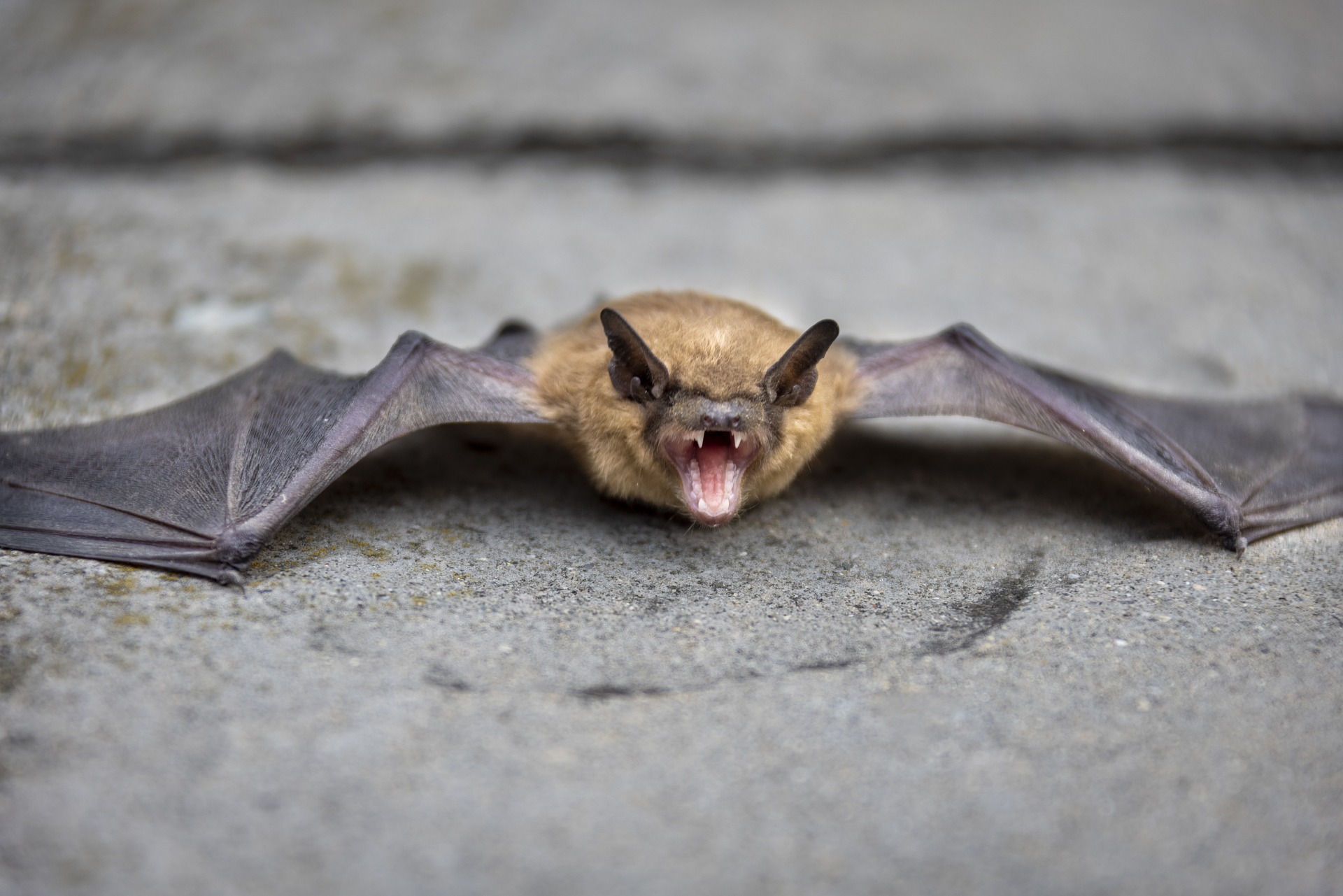
Clinical Infectious Diseases reported in March 2023 the first rabies post-exposure prophylaxis (PEP) failure in humans in the U.S. using modern cell-culture vaccines.
In January 2021, an 84-year-old male died from rabies six months after being bitten by a rabid bat despite receiving timely rabies PEP.
The researchers found rabies virus antibodies present in serum and cerebrospinal fluid were non-neutralizing.
Their recommendation is clinicians should consider measuring rabies-neutralizing antibody titers after completion of PEP if there is any suspicion of immunocompromised in the person.
Previously, The Lancet Infectious Disease reported (Dec 2022) that sporadic breakthrough infections (i.e., rabies in people who have started PEP had been reported.
These researchers identified a total of 122 rabies vaccine breakthrough infections.
Although people with high-risk exposures or immunosuppression can develop rabies despite adherence to core practices, this occurrence remains exceedingly rare, wrote these researchers.
The rabies virus infects the central nervous system. If a person does not receive the appropriate medical care after a potential rabies exposure, the virus can cause disease in the brain, ultimately resulting in death, wrote the U.S. CDC.
According to the CDC, most rabies infections in the U.S. are rare and related to bat bites, while dog bites are a more frequent source of rabies in other countries.
Various rabies vaccines are available in the U.S. in 2023.



ANI News posted a video that revealed Serum Institute of India's (SII) CEO Adar Poonawalla informed the local media that the institute recently produced 5-6 million doses of the protein-based CovoVax™ COVID-19 vaccine.
However, as of April 22, 2023, the demand for CovoVax vaccines is zero in Indian hospitals.
Poonawalla added, "Current (SARS-CoV-2) variants are mild and not severe... However, senior citizens can take booster doses as a precaution."
These vaccines may be needed as the WHO South-East Asia Region, which includes India, recently reported a (+654%) increase in COVID-19 cases and fatalities.
Maryland-based Novavax, Inc. and SII confirmed CovoVax vaccine was authorized in Indonesia on December 1, 2021, and in India on December 28, 2021.
In the U.S., the U.S. FDA confirmed on August 19, 2022, that the Novavax COVID-19 Vaccine was available to prevent COVID-19 in individuals 12 years of age and older.
Novavax COVID-19 vaccine brands are available in over 40 countries as of April 2023.