Search API

0 min read

PharmaJet® today announced their support for the World Health Organization’s (WHO) polio eradication campaigns in Pakistan.

Starting in May 2023, PharmaJet is providing an additional 5 million syringes to the WHO for a supplemental immunization activity campaign.

Chris Cappello, President and CEO, PharmaJet, commented in a press release on May 23, 2023, “We are pleased to continue our collaboration with the WHO for over five years with a common goal of global eradication of polio."

"Now, with over 12 million needle-free syringes provided across multiple polio vaccination campaigns, we have confidence that our Precision Delivery Systems are safe, effective, and can be rapidly deployed in response to emergencies anywhere on the globe."

The WHO previously introduced needle-free intradermal delivery of inactivated polio vaccine (ID-IPV) in Pakistan and Somalia using the PharmaJet Tropis ID PDS to immunize millions of children. 

Published results from Pakistan and recent survey results from Somalia showed that the Tropis PDS is an effective and preferred solution for polio immunization campaigns that can help increase campaign coverage by over 18%.

An ongoing study evaluating Tropis use for Routine Immunization Administration of the IPV vaccine has been previously reported.

The PharmaJet Tropis Precision Delivery System™ was selected based on its proven cost savings, ease of training, and improved immunization coverage benefits.

Vaccine Treats: 
Image: 
Image Caption: 
Tropis Precision Delivery System
Live Blog Update Author: 
Location Tags: 
Bird migration 2023
Brazil is a leading chicken meat exporter

RSV Season

RSV Season 2024-2025

The World Health Organization (WHO) Influenza Update N° 496 reported that, as of September 2024, most countries' respiratory syncytial virus (RSV) activity was not reported. In April 2024, the WHO RSV surveillance project was implemented in 25 countries across all six WHO regions to generate evidence on RSV seasonality.

RSV Season United States 2024-2025

The U.S. Centers for Disease Control and Prevention (CDC) reported that Respiratory Virus Activity Levels were minimal nationwide but increased in the southwest as of October 18, 2024. RSV circulation in the U.S. usually begins in Florida and then migrates to the southeast, later to the north and west regions. As of September 28, 2024, week #38, the Florida Department of Health reported increasing RSV positivity rates but decreasing hospital admissions, but there is one RSV outbreak located in Miami-Dade County. A U.S.-based study found that 53.4% of children were infected with RSV during infancy, and 2.8% were hospitalized. Seperately, the National Emergency Department Visit RSV and Wastewater Scan data shows RSV detections were 'low' as of September 2024. In the U.S., people aged 18-49 with at least one risk factor for RSV disease could exceed 21 million.

RSV Season United States 2023

The RSV-NET Interactive Dashboard shows for the 2022-2023 RSV season in the U.S., the overall rate of related hospitalizations was 50.9 per 100,000 people. The U.S. CDC Morbidity and Mortality Weekly Report presented the seasonality of RSV in the U.S. from 2017–to 2023.

RSV Season the Americas

The Pan American Health Organization (PAHO) published a situation report in December 2023 confirming RSV activity has remained low overall. Still, several countries from the southern hemisphere (Brazil, Chile, Paraguay, Uraguay) reported a start of the 2023 RSV season. On May 23, 2023, an updated Protocol and Technical note regarding RSV laboratory diagnosis. SARInet updates the seasonality of RSV in Latin America and the Caribbean. 

RSV Season Australia

As of October 2023, Australia's Department of Health and Aged Care published report #1; influenza-like-illness activity in the community has remained stable and was low overall. The number (1,652) and proportion of RSV notifications by age group and reporting period since January 2023 are linked here.

RSV Season Canada

RSV season in Canada typically runs from October until May, with most cases occurring in winter. As of September 17, 2023, updated RSV detection information in Canada for week 37 is posted at this link, including positive RSV tests in Canada segmented by region.

RSV Season Europe

The European Respiratory Virus Surveillance Summary (ERVISS) interactive dashboard provides a weekly RSV epidemiological summary for the European Union/European Economic Area (EU/EEA).

RSV Mortality

The JAMA Network published results from an Original Investigation in 2022 that reported a mean of 6,549 (95% CI, 6140-6958) underlying respiratory fatalities were associated with RSV each year. Most RSV deaths were among children <5 (47.8%) than adults ≥50 (40.4%) years of age. 

The U.S. FDA VRBPAC reviewed RSV Epidemiology and Disease Burden in Older Adults on February 28, 2023, presented by Fiona Havers, MD, MHS, FIDSA. On February 23, 2023, the U.S. CDC Advisory Committee on Immunization Practices (ACIP) conducted a meeting on RSV. In adults aged 50 years, hospitalization rates for RSV were similar to those associated with influenza as of 2018. From 2005 to 2016, researchers identified 405 deaths in adults over 50. RSV-pneumonia deaths among adults aged ≥50 years were 17.6 in 2005.

The U.S. CDC reports most infants are hospitalized with RSV during their first few months of life. The Lancet reported on February 14, 2024, a meta-analysis found that preterm infants face a disproportionately high burden of RSV-associated disease, accounting for 25% of RSV hospitalizations. They estimated that, in 2019, 533,000 hospital admissions of preterm infants in the first year of life occurred worldwide. Regarding mortality, these researchers estimated that, globally, 26,760 overall preterm infant deaths were attributable to RSV in 2019

A study published by PLOS Medicine on July 17, 2023, concluded that the RSV disease burden was high in the nearly 600 million children under five living in 121 low-income and middle-income countries. A study published by the Journal of Infectious Diseases determined that RSV-related deaths in infants <1 year peaked at one month, while bronchiolitis and influenza mortality peaked at two months. Over the 20-year study period, RSV was listed as the underlying cause of death on 932 death certificates. Children <1 year of age accounted for 39% of RSV and bronchiolitis deaths. 

Over eight assessed RSV seasons, among children with a first infection, annual inpatient and outpatient reinfection rates were 0.25% (95% confidence interval (CI) = 0.22–0.28) and 3.44% (95% CI = 3.33–3.56), respectively. Both infection and reinfection rates declined with age.

The U.S. CDC RSV Work Group presented on June 23, 2022: RSV Virion and Vaccine Products by Natalie Thornburg; Epidemiology of RSV in Children by Dr. M McMorrow. The ACIP previously reviewed in February 2023 Maternal/Pediatric presentations led by Sarah S. Long, MD Chair, Maternal/Pediatric RSV Work Group: Nirsevimab for preventing RSV in infants; Jefferson Jones, MD MPH FAAP, Next Steps for the ACIP Maternal & Pediatric RSV Work Group.

The JAMA Network conducted an Original Investigation on February 28, 2022, that found there were 96 (95% CI, 92-99) RSV deaths among children younger than one year. A study published by the Journal of Infectious Diseases published a study in August 2022 determined that RSV-related deaths in infants younger than one year peaked at about one month.

Breastfeeding infants during the first few months of life protects against severe RSV bronchiolitis outcomes. Breastfeeding reduced the risk of hospitalization (OR 0.47, 95% CI 0.25 to 0.89, p=0.021). This review (Feb. 2022) shows that exclusive and partial breastfeeding reduces the severity of disease, length of hospital stay, and supplemental oxygen requirement.

RSV Pregnant Women

The Journal of Infectious Diseases published a meta-analysis of eleven studies in October 2023 that found that among 8,126 pregnant women, the proportion with respiratory infections that tested positive for RSV ranged from 0.9% to 10.7%, with a meta-estimate of 3.4% (95% CI: 1.9; 54). RSV hospitalization rates reported in two studies were 2.4 and 3.0 per 1000 person-years. Of five studies that ascertained RSV-associated deaths among 4708 pregnant women, no casualties were reported. 

RSV Immunity

H. Keipp Talbot MD MPH FIDSA presented an RSV Immunity, Durability, and Reinfection overview during the U.S. Food and Drug Administration (FDA) 179th Vaccines and Related Biological Products Advisory Committee (VRBPAC) meeting on February 28, 2023. This conclusion said natural RSV infection does not provide durable or complete protection from reinfection; Anti-RSV antibodies return to pre-infection levels within six months after infection; RSV reinfection can occur within two months of the last infection; Older adults have weaker IFNγ responses to RSV than younger adults do, likely making older adults more susceptible to infection and to severe infection.

RSV Influenza Comparison

The JAMA Network published an Original Investigation on February 28, 2022: Mortality Associated With Influenza and RSV in the U.S., 1999-2018. This study suggests that RSV poses a greater risk than influenza to infants, while both are associated with substantial mortality among elderly individuals. Influenza has sizeable interannual variability, affecting different age groups depending on the circulating virus. A mean of 6549 (95% CI, 6140-6958) underlying respiratory deaths was associated with RSV annually, including 96 (95% CI, 92-99) deaths among children younger than one year. For influenza, there were 10 171 (95% CI, 9652-10 691) underlying respiratory deaths per year, with 23 deaths (95% CI, 19-27) among children younger than one year. 

A study published in 2017 found that adult patients were less likely to be diagnosed with RSV than with influenza (2.3 vs. 8.3%, respectively), were older, and were more likely to be diagnosed with pneumonia, chronic obstructive pulmonary disease, hypoxemia, and bacterial coinfection. Furthermore, in patients with RSV infection, the 20-day all-cause mortality was higher than that for influenza (18.4 vs. 6.7%, respectively). In addition, RSV infection showed a significantly higher risk of death than the seasonal influenza group, with a hazard ratio of 2.32 (95% CI, 1.17–4.58). 

RSV Monoclonal Antibody Therapy

The RSV monoclonal antibody Beyfortus / Nirsevimab was U.S. FDA-approved.

RSV Vaccines

As of June 2024, three RSV vaccines have been approved in various countries.
7 min read
Last Reviewed: 
Thursday, October 24, 2024 - 08:25
Description: 
Respiratory syncytial virus outbreaks are seasonal in most countries.
0 min read

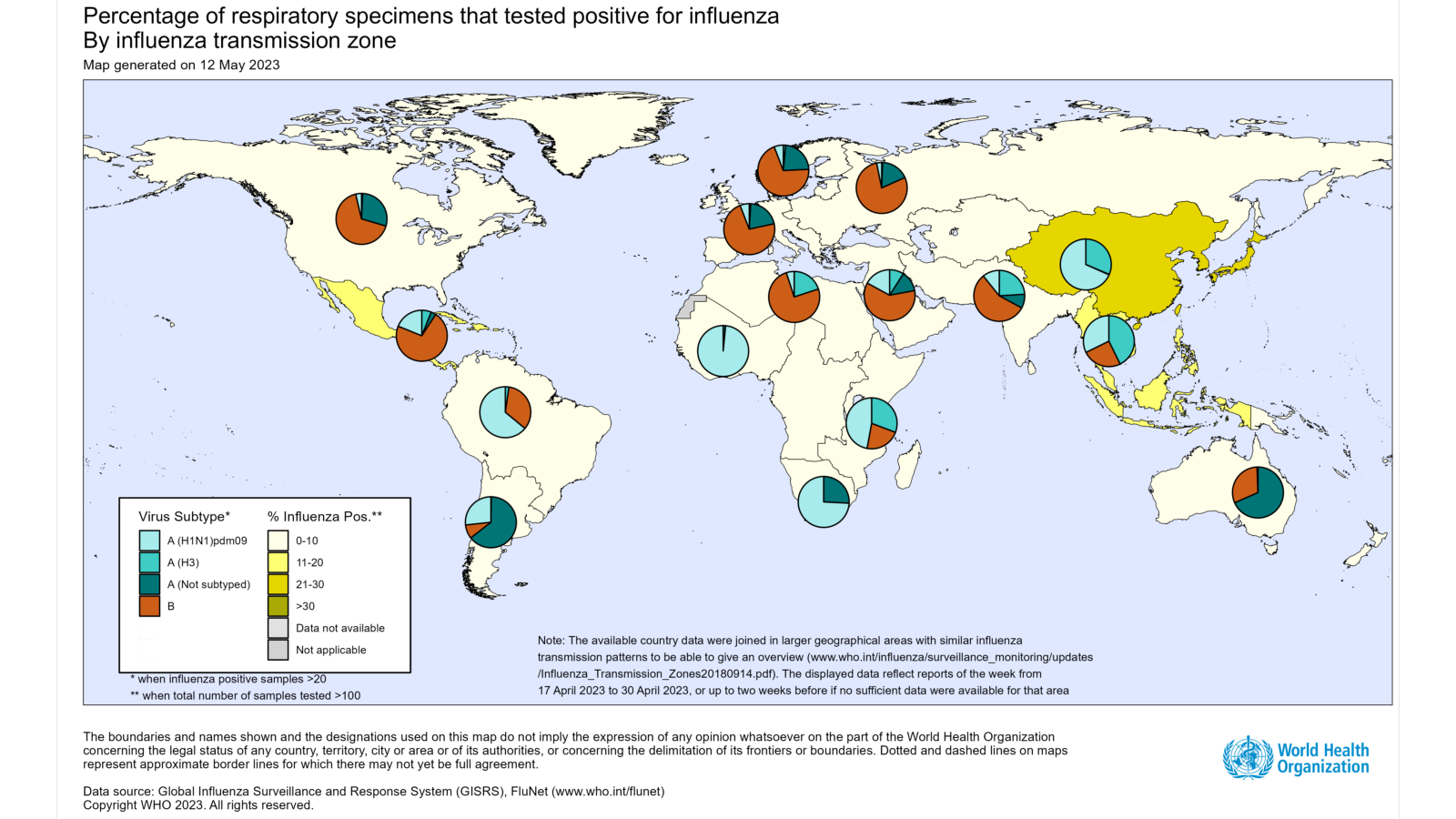
The World Health Organization (WHO) published Influenza Update N° 445 on May 15, 2023, stating influenza detections decreased further due to a decline in detections in the northern hemisphere, while some countries in the southern hemisphere reported an increase in influenza detections in recent weeks.

Most influenza activity was very low in North America, the Caribbean, and Central American countries.

In the tropical countries of South America, influenza activity decreased overall during this reporting period, although positivity increased to an extraordinary level in the Plurinational State of Bolivia.

In Europe, overall influenza detections decreased, and influenza positivity from sentinel sites dropped below the epidemic threshold of 10% at the regional level.

Despite continued testing in Central Asia, no influenza detections were reported during this period.

In Northern Africa, no influenza detections were reported.

In Western Asia, influenza activity remained low overall.

In East Asia, influenza activity decreased overall, although detections of mainly influenza A(H1N1)pdm09 continued to increase in Hong Kong Special Administrative Region, China.

A slight increase in influenza detections was reported in the Republic of Korea.

Other influenza and vaccine news for the upcoming 2023-2024 flu season is posted at Precision Vaccinations.

Vaccine Treats: 
Image: 
Image Caption: 
WHO influenza virus map May 12, 2023
Live Blog Update Author: 
Location Tags: 
0 min read

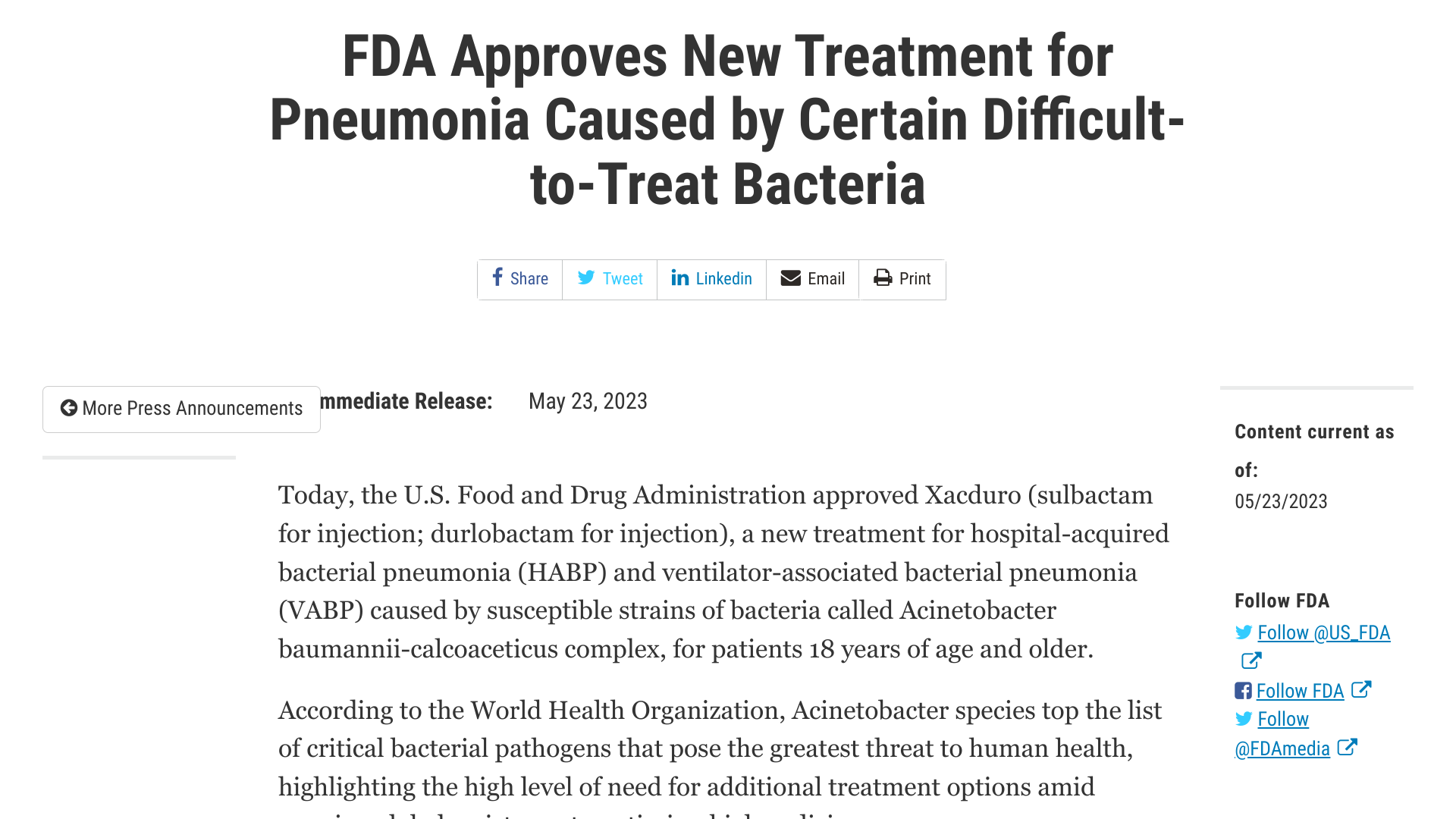
The U.S. Food and Drug Administration today approved Entasis Therapeutics's Xacduro, an intravenous infusion treatment for hospital-acquired bacterial pneumonia (HABP) and ventilator-associated bacterial pneumonia (VABP) caused by susceptible strains of bacteria called Acinetobacter baumannii-calcoaceticus complex, for adult patients 18 years of age and older. 

"The FDA is dedicated to supporting the development of safe and effective treatment options for infections caused by difficult-to-treat bacteria like Acinetobacter baumannii-calcoaceticus complex," said Peter Kim, M.D., M.S., director of the Division of Anti-Infectives in the FDA's Center for Drug Evaluation and Research, in a press release on May 23, 2023.

"Today's approval helps address a high unmet medical need by providing an additional treatment option for some of the sickest patients in our nation's hospitals."

According to the World Health Organization, Acinetobacter species top the list of critical bacterial pathogens that pose the greatest threat to human health.

Acinetobacter baumannii-calcoaceticus complex (hereafter referred to as A. baumannii) includes four species of bacteria in the Acinetobacter family.

These bacteria can cause infections in various body parts, occurring most frequently in healthcare settings and predominantly causing pneumonia.

A. baumannii can become highly resistant to multiple antibacterial drugs, and current treatment options for drug-resistant A. baumannii are limited.  

Xacduro consists of sulbactam, a drug structurally related to penicillin, and durlobactam.

Sulbactam kills A. baumannii, whereas durlobactam protects sulbactam from being degraded by enzymes that may be produced by A. baumannii.  

Previously, the FDA granted Xacduro Fast Track, Qualified Infectious Disease Product, and Priority Review designations for this application. 

Additional pneumonia and influenza vaccine news is posted by Precision Vaccinations.

Vaccine Treats: 
Image: 
Image Caption: 
U.S. FDA May 23, 2023
Live Blog Update Author: 
Location Tags: 
0 min read

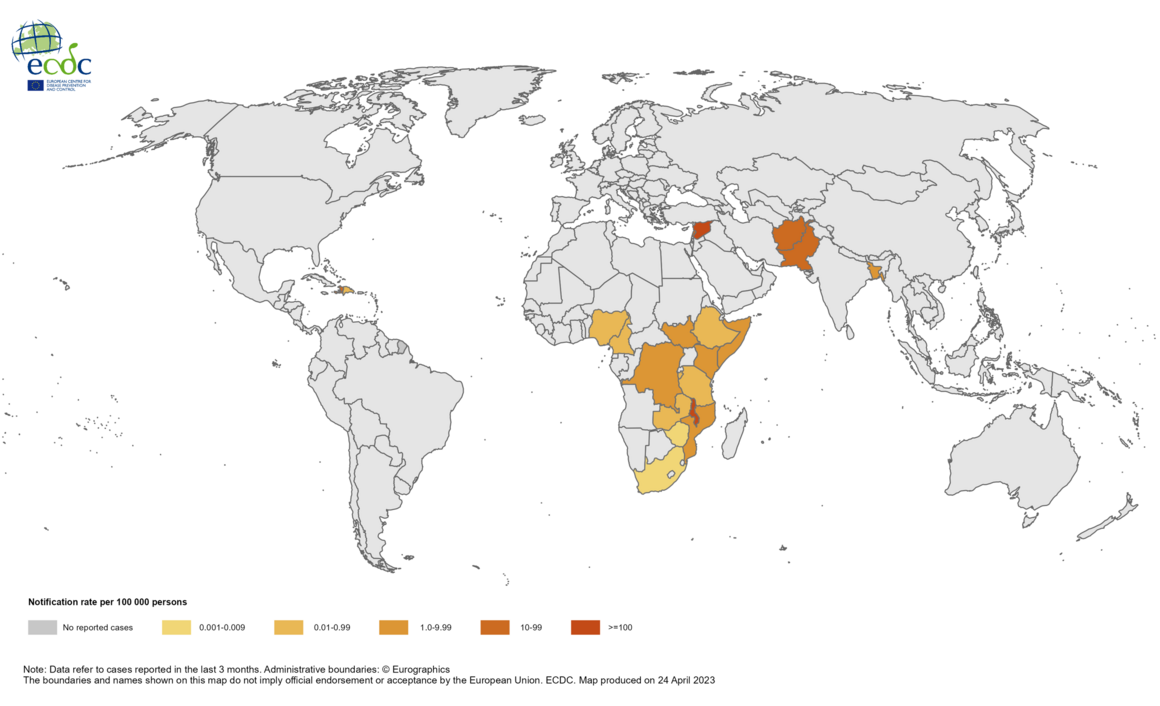
According to Reuters, on May 22, 2023, South Africans blamed Pretoria's Gauteng province government for failing to provide clean water as cholera-related fatalities reached 15.

The Gauteng Department of Health (GDoH) informed the public of the recent outbreak presenting with gastrointestinal symptoms in Hammanskraal, which is located north of Pretoria.

The first cholera cases in this outbreak were imported or import-related cases following travel to Malawi. All subsequent cases acquired infection locally and are classified as indigenous cases.

Other African countries currently experiencing cholera outbreaks include Mozambique, Zambia, and Zimbabwe.

The World Health Organization (WHO) says cholera outbreaks are ongoing in 24 countries.

As of May 23, 2023, there are WHO-approved cholera vaccines such as DUKORAL®; however, due to production constraints, supply is very limited.


Vaccine Treats: 
Image: 
Image Caption: 
ECDC cholera map April 2023
Live Blog Update Author: 
Location Tags: 
BCG vaccine
BCG vaccine therapy for patients with a type of bladder cancer is associated with a decreased risk of developing Alzheimer's
0 min read

Icosavax, Inc. today announced positive topline interim results from its Phase 1 clinical trial of IVX-A12 against the respiratory syncytial virus (RSV) and human metapneumovirus (hMPV) in older adults.

IVX-A12 comprises IVX-121, Icosavax’s RSV prefusion F protein VLP vaccine candidate, and IVX-241, Icosavax’s hMPV prefusion F protein VLP vaccine candidate.

“IVX-A12 is a potential first-in-class combination vaccine candidate designed to address an unmet medical need in older adults, and we believe these interim data for hMPV in an older adult population also break new ground in the field. Furthermore, as has been seen previously with prefusion F antigen approaches for RSV, we expect that a combination vaccine displaying prefusion F antigens for both hMPV and RSV, on our VLP technology, may translate into significant protection against two leading causes of pneumonia. Therefore, we plan to expeditiously proceed towards a Phase 2 trial for IVX-A12 in mid-2023 in older adults as we pursue our goal of developing a broader viral respiratory vaccine,” said Adam Simpson, Chief Executive Officer of Icosavax, in a press release on May 22, 2023.

In this Phase 1 trial, IVX-A12 induced robust immune responses against RSV and hMPV at Day 28 in older adults across dosage levels and with and without adjuvant.

When administered in combination, there was no evidence of immune interference between RSV and hMPV VLPs.

The IVX-121 (RSV) component of IVX-A12 (RSV/hMPV) previously demonstrated positive immunogenicity and tolerability results in a Phase 1/1b study, and a subset of these Phase 1b older adult subjects continue to be followed.

In December 2022, Icosavax reported positive durability data at six months, with twelve-month immunogenicity data expected in mid-2023.

Discovered in 2001, HMPV is in the Pneumoviridae family along with RSV, says the U.S. CDC.

Broader use of molecular diagnostic testing has increased the identification and awareness of HMPV as an important cause of upper and lower respiratory infections.

Other RSV vaccine candidate news is posted by Precision Vaccinations.

Image: 
Image Caption: 
by Nancy Jane
Live Blog Update Author: 
Location Tags: 
0 min read

Why do some parents resist offering cancer prevention vaccines to their adolescents? These effective vaccines have significantly reduced cervical cancer over decades.

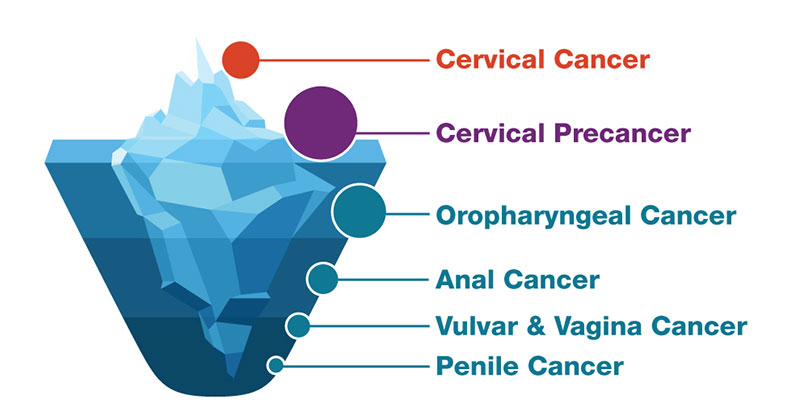
HPV vaccination could prevent more than 90% of cancers caused by Human Papillomavirus (HPV) from developing.

A new study published today by the American Academy of Pediatrics found parents cited vaccine safety as a leading reason for not intending to vaccinate their adolescent children against HPV has increased over time.

Overall, parental HPV vaccine hesitancy decreased by 5.5% annually between 2010 and 2012 and remained stable for nine years from 2012 through 2020.

The five most frequently cited reasons for not intending to vaccinate included “not necessary,” “safety concerns,” “lack of recommendation,” “lack of knowledge,” and “not sexually active.”

The proportion of parents citing “safety or side effects” as a reason for vaccine hesitancy increased significantly by 15.6% annually from 2010 to 2018.

The proportion of parents citing “not recommended,” “lack of knowledge,” or “child not sexually active” as reasons for vaccine hesitancy decreased significantly by 6.8%, 9.9%, and 5.9%, respectively, per year.

 And no significant changes were observed for parents citing “not necessary.”

The good news is by 2020, about 75% of adolescents had received at least one HPV vaccine dose, but only 59% completed the vaccination series.

The U.S. CDC updated its recommended HPV vaccination schedule in 2023.

Precision Vaccinations post other sexually transmitted disease vaccine news.

Vaccine Treats: 
Image: 
Image Caption: 
U.S. CDC HPV cancers May 2023
Live Blog Update Author: 
Location Tags: 
Disease data netwek
International Pathogen Surveillance Network connects countries and regions for analyzing disease data