Search API
Since the first dengue-like epidemic was suspected in 1635 in the Caribbean Islands, this mosquito-transmitted disease has impacted the health of millions of people throughout the Region of the Americas.
According to new data, the year 2024 may set an all-time record.
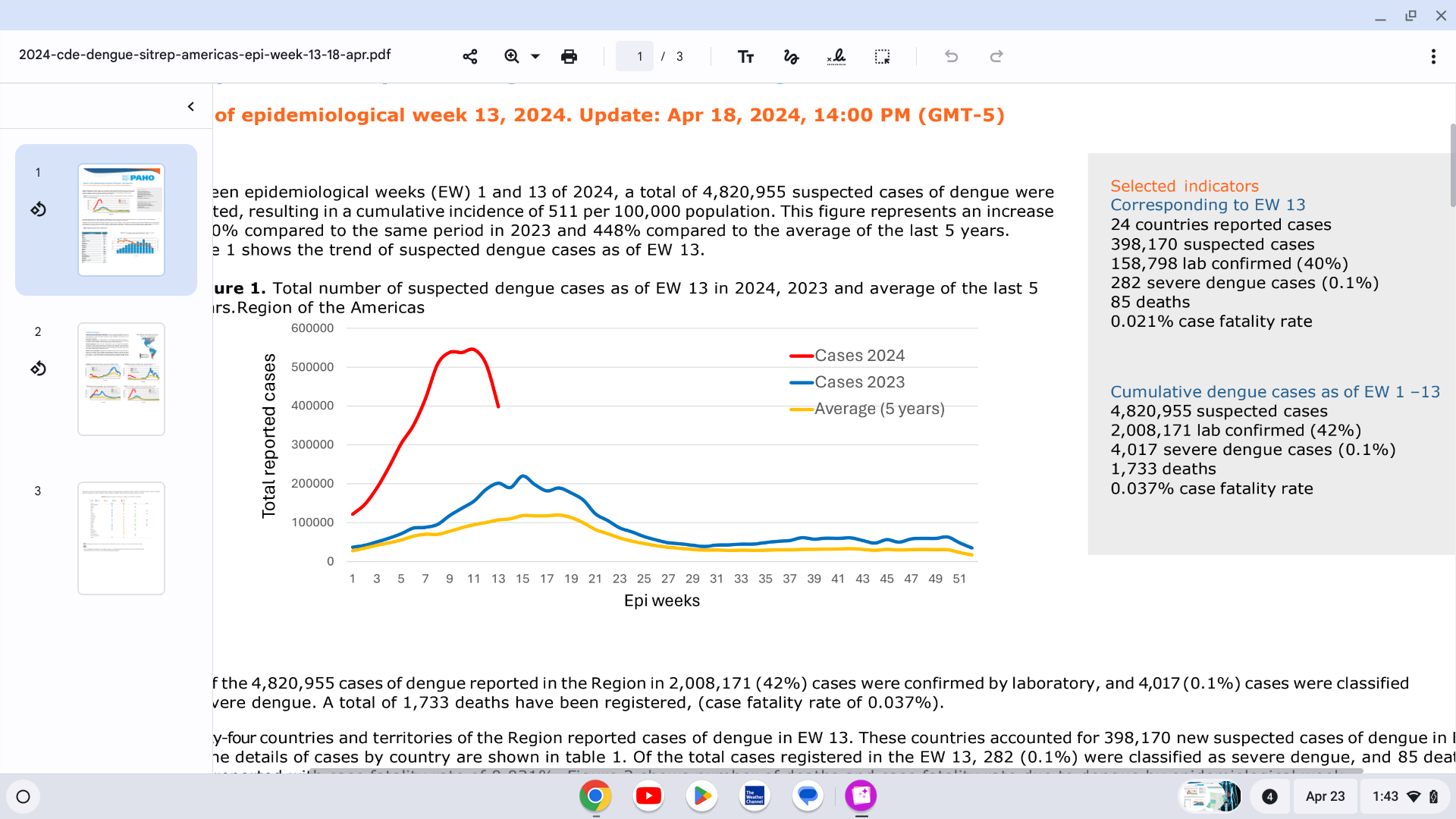
The Pan American Health Organization (PAHO) recently issued Situation Report No. 14 confirming that 4,820,955 suspected cases of Dengue (an increase
of 260% from 2023) and 1,733 deaths have been registered as of mid-April 2024.
As of April 23, 2024, Brazil has reported the most Dengue cases this year.
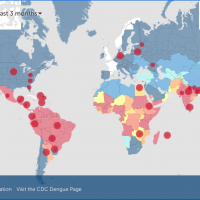
To alert international travelers, the U.S. Centers for Disease Control and Prevention (CDC) reissued its Level 1 Travel Health Advisory for the Americas on April 18, 2024. The countries listed have reported higher-than-usual dengue cases.
The CDC says travelers to these Caribbean, Central, and South American countries may be at increased risk.
Within the U.S., the CDC reported that 37 jurisdictions have reported 929 dengue cases as of April 2024.
The unfortunate leader is Puerto Rico, which has 644 dengue cases, followed by the state of Florida, which has 106 travel-associated cases and five locally acquired dengue cases this year.
From a prevention perspective, two dengue vaccines have been approved. To learn about vaccination options, the CDC says travelers should speak with a vaccine advisor at least one month before traveling abroad.
As of April 23, 2024, travel vaccines are offered at specialty clinics and certified pharmacies in the U.S.
The Florida Department of Health published Arbovirus Surveillance Update #15, which discloses various mosquito-borne diseases reported this year.
As of April 13, 2024, countries in southern Florida confirmed these mosquito-transmitted diseases:
- Chikungunya - Three cases of chikungunya that began in 2024 have been reported in individuals with a travel history to Brazil, and four cases were confirmed in 2023.
- Dengue Fever - In 2024, 106 travel-associated dengue cases have been reported, mainly by visitors from Cuba. In 2023, 609 travel-associated dengue cases were reported, primarily in people arriving from Brazil and Cuba. Five cases of locally acquired dengue were reported from Miami-Dade (4) and Pasco counties in 2024.
- Malaria - In 2024, nineteen cases of malaria with onset in 2024 have been reported in individuals with a travel history to malaria-endemic areas in Africa. In 2023, 78 malaria cases were reported.
To learn where these diseases are spreading, the U.S. CDC issued Travel Health Notices to inform travelers about global health risks.
While the U.S. FDA recently approved an innovative chikungunya vaccine, its availability in Florida is pending. Access to the approved dengue vaccine has specific requirements.
Furthermore, two approved malaria vaccines are unavailable in the U.S.
Visit a local travel clinic, such as Passport Health USA Tampa, to learn more about these and other travel vaccine options.

The U.S. government confirmed today that the ongoing measles outbreak in the United States is rapidly increasing.
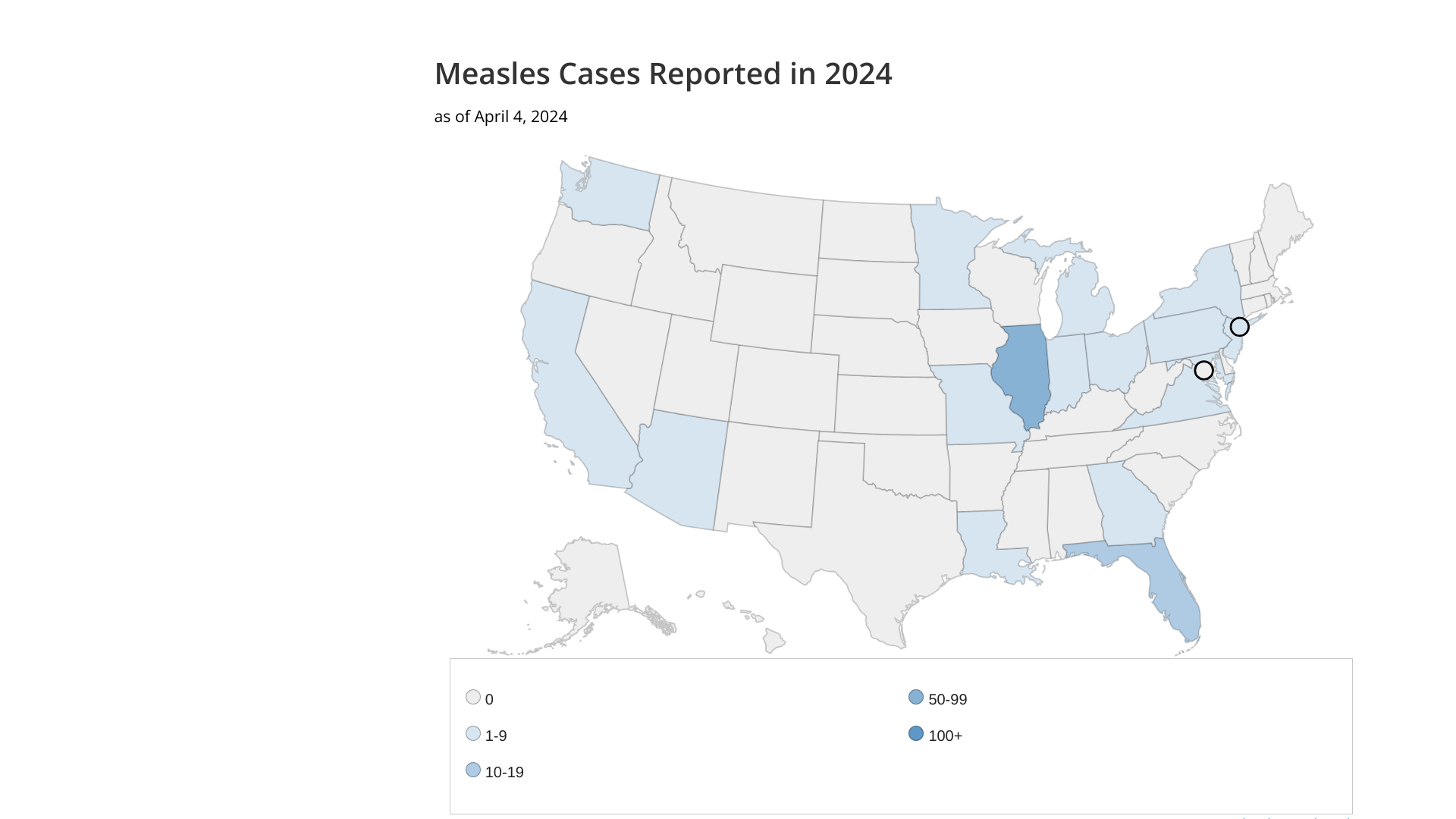
As of April 5, 2024, the Centers for Disease Control and Prevention (CDC) reported a total of 113 measles cases had been confirmed by 18 jurisdictions: Arizona, California, Florida, Georgia, Illinois, Indiana, Louisiana, Maryland, Michigan, Minnesota, Missouri, New Jersey, New York City, New York State, Ohio, Pennsylvania, Virginia, and Washington.
Seven outbreaks (defined as three or more related cases) were reported in 2024, and 73% are outbreak-associated.
For example, in Illinois, Chicago has reported about 58 measles cases over the past weeks.
About 58% of measles cases require hospitalization.
For comparison, in 2023, 58 measles cases were reported by 20 jurisdictions, with four outbreaks.
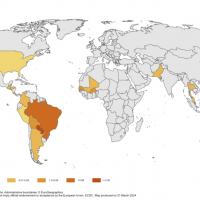
Internationally, the CDC listed the top ten international measles outbreaks as of March 12, 2024, led by Kazakhstan, Azerbaijan, Yemen, and India.
Furthermore, the United Kingdom's multi-month measles outbreak is accelerating in April 2024.
And to alert international travelers, the U.S. CDC republished a Travel Health Notice in late March 2024, identifying measles outbreaks in 49 countries.
The CDC says measles is a vaccine-preventable disease.
Various measles vaccines are offered at clinics and pharmacies in the U.S.
Brazil's health officials are concerned about an unprecedented number of dengue cases reported in early 2024—more than one million. Traditionally, Brazil's dengue cases peak between March and May.
As reported by the AP, Brazil declared public health emergencies in Acre, Minas Gerais, Goias, and the Federal District in February 2024 to increase awareness.
According to the Municipal Health Secretariat of Rio de Janeiro, the "Against Dengue Every Day" campaign included the distribution of repellents, stickers, bandanas, and hats with warnings about the mosquito-transmitted disease.
Rio is a very popular vacation destination for events such as Carnival, receiving about 2 million foreign tourists.
The AP also reported that a section of Rio deployed the Wolbachia technique, also known as the Incompatible Insect Technique, and is seeing initial, positive results.
This biological method uses Wolbachia-infected mosquitoes to reduce the number of mosquitoes that spread vector-borne diseases. This method has been tested in the United States since 2016, initially in Miami, Florida.
In addition to genetically modifying local mosquitoes, Brazil has been offering dengue vaccinations.
Brazil became the first Latin American country to include the second-generation QDENGA® (TAK-003) vaccine in its public health system. The government plans to administer over 5 million doses in 2024.
This dengue vaccine does not require pre-admission testing.
To expand access, Biological E. Limited committed in February 2024 to manufacturing up to 50 million QDENGA doses annually, accelerating the vaccine's owner Takeda's ability to deliver 100 million doses annually by 2030.
As of March 30, 2024, QDENGA is unavailable in the United States.

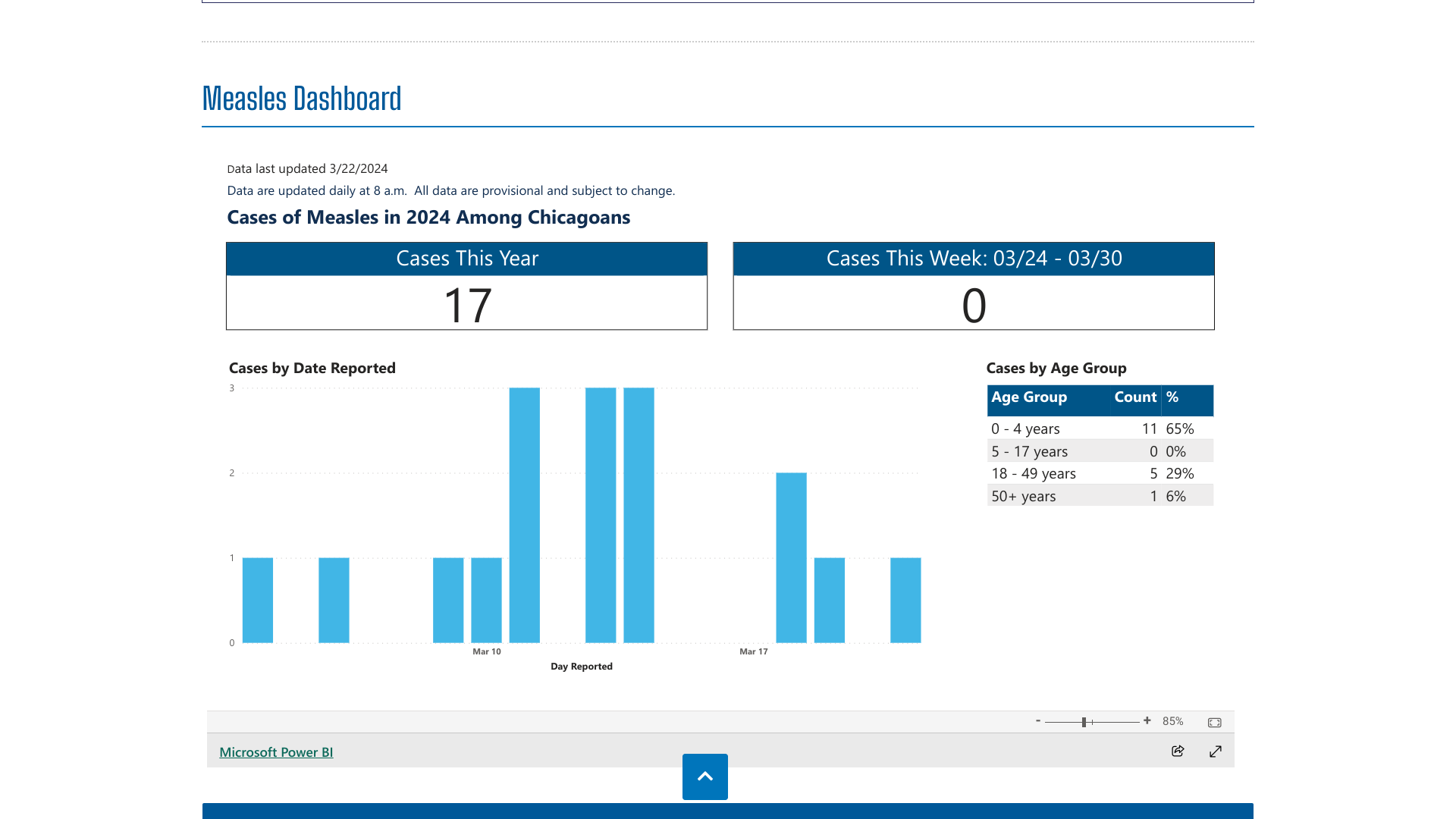
The Chicago Department of Public Health (CDPH) is responding to the first measles cases in the city since 2019 and a recent outbreak.
As of March 24, 2024, CDPH has identified 17 confirmed measles cases in Chicago, most of which have been found in the Pilsen new arrivals shelter on Halsted Street.
Of the 17 confirmed cases, 11 are in children below the age of 5.
CDPH has established vaccine operations at new arrival shelters and the landing zone. Since the measles outbreak began, about 4,000 people have received a measles-mumps-rubella (MMR) vaccine.
MMR vaccination remains the best and most effective way to prevent the spread of measles, and all Chicagoans should review their immunization records or contact their healthcare provider to ensure they are up to date on the vaccine.
MMR vaccinations are generally offered at health clinics and community pharmacies in Illinois.
During 2024, a total of 64 measles cases were reported by 17 jurisdictions: Arizona, California, Florida, Georgia, Illinois, Indiana, Louisiana, Maryland, Michigan, Minnesota, Missouri, New Jersey, New York City, Ohio, Pennsylvania, Virginia, and Washington.
In 2023, the U.S. CDC reported 58 measles cases in 20 jurisdictions.