Search API
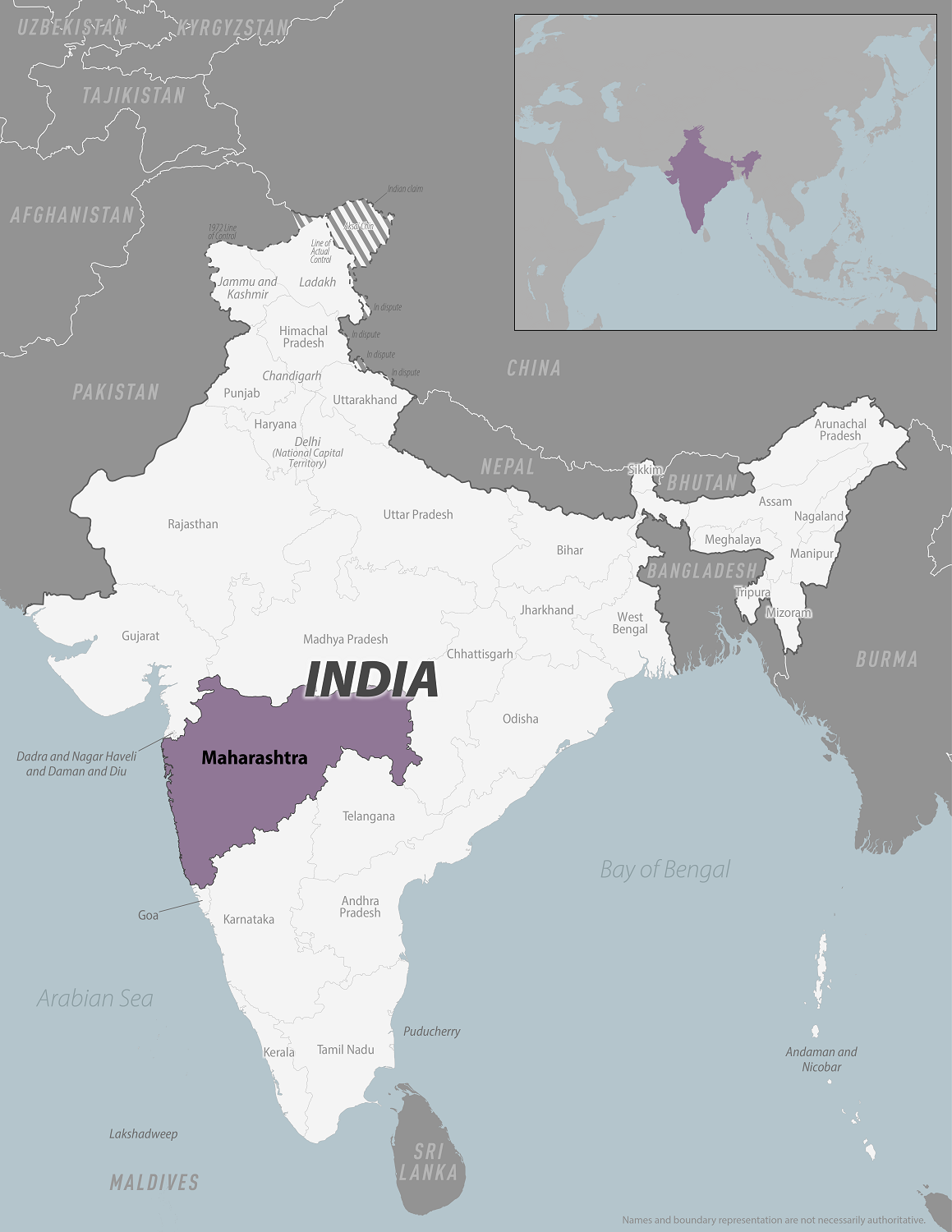
The U.S. Centers for Disease Control and Prevention (CDC) recently confirmed there is an outbreak of Zika virus in the state of Maharashtra, India.
The Times of India recently reported 113 confirmed Zika cases, of which 100 are from Pune district, including pregnant women.
On August 22, 2024, the CDC published a Level 2 - Practice Enhanced Precautions, Travel Health Notice, offering specific Zika advice.
The CDC says all travelers to Maharashtra should prevent mosquito bites and sexual transmission of the Zika virus during and after travel. Zika virus is most commonly spread to people by the bite of an infected Aedes species mosquito.
If you are planning pregnancy, you should delay pregnancy following travel to India based on the timeframes to prevent sexual transmission.
If you are pregnant, you should avoid travel to Maharashtra. If travel is unavoidable, you should strictly follow Zika prevention recommendations from your healthcare provider.
Infection during pregnancy can cause certain birth defects, says the CDC.
Furthermore, travelers to Maharashtra should seek medical care immediately if they develop fever, rash, headache, joint or muscle pain, or red eyes during or after travel.
In addition to India, there have been over 40,000 Zika cases confirmed in the Region of the Americas in 2024.
There is currently no vaccine to prevent a Zika infection.
However, Valneva SE's VLA1601 second-generation Zika vaccine candidate has progressed in clinical trials.
The journal Clinical Infectious Diseases recently published results from an extensive, observer-blinded, CLOVER phase 3 clinical trial that found a Clostridioides difficile vaccine candidate was safe, well tolerated, and reduced the severity of C difficile infection (CDI).
However, this vaccine did not reduce the incidence of CDI in at-risk adults.
Although the primary endpoint of this study was not met, PF-06425090 reduced symptom duration, CDI requiring medical attention, and CDI-directed antibiotic treatment, highlighting its potential to reduce CDI-associated healthcare burden, wrote these researchers on August 24, 2024.
The U.S. CDC says CDI causes substantial mortality and healthcare burden. In 2022, the incidence rate of CDI increased with age, and rates were higher in women.
As of August 27, 2024, no C difficile infection protection vaccines are available.


CancerVax, Inc. announced today that the Company has recently filed a new patent application, which includes Smart mRNA Technology.
The Company’s new patent application describes a customizable nanoparticle containing Smart mRNA that can DETECT, MARK, and KILL only cancer cells.
By forcing cancer cells to “look” like well-immunized diseases such as measles or chickenpox, we intend to harness the body’s natural immunity to kill cancer cells effectively.
For example, anyone who has had chickenpox, or been vaccinated for chickenpox, has lifetime immunity to the disease. We intend to activate and harness this natural immunity to fight cancer.
Dr. Adam Grant, Principal Scientist at CancerVax and co-inventor of this new technology commented in a press release on August 27, 2024, “In the creation of this new technology, we have been using cutting-edge machine learning and artificial intelligence algorithms to identify genetic signatures that differentiate cancer cells from healthy cells."
"We can quickly load these signatures into our Smart mRNA for immediate lab testing. Not only does this speed up innovation, but it drastically reduces the current laborious and iterative drug discovery process. Only recently have the scientific tools and data been available to allow us to discover and innovate this technology."
"As a computational biologist by training, I have watched the advancement of drug delivery systems over the years, and the availability of next-generation sequencing data sets grow to the point where we can now design new and exciting drugs that we believe can change the game in cancer treatments.”
Dr. Grant continued, “Our natural immune system is an expert at identifying and eradicating foreign pathogens. When a pathogen is eliminated from the body, our immune system remembers it if it infects the body again."
"Our Universal Cancer Treatment Platform harnesses this extraordinary immune system capability by marking cancer cells with something the immune system already knows, such as measles. This way, the immune system can easily kill the cancer cells, just as it would with measles."
"In contrast to other cancer therapies, our technology employs the full power of the body’s immune system. It has the potential to turn “cold” tumors into “hot” tumors, overcoming a major hurdle in treating cancer patients with existing immunotherapies."
We look forward to validating our hypotheses using in-vivo models and refining our technology shortly.”


Tonix Pharmaceuticals Holding Corp. and Bilthoven Biologicals (BBio) today announced a collaboration to advance TNX-801, a mpox vaccine candidate.
TNX-801 (recombinant horsepox virus) is a live replicating, attenuated, single-dose vaccine candidate based on horsepox in preclinical development to prevent mpox and smallpox.
TNX-801 is based on technology that has the potential to be used as a viral vector platform from which recombinant versions can be developed to protect against other infectious diseases.
BBio is a global vaccine company that produces prophylactic and therapeutic vaccines and is part of the world’s largest vaccine manufacturer, the Cyrus Poonawalla Group, which includes the Serum Institute of India.
BBio has been selected by the European Union for its pandemic preparedness program of ‘ever warm’ vaccine manufacturing companies.
“The recent mpox outbreak exemplifies precisely why we built the pandemic preparedness facility at BBio,” said Jurgen Kwik, Chief Executive Officer of Bilthoven Biologicals, in a press release on August 26, 2024.
“The establishment of the 'ever-warm' facility for pandemic preparedness underscores the critical importance of readiness in the face of global health emergencies, such as mpox. This collaboration encapsulates the essential role of the facility in bolstering pandemic preparedness and response capabilities."
Tonix has received an official written response from a Type B pre-Investigational New Drug Application meeting with the U.S. Food and Drug Administration to develop TNX-801 as a potential vaccine to protect against mpox and smallpox diseases.
Currently, four mpox / smallpox vaccines are in use globally.

Immorna Biotherapeutics Inc. today announced that it has received a $3.8 million grant from the Bill & Melinda Gates Foundation to support the clinical development of JCXH-108.
JCXH-108 is a Respiratory Syncytial Virus (RSV) monovalent vaccine candidate based on Immorna’s proprietary mRNA and ‘Ready-to-Use’ lipid nanoparticle technologies.
Available data suggest that the mRNA-RTU-LNP vaccine can achieve approximately 18 months of shelf-life at 2-8 °C, over two months of stability at room temperature, and at least 8 hours of in-use stability in the clinical setting. The enhanced stability is expected to significantly reduce the logistics complexity associated with mRNA vaccine storage, transportation, and distribution, hence enhancing this mRNA vaccine's accessibility.
The grant provides staged financial support to expedite JCXH-108’s clinical trials and clinical development of the multi-dose vial vaccine, the marketing application in the U.S., and the World Health Organization Pre-Qualification.
Dr. Zihao Wang, Co-Founder and CEO of Immorna, commented in a press release on August 26, 2024, “I believe that, if successfully approved for marketing, JCXH-108 may help protect millions of susceptible individuals and their families from the deadly diseases associated with RSV infection, which is particularly meaningful .... where RSV infection is prevalent."
"We are on track to enroll the first subject for our clinical trial by the end of August 2024."
As of August 2024, the U.S. CDC has approved three RSV vaccines and one monoclonal antibody. These products are available at clinics and pharmacies for the RSV 2024-2025 season.

The U.S. Food and Drug Administration has approved and granted emergency use authorization for updated mRNA COVID-19 vaccines (2024-2025 formula) to include a monovalent component that corresponds to the Omicron variant KP.2 strain of SARS-CoV-2 coronavirus.
Announced on August 22, 2024, the mRNA COVID-19 vaccines have been updated with this formula to more closely target currently circulating variants and provide better protection against serious consequences of COVID-19, including hospitalization and death.
“Vaccination continues to be the cornerstone of COVID-19 prevention,” said Peter Marks, M.D., Ph.D., director of the FDA’s Center for Biologics Evaluation and Research, in a press release.
These FDA actions relate to updated mRNA COVID-19 vaccines manufactured by ModernaTX Inc. and Pfizer Inc.
On August 19, 2024, Novavax Inc. announced, 'We are working productively with the FDA as they complete their review, including providing additional information as needed, and the FDA has committed to moving swiftly on regulatory authorization.'
'We expect authorization (protein-based vaccine) for peak vaccination season.'
The FDA states that vaccination is one of the most effective ways to prevent infectious diseases, disabilities, and deaths. In the U.S., routine childhood vaccines prevent many diseases, and immunization has reduced the occurrence of most vaccine-preventable diseases by over 95%.