Search API
Today's dynamic digital vaccine news typically involves fact-checking by trusted third parties, but it rarely includes a manufacturer openly responding to a potentially biased article.
Recently, the news industry has been challenged in its ability to comprehend vaccine-related clinical trials and technical journal articles.
For example, on June 16, 2024, The Economic Times published a headline stating, 'Bharat Bio's Rotavirus vaccine Rotavac may be unsafe for children: Study.'
Later that day, the company posted on X its response....Unfair Journalistic Practices and Breach of Ethics by The Economic Times.
While this vaccine efficacy debate may be illuminated on social media for days and probably never settled, vaccine hesitancy and reduced trust in the healthcare delivery system will continue.
In most countries, government agencies, such as the U.S. FDA, play vital roles in communicating virology (vaccines, immunotherapies, gene therapy, monoclonal antibodies) risks and benefits, not media-centric fiction.

Novavax, Inc. today announced that it has submitted an amendment to its Emergency Use Authorization to the U.S. Food and Drug Administration (FDA) for its updated JN.1 COVID-19 vaccine (NVX-CoV2705) for individuals aged 12 and older.
The submission aligns with guidance from the U.S. FDA, the European Medicines Agency, and the World Health Organization to target the JN.1 lineage during late 20204.
As discussed at the recent FDA meeting, targeting JN.1, the parent strain of the most common currently circulating SARS-CoV-2 virus variants has a public health benefit.
Novavax's JN.1 vaccine has demonstrated broad cross-neutralizing antibodies against multiple variant strains, including KP.2 and KP.3, indicating the potential to protect against forward drift variants.
"Novavax is committed to having a protein-based COVID-19 option available at the start of the vaccination season, which is critical because research suggests that providing vaccine choice, along with healthcare provider recommendations, may help improve vaccination rates," said John C. Jacobs, President and Chief Executive Officer, Novavax, in a press release on June 14, 2024.
Nonclinical data have demonstrated that Novavax's JN.1 vaccine induces broad neutralization responses to JN.1 lineage viruses, including those containing the F456L and R346T mutations, and to "FLiRT" and "FLuQE" variants.
Novavax's vaccine also produces conserved polyfunctional, Th1-biased CD4+ T cell responses to a range of JN.1 lineage variants.2 Novavax's updated JN.1 COVID-19 vaccine targets the "parent strain" of KP.2 and KP.3.
Novavax intends to have doses in the U.S. for distribution by mid-July. Upon FDA authorization and U.S. CDC recommendation, Novavax is preparing to deliver to U.S. customers promptly. Novavax is also working with other regulatory authorities globally to authorize or approve its JN.1 COVID-19 vaccine.


The U.S. Biomedical Advanced Research and Development Authority (BARDA) today announced up to $500 million in Project NextGen funding for multiple Phase 2b clinical trials to evaluate novel vaccines administered as a nasal spray or as a pill to protect against symptomatic COVID-19.
While currently approved COVID-19 vaccines are administered intramuscularly, they are limited in their capacity to induce a robust immune response in mucosal areas such as the mouth, nose, and gut, where the SARS-CoV-2 coronavirus first enters people.
Successful development of intranasal and oral vaccines would provide safe, effective, needle-free, easier-to-administer options with the potential to improve vaccine access.
“We learned a lot during the COVID-19 pandemic that we can use to better prepare for future public health crises. That includes finding new ways to administer vaccines to make it even easier for everyone to protect themselves from illness,” U.S. HHS Secretary Xavier Becerra said in a press release on June 13, 2024.
The project awards were made to:
Up to $453 million to Vaxart of San Francisco, California, developing an oral pill vaccine candidate, adenovirus serotype 5. BARDA will provide an initial $65.7 million for early trial milestones, with remaining funds provided as the effort successfully advances toward trial execution. Vaxart will execute its own Phase 2b clinical trials.
Approximately $34 million was donated to Castlevax, part of the Mount Sinai Health System in New York City, to develop an intranasal vaccine candidate, CVAX-01.
Approximately $40 million will go to Cyanvac of Athens, Georgia, to develop an intranasal vaccine candidate, CVXGA.
Castlevax and Cyanvac Phase 2b trials are in partnership with BARDA’s Clinical Studies Network.
These awards are just one component of BARDA’s Project NextGen medical countermeasures portfolio. To date, BARDA has leveraged more than $2 billion in Project NextGen funding to support the development of next-generation vaccines, treatments, and enabling technologies.
As of June 14, 2024, the U.S. government has approved three COVID-19 vaccines, while the World Health Organization has qualified 13 vaccines.


Sysmex Astrego AB announced today that it was awarded the Longitude Prize for antimicrobial resistance for developing a rapid antimicrobial susceptibility test for urinary tract infections (UTIs).
Sysmex Astrego received the $10.2 million award to incentivize the development of transformative point-of-care tests that will improve antibiotic treatment decisions.
Using a 400 microlitre urine sample on a smartphone-sized cartridge, the PA-100 AST System test can identify the presence of bacterial infections such as UTIs in just 15 minutes.
The goal is to replace the 2-3 day lab test process.
"Winning the Longitude Prize is the first true and biggest recognition that what we have been doing all these years was for a very important global cause," Ozden Baltekin, PhD, Sysmex Astrego director of program management, said in a press release on June 12, 2024.
Sysmex Astrego launched the PA-100 AST System in Europe in 2023 and intends to accelerate global expansion efforts.
UTIs are the most common bacterial infection, and around 50-60% of women develop one in their lifetime.
As of June 13, 2024, a UTI vaccine is available in certain countries, and new therapies are conducting late-stage development.


Gavi, the Vaccine Alliance, today announced support for human rabies vaccines for post-exposure prophylaxis (PEP) as part of routine immunization.
On June 13, 2024, Gavi stated eligible countries are receiving guidance on how to access these vaccines under Gavi’s cofinancing policy. The first round of applications will be accepted by mid-July 2024. Ninety-five percent of human rabies deaths occur in Africa and Asia.
“This commitment from Gavi is crucial and will expedite efforts to halt human fatalities caused by dog-mediated rabies,” said Dr Jérôme Salomon, Assistant Director-General for Universal Health Coverage, Communicable and Noncommunicable Diseases at WHO, in a press release.
“WHO will provide technical assistance to countries, not only to support their funding applications to Gavi but to draw up comprehensive plans of action that can deliver real progress towards the Zero by 30 goal.”
This development complements the ongoing global efforts of the Zero by 30 campaign, led by United Against Rabies partners, including the Food and Agriculture Organization, the World Health Organization, and the World Organisation for Animal Health, to eliminate dog-mediated human rabies by 2030.
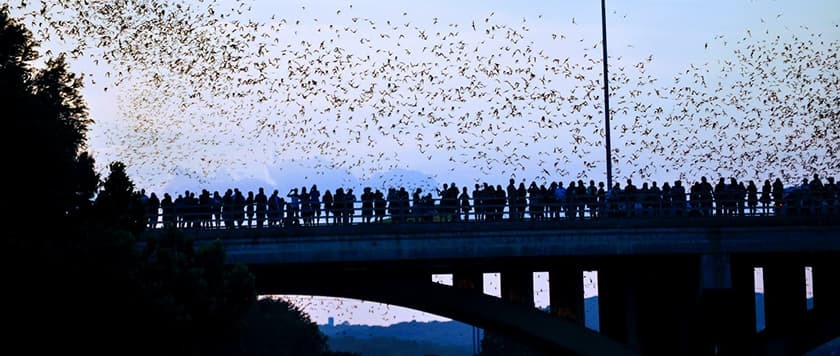
In the United States, the Centers for Disease Control and Prevention reports bats, not dogs, are the leading source of rabies cases.