Search API
Bavarian Nordic A/S today provided an update on its supply and manufacturing activities supporting the ongoing mpox outbreak. The Company produces MVA-BN® (JYNNEOS®, IMVAMUNE®, and IMVANEX®), a leading smallpox and mpox vaccine.
Since the recent declaration of a Public Health Emergency of International Concern (PHEIC) by the World Health Organization (WHO), Bavarian Nordic has intensified the collaboration with global stakeholders to support efforts to combat the mpox outbreak.
Thanks to donations from the European Commission, the U.S. government and Bavarian Nordic, the first doses of MVA-BN arrived last week in the Democratic Republic of Congo, the epicenter of the mpox clade 1b outbreak. More than 250,000 doses have already been shipped, and other countries have pledged further donations of more than 500,000 doses of MVA-BN.
Bavarian Nordic stated that by focusing the full capacity to address the current public health emergency, the Company could supply up to 13 million MVA-BN doses by the end of 2025, including 2 million in 2024.
Paul Chaplin, President & CEO of Bavarian Nordic, said in a press release on September 12, 2024, “As the supplier of the only non-replicating mpox vaccine that has shown to be highly effective during a mpox outbreak, we have been working closely with all governments and organizations to support the international efforts to combat the latest public health emergency."
"Just as during the clade two mpox outbreak in 2022/23, we will support all requests for vaccine and have already secured agreements and submitted responses to the UNICEF tender that will hopefully secure more access to MVA-BN globally."
The JYNNEOS vaccine is commercially available in the United States at select travel clinics and pharmacies.
The U.S. government recommends two JYNNEOS doses to provide robust protection against disease. However, routine immunization against mpox is not recommended for the general public, and a booster dose (3rd) is not endorsed.

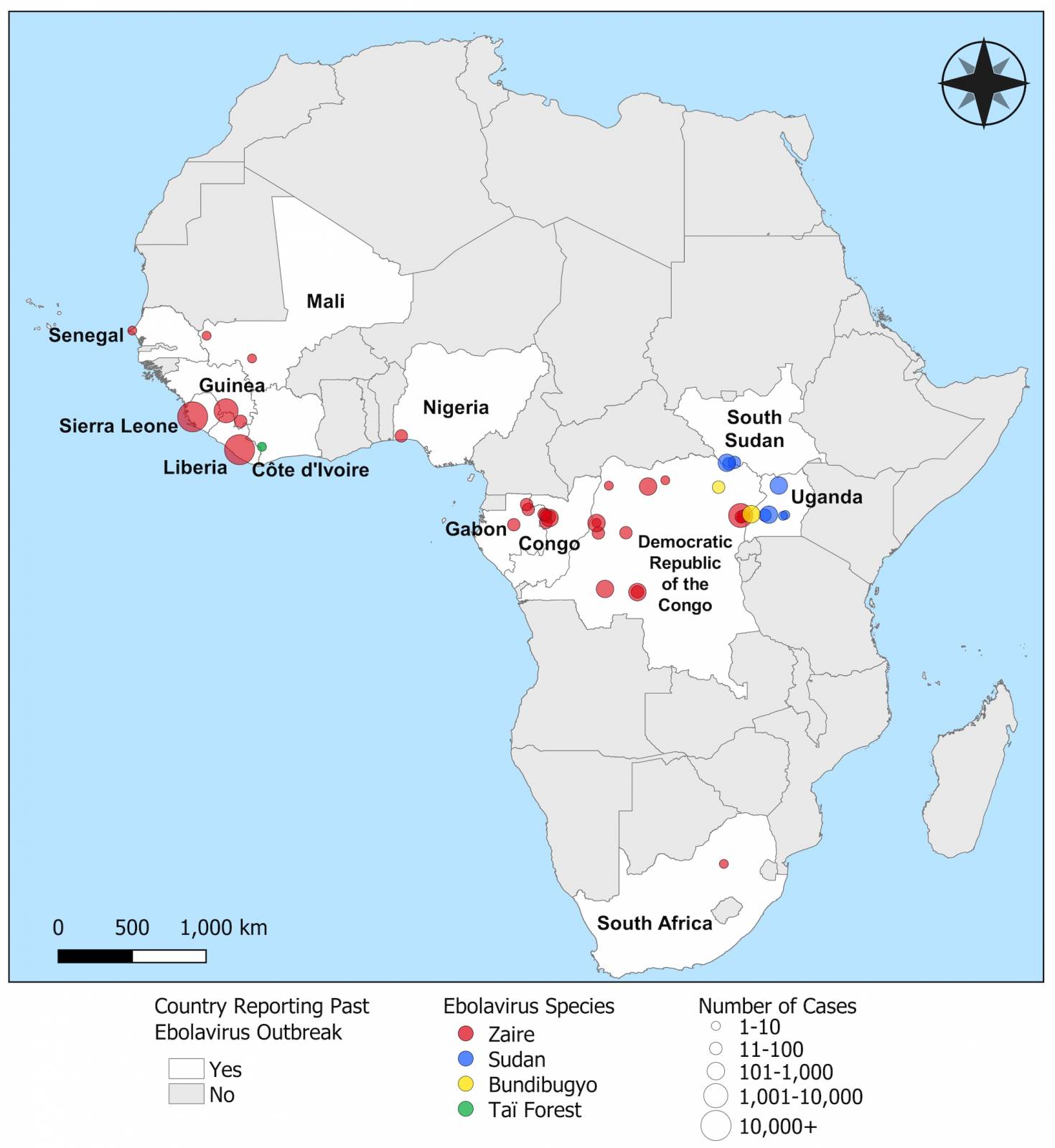
While there is an approved Ebola virus disease (EVD) vaccine, the U.S. government continues to invest in human monoclonal antibody (mAb) therapy during Zaire ebolavirus outbreaks in Africa.
The initial Zaire Ebolavirus disease (EVD) case was confirmed in 1976, Since then, more than 30 EVD outbreaks have been reported.
Emergent BioSolutions Inc. announced today that it was awarded a contract modification executing an option period by the Biomedical Advanced Research and Development Authority (BARDA), valued at $41.9 million, for drug substance engineering and scale-up process validation, long-term stability, and commercial readiness in support of its ongoing scale-up program for Ebanga™, a licensed glycoprotein (EBOV GP)-directed mAb treatment for EVD.
“Emergent is proud to continue to advance the Ebanga™ (ansuvimab-zykl) development and scale up to its next phase,” said Paul Williams, senior vice president of products business, Emergent, in a press release on September 12, 2024.
This mAb binds to a portion of the Ebola virus's surface called the glycoprotein, which prevents the virus from entering a person's cells. Ebanga's efficacy has not been established for other species of the Ebolavirus and Marburgvirus.
Under the terms of the contract, Emergent will complete activities to advance the development of Ebanga™ treatment through post-licensure commitments, including the transfer of technology as part of manufacturing scale-up, submission of a supplemental Biologics License Application to the U.S. Food and Drug Administration (FDA), and completion of stability studies.
The existing 10-year contract consists of a base period of performance with two option periods for advanced development valued at approximately $121 million and option periods for procurement of Ebanga™ treatment over five years valued at up to $583 million. Execution of this option period is in line with Emergent’s planned program performance and critical path for developing the Ebanga™ treatment.
BARDA is part of the Administration for Strategic Preparedness and Response within the U.S. Department of Health and Human Services.

Moderna, Inc., today announced program and financial updates at its annual R&D Day event, demonstrating progress and strategic prioritization of its mRNA pipeline.
Stéphane Bancel, CEO of Moderna, commented in a press release, "The size of our late-stage pipeline combined with the challenge of launching products means we must now focus on delivering these ten products to patients, slow down the pace of new R&D investment, and build our commercial business."
Moderna's updates on September 12, 2024, include but are not limited to, several seasonal influenza vaccine candidates in clinical development.
The Company's investigational seasonal flu vaccine, mRNA-1010, has demonstrated consistently acceptable safety and tolerability across three Phase 3 trials.
In the most recent Phase 3 trial (P303), which was designed to test the immunogenicity and safety of an optimized vaccine composition, mRNA-1010 met all immunogenicity primary endpoints, demonstrating higher antibody titers compared to a licensed standard-dose flu vaccine (Fluarix®).
In an older adult extension study of P303, mRNA-1010 met all primary immunogenicity, including superiority for all compared to a licensed enhanced flu vaccine (Fluzone HD®), and showed an acceptable reactogenicity profile.
The Company plans to start a confirmatory vaccine efficacy study for mRNA-1010 in 2024, funded by previously announced project financing through Blackstone Life Sciences.
Moderna also confirmed it is no longer pursuing an accelerated approval pathway for the regulatory submission of its standalone flu vaccine, mRNA-1010, to focus its resources on submitting a potentially more impactful flu/COVID combination vaccine, mRNA-1083, in 2024.
With the 2024-2025 flu season beginning in the United States, most health clinics and pharmacies offer flu shot vaccination services.
About 158 million flu vaccines had been distributed during the 2023-2024 season.

With the 2024-2025 Respiratory Syncytial Virus (RSV) season detected in Florida, recent research confirms the newly approved passive immunization monoclonal antibody offers infants significant protection.
On September 11, 2024, a study conducted in Spain and published by the American Academy of Pediatric Association concluded that Beyfortus™ (Nirsevimab) could effectively protect a broad infant population against RSV infection: a 63.1% reduction in acute bronchiolitis-related hospital admissions (95% confidence interval [CI], 60.9% to 65.2%) and a 63.1% reduction in pediatric intensive care unit admissions (95% CI, 58.1% to 67.9%).
In clinical trials, Beyfortus was reported to be about 90% (95% CI = 75%–96%) protective against RSV-associated hospitalization in infants in their first RSV season.
As of March 2024, the U.S. CDC reported that among females with an infant under eight months old, 41.3% reported that their infant received Beyfortus.
Beyfortus is currently recommended for newborn children in Australia, Canada, China, Europe, Japan, and France.

According to an American Academy of Pediatrics study, the effectiveness of a single dose of the rotavirus vaccine against emergency department visits or hospitalizations for inflammation of the gastrointestinal tract was 78% in children younger than five years and 53% in older children.
On September 10, 2024, these researchers wrote rotavirus vaccines remain highly effective in preventing disease in children.
The U.S. Centers for Disease Control and Prevention says two types of rotavirus vaccine are available for infants, and both are safe and effective. Two or more doses of the rotavirus vaccine are recommended as the best way to protect against it.
The Vaccines for Children (VFC) Program allows children to access no-cost vaccines such as rotavirus. The VFC program helps families of eligible children who may not be able to afford or have access to vaccines.

Alopexx, Inc. today announced a collaboration with India-based Bharat Biotech for the co-development and commercialization of the broad-spectrum antimicrobial vaccine, AV0328.
AV0328 is a synthetic vaccine designed to target poly N-acetyl glucosamine (PNAG), a substance found on the surface of a wide range of bacterial, fungal, and parasitic pathogens.
In preclinical studies, targeting PNAG has shown effectiveness in preventing and treating infections caused by over 15 different pathogens.
A phase I, first-in-human clinical trial, has been completed, demonstrating that AV0328 is well-tolerated with no serious adverse events observed. The vaccine-induced antibodies are capable of killing a wide range of PNAG-expressing pathogens, reaffirming their potential as a broad-spectrum antimicrobial solution.
Dr. Krishna Ella, Executive Chairman of Bharat Biotech, commented in a press release on September 11, "024: We are proud to collaborate with Alopexx to bring AV0328 to the regions (India) where it is most needed."
"Our goal is to develop solutions to reduce antimicrobial resistance through vaccination. This collaboration aligns with our mission to provide safe, affordable, and high-quality vaccines to combat infectious diseases globally."
The companies will co-develop and commercialize AV0328 in India and other licensed territories as part of the collaboration.
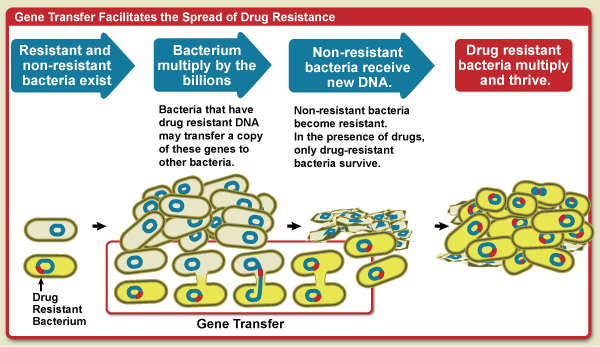
This Review discusses evidence that vaccines can play a major role in fighting antimicrobial resistance (AMR).
Different health organizations have highlighted the emergence and spread of AMR as a global threat. Pathogens resistant to AMR cause substantial morbidity and death. As resistance to multiple drugs increases, novel and effective therapies and prevention strategies are needed, wrote researchers in 2022.
Merck today announced positive top-line results from its pivotal Phase 3 clinical trial evaluating the company’s 9-valent Human Papillomavirus (HPV) vaccine, GARDASIL ® 9 vaccine, in Japanese males ages 16 to 26.
This trial (V503-064) met its primary and secondary endpoints demonstrating that administration of a 3-dose regimen of GARDASIL 9 reduced the combined incidence of anogenital persistent infection caused by nine types of HPV compared with a placebo.
“A decade after the first approval of GARDASIL 9, Merck continues to evaluate this important vaccine in additional patient populations and remains committed to helping prevent certain HPV-related cancers through broad and equitable access globally,” said Dr. Eliav Barr, senior vice president, head of global clinical development and chief medical officer, Merck Research Laboratories, in a press release on September 11, 2024.
“These data build on the clinical efficacy of GARDASIL 9 for the prevention of persistent infection in males and can potentially make a significant impact in addressing the global burden of certain HPV-related cancers and diseases.”
This HPV vaccine is generally available at clinics and pharmacies in the U.S. However, Merck says the GARDASIL 9 vaccination may not protect all vaccine recipients.

The Los Angeles County Department of Public Health (LACDPH) recently confirmed a locally acquired case of dengue fever in a person living in the City of Baldwin Park.
Dengue fever is transmitted primarily through the bite of infected Aedes mosquitoes.
As of September 9, 2024, this is the third locally acquired case of dengue fever in California and the first identified by the Los Angeles County Department of Public Health. Previous locally acquired cases of dengue fever in the greater LA area were identified in Long Beach and Pasadena in 2023.
The LACDPH stated the risk of transmission of dengue virus to the general population in Los Angeles County remains low.
As of September 5, 2024, the U.S. CDC reported that 53 jurisdictions, led by Florida, New Jersey, New York, and Puerto Rico, have reported 4,369 dengue cases this year. In 2023, 52 U.S. jurisdictions reported 2,343 dengue cases.
The CDC wrote that these local dengue cases reinforce the presence of infected mosquitoes and underscore the importance of preventive measures to control the spread of this virus.
As of September 10, 2024, dengue vaccines are not offered in the United States.