Search API
The U.S. Centers for Disease Control and Prevention (CDC) today issued Health Alert Network Health Update (CDCHAN-00516) to provide additional information about the ongoing outbreak of clade I monkeypox virus (MPXV), the virus that causes mpox.
As of September 23, 2024, no cases of clade I mpox have been identified in the U.S.
This mpox strain is more severe than the clade 2 strain circulating in the U.S. since May 2022.
The CDC urges travelers to vaccinate against mpox if they are heading to Eastern and Central African countries where clade 1 MPXV has been spreading.
Furthermore, healthcare providers and travel vaccine experts should recommend vaccination to those whose activities place them at risk.
This is essential advice since clade 1 mpox cases have recently been confirmed in international travelers.
For example, The Mint reported a man from Malappuram district in Kerala, India, has been detected with Mpox clad I. The patient had returned from the United Arab Emirates.
According to the CDC, two doses of JYNNEOS® (MVA-BN®, IMVAMUNE®, IMVANEX®) should be given at least six weeks before traveling abroad. This U.S. FDA-approved vaccine is available at clinics and pharmacies in the U.S.

A new report jointly released by the World Health Organization (WHO) and ITU (International Telecommunication Union) today suggests an additional $0.24 per patient per year investment in digital health interventions, such as telemedicine, mobile messaging, and chatbots, can help save more than two million lives over the next decade from noncommunicable diseases.
These diseases include, but are not limited to, cardiovascular, cancer, diabetes, and chronic respiratory diseases.
This small investment could also avert approximately 7 million acute events and hospitalizations, significantly reducing the strain on healthcare systems worldwide.
ITU Secretary-General Doreen Bogdan-Martin commented in a press release on September 23, 2024, "We call for greater collaboration between the health and tech sectors, including the development of strong digital public infrastructure, essential for the delivery of digital health services that can benefit people everywhere without leaving anyone behind."
The publication" "going Digital for Noncommunicable Diseases: The Case for Action" was launched at an event hosted by the Government of The Gambia during the 79th United Nations General Assembly in collaboration with the ITU and WHO.

Vicebio Ltd. today announced a $100 million Series B financing led by TCGX and others. Vicebio is developing next-generation vaccines for respiratory viruses utilizing its proprietary Molecular Clamp technology, which was discovered at the University of Queensland (UQ).
The Molecular Clamp technology applies to a wide range of viruses, including Respiratory Syncytial Virus (RSV), Human Metapneumovirus (hMPV), Parainfluenza virus, Influenza, and Coronaviruses, as confirmed by promising preclinical and clinical studies.
Vicebio has recently initiated a Phase I clinical trial with VXB-241, its bivalent vaccine targeting RSV and hMPV. Initial clinical readouts of the Phase 1 study are expected to launch in mid-2025.
This financing will also support the acceleration and expansion further development of Vicebio’s multivalent pipeline, including VXB-251, a trivalent vaccine targeting RSV, hMPV, and Parainfluenza Virus 3, a further valency that addresses a significant remaining medical burden in the elderly.
Cariad Chester, Managing Partner at TCGX, said in a September 23, 2024, press release, “Vicebio has a unique capability to advance vaccine products that simultaneously provide robust immune responses against multiple respiratory pathogens. We look forward to working closely with the team to bring these important vaccines to the market.”
Prof. Paul Young, Daniel Watterson, and Keith Chappell at UQ developed the Molecular Clamp proprietary technology.

The Committee for Medicinal Products for Human Use (CHMP) of the European Medicines Agency (EMA) has recommended marketing authorization for the companies’ Omicron KP.2-adapted monovalent COVID-19 vaccine (COMIRNATY ® KP.2) for active immunization to prevent COVID-19 caused by SARS-CoV-2 in individuals six months of age and older.
Pfizer Inc. and BioNTech SE announced that the European Commission will review the CHMP’s recommendation and is expected to make a final decision soon.
The CHMP recommendation dated September 19, 2024, is based on the non-clinical and manufacturing data of the Omicron KP.2-adapted vaccine and the clinical and real-world evidence supporting the safety and efficacy of prior formulas of the COVID-19 vaccines by Pfizer and BioNTech.
Pending the EC's authorization of the Omicron KP.2-adapted vaccine, both the Omicron KP.2-adapted vaccine and the Omicron JN.1-adapted vaccine will be available across the EU, though availability will vary based on individual country government requests and national recommendations.

The peer-reviewed journal The Lancet Infectious Diseases recently published interim results of a double-blind, randomized, placebo-controlled phase 3 trial in adolescents of the U.S. FDA-approved, single-dose IXCHIQ® (VLA1553) chikungunya vaccine.
In an article published on September 4, 2024, these researchers concluded that VLA1553 was generally safe and induced seroprotective titers in almost all vaccinated adolescents, with favorable safety data in seropositive adolescents at baseline.
VLA1553 induced seroprotective chikungunya virus neutralizing antibody levels in 247 of 250 (98.8%, 95% CI 96·5–99·8) participants 28 days after vaccination.
This data supports using VLA1553 to prevent diseases caused by the chikungunya virus among adolescents and in endemic areas in the Region of the Americas.
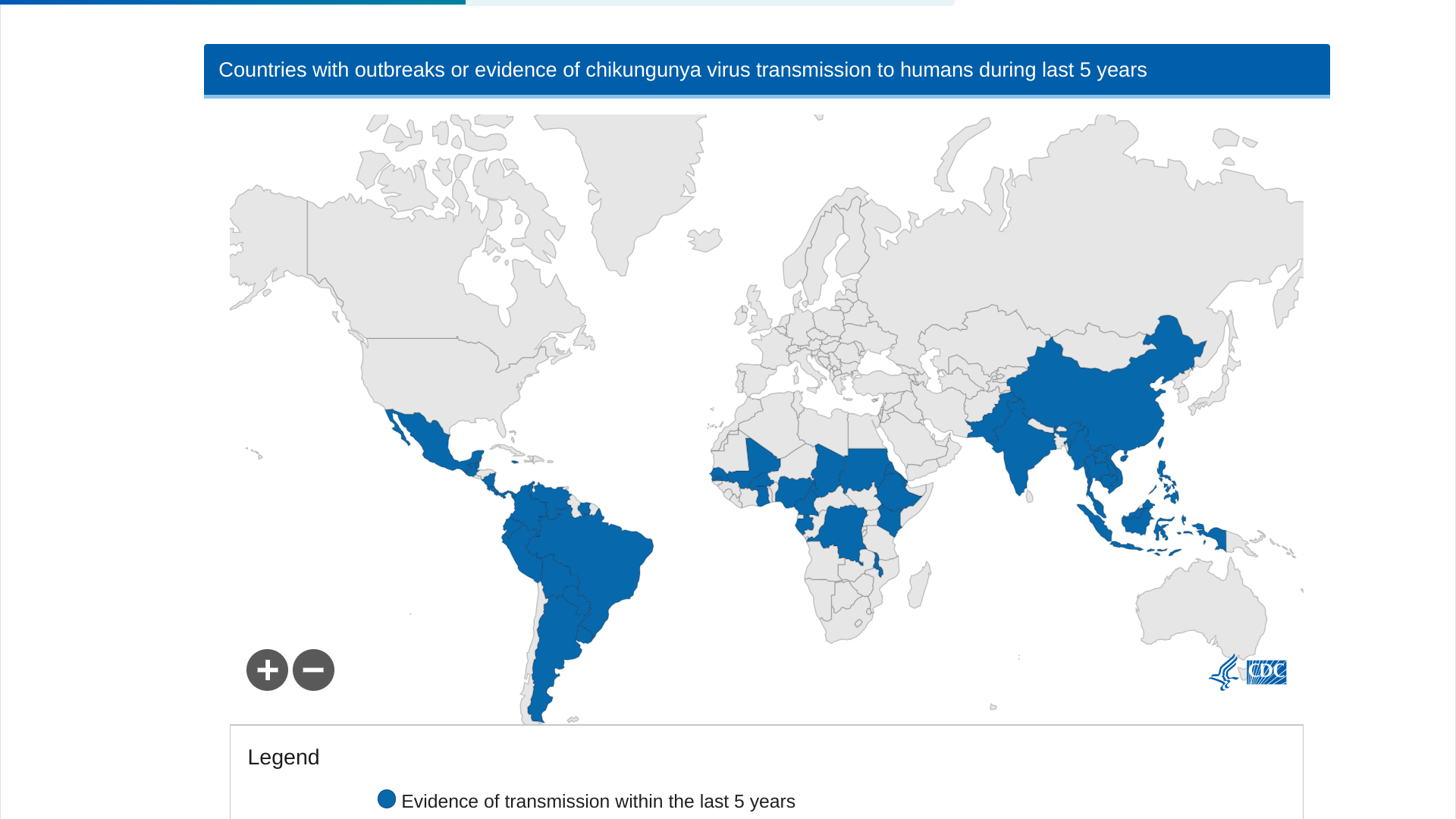
As of September 22, 2024, the Pan American Health Organization reported 390,669 CHIKV cases. Specifically, Brazil has confirmed 170 related deaths this year.
If you are traveling to an area at risk for chikungunya, the U.S. CDC suggests discussing vaccination options with your healthcare provider at least one month before departing abroad.
The U.S. Department of State published an updated Level 2: Exercise Increased Caution advisory for visitors to the Kingdom of Denmark, Greenland, and the Faroe Islands.
About 63 million international and domestic tourists visited Denmark in 2023, including over 600,000 from the United States.
As of September 17, 2024, the State Department advises travelers to be aware of their surroundings when traveling to tourist locations and crowded public venues. Additionally, travelers should enroll in the Smart Traveler Enrollment Program to receive alerts, which makes locating you in an emergency easier.
Furthermore, Denmark has excellent medical facilities, such as modern and fully equipped hospitals. However, medical facilities in Greenland and the Faroe Islands are limited, and evacuation is required for serious illness or injury. For emergency services in the Kingdom of Denmark, dial 112, and vaccine information is posted at this link.
The U.S. CDC says those travelers who may be at increased risk of an infectious disease due to their work, lifestyle, or underlying health problems should be up to date with recommended vaccines, which may need to be administered one month before visiting Denmark.
Health clinics and pharmacies in the U.S. generally offer travel vaccines.


The Minnesota Department of Health recently affirmed the greater Twin Cities area is experiencing an ongoing outbreak of measles cases, with the virus spreading mainly among unvaccinated children.
The Minneapolis—St. Paul's measles outbreak began in May 2024, and as of September 19, 2024, 51 cases had been confirmed.
Earlier this year, Chicago, Illinois, reported a more significant measles outbreak that impacted 64 people.
Overall, the U.S. CDC has reported 262 measles cases in 32 jurisdictions in 2024.
From a global health-risk perspective, the CDC has issued travel advisories for over 50 countries this year.
Measles is a vaccine-preventable disease. Vaccination is generally recommended for most people, and various vaccines are available at clinics and pharmacies in the U.S.