Search API

0 min read

The Coalition for Epidemic Preparedness Innovations (CEPI) and the World Health Organization (WHO) today called on researchers and governments to strengthen and accelerate global research to prepare for the next pandemic.

They emphasized the importance of expanding research to encompass entire families of pathogens that can infect humans–regardless of their perceived pandemic risk–and focusing on individual pathogens.

The report’s authors likened its updated recommendation to imagining scientists as individuals searching for lost keys on the street (the next pandemic pathogen).

The area illuminated by the streetlight represents well-studied pathogens with known pandemic potential. By researching prototype pathogens, we can expand the lighted area and gain knowledge and understanding of pathogen families that might be in the dark.

The dark spaces in this metaphor include many regions of the world, particularly resource-scarce settings with high biodiversity, which are still under-monitored and understudied. These places might harbor novel pathogens but lack the infrastructure and resources to conduct comprehensive research.

“WHO’s scientific framework for epidemic and pandemic research preparedness is a vital shift in how the world approaches countermeasure development and one that CEPI strongly supports.... this framework will help steer and coordinate research into entire pathogen families, a strategy that aims to bolster the world’s ability to swiftly respond to unforeseen variants, emerging pathogens, zoonotic spillover, and unknown threats referred to as pathogen X”, said Dr Richard Hatchett, CEO of CEPI, in a press release on August 1, 2024.

The prioritization work underpinning the report involved over 200 scientists from more than 50 countries, who evaluated the science and evidence on 28 virus families and one core group of bacteria, encompassing 1652 pathogens.

Vaccine Treats: 
Image: 
Image Caption: 
from Pixabay
Live Blog Update Author: 
Location Tags: 
Include in VBT newsletter: 
0 min read

Although immunization can dramatically reduce the mortality and morbidity associated with vaccine-preventable diseases, uptake remains suboptimal worldwide.

A systematic review and meta-analysis of strategies to promote vaccination uptake was recently published in Nature Human Behaviour. The review analyzed the results of 88 eligible randomized-controlled trials testing interventions from 17 countries.

Published on August 1, 2024, the researchers considered seven vaccine intervention strategies: increasing access to vaccination, sending vaccination reminders, providing incentives (e.g., money), supplying information, correcting misinformation, promoting active and passive motivation, and teaching behavioral skills.

“Public health officials often say that ensuring vaccine access is the first step to promoting immunization,” said co-author Dolores Albarracín, the Amy Gutmann Penn Integrates Knowledge University Professor at the University of Pennsylvania, in a press release.

“Our meta-analysis provides hard evidence supporting this recommendation and indicates that this should be a priority in under-resourced areas with limited access to health care.

Interventions to increase access to vaccines included offering transportation assistance or bringing vaccines to recipients at sites like nursing homes, family homes, and workplaces.

There was also a small effect of promoting financial incentives for healthcare providers.

For example, a U.S. study achieved an 85% influenza vaccination rate when physicians were reimbursed $1.60 per dose, compared with a 70% vaccination rate when they were reimbursed $0.80 per dose.

However, the effects of incentives were quite small in both this U.S. study and the estimates from the meta-analysis.

Vaccine Treats: 
Image: 
Image Caption: 
by Brian Merrill
Live Blog Update Author: 
Location Tags: 
Include in VBT newsletter: 

Shigella Tetravalent Bioconjugate Vaccine

Shigella Tetravalent Bioconjugate Vaccine Clinical Trials, Efficacy, Indication, Side Effects

Valneva SE and LimmaTech Biologics AG co-develop Shigella4V2 (S4V2), a second-generation tetravalent bioconjugate vaccine candidate against shigelllosis, a significant public health problem that remains endemic in many developing countries. In 2015, LimmaTech signed a research collaboration agreement with GlaxoSmithKline (GSK) to develop novel, bioconjugate antigen-based vaccines, including a monovalent Shigella vaccine, which was to be developed with the support of the Wellcome Trust. Following positive results from the proof-of-concept clinical trial with the monovalent Shigella vaccine, LimmaTech and GSK initiated the development of a multivalent Shigella vaccine in 2018, which was partly funded by a Wellcome Trust grant. In July 2023, LimmaTech announced that it had in-licensed the S4V2 Shigella bioconjugate vaccine candidate from GSK to lead the further development of the program. On August 1, 2024, Valneva SE announced that it had entered a strategic partnership and exclusive licensing agreement with LimmaTech to develop, manufacture, and commercialize Shigella4V vaccines.

As of October 16, 2024, the U.S. Food and Drug Administration (FDA) granted Shigella4V Fast Track designation. The anticipated FDA regulatory pathway for S4V2 will leverage a combination of Controlled Human Infection Model studies to support potential initial approval in adults, followed by field efficacy studies to expand the indication to children. No approved multivalent Shigella vaccine is currently available, and the World Health Organization (WHO) identified the development of Shigella vaccines as a priority.

On November 13, 2024, Valneva and LimmaTech Biologics announced that the first participant had been vaccinated in a Phase 2b (NCT06615375) controlled human infection model (CHIM) study of Shigella 4V2. In addition to the CHIM study, LimmaTech and Valneva announced on April 9, 2025, that the first participant had been vaccinated in a Phase 2 infant safety and immunogenicity study of Shigella4V2 (S4V2) in Kenya. Sponsored and conducted by LimmaTech, with support from the Gates Foundation, the Phase 2 study S4V02 will test the safety and immunogenicity of S4V2 in nine-month-old infants to identify the optimal dose for testing in a Phase 3 trial. The completion date of this study is estimated for November 2025.

On June 4, 2025, the Company stated: Revenues from our growing commercial business help fuel the continued advancement of our vaccine pipeline, which includes the world's most clinically advanced Shigella vaccine candidate. And on August 12, 2025, Valneva affirmed S4V2 is the world’s most clinically advanced tetravalent vaccine candidate against shigellosis, a diarrheal infection caused by Shigella bacteria, under development in collaboration with LimmaTech Biologics AG.

LimmaTech Bio is an independently owned biotechnology company in Schlieren, Switzerland. In February 2015, GSK acquired it, separating the Company from GlycoVaxyn.

Valneva SE is a specialty vaccine company that develops, manufactures, and commercializes prophylactic vaccines for infectious diseases, addressing unmet medical needs. We take a highly specialized and targeted approach, applying our expertise across multiple vaccine modalities. We are focused on providing either first-class, best-in-class, or only-in-class vaccine solutions.

Shigella4V2 Tetravalent Bioconjugate Vaccine Indication

On May 17, 2024, the World Health Organization (WHO) published an updated list of drug-resistant bacteria most threatening to human health, informing the development of new treatments and strategies to prevent and mitigate the spread of antimicrobial resistance. Shigella spp. are included in the updated list as high-priority pathogens due to the substantial burden at the community level and increasing levels of resistance. Shigellosis is a global health threat caused by the Gram-negative Shigella spp. Bacteria estimated that up to 165 million infections are caused by Shigella, of which 62.3 million occur in children under five.

Diarrheal infection is one of the significant causes of morbidity and mortality in numerous countries, as well as in travelers and deployed military personnel in endemic regions. The U.S. CDC estimates that approximately 450,000 Shigella infections occur annually, with 242,000 infections being antimicrobial-resistant. 

LimmaTech Biologics Multivalent Technology Platform

LimmaTech Biologics has developed a proprietary vaccine technology that enables the design of vaccine candidates containing multiple immunogenic antigens, which can be produced in a single, scalable step. A vital aspect of this proprietary technological innovation is engineering an E. coli strain to produce self-adjuvanting vaccine candidates. This technology has the potential to maximize a vaccine candidate's potency against the pathogen and provide lasting protection.

LimmaTech Biologics Agreement Valneva SE

Under the agreement with Valneva, LimmaTech will receive an upfront payment of €10 million and be eligible to receive additional milestone payments based on regulatory, development, sales achievements, and low double-digit royalties on sales. LimmaTech will be responsible for conducting a Phase 2 Controlled Human Infection Model and a Phase 2 pediatric study. Both clinical trials are expected to begin in the second half of 2024. Valneva will assume all further development, including chemistry, manufacturing, controls, and regulatory activities, and will be responsible for the commercialization of the vaccine candidate worldwide if it is approved. The global market for a vaccine against Shigella is estimated to exceed $500 million annually.

Shigella4V2 Tetravalent Bioconjugate Vaccine Indication

Shigella remains a leading cause of diarrheal disease worldwide, leading to an estimated 90,000 deaths yearly, with the most significant burden of morbidity and mortality seen in children between six months and two years of age.

Shigella4V2 Tetravalent Bioconjugate Vaccine News

April 9, 2025 - Dr. Patricia Martin, Chief Operating Officer of LimmaTech, stated in a press release, "We are encouraged by the potential of S4V2 to provide a solution for a serious global health threat and make a profound impact in protecting the health of so many children worldwide."

February 18, 2025 - Peter Bühler, Valneva's Chief Financial Officer, commented, "With over €168 million of cash at the end of 2024, we are entering 2025 in a good financial position to support these objectives."

November 13, 2024—Thomas Lingelbach, CEO of Valneva, commented in a press release, "Human challenge studies are unique in their ability to investigate and understand the onset and development of disease in a safe and highly controlled environment. This CHIM study forms part of our staggered and risk-mitigating development strategy for S4V2, as it should provide the first results on efficacy before potentially advancing to further CHIM and Phase 3 studies."

October 16, 2024: Dr. Franz-Werner Haas, CEO of LimmaTech, released a press release stating, "We are highly encouraged by the FDA's Fast Track designation, which reinforces our efforts and underscores the significant potential of the S4V Shigella vaccine candidate to address a serious global health threat."

August 1, 2024—Thomas Lingelbach, CEO of Valneva, commented in a press release, "We are very pleased to partner with LimmaTech to advance a promising program in an area of high unmet medical need. The Shigella vaccine candidate offers a potential first-in-class solution for both low- and middle-income countries (LMICs) and travelers, and as such, represents a highly synergistic product for Valneva. The anticipated development path follows a staggered and risk-mitigated strategy."

February 22, 2024: Patricia Martin, PhD, Chief Operating Officer of LimmaTech, commented: "Shigellosis is a serious disease caused by a pathogen that continuously evolves and becomes increasingly resistant to antibiotics. Our vaccine candidate has the potential to prevent an infection that threatens the lives of many children and protect travelers and military personnel traveling to Shigella-endemic countries. We look forward to continuing its clinical development in a study we plan to initiate in 2024.

July 20, 2023—LimmaTech Biologics AG signed an in-license agreement with GSK, enabling the Company to develop and commercialize a quadrivalent bioconjugate vaccine candidate for Shigellosis that GSK added to its infectious disease pipeline when LimmaTech Bio's predecessor company, GlycoVaxyn, was acquired by GSK in 2015.

Shigella4V2 Vaccine Clinical Trial

Following the positive Phase 1/2 study results in February 2024, LimmaTech will conduct the Phase 2 study S4V02 (Identifier: NCT06523231). The safety and immunogenicity of the second-generation tetravalent bioconjugate candidate vaccine S4V2 will be tested in approximately 110 nine-month-old infants to identify the optimal dose for testing in a Phase 3 trial. Sponsored and conducted by LimmaTech, S4V02 is a randomized, controlled, and blinded study conducted at a single study site in Kenya. Participants will receive a two-dose vaccination with one of two different vaccine dose levels of S4V2 or a control vaccine. Safety will be evaluated throughout the trial for approximately six months following the last vaccination. The study's results, supported by funding from the Gates Foundation, are expected to be released in the second half of 2025.

The Phase I/II clinical study is a randomized, double-blind, dose-finding, and age-descending clinical trial designed to assess the safety and immunogenicity of Shigella4V (S4V). The clinical trial is divided into two parts. The Part 1 age-descending study evaluated the vaccine candidate's safety in adults, children (aged 2 to 5 years), and infants. The Part 2 dose-finding study evaluated S4V's safety and immunogenicity in the nine-month-old target population to identify the preferred vaccine dose. On May 25, 2022, the study's results suggested that the Shigella quadrivalent vaccine offered a promising solution to the morbidity and mortality associated with Shigella infections. Building on previous achievements with conjugate Shigella vaccines, a bioconjugate comprised of Shigella O-antigen coupled to the carrier protein  Pseudomonas aeruginosa exoprotein A (EPA) was determined to be a safe, immunogenic, and tolerable vaccine. The study confirmed that transitioning the monovalent S. flexneri 2a vaccine formulation from single valency to multivalency is required to induce immunity against the four major Shigella serotypes.

0 min read
Availability: 
N/A
Generic: 
Shigella4V2
Drug Class: 
Tetravalent bioconjugate vaccine
Condition: 
Last Reviewed: 
Thursday, August 14, 2025 - 07:15
Abbreviation: 
S4V2
Status: 
Manufacturer Country ID: 
FDA First In Class: 
Yes
Location tags: 
0 min read

A seldom-discussed diarrheal disease that affects millions of children and adults may soon have a preventive vaccine available. Furthermore, the World Health Organization has identified Shigella prevention as a priority.

LimmaTech Biologics AG today announced that it entered into a strategic partnership and exclusive licensing agreement with Valneva SE for the development, manufacturing, and commercialization of Shigella4V (S4V), a tetravalent bioconjugate vaccine candidate against Shigellosis.

As of August 1, 2024, no approved Shigella vaccine is available.

However, the global market opportunity for a vaccine against Shigella is estimated to exceed $500 million annually.

Shigellosis, caused by Shigella bacteria, is the second leading cause of fatal diarrheal disease worldwide. It is estimated that up to 165 million cases of disease and an estimated 600,000 deaths are attributed to Shigella each year.

Moreover, Shigellosis affects international travelers and military personnel in endemic regions.

Under the terms of the agreement with Valneva, LimmaTech confirmed it will receive an upfront payment of €10 million ($10.8m) and be eligible to receive additional regulatory, development, and sales-based milestone payments as well as low double-digit royalties on sales.

LimmaTech will be responsible for conducting a Phase 2 Controlled Human Infection Model and a Phase 2 pediatric study. Both clinical trials are expected to begin in the second half of 2024.

Dr. Franz-Werner Haas, LimmaTech's Chief Executive Officer, said in a press release, “Having developed the S4V Shigella vaccine candidate from its early discovery phase to the promising clinical data we have achieved to date, we are excited to accelerate the program with our partnership with Valneva."

"This agreement underscores our capabilities to leverage LimmaTech’s proficiency in vaccine development with the best path to develop programs rapidly."

LimmaTech initiated the tetravalent Shigella vaccine candidate and continued to lead its development as part of its ongoing collaboration with GSK. Later, it in-licensed the vaccine candidate from GSK.

In February 2024, LimmaTech reported positive interim Phase 1/2 data for the S4V vaccine candidate, including a favorable safety and tolerability profile and robust data on immunogenicity against the four most common pathogenic Shigella serotypes: S. flexneri 2a, 3a, 6, and S. sonnei4.

LimmaTech Biologics AG LimmaTech Biologics is at the forefront of combating the global antimicrobial resistance epidemic based on its unparalleled track record in vaccine technology and clinical candidate development. The company is leveraging its proprietary self-adjuvanting and multi-antigen vaccine platform alongside additional disease-specific vaccine approaches to prevent increasingly untreatable microbial infections.

Vaccine Treats: 
Image: 
Image Caption: 
by Mohamed Hassan
Live Blog Update Author: 
Location Tags: 
Include in VBT newsletter: 
pharmacy vaccine
Retail pharmacists excel in communication with customers
RSV vaccine
RSV Vaccines and antibody therapy are available in August 2024
0 min read

GSK plc today announced that its market-leading herpes zoster vaccine, Shingrix®, produced £0.8 billion in sales during the second quarter of 2024, which is 4% less than the previous period.

On July 31, 2024, GSK revealed that Shingrix sales did increase YTD.

In the United States, sales in the quarter decreased by 36% at AER and CER, reflecting channel inventory reductions and changes in retail vaccine prioritization in part due to a transition to a new CMS rule that changed how pharmacies process reimbursements from payers.

In addition, lower demand in the U.S. was driven by challenges activating harder-to-reach consumers, which remains a priority.

At the end of Q1 2024, the cumulative immunization penetration rate reached 37% of the more than 120 million adults currently recommended by the U.S. CDC to receive Shingrix.

Internationally, Shingrix sales grew significantly in the quarter and YTD.

Markets outside the U.S. now represent 64% of Q2 2024 global sales (Q2 2023: 46%), with Shingrix launched in 45 countries. The majority of these markets have average cumulative immunization rates below 5%

This increase was driven by a national immunization program in Australia, regional funding in Japan, and supply to co-promotion partners in China, despite phasing some expected sales into Q3.

In Europe, Shingrix grew in the quarter and YTD from expanded public funding, partly offset by declining demand in Germany.

Shingles is a painful skin rash caused by reactivation of the varicella-zoster virus, which causes chickenpox, says the U.S. CDC. If you've had chickenpox, you are at risk for shingles. This long-lasting pain is called postherpetic neuralgia (PHN), the most common complication of shingles.

The CDC says the risk of getting shingles and PHN increases as people age.


Vaccine Treats: 
Image: 
Image Caption: 
by Mircea Iancu
Live Blog Update Author: 
Location Tags: 
Include in VBT newsletter: 
0 min read

Biological E. Limited (BE) today announced that the World Health Organisation (WHO) has granted Pre-qualification (PQ) status to their Novel Oral Polio Vaccine type 2 (nOPV2).

In collaboration with PT Bio Farma (PTB) in Indonesia, the first manufacturer of the nOPV2 vaccine to receive WHO Pre-Qualification in January 2024, BE has successfully received technology from PTB and qualified to produce more than 500 million doses of nOPV2 vaccine annually.

As of July 2024, over 1 billion nOPV2 vaccine doses have been administered.

BE has been approved by the Indian regulatory authorities to manufacture the vaccine for export purposes.

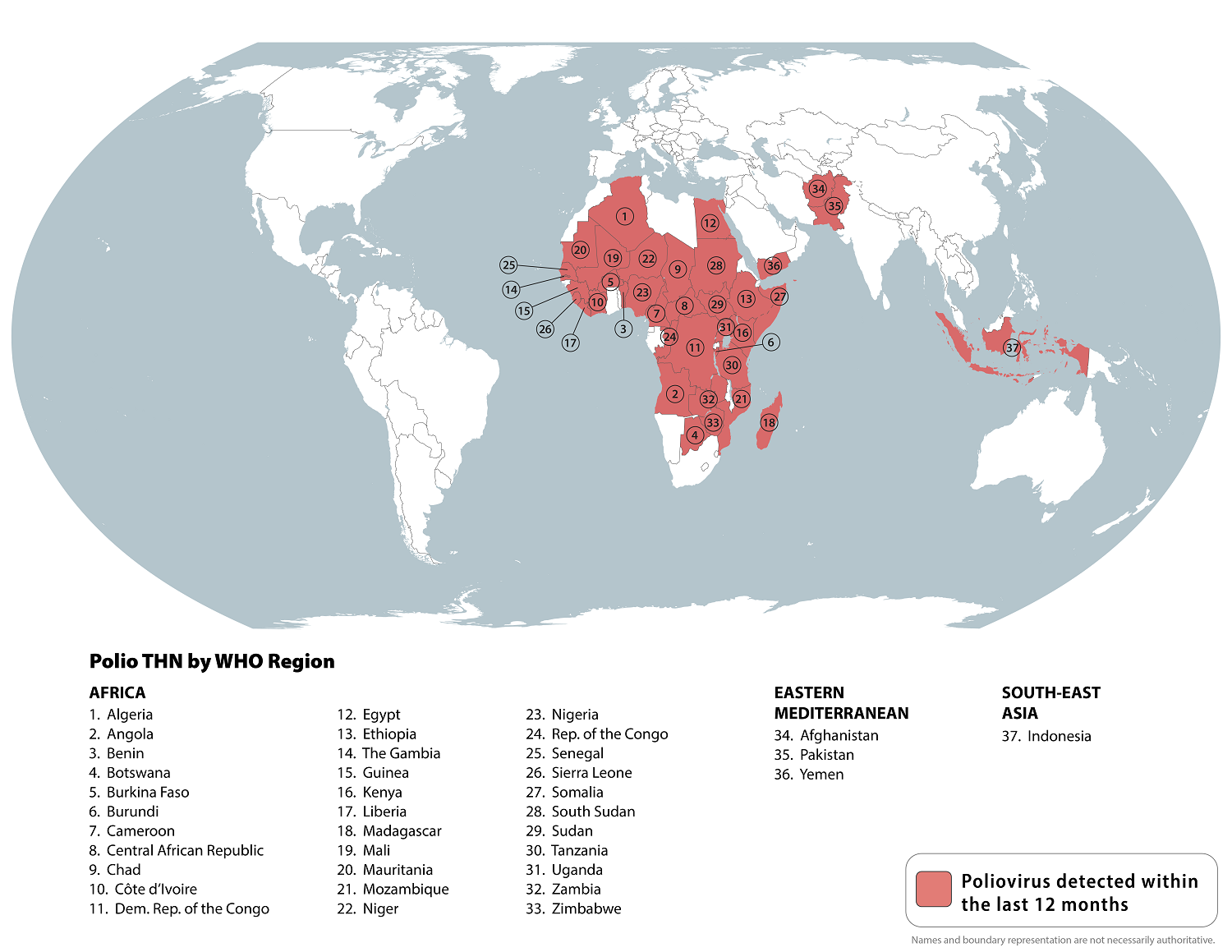
This next-generation live, attenuated oral polio vaccine significantly reduces the risk of circulating vaccine-derived Poliovirus type 2 (cVDPV2) outbreaks, which continues in various countries in 2024.

With its improved genetic stability, nOPV2 has a significantly decreased chance of seeding new outbreaks in low-immunity environments.

Furthermore, nOPV2's real-world deployment in outbreak regions has shown that it can significantly decrease the incidence of cVDPV2 outbreaks, safeguarding communities from the ravages of polio.

Ms. Mahima Datla, Managing Director, BE, said in a press release on July 30, 2024, "This vaccine has been specifically designed to address concerns about Vaccine-Associated Paralytic Polio, which has occurred in approximately 2 to 4 cases per million births with the traditional oral vaccine due to the vaccine virus reverting to a virulent form."

Ms. Datla further expressed BE's gratitude for the collaboration with PTB and the support of a grant from the Gates Foundation, “The significance of this milestone extends beyond scientific achievement; it represents a beacon of hope for millions of children and families around the globe."

Since 2000, the IPV vaccine has been available in the U.S.

In late 2023, the U.S. CDC published updated recommendations for using the IPV vaccine. Fully vaccinated adults at increased risk for poliovirus exposure may receive a single lifetime booster dose of IPV.

BE is a Hyderabad-based Pharmaceuticals & Biologics Company founded in 1953 and is the first private-sector biological products company in India.

Vaccine Treats: 
Image: 
Image Caption: 
GPEI polio case map July 23, 2024
Live Blog Update Author: 
Location Tags: 
Include in VBT newsletter: 
cow flu vaccines
Seasonal influenza vaccines do not protect people from avian influenza viruses
Cow flu vaccine
Avian influenza mortality might be due to a H5N1 virus pneumonia