Search API
Takeda Canada Inc. today annonced a new report, Enhancing Diagnosis, Access, Care, and Treatment, highlighting the urgent need for innovative funding models and collaboration to help accelerate Canada’s National Strategy for Drugs for Rare Diseases.
Nearly 200 novel drugs for rare diseases are being developed and are expected to launch in Canada within the next ten years. It’s estimated only 5% of rare diseases have an approved treatment.
A “rare” disease is any disease that affects a minimal number of individuals. It is often genetic, chronic throughout a patient’s life, and life-threatening. With rare diseases affecting relatively limited patients, innovative treatments are often unavailable.
The impact of rare diseases is significant, with approximately one in 12 Canadians, two-thirds of whom are children.
“Canadians living with rare diseases have every reason to be optimistic,” says Durhane Wong-Rieger, President & CEO of the Canadian Organization for Rare Disorders, in a press release on August 22, 2024.
“Hundreds of new therapies are being developed, many targeting the 95% of rare diseases with no known treatment! We must leverage the $1.5 billion Rare Disease Drug Strategy,
The journey toward appropriately managing a rare disease is long and challenging. On average, it takes 6 to 8 years before a patient receives a correct diagnosis; this time, they will see an average of eight physicians and receive two to three misdiagnoses.
Takeda also produces innovative products, such as QDENGA®, an approved two-dose vaccine that prevents dengue fever and/or severe dengue in adults caused by any of the four serotypes of the dengue virus.
This dengue vaccine is authorized in about 40 countries and does not require pre-admission testing.


In 2024, yellow fever outbreaks remain a health threat in tropical regions of Africa and South America. The good news is that vaccines have been proven safe and effective for protecting international travelers visiting these areas.
However, new yellow fever vaccines with improved production scalability and enhanced efficacy are needed to reduce outbreaks.
The Lancet Infectious Diseases recently published results from a first-in-human phase 1 study on the safety and immunogenicity of a new Vero cell line-derived yellow fever vaccine, vYF-247.
Produced by Sanofi, the vYF-247 vaccine showed similar safety and immunogenicity to the U.S. FDA-approved YF-VAX vaccine.
These researchers concluded that the vYF-247 vaccine with a 5 Log CCID50 dose showed optimal viremia, safety, and immunogenicity and was chosen for further development.
Until a new vaccine is approved, the YF-VAX® vaccine remains available at travel clinics and pharmacies in the United States. For those travelers who were already vaccinated, the U.S. CDC says yellow fever vaccine booster doses are unnecessary.

The Oregon Health Authority (OHA) has reported four new measles cases in 2024, bringing the total to 30 across three counties. Marion County has the most cases, followed by Clackamas County and Multnomah County.
As of August 21, 2024, all measles patients were unvaccinated, and twelve were younger than ten.
These counties and OHA have been sharing information with the public so “we can let members of the public know they may have been exposed to measles,” Clackamas County Health Officer Sarah Present, M.D. said in a recent press release.
Dr. Present noted that since measles is so contagious, an estimated 96% of the population needs to have received two doses of measles vaccine to protect the community's most vulnerable members via community or “herd” immunity.
In Oregon, measles vaccines are available at health clinics and local pharmacies.
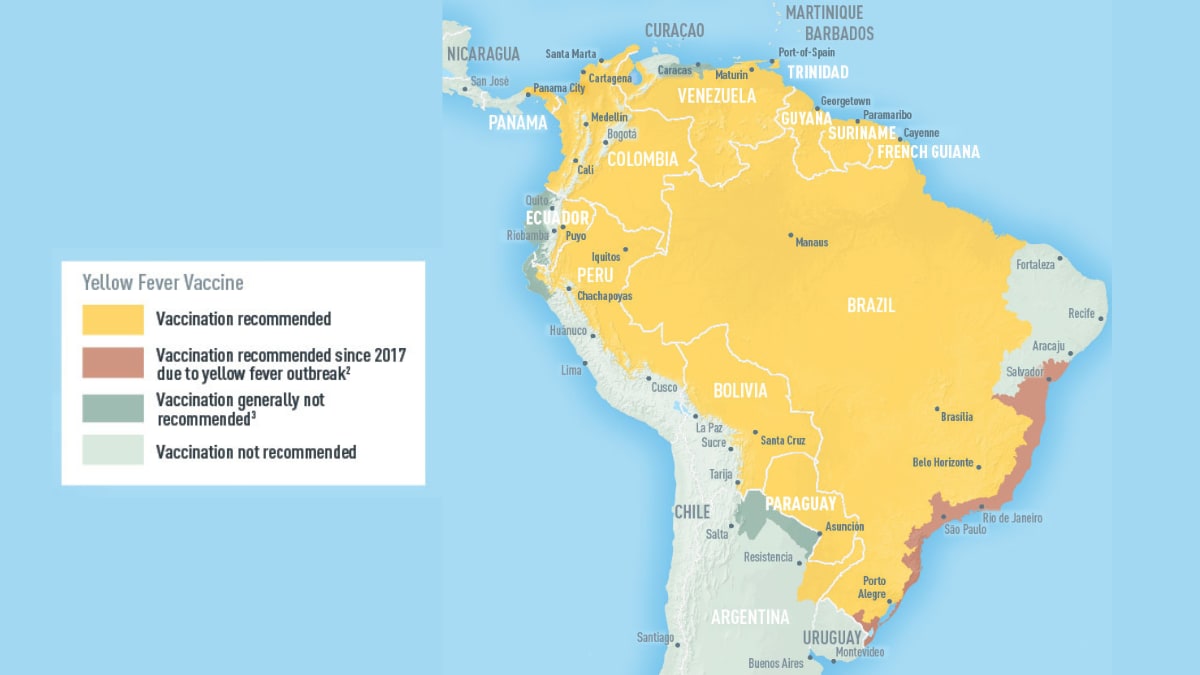
As of August 15, 2024, the U.S. CDC confirmed that 27 U.S. jurisdictions reported 219 measles cases this year. In 2023, 20 jurisdictions reported 59 measles cases for the entire year.

Emergent BioSolutions today announced it has pledged to donate 50,000 doses of its ACAM2000® (Smallpox (Vaccinia) Vaccine, Live) through a humanitarian relief organization to the Democratic Republic of the Congo (DRC) and the other impacted countries of Burundi, Kenya, Rwanda, and Uganda.
In October 2023, Emergent filed a supplemental Biologics License Application to the U.S. FDA seeking an expanded indication for the ACAM2000 vaccine to include immunization against the mpox virus. The FDA target for review completion in the third quarter of 2024.
These efforts are in response to the WHO’s recent statement declaring that the upsurge of mpox clade 1 in African countries constitutes a public health emergency of international concern under the International Health Regulations.
“Africa CDC estimated they will need 10 million doses to control the epidemic in the continent,” said Dr. Raina McIntyre, Professor of Global Biosecurity, NHMRC L3 Research Fellow, Head, Biosecurity Program, Kirby Institute, University of New South Wales Sydney, in a press release on August 19, 2024.
“It is unlikely there will be enough supply of 3rd generation vaccines (JYNNEOS®, MVA-BN®) to control the epidemic in Africa, given demand in other countries.”

The World Health Organization (WHO) today announced temporary (one-year) recommendations for States Parties experiencing the upsurge of monkeypox virus (MPXV) clade 1 detections, including, but not limited to, the Democratic Republic of the Congo (DRC), Burundi, Kenya, Rwanda, and Uganda.
The upsurge of mpox cases in the DRC in 2024 and its neighboring countries is driven by outbreaks associated with two sub-clades of clade I MPXV: clade Ia and clade Ib.
These WHO recommendations include establishing or strengthening cross-border collaboration arrangements for surveillance and management of suspect mpox cases and providing information to travelers and conveyance operators without resorting to general travel and trade restrictions unnecessarily impacting local, regional, or national economies.
As of August 19, 2024, the WHO Committee considered the event “extraordinary” because of the increase in mpox clade I disease occurrence in the DRC and the emergence of the new MPXV clade Ib.
Clade I mpox was classically described in studies conducted by WHO in the 1980s to have a mortality rate of approximately 10%, with most deaths occurring in children.
MPXV clade Ia is endemic in the DRC. The disease primarily affects children. Data available for 2024 show an aggregated case fatality rate of 3.6%, and the spread is likely sustained through multiple modes of transmission, including person-to-person transmission following zoonotic introduction in a community.
MPXV clade Ib is a new strain of MPXV that emerged in the DRC. It is transmitted between people, presumed via sexual contact, which has been spreading in the eastern part of the country.
Although first characterized in 2024, estimates suggest it emerged around September 2023.
The outbreak associated with clade Ib in the DRC primarily affects adults and is spreading rapidly, sustained largely, but not exclusively, through transmission linked to sexual contact and amplified in networks associated with commercial sex and sex workers.
Furthermore, these African countries are to initiate plans to advance mpox vaccination activities targeting people at high risk of infection. As of August 19, 2024, various reports indicate that (10 million) mpox vaccines are being produced to meet potential outbreak demand.
In early August 2024, the U.S. CDC issued a Level 2 - Practice Enhanced Precautions, Travel Health Advice, recommending various mpox protection tactics, including (JYNNEOS) vaccination.
These new WHO recommendations are intended to be implemented by those States Parties in addition to the current standing recommendations for mpox, which will be extended until August 20, 2025.