Search API

LBP-EC01 CRISPR-Enhanced Bacteriophage UTI Therapy

LBP-EC01 CRISPR-Enhanced Bacteriophage UTI Therapy Clinical Trials, Indication, Side Effects

Locus Biosciences LBP-EC01 CRISPR-enhanced bacteriophage (crPhage®) therapy in development for treating urinary tract infections (UTI) and other infections caused by the pathogen E. coli. It is a bacteriophage cocktail engineered with a CRISPR-Cas3 construct targeting the E. coli genome. The precision medicine product works through a unique dual mechanism of action utilizing both the natural lytic activity of the bacteriophage, which are viruses that specifically attack bacterial cells and the DNA-targeting activity of CRISPR-Cas3. The mechanism also makes LBP-EC01 effective in killing E. coli strains regardless of whether they are antibiotic-resistant.

In 2020, Locus and the Biomedical Advanced Research and Development Authority (BARDA), part of the Administration for Strategic Preparedness and Response (ASPR) at the U.S. Department of Health and Human Services (HHS), announced an agreement to co-fund the development of LBP-EC01. Under the partnership agreement, contract number 75A50120C00169, BARDA will provide up to $93 million to Locus as part of a $152 million program to support Phase 2 and Phase 3 clinical trials and other activities required to seek marketing approval from the U.S. Food and Drug Administration (FDA) for LBP-EC01.

As of August 12, 2024, the primary and secondary objectives were met in the open-label randomized Part 1 of the clinical trial to treat uncomplicated UTIs caused by antibiotic-resistant E. coli. Data from the randomized, uncontrolled, open-label Part 1 portion of the clinical trial were published in The Lancet Infectious Diseases on August 9, 2024.

Locus Biosciences is creating a new class of precision biotherapeutics with clinical-stage engineered bacteriophage treatments for diverse bacterial and microbiome/inflammatory diseases. For more  information about Locus, visit https://locus-bio.com/ 

LBP-EC01 Indication

The U.S. Centers for Disease Control and Prevention (CDC) and World Health Organization (WHO) have identified antibiotic-resistant E. coli as an urgent and serious public health threat requiring the development of new treatments. Worldwide, an estimated 150 million people are affected by UTIs each year. Approximately 80% of these are caused by E. coli. Most UTI patients experience a recurrence within months of the first episode.

LBP-EC01 News

August 12, 2024 - Phase 2 trial evaluating LBP-EC01, a CRISPR-Cas3 genetically engineered bacteriophage therapy designed to treat patients with uncomplicated urinary tract infections (uUTIs) caused by antimicrobial-resistant and multi-drug-resistant E. coli, reported positive news.

January 23, 2024 -  Locus Biosciences, Inc. announced the release of $23.9 million from the BARDA to continue the development of Locus’ CRISPR-enhanced bacteriophage therapy, LBP-EC01, for treating UTIs caused by drug-resistant E. coli based on positive results from a Phase 2a clinical trial.

September 13, 2022 – Locus Biosciences, Inc. announced that the ELIMINATE trial has begun enrolling patients, and the first patient has been treated. ELIMINA E is a registration-enabling Phase 2/3 clinical trial of lead candidate LBP-EC01 for treating UTIs caused by E. coli bacteria.

February 24, 2021 - Locus Biosciences announced the completion of its Phase 1b clinical trial of the LBP-EC01 precision medicine product, which targets E. coli bacteria that cause UTIs.

LBP-EC01 CRISPR-Enhanced Bacteriophage UTI Therapy Clinical Trials

LBP-EC01 met all primary and secondary endpoints and demonstrated safety and tolerability in a Phase 1b trial. LBP-EC0  is currently being evaluated in a Phase 2 trial for treating UTIs caused by E. coli.

ELIMINATE Trial Part 1 Results - The primary and secondary outcomes of Part 1 were met, and a dosing regimen was identified that was well-tolerated, which led to high drug exposure at the site of infection. No seri us adverse events were observed in Part 1, and exposure to LBP-EC01 did not lead to any observations of genetic resistance in any subsequently recovered E. coli samples. Part 1, as initiated with three treatment groups, focused on intravenous (IV) delivery of a high 1×10¹¹ plaque forming units (PFU)/dose of LBP-EC01, which was halted after three patients discontinued dosing due to non-serious adverse events of mild tachycardia and afebrile chills. Three u-dated treatment groups, which focused on a short, 3-day course of intra-urethral (i.e., IU or direct to the bladder) and lower exposure IV dosing, replaced the original treatment groups. With this updated dosing approach, a rapid reduction of E. coli in urine was observed four hours after the first treatment, which was maintained to the day 10 test of cure (TOC) evaluation. All (16 of 16) patients in the evaluable population had complete resolution of UTI symptoms, and 14 of 16 (87.5%) patients demonstrated microbiologic cure or reduction of their bacterial infection below 1×10³ colony forming units (CFU)/mL in urine by the day 10 TOC. A dosing regimen of LBP-EC01 was given for two days IU (2×10¹² PFU/dose) and given concurrently for three days IV (1×10¹⁰ PFU/dose) with concomitant oral TMP/SMX (160 mg TMP/800 mg SMX twice daily) has been advanced into Part 2.

Part 2 of the ELIMINATE trial has been initiated, and patient dosing is underway. This randomized, controlled, double-blind trial portion will evaluate the efficacy, safety, tolerability, and pharmacokinetics of LBP-EC01 with TMP/SMX. Up to 2 8 female uncomplicated UTI patients will be enrolled and randomized in a 1:1 ratio where patients will receive LBP-EC01 or placebo for the 3-day dosing regimen selected from Part 1. The primary objective will be to evaluate the effect of LBP-EC01 given with TMP/SMX on its ability to treat acute UTIs in patients with a history of UTI recurrence. The impact of the treatment on reducing UTI recurrence and/or extending the duration to the subsequent UTI recurrence will be examined as an exploratory endpoint in a 6-month follow-up evaluation. This trial is registered with ClinicalTrials.gov, NCT05488340, and is ongoing.


0 min read
Availability: 
N/A
Generic: 
LBP-EC01
Drug Class: 
CRISPR-Cas3
Last Reviewed: 
Wednesday, August 14, 2024 - 04:35
Brand: 
crPhage™
Status: 
Manufacturer Country ID: 
FDA First In Class: 
Yes
UTI
LBP-EC01 is a CRISPR-Cas3 genetically engineered bacteriophage therapy designed to treat patients with uncomplicated urinary tract infections caused by antimicrobial-resistant and multi-drug-resistant Escherichia coli
0 min read

At the end of July 2024, Swissmedic authorized Takeda Pharma AG's QDENGA® (TAK-003) Tetravalent Vaccine (Live, Attenuated) vaccine after assessing its efficacy, safety, and quality.

According to Swissmedic's statement on August 2, 2024, QDENGA is authorized for people aged four years and older who travel to regions where dengue fever is prevalent. These areas primarily include subtropical and tropical regions in Central Africa, Latin America, India, and Southeast Asia.

Swissmedic says QDENGA cannot cause the disease, but vaccination triggers the immune system to defend the body against the virus. When a person receives the vaccine, their immune system recognizes the attenuated variants as foreign and forms antibodies against them. When they come into contact with the virus again, the body rapidly produces more antibodies to neutralize it before the person contracts dengue fever.

The U.S. Centers for Disease Control and Prevention (CDC) recently announced that the global incidence of dengue this year is the highest in recent history, with about 100 countries reporting higher-than-usual dengue cases.

In 2024, both travel-related and locally transmitted dengue infections were confirmed in the south of the USA, in states such as Florida (335) and Texas (18).

Dengue fever is a viral disease spread by infected mosquitoes. It usually develops between four and seven days after the person is bitten. Symptoms include fever, headache, pain behind the eyes, muscle and joint pain, nausea or vomiting, swollen glands, and rash.

As of August 21, 2024, QDENGA had been approved in 40 countries and launched (or was available) in 24 of them.

Note: This new article was updated with information on current vaccine availability with a changed headline on August 23, 204.

Vaccine Treats: 
Image: 
Image Caption: 
US CDC Aug. 2024
Live Blog Update Author: 
Location Tags: 
Include in VBT newsletter: 
0 min read

Throughout 2024, the Florida Department of Health has reported various mosquito-transmitted diseases infecting people. Florida has confirmed that 14 species of Anopheles mosquitoes transmit diseases to humans. 

While Dengue fever gets most of the media headlines, diseases such as Chikungunya, Malaria, and West Nile virus have also been detected this year.

For example, on August 5, 2024, a locally acquired case of West Nile Virus was confirmed in Broward County.

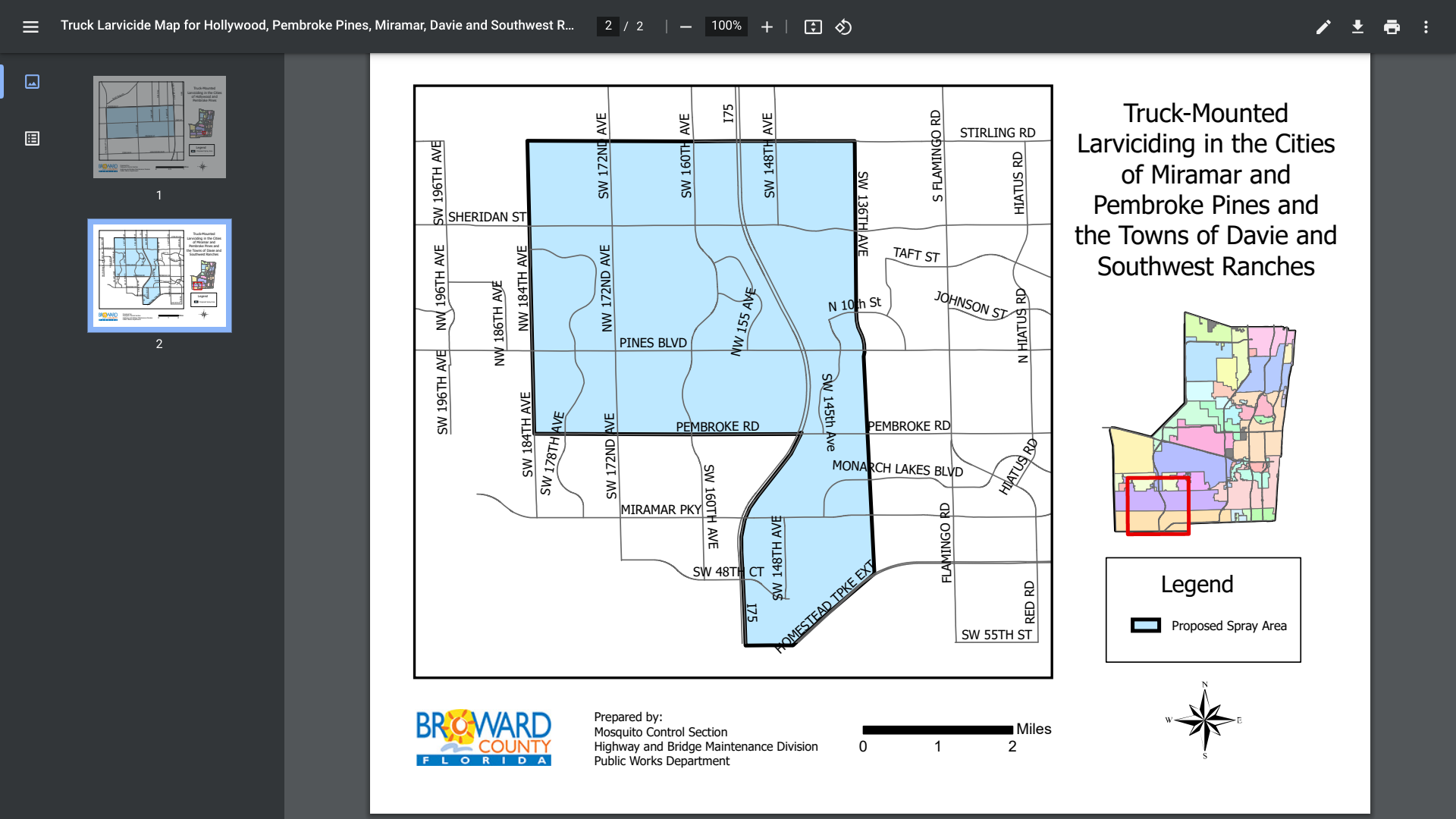
As a direct response, the Broward County Mosquito Control Section recently announced it would spray organic larvicide as part of an integrated pest management approach. Truck-mounted larviciding will be performed between August 5 - 22, 2020.

This month, portions of Hollywood, Pembroke Pines, Davie, and Southwest Ranches are being targeted in southeast Florida.

The larvicide used is VectoBac WDG, which is not harmful to humans, pets, bees, aquatic habitats, or environmentally sensitive areas. The active ingredient is Bacillus thuringiensis israelensis (Bti, strain AM6552), a naturally occurring, biodegradable bacterial mosquito larvicide.

Broward County Mosquito Control Section continues to work closely with the Florida Department of Health and Code Enforcement partners in Broward's 31 municipalities to reduce the population of mosquitoes and their habitats. Any Broward County resident experiencing mosquito problems can request service by calling 311.

Regarding disease prevention, the U.S. Centers for Disease Control and Prevention (CDC) recently recommended Valneva SE's IXCHIQ®, a monovalent, single-dose, live-attenuated chikungunya vaccine. Vaccination is advised for international travelers since five chikungunya cases with onset in 2024 have been reported in individuals with a travel history to Brazil.

As of August 10, 2024, the CDC has not issued vaccination requirements for Florida residents or visitors.

Vaccine Treats: 
Image: 
Image Caption: 
Broward County Florida Mosquito Control Map August 2024
Live Blog Update Author: 
Location Tags: 
Include in VBT newsletter: 
dengue vaccine
Butantan-DV vaccine contains more actual homologous immunogenic dengue proteins for each serotype in the cocktai
0 min read

The Oregon Health Authority (OHA) recently alerted health providers regarding the ongoing community measles virus transmission. In its latest update, the OHA reported 26 confirmed cases, all involving unvaccinated people. 

As of August 8, 2024, 27 jurisdictions had reported 211 measles cases to the U.S. CDC. And 45% of these cases were hospitalized for isolation or for management of measles complications.

For all of 2023, the CDC reported 59 measles cases in 20 jurisdictions.

Did you know that measles is a health risk while traveling?

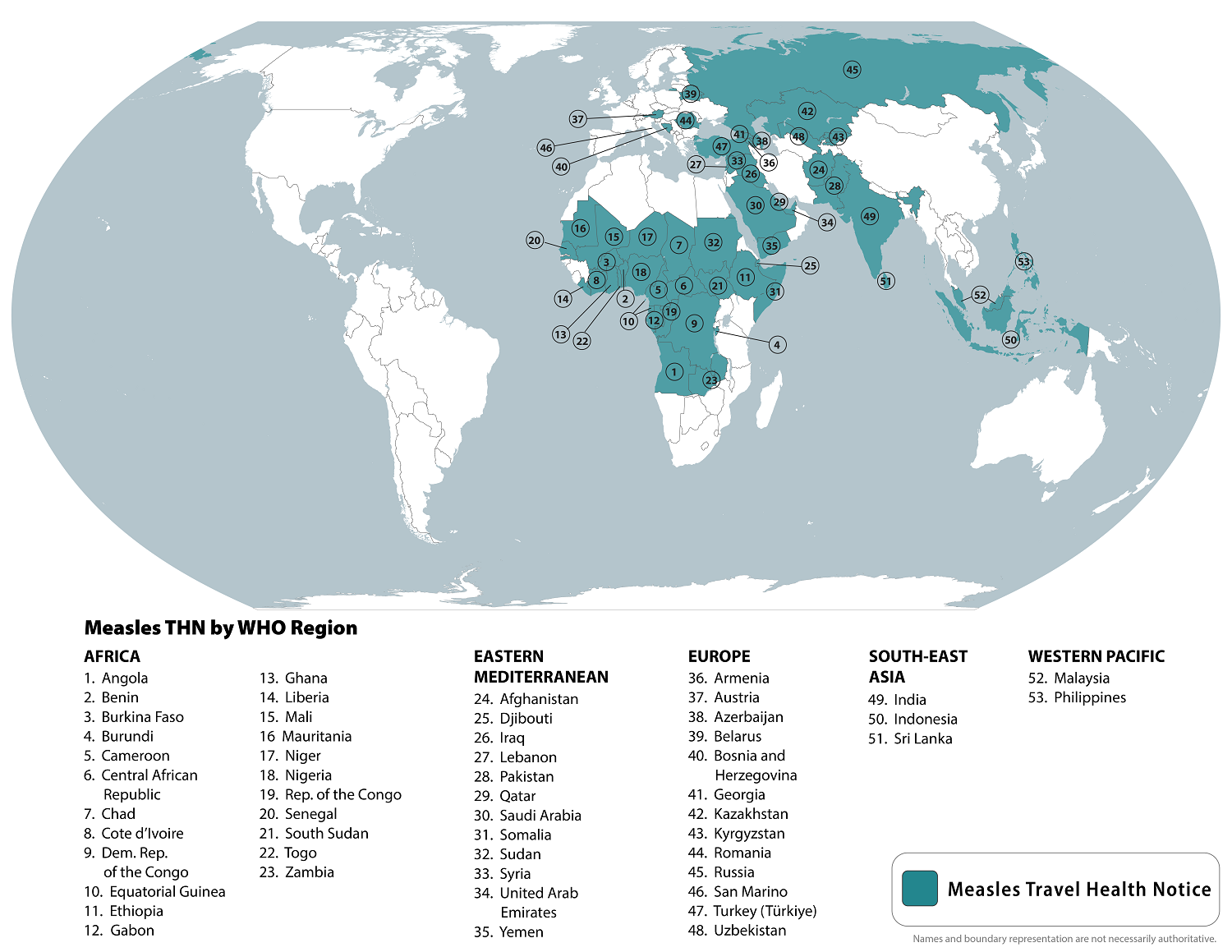
The CDC republished a global Watch-Level 1, Practice Usual Precautions, Travel Health Notice in late May 2024, identifying measles outbreaks in 53 countries.

The CDC recommends evaluating your family's need for early vaccine doses before any international travel. Measles vaccines are generally available at clinics and pharmacies in the U.S.

After you return from a flight, monitor your health for three weeks and call your healthcare provider if you or your child get sick with a rash and fever.

Vaccine Treats: 
Image: 
Image Caption: 
US CDC measles outbreak map May 2024
Live Blog Update Author: 
Location Tags: 
Vaccine: 
Include in VBT newsletter: 
0 min read

The European Centre for Disease Prevention and Control (ECDC) today alerted travelers and clinicians today about the risk of Oropouche virus disease, a zoonotic disease caused by the Oropouche virus (OROV).

The ECDC's Threat Assessment, published on August 9, 2024, reported that during June and July 2024, 19 imported cases of Oropouche virus disease were reported for the first time in EU countries: Spain (12), Italy (5) and Germany (2).

Eighteen of these cases had a travel history to Cuba and one to Brazil.

The principal vector (Culicoides paraensis midge) is widely distributed across the Americas but is absent in Europe. There has been a lack of evidence as to whether European midges or mosquitoes could transmit the virus.

In 2024, outbreaks of OROV disease were reported in several countries across South America, Central America, and the Caribbean.

The ECDC says this health risk is moderate for people traveling to or living in epidemic areas in South America, Central America, and the Caribbean.

However, it noted that the risk is higher for those visiting heavily affected areas, including Brazil's northern states and the Amazon region, and for those who don't take adequate protective measures.

Oropouche virus disease can manifest as an acute febrile illness with headache, nausea, vomiting, muscle and joint pains, and occasionally more severe symptoms. The prognosis for recovery is good, and fatal outcomes are infrequent.

Recently, the Brazilian Ministry of Health reported six possible cases of OROV disease being passed from mother to child during pregnancy. The potential risk during pregnancy and fetopathic effects of OROV infection are still under investigation and have not been confirmed.

Furthermore, horizontal, human-to-human virus transmission has not been documented.

The ECDC says areas affected by OROV, such as Brazil, are also classified with current or previous Zika virus (ZIKV) transmission. Therefore, travel advice for pregnant women combines ZIKV and OROV warnings.

Unfortunately, there are no vaccines to prevent OROV or Zika diseases.

Vaccine Treats: 
Image: 
Image Caption: 
by Judith Hasler
Live Blog Update Author: 
Location Tags: 
Include in VBT newsletter: 
0 min read

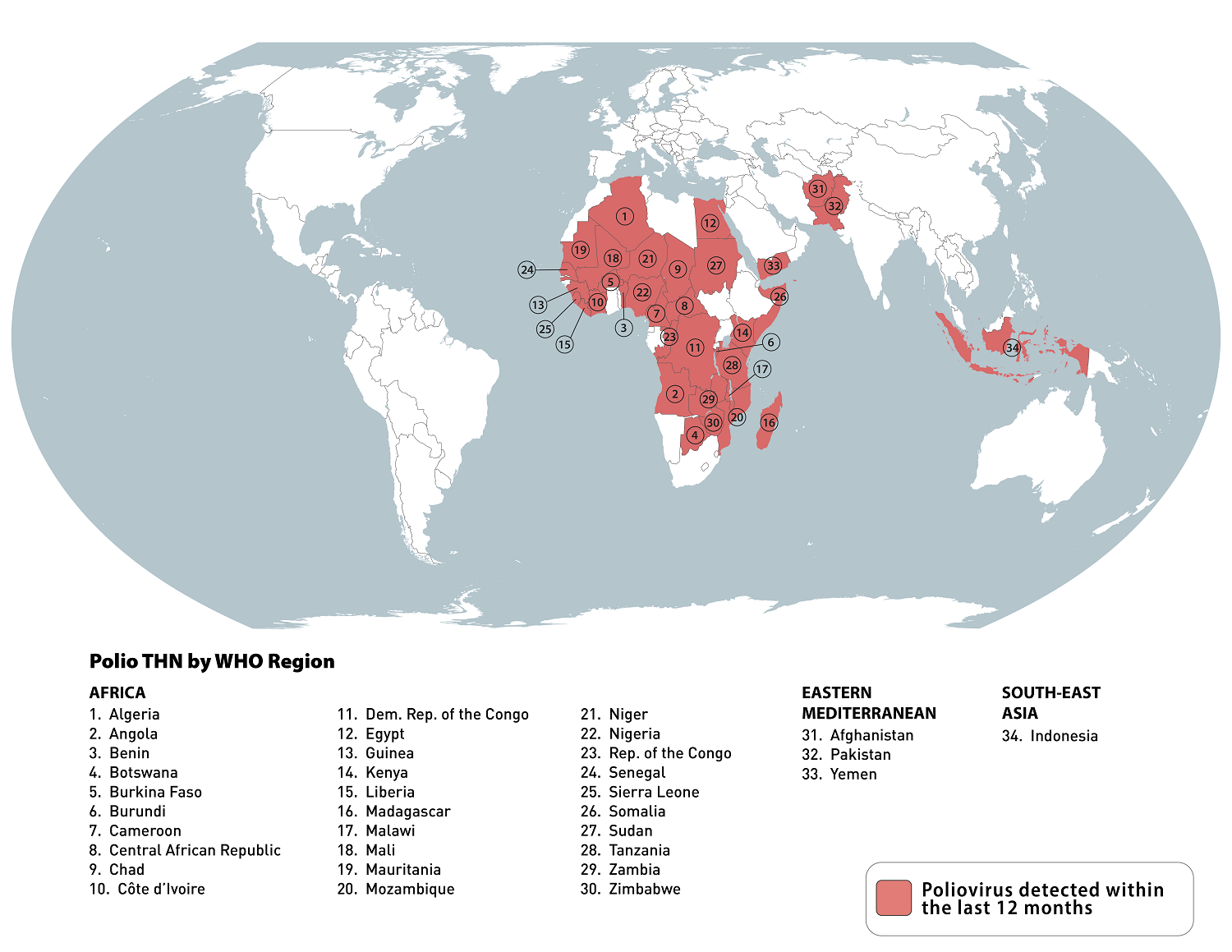
According to the weekly update from the Global Polio Eradication Initiative (GPEI), six countries reported poliovirus cases, including Afghanistan and Pakistan, with additional wild poliovirus type 1 (WPV1) cases.

The GPEI says both countries have already doubled the cases they reported in 2023.

As of August 7, 2024, Afghanistan reported two new WPV1 cases, bringing its total to 11.

Pakistan reported three more cases, increasing its total to 12 for 2024.

Four African countries reported cases involving circulating vaccine-derived poliovirus type 2 (cVDPV2).

The Democratic Republic of the Congo reported two cVDPV2 cases. Ethiopia reported one case, boosting its total to 12. Nigeria reported one case, elevating its total to 38, and South Sudan reported its 7th cVDPV2 case for 2024. 

The U.S. CDC says most people with polio do not feel sick. Some people have only minor symptoms, such as fever, tiredness, nausea, headache, nasal congestion, sore throat, cough, stiffness in the neck and back, and pain in the arms and legs.

In rare cases, polio infection causes permanent loss of muscle function.

Polio can be fatal if the breathing muscles are paralyzed or if the brain is infected.

Furthermore, the CDC recommends that adults who previously completed the full, routine polio vaccine series may receive a single, lifetime booster dose of polio vaccine before traveling to any destination reporting polio cases. Polio vaccines are generally available at health clinics and pharmacies in the U.S.

Vaccine Treats: 
Image: 
Image Caption: 
US CDC Polio Country Case Map 2024
Live Blog Update Author: 
Location Tags: 
Include in VBT newsletter: 
vaccine
WHO recommends two mpox vaccines
Lyme disease
Lyme disease vaccine arrival expected in 2026