



Search API

0 min read

With one approved chikungunya vaccine already available, the U.S. Food and Drug Administration (FDA) has accepted and granted Priority Review for the Biologics License Application (BLA) for Bavarian Nordic A/S CHIKV VLP, a vaccine candidate for immunization to prevent disease outbreaks caused by chikungunya virus infection in individuals 12 years of age and older.

The Priority Review designation means the FDA aims to complete its review within six months. The FDA has assigned a target action date for the Prescription Drug User Free Act of February 14, 2025.

CHIKV VLP is an adjuvanted VLP-based vaccine candidate for active immunization to prevent disease caused by CHIKV infection.

Paul Chaplin, President and CEO of Bavarian Nordic, said in a press release on August 13, 2024, “The FDA review, along with the ongoing review of our CHIKV VLP vaccine by the European Medicines Agency, represent the first regulatory reviews of a chikungunya vaccine for adolescents, potentially providing a broader usage by populations at risk of this debilitating disease.”

CHIKV VLP is currently also under accelerated assessment review with the EMA, potentially supporting approval of the vaccine by the European Commission in the first half of 2025.

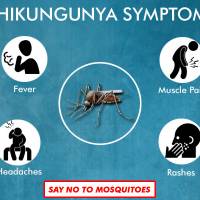
Chikungunya is a mosquito-borne viral disease caused by the chikungunya virus (CHIKV). The disease typically presents with acute symptoms, including fever, rash, fatigue, headache, and often severe and incapacitating joint pain.

While mortality is relatively low, morbidity is high; nearly 50% of individuals with CHIKV disease have debilitating long-term symptoms that can intensify with age.

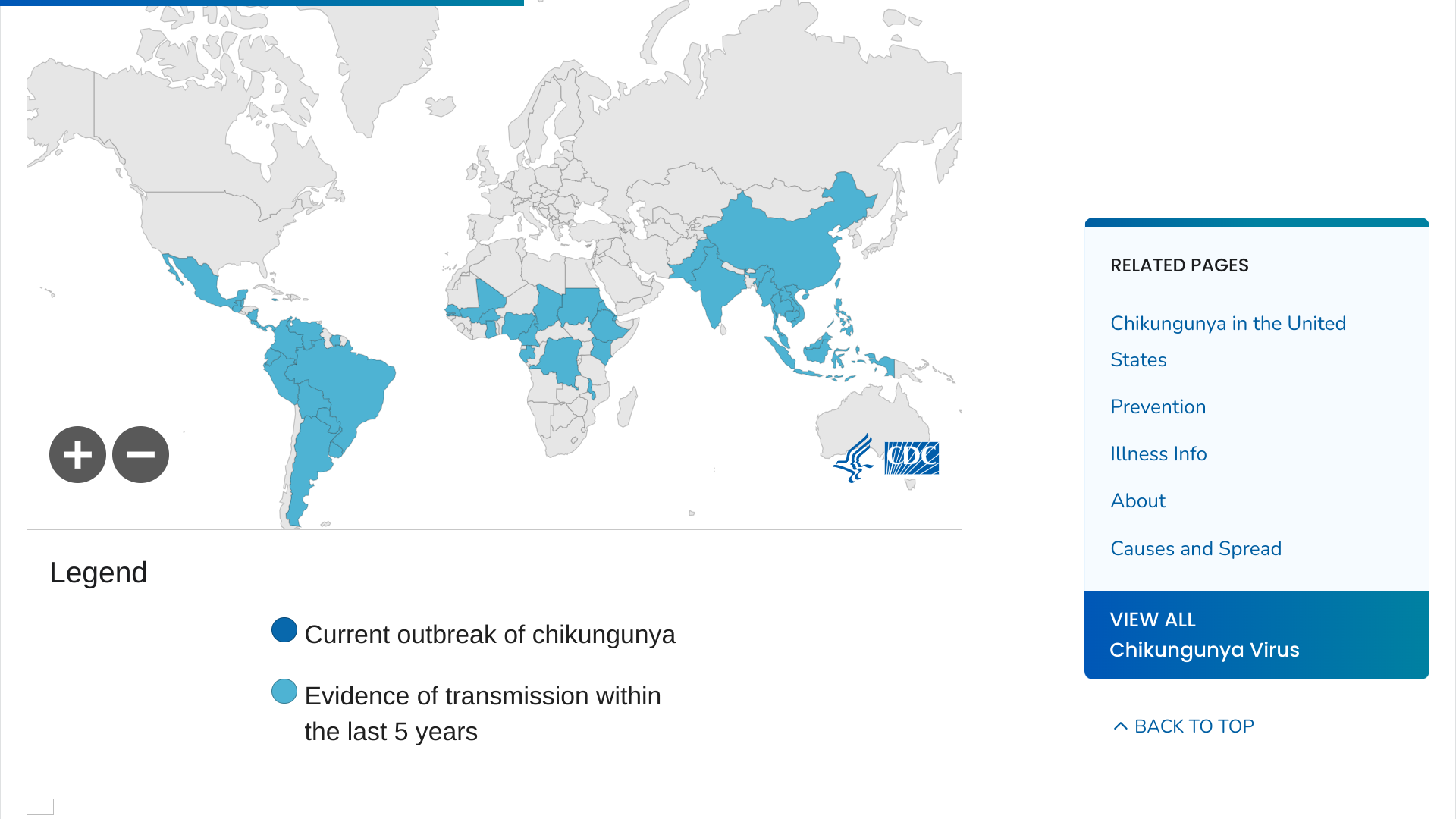
Over the past few decades, CHIKV has emerged in several previously non-endemic regions in Asia, Africa, southern Europe, and the Region of the Americas, often causing large, unpredictable outbreaks. 

As of August 8, 2024, the Pan American Health Organization (PAHO) reported over 371,167 CHIKV cases in the Americas this year. Between 2013 and 2023, the PAHO reported more than 3.7 million CHIKV cases in the Americas. 

The U.S. CDC reported from 2006 to 2023, 4,590 travel-related CHIKV cases were reported in the U.S., in areas such as Florida.

However, Locally acquired cases have not been reported in U.S. states or territories since 2019.

Vaccine Treats: 
Image: 
Image Caption: 
US CDC chikungunya case map August 2024
Live Blog Update Author: 
Location Tags: 
Include in VBT newsletter: 
herpes
Herpes zoster vaccine associated with reduced subjective cognitive decline
0 min read

According to a recent Morbidity and Mortality Weekly Report, more than half of school-aged children in American Samoa have evidence of a dengue fever virus infection. 

The estimated seroprevalence among all students aged 7–16 years was 59% (95% CI = 47%–71%) and was 60% (95% CI = 48%–72%) among those age-eligible for vaccination (i.e., those aged 9–16 years).

Dengue seroprevalence was lowest among children aged 8 (46%; 95% CI = 32%–60%).

The U.S. CDC's Notes from the Field (73(31);686–688) published on August 8, 2024, suggests American Samoa exceeds the minimum 20% threshold established for the introduction of recommended dengue vaccines to reduce the risk of hospitalization and severe dengue in seronegative children and adolescents.

The authors concluded, "In American Samoa, dengue vaccines could be part of a broader strategy for dengue control."

As of August 13, 2024, access to dengue vaccines in the United States is very limited.

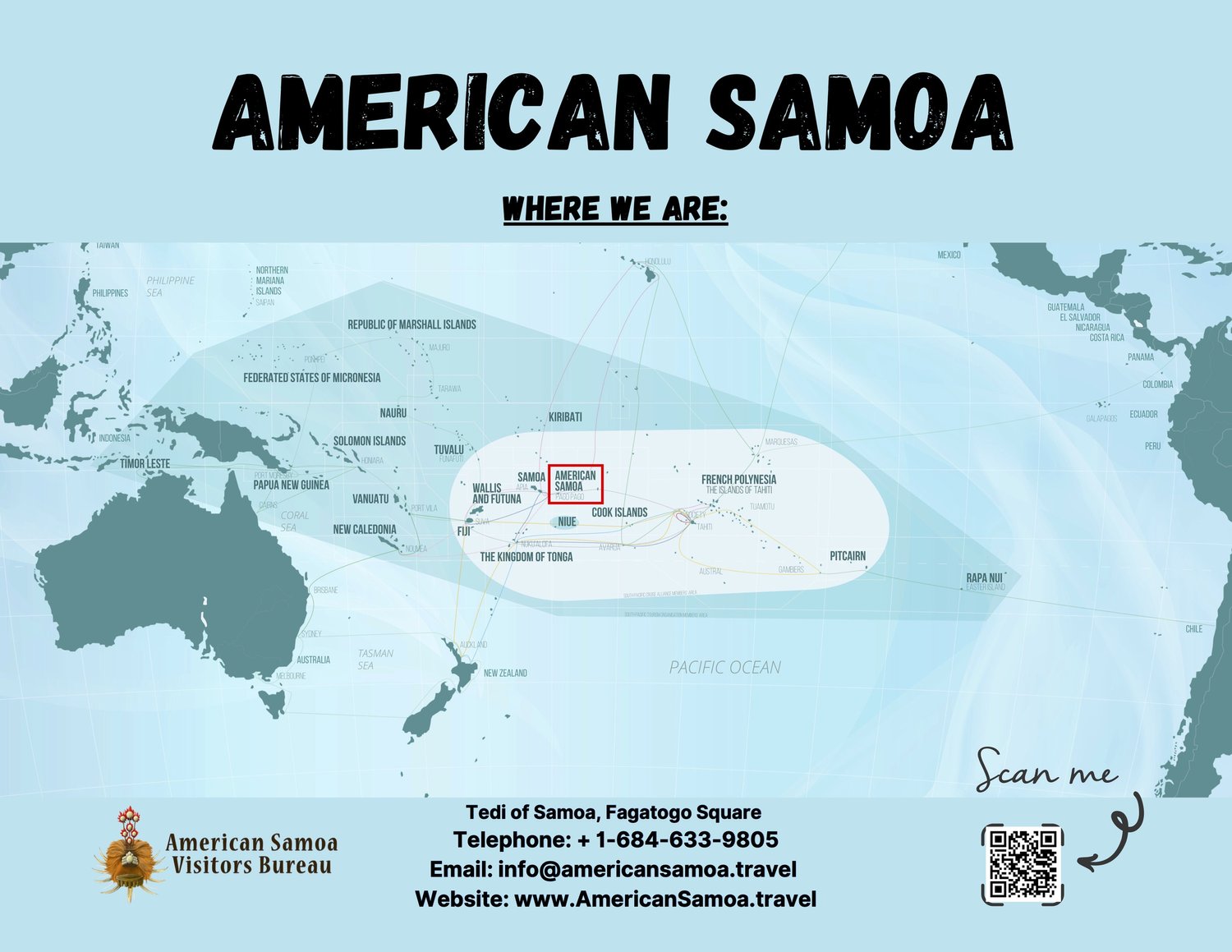
American Samoa is located in the Pacific Ocean, halfway between Hawaii in the north and New Zealand in the south. The CDC recommends checking the vaccines and medicines list and visiting your healthcare provider at least a month before your trip to American Samoa to get necessary supplies. 

These authors disclosed no potential conflicts of interest.

Vaccine Treats: 
Image: 
Image Caption: 
American Samoa Visitors Bureau map 2024
Live Blog Update Author: 
Location Tags: 
Include in VBT newsletter: 
B19V
B19V infections detected in 14 European countries and United States in 2024
measles vaccine
Measles virus transmission after vaccination failure is less than five percent
vaccine
Chikungunya vaccine IXCHIQ induces sustained protective antibody concentrations
0 min read

Valneva SE today reported its consolidated financial results for the first half of the year, which ended June 30, 2024. On August 13, 2024, Valneva reported total revenues of €70.8 million, Net Profit of €34.0 million, and Cash position of €131.4 million.

Valneva’s commercial portfolio consists of three travel vaccines: IXIARO®/JESPECT®, DUKORAL®, and the recently launched IXCHIQ®, the first monovalent, single-dose, live-attenuated chikungunya vaccine approved by the U.S. Food and Drug Administration.

The Company recently confirmed that IXCHIQ's two-year antibody persistence data were published in the Lancet Infectious Diseases and reported positive six-month data for the Phase 3 adolescent study of IXCHIQ; it expects to submit label extensions for 12 to 17 years in the U.S., Europe, and Canada in the second half of 2024.

In a press release, Peter Bühler, Valneva’s Chief Financial Officer, commented, “Our first half sales performance is in line with our expectations."

"We aim to further capitalize on the travel industry recovery as we focus on ramping up sales for IXCHIQ® to support our commercial growth while continuing to execute on our key R&D and regulatory milestones."

The Company also distributes certain third-party products in countries where it operates its own marketing and sales infrastructure.

For example, the Company has an exclusive worldwide license for the S4V Shigella vaccine candidate, adding an attractive Phase 2 clinical asset to Valneva’s R&D pipeline without impacting full-year or mid-term financial guidance.

The half-year financial report, including the condensed consolidated interim financial report and the half-year management report, is available on the Company’s website (Financial Reports—Valneva). 

On August 13, 2024, Valneva CEO Thomas Lingelbach spoke on YouTube about the Company’s half-year results and plans for the rest of 2024.

Vaccine Treats: 
Image: 
Image Caption: 
by Alessandro D'Andrea
Live Blog Update Author: 
Location Tags: 
Include in VBT newsletter: 
BCG vaccine
Access to ANKTIVA increases through commercial and government insurance programs
0 min read

Pfizer Inc. today announced positive top-line safety and immunogenicity results from substudy B of the ongoing pivotal Phase 3 clinical trial.

The trial is evaluating two doses of the ABRYSVO™ vaccine in immunocompromised adults aged 18 and older at risk of developing severe respiratory syncytial virus (RSV)- associated lower respiratory tract disease.

ABRYSVO was well-tolerated during the trial, showing a safety profile consistent with findings from other vaccine studies.

While the company evaluated two doses, a single 120 µg dose of ABRYSVO generated a strong neutralizing response against both subtypes of RSV, RSV-A, and RSV-B across all cohorts and age groups in the study.

Pfizer plans to share these findings at an upcoming scientific conference, publish them in a peer-reviewed scientific journal, and submit the data to the regulatory agencies for review.

“Immunocompromised adults, such as patients with cancer or autoimmune disorders, have a substantially increased risk of experiencing severe complications from RSV, yet there are currently no vaccines approved for those aged 18 to 59 in the U.S.,” said Annaliesa Anderson, Ph.D., Senior Vice President and Chief Scientific Officer, Vaccine Research and Development, Pfizer, in a press release on August 12, 2024.

“We are encouraged by the positive top-line data from this study, which provide important evidence that ABRYSVO has the potential to address a significant unmet need in this vulnerable population.”

These most recent data in immunocompromised adults build on the body of evidence supporting the profile of ABRYSVO in high-risk adults. 

As of early August 2024, three RSV vaccines have been approved for use in the U.S., and several vaccine candidates are conducting late-stage studies.

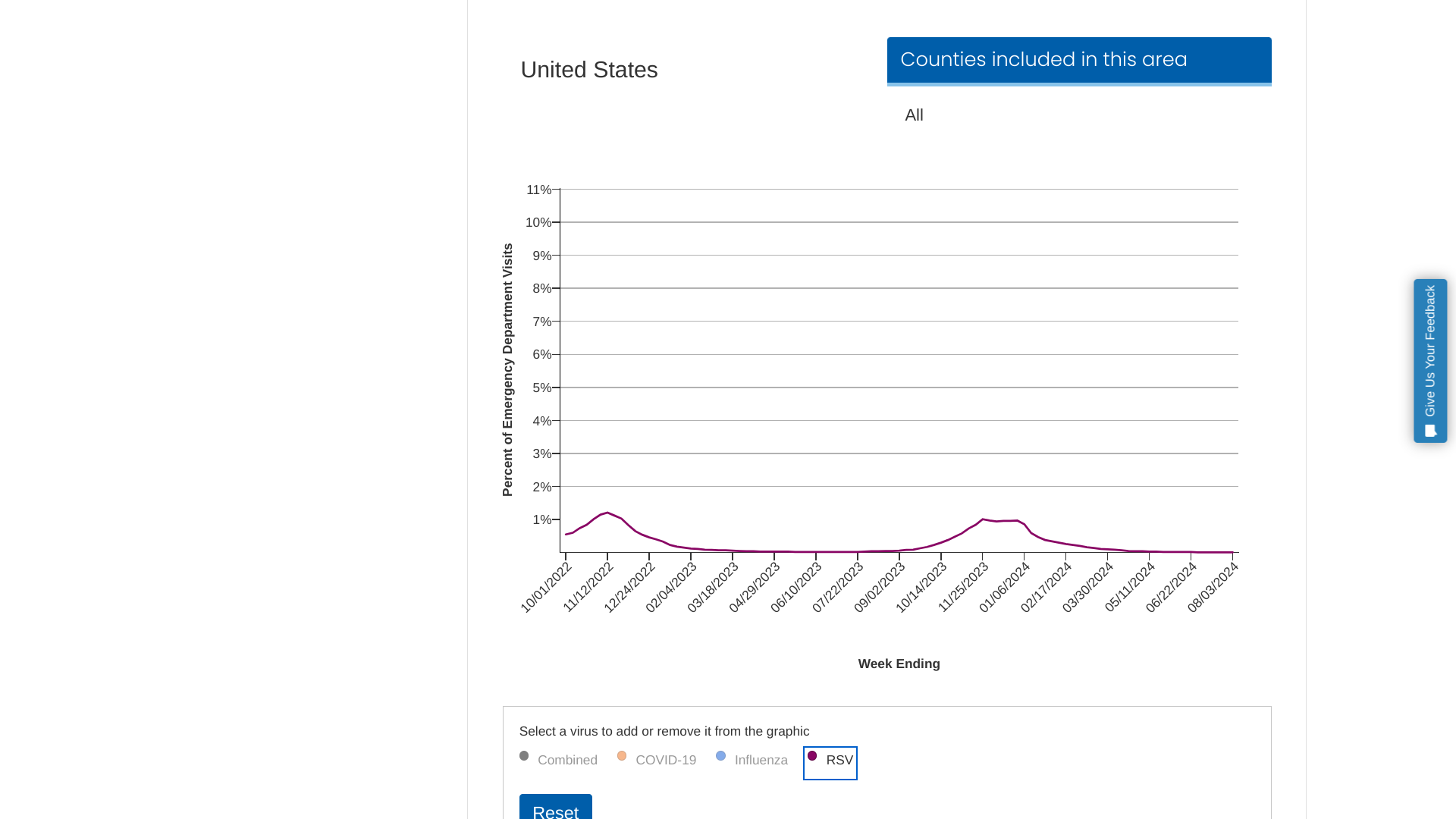
Additionally, the U.S. CDC reported on August 9, 2024, that RSV sections were generally low, except for the state of Florida.

Image: 
Image Caption: 
US CDC RSV case map August 2024
Live Blog Update Author: 
Location Tags: 
Include in VBT newsletter: 

LBP-EC01 CRISPR-Enhanced Bacteriophage UTI Therapy

LBP-EC01 CRISPR-Enhanced Bacteriophage UTI Therapy Clinical Trials, Indication, Side Effects

Locus Biosciences LBP-EC01 CRISPR-enhanced bacteriophage (crPhage®) therapy in development for treating urinary tract infections (UTI) and other infections caused by the pathogen E. coli. It is a bacteriophage cocktail engineered with a CRISPR-Cas3 construct targeting the E. coli genome. The precision medicine product works through a unique dual mechanism of action utilizing both the natural lytic activity of the bacteriophage, which are viruses that specifically attack bacterial cells and the DNA-targeting activity of CRISPR-Cas3. The mechanism also makes LBP-EC01 effective in killing E. coli strains regardless of whether they are antibiotic-resistant.

In 2020, Locus and the Biomedical Advanced Research and Development Authority (BARDA), part of the Administration for Strategic Preparedness and Response (ASPR) at the U.S. Department of Health and Human Services (HHS), announced an agreement to co-fund the development of LBP-EC01. Under the partnership agreement, contract number 75A50120C00169, BARDA will provide up to $93 million to Locus as part of a $152 million program to support Phase 2 and Phase 3 clinical trials and other activities required to seek marketing approval from the U.S. Food and Drug Administration (FDA) for LBP-EC01.

As of August 12, 2024, the primary and secondary objectives were met in the open-label randomized Part 1 of the clinical trial to treat uncomplicated UTIs caused by antibiotic-resistant E. coli. Data from the randomized, uncontrolled, open-label Part 1 portion of the clinical trial were published in The Lancet Infectious Diseases on August 9, 2024.

Locus Biosciences is creating a new class of precision biotherapeutics with clinical-stage engineered bacteriophage treatments for diverse bacterial and microbiome/inflammatory diseases. For more  information about Locus, visit https://locus-bio.com/ 

LBP-EC01 Indication

The U.S. Centers for Disease Control and Prevention (CDC) and World Health Organization (WHO) have identified antibiotic-resistant E. coli as an urgent and serious public health threat requiring the development of new treatments. Worldwide, an estimated 150 million people are affected by UTIs each year. Approximately 80% of these are caused by E. coli. Most UTI patients experience a recurrence within months of the first episode.

LBP-EC01 News

August 12, 2024 - Phase 2 trial evaluating LBP-EC01, a CRISPR-Cas3 genetically engineered bacteriophage therapy designed to treat patients with uncomplicated urinary tract infections (uUTIs) caused by antimicrobial-resistant and multi-drug-resistant E. coli, reported positive news.

January 23, 2024 -  Locus Biosciences, Inc. announced the release of $23.9 million from the BARDA to continue the development of Locus’ CRISPR-enhanced bacteriophage therapy, LBP-EC01, for treating UTIs caused by drug-resistant E. coli based on positive results from a Phase 2a clinical trial.

September 13, 2022 – Locus Biosciences, Inc. announced that the ELIMINATE trial has begun enrolling patients, and the first patient has been treated. ELIMINA E is a registration-enabling Phase 2/3 clinical trial of lead candidate LBP-EC01 for treating UTIs caused by E. coli bacteria.

February 24, 2021 - Locus Biosciences announced the completion of its Phase 1b clinical trial of the LBP-EC01 precision medicine product, which targets E. coli bacteria that cause UTIs.

LBP-EC01 CRISPR-Enhanced Bacteriophage UTI Therapy Clinical Trials

LBP-EC01 met all primary and secondary endpoints and demonstrated safety and tolerability in a Phase 1b trial. LBP-EC0  is currently being evaluated in a Phase 2 trial for treating UTIs caused by E. coli.

ELIMINATE Trial Part 1 Results - The primary and secondary outcomes of Part 1 were met, and a dosing regimen was identified that was well-tolerated, which led to high drug exposure at the site of infection. No seri us adverse events were observed in Part 1, and exposure to LBP-EC01 did not lead to any observations of genetic resistance in any subsequently recovered E. coli samples. Part 1, as initiated with three treatment groups, focused on intravenous (IV) delivery of a high 1×10¹¹ plaque forming units (PFU)/dose of LBP-EC01, which was halted after three patients discontinued dosing due to non-serious adverse events of mild tachycardia and afebrile chills. Three u-dated treatment groups, which focused on a short, 3-day course of intra-urethral (i.e., IU or direct to the bladder) and lower exposure IV dosing, replaced the original treatment groups. With this updated dosing approach, a rapid reduction of E. coli in urine was observed four hours after the first treatment, which was maintained to the day 10 test of cure (TOC) evaluation. All (16 of 16) patients in the evaluable population had complete resolution of UTI symptoms, and 14 of 16 (87.5%) patients demonstrated microbiologic cure or reduction of their bacterial infection below 1×10³ colony forming units (CFU)/mL in urine by the day 10 TOC. A dosing regimen of LBP-EC01 was given for two days IU (2×10¹² PFU/dose) and given concurrently for three days IV (1×10¹⁰ PFU/dose) with concomitant oral TMP/SMX (160 mg TMP/800 mg SMX twice daily) has been advanced into Part 2.

Part 2 of the ELIMINATE trial has been initiated, and patient dosing is underway. This randomized, controlled, double-blind trial portion will evaluate the efficacy, safety, tolerability, and pharmacokinetics of LBP-EC01 with TMP/SMX. Up to 2 8 female uncomplicated UTI patients will be enrolled and randomized in a 1:1 ratio where patients will receive LBP-EC01 or placebo for the 3-day dosing regimen selected from Part 1. The primary objective will be to evaluate the effect of LBP-EC01 given with TMP/SMX on its ability to treat acute UTIs in patients with a history of UTI recurrence. The impact of the treatment on reducing UTI recurrence and/or extending the duration to the subsequent UTI recurrence will be examined as an exploratory endpoint in a 6-month follow-up evaluation. This trial is registered with ClinicalTrials.gov, NCT05488340, and is ongoing.

0 min read
Availability: 
N/A
Generic: 
LBP-EC01
Drug Class: 
CRISPR-Cas3
Last Reviewed: 
Wednesday, August 14, 2024 - 04:35
Brand: 
crPhage™
Status: 
Manufacturer Country ID: 
FDA First In Class: 
Yes