Search API

The U.S. Centers for Disease Control and Prevention (CDC) today announced details of a gastrointestinal illness (GI) outbreak on the Silversea Cruises ship Silver Ray.
On January 16, 2025, the CDC reported that 38 guests and five crew members were ill among the 681 people onboard Voyage RA250104016.
This data represents 6.6% of all people onboard the Silver Ray.
The main symptoms of the patients were diarrhea and abdominal cramps. The CDC reported that the causative agent remains unknown.
This incident is the second GI outbreak aboard a cruise ship in 2025.
Last year, the CDC confirmed 18 outbreaks aboard cruise ships, with norovirus as the primary disease agent.
'Norovirus is often a cause of GI outbreaks on cruise ships, but we don't always know the cause of the outbreak when investigations begin, writes the CDC.
A study published in January 2025 identified cruise ship dining areas as priorities for preventing disease outbreaks. However, the probability of airborne infection in a speaking normal condition is low (<3 %).
As of January 2025, norovirus vaccine candidates are conducting clinical research, but none have been U.S. FDA-approved.
For a potential treatment, Travelan®, an orally administered passive immunotherapy, prophylactically reduces the likelihood of contracting travelers' diarrhea. In the U.S., Travelan is sold as a dietary supplement for digestive tract protection.
Note: This article was updated on Jan. 17, 2025, to include a reference link.


The Pan American Health Organization (PAHO), the Government of Argentina, and others today announced a joint effort to facilitate local production and regional access to the 20-valent pneumococcal conjugate vaccine (PCV20).
This vaccine is expected to further protect against severe diseases caused by Streptococcus pneumonia (pneumococcus), responsible for pneumonia, meningitis, and other serious infections, including those linked to antibiotic-resistant strains.
In 2021, 3,345 children under the age of 5 died due to pneumonia and meningitis caused by pneumococcus in Latin America and the Caribbean.
Through this initiative, not only will Argentina benefit from local production of the PCV20 (PREVNAR 20®), but countries across the Region of the Americas will be able to access vaccine doses through PAHO’s Regional Revolving Funds, ensuring more rapid vaccine rollout at competitive prices.
The PCV20 vaccine will be available in Latin America and the Caribbean starting in early 2025. The first doses produced in Argentina are estimated to be available by 2026.
“PAHO is committed to boosting regional production of sustainable, innovative technologies by strengthening existing capacities and our regional purchasing mechanism, the Revolving Fund for Access to Vaccines,” said PAHO Director Jarbas Barbosa in a press release on January 15, 2025.
“This collaboration reflects our dedication to ensuring equitable access to safe, effective vaccines that prevent severe diseases and save lives,” he added.


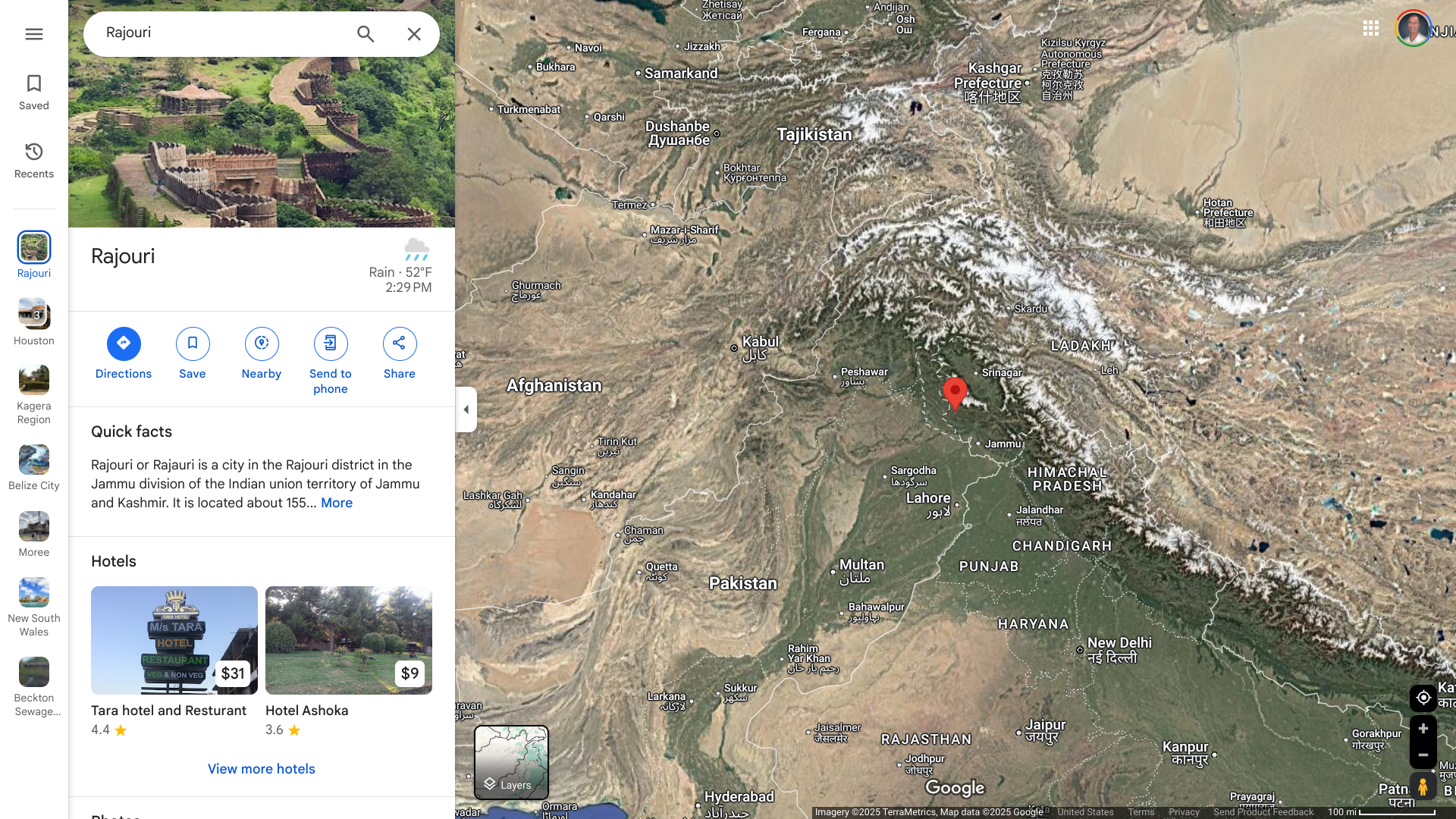
According to local media in India, medical experts have not determined the cause of death of 14 people in the Badhal village in the border district of Rajouri.
Since early December 2024, fourteen of 38 affected persons have died due to a 'mysterious disease.'
The Star reported on January 15, 2025, that experts from the PGIMER Chandigarh, Council of Scientific & Industrial Research, National Institute of Virology, National Centre for Disease Control, Defence Research and Development, and other organizations have so far been unable to detect the cause of the affected persons belonging to three interlinked families.
The Rajouri district is in the remote Jammu division of the Indian union territory of Jammu and Kashmir.
This is a developing story.
According to media reports, the Republic of Cyprus cruise ship arrivals at the port of Limassol for 2024 were not fully realized due to the current geopolitical situation.
CBN reported last year that the management company of the passenger terminal at the port of Limassol, the principal seaport of the island, emphasized that it remains optimistic about a strong recovery in 2025 and 2026 in the Eastern Mediterranean region.
Similar to this optimism, the U.S. Department of State updated its Travel Advisory for Cyprus, remaining at Level 1: Exercise Normal Precautions as of January 13, 2025.
However, when visiting Cyprus, do not attempt to enter the United Nations buffer zone at any place other than a designated crossing point. The U.S. Embassy in Nicosia can only assist U.S. citizens in this area to a limited extent.
If you travel to Cyprus, the State Department suggests enrolling in the Smart Traveler Enrollment Program to receive security messages and to help locate you in an emergency.
Since 1974, the southern part of Cyprus has been controlled by the internationally recognized Government of the Republic of Cyprus. The northern part of Cyprus proclaimed itself the “Turkish Republic of Northern Cyprus” in 1983.
From a health perspective, the U.S. CDC says visitors should be aware of current health issues in Cyprus, such as measles.
And speak with a vaccine expert at least one month before departure to discuss travel vaccine options.

Immuron Limited today announced that it had submitted the Clinical Study Report to the U.S. Food and Drug Administration (FDA) for the recently completed Phase 2 study with Travelan® (IMM-124E) and will soon request an end-of-Phase 2 meeting, which is a pre-cursor to proceeding to Phase 3.
As of January 14, 2025, the company wrote, 'This study data implies that Travelan® appears to aid in the reduction and clearance over time of pathological ETEC bacteria, by shortening the recovery period after Enterotoxigenic Escherichia Coli (ETEC) challenge.'
In the phase 2 study, statistically significant lower levels of IgA and IgG were observed for the subjects who received Travelan® compared to those who received the placebo, which may also reflect levels of exposure to ETEC antigen.
Travelan antibodies target and bind to ETEC antigen in the gastrointestinal tract, block LPS epitopes and therefore reduce antigen exposure, resulting in lower overall IgA and IgG antibody titers.
Clinical data also demonstrated a statistically significant reduction in colony-forming units in the stools of subjects who received Travelan® (p =0.0121), measured 48 hours post-challenge. This indicates faster clearance of the challenge strain from the GI tract.
Travelan® is an orally administered passive immunotherapy that prophylactically reduces the likelihood of contracting travelers’ diarrhea (TD). This digestive tract disorder is commonly caused by pathogenic bacteria and the toxins they produce.
TD continues to be the most frequent health problem among travelers to destinations in lower—and middle-income regions. Between 8% and 50% of travelers develop diarrhea, and the incidence depends on the country visited. However, travelers can have multiple episodes of diarrhea during one trip.
TD is different from a norovirus infection caused by nonenveloped, single-stranded RNA viruses. Norovirus causes viral gastroenteritis, which is sometimes referred to as stomach flu.
According to the U.S. CDC, norovirus is a commonly reported cause of diarrhea among travelers in confined spaces, such as on cruise ships.
As of January 2025, there are no norovirus vaccines available.
In the U.S., Travelan® is sold as a dietary supplement for digestive tract protection.

Quebec's Ministère de l'Environnement, de la Lutte contre les changements climatiques, de la Faune et des Parcs recently advised the public that a raccoon infected with the rabies virus was found dead in Saint-Armand, in the Estrie region, on December 17, 2024.
As of January 15, 2025, this is the first case of raccoon rabies in Québec since 2015.
The animal was found about 1.4 kilometers from where a case had been discovered near the Québec border, in the municipality of Highgate, Vermont.
In a media release, the government stated that 'it should be noted that over the past year, several cases of raccoon rabies have been identified in northern Vermont.
The evolution of the situation is being closely monitored by the Gouvernement du Québec, which continues its close cooperation with American authorities to optimize control and surveillance efforts on both sides of the border.
Raccoon, skunk, and fox vaccination interventions are planned for 2025. An analysis is underway to determine the best intervention strategy, which will be tailored to the situation.
In the United States, most rabies infections are related to infected bat bites.
In December 2024, the Kentucky and California health departments reported people had died after being infected with the rabies virus.
Furthermore, rabies vaccines for people are offered at various clinics and travel pharmacies in 2025.

The World Health Organization (WHO) recently informed its Member States of a suspected Marburg Virus Disease (MVD) outbreak in the Kagera region of the United Republic of Tanzania.
On January 13, 2025, the WHO wrote that the risk of this suspected MVD outbreak is assessed as high at the national level due to several concerning factors.
The regional risk is also considered high due to the Kagera region's strategic location as a transit hub, with significant cross-border movement of the population to Rwanda, Uganda, Burundi, and the Democratic Republic of the Congo.
As of early January 2025, nine suspected cases were reported, including eight deaths (case fatality ratio of 89%) across two districts – Biharamulo and Muleba.
Close contacts, including healthcare workers, are reported to have been identified and under follow-up in both districts. Human-to-human transmission of Marburg virus is primarily associated with direct contact with the blood and/or other bodily fluids of infected people.
The Bukoba district in the Kagera region experienced its first MVD outbreak in March 2023, and zoonotic reservoirs, such as fruit bats, remain endemic to the area. The outbreak in 2023 lasted for nearly two months, with nine cases and six deaths.
Since 1967, MVD outbreaks have been confirmed in various countries.
The WHO advises against travel and trade restrictions with Tanzania based on the current risk assessment.
As of January 15, 2025, the U.S. CDC issued a Level 1 - Practice Usual Precautions, Travel Health Advisory for visiting Tanzania. Previously, the CDC included Tanzania in its current global polio Travel Health Advisory.
Furthermore, no U.S. FDA-approved Marburg vaccines exist, but candidates are conducting clinical trials.
