Search API
North Carolina-based Istari Oncology, Inc. announced that the first patient was dosed in the LUMINOS-102 phase 2 clinical trial, which will assess the safety and efficacy of PVSRIPO alone or in combination with a programmed death receptor-1/ligand 1 (PD-1/L1) inhibitor in patients with melanoma who are resistant to these checkpoint therapies.
PVSRIPO is a novel viral immunotherapy that activates the innate and adaptive immune system to stimulate the production of a functional, systemic anticancer CD8+ T cell response.
“Anti-PD-1/L1 therapies have been a major advancement in melanoma treatment, however, many patients develop resistance or never respond in the first place,” said Matt Stober, President, and CEO at Istari Oncology, in a related press statement.
“We are very optimistic about the prospects for the phase 2 trial. PVSRIPO monotherapy has already shown clinical activity in this population, and its mechanism is synergistic with anti-PD-1/L1 therapies, so we believe the combination may provide even more benefit.”
Following positive phase 1 results, the phase 2 trial will further explore PVSRIPO’s impact on this population of patients in severe need of additional therapeutic options.

Pharmacists located in Ireland should immediately be mobilized to administer the HPV vaccine after an alarming decrease in vaccinations in 2020, stated the Irish Pharmacy Union (IPU) on March 30, 2021.
About 53% of Ireland's students received a first dose of the HPV vaccine series in 2020 compared to over 80% in 2019.
School closures and the redeployment of school vaccination teams to COVID-19 vaccine roll-out have interrupted school HPV vaccination programs reported by the IPU.
IPU Secretary General Darragh O’Loughlin has called for this worrying situation to be immediately addressed by commenting, “Pharmacists are trained and experienced vaccinators and have consultation rooms at the ready. Allow pharmacists to help protect our future generations from the morbidity and mortality caused by cervical cancer and other cancers related to HPV."
Around 300 women are diagnosed with cervical cancer each year in Ireland, with more than 90% of cervical cancer diagnoses from HPV infections, leading to around 90 deaths every year.
“Last year’s rates are particularly concerning, given the risks of not vaccinating and the strenuous efforts made by the HPV Vaccination Alliance to increase HPV vaccination rates. A window of opportunity is now available to substantially increase vaccination rates by providing a role for pharmacists in providing the HPV vaccine, Mr. O’Loughlin continued.
The HPV vaccine currently used in Ireland is called Gardasil 9. Over 300,000 people in Ireland have already been vaccinated with Merck's Gardasil 9, reports Ireland's Health Services.

The US Transportation Security Administration (TSA) reported a new post-coronavirus pandemic travel record on March 28, 2021, when 1,574,228 air travelers were screen at airports in the USA.
That volume is far greater than in 2020, when only 180,002 people were screened.
However, last Sunday's traffic is only 62% when compared to 2019's travel record.
To meet this expanding consumer demand, the TSA previously announced during February 2021 that it intends to hire about 6,000 additional staff members.
Specifically, the TSA is hiring Transportation Security Officers to work at Denver International Airport. There are 135 full- and 15 part-time positions currently available, with a starting salary of $18.10 per hour.
Additionally, TSA staff will soon assist the U.S. CDC's requirement that air passengers two years of age and over entering the USA (including U.S. citizens and Legal Permanent Residents) to present a negative COVID-19 test, taken within three calendar days of departure, or proof of recovery from the virus within the last 90 days.
The TSA is a division of the Department of Homeland Security.

The U.S. Food and Drug Administration (FDA) Safety Communication group issued a notice on March 24, 2021, to inform the public and healthcare providers that the FDA has required and approved an updated safety label change to the Prescribing Information for Shingrix (Zoster Vaccine Recombinant, Adjuvanted) that includes additional safety information based on post-marketing experience.
The FDA required GlaxoSmithKline (GSK), the manufacturer of Shingrix, to revise the Prescribing Information to include the following language in the Warnings and Precautions section: In a post-marketing observational study, an increased risk of Guillain-Barré syndrome (GBS) was observed during the 42 days following vaccination with Shingrix.
GSK’s top priority is patient safety and is committed to monitoring and ensuring the safety of all their products, including Shingrix (Recombinant Zoster Vaccine/RZV).
FDA stated it 'evaluated data from a postmarketing observational study that assessed the risk of GBS following vaccination with Shingrix. Based on this evaluation, FDA has determined that the results of this observational study show an association of GBS with Shingrix. Still, that available evidence is insufficient to establish a causal relationship.'
Guillain-Barré syndrome is a rare disorder in which the body’s immune system damages nerve cells, causing muscle weakness and sometimes paralysis. While its cause is not fully understood, the syndrome often follows infection with a virus or bacteria. Each year in the United States, an estimated 3,000 to 6,000 people develop GBS.
According to the CDC, GBS is rare, and data on the risk of GBS following HZ (herpes zoster or “shingles”) and vaccination are limited. Clinical trials, observational studies, and the risk-benefit analysis confirm the considerable benefits of RZV (SHINGRIX) vaccination in preventing HZ, severe disease, and complications.
The Shingrix vaccine received FDA approval on October 20, 2017, to prevent herpes zoster (shingles) in adults aged 50 years and older. In one clinical trial, compared to placebo, Shingrix reduced the incidence of shingles by 97% in individuals 50 years and older, says the FDA.
GSK's Shingrix vaccine is administered as a two-dose series, with the second dose given anytime between 2 and 6 months after the first dose.
'Although no medical product, such as vaccines or drugs, is 100% safe or effective, Shingrix has a strong safety record,' says the FDA.
GSK remains confident in the favorable benefit-risk profile of Shingrix for the prevention of shingles. GSK will continue to communicate with FDA and CDC on post-marketing safety monitoring for Shingrix.


A study published by the JAMA sought to answer a fundamental question of the digital age: Is there an association between an internet search for health information and improved accuracy in diagnosis and triage among non-physicians?
This is an important question since, over the past decade, when confronted with new medical symptoms, most people turn to the Internet to understand why they are ill and where they should get care.
Published on March 29, 2021, the results of this study led by Boston, MA researchers suggest that, contrary to concerns of its harmfulness, Internet searches are associated with modest improvements.
This study found the following groups had an increased rate of correct diagnosis:
- adults 40 years or older (e.g., 40-49 years: 5.1 [95% CI, 0.8-9.4] percentage points better than those aged <30 years; P = .02),
- women (9.4 [95% CI, 6.8-12.0] percentage points better than men; P < .001), and,
- those with perceived poor health status (16.3 [95% CI, 6.9-25.6] percentage points better than those with excellent status; P = .001) and,
- with more than 2 chronic diseases (6.8 [95% CI, 1.5-12.1] percentage points better than those with 0 conditions; P = .01).
Furthermore, with or without an Internet search, roughly three-quarters of participants were able to identify the severity of the situation and when to seek care.
Participants were more accurate when a case was more severe: almost 9 in 10 emergent cases were triaged appropriately. These results were reassuring, although it is important to recognize that an incorrect triage occurred in 1 in 10 emergent cases. This rate of triage inaccuracy compared with the triage inaccuracy rate for nurse triage lines and how it is associated with patient outcomes was unclear.
In conclusion, these researchers stated, 'We found that, among survey participants, using the internet to search for health information was associated with small increases in diagnostic accuracy. However, we observed no association between an internet search for health information and triage accuracy.'
"This next study takes a generalized AI algorithm, trained on all of the open-source text of the Internet such as Reddit and Twitter, and then uses that to respond when prompted," stated David Levine, M.D., MPH, of the Division of General Internal Medicine & Primary Care at the Brigham, in a press release.
"Can AI supplement how people use the Internet? Can it supplement how doctors use the Internet? That's what we're interested in investigating."

A new study conducted in France published in The Lancet on March 27, 2021, concluded 'Among patients admitted to hospital with community-acquired pneumonia who met clinical stability criteria, discontinuing β-lactam treatment after 3 days was non-inferior to 8 days of treatment.
The Pneumonia Short Treatment (PTC) phase 2 clinical trial was conducted in 16 hospitals in France and involved non-immunocompromised adult patients admitted to the hospital with moderately severe community-acquired pneumonia who met prespecified clinical criteria after 3 days of treatment with beta-lactam therapy.
From December 2013 to February 2018, 310 eligible patients were assigned to receive placebo (157) or beta-lactam treatment (153). In the intention-to-treat analysis, cure at day 15 occurred in 117 of 152 patients (77%) in the placebo group and 102 of 151 (68%) in the beta-lactam group (9.42% difference; 95% confidence interval, -0.38 to 20.04), indicating non-inferiority.
This study's findings 'could allow a substantial reduction of antibiotic consumption,' stated these researchers.
Community-acquired pneumonia is defined as pneumonia that is acquired outside the hospital. Pneumonia is an infection of the lungs that can cause mild to severe illness in people of all ages, says the U.S. CDC.
Vaccines can prevent some types of pneumonia. In the USA, vaccines can help prevent infection by some of the bacteria and viruses that can cause pneumonia, such as
- Haemophilus influenzae type b
- Influenza
- Measles
- Pertussis
- Pneumococcal
- Varicella
These vaccines are safe, but side effects can occur. Most side effects are mild and go away on their own within a few days says the CDC.
The French Ministry of Health funded this new study.

The Director of Polio Eradication for WHO’s Eastern Mediterranean Region, Dr. Hamid Jafari, declared the Federal Republic of Somalia’s outbreak of circulating vaccine-derived poliovirus type 3 (cVDPV3) had been successfully stopped, with no international spread.
The outbreak closed a full 28 months after this strain of polio was last detected in Somalia.
However, the 2018 cVDPV3 outbreak in Somalia was part of a 2-strain polio outbreak, along with circulating vaccine-derived poliovirus type 2 (cVDPV2). Both strains emerge and paralyze children in under-immunized populations.
Across this WHO Region, the cVDPV2 outbreak is ongoing. Thus, paralytic polio is still a risk for un- or under-immunized children in Somalia.
Wild poliovirus still stalks children across Afghanistan and Pakistan, and the movement of people across borders underscores the risk of importation across and beyond the Region.
The Global Polio Eradication Initiative (GPEI) map indicates various countries continue reporting new poliovirus cases. A listing of polio cases over the past 12-months is published at this GPEI link.
Somalia is a country in the Horn of Africa, located in northeast Africa, with a population exceeding 15 million residents.
The U.S. CDC recommends that children in the USA get polio vaccinated to protect against poliomyelitis. Since 2000, the inactivated polio vaccine is most often given in the USA. The CDC's Advisory Committee on Immunization Practices Vaccine Recommendations is published on this webpage.
The oral polio vaccine is offered in various countries.

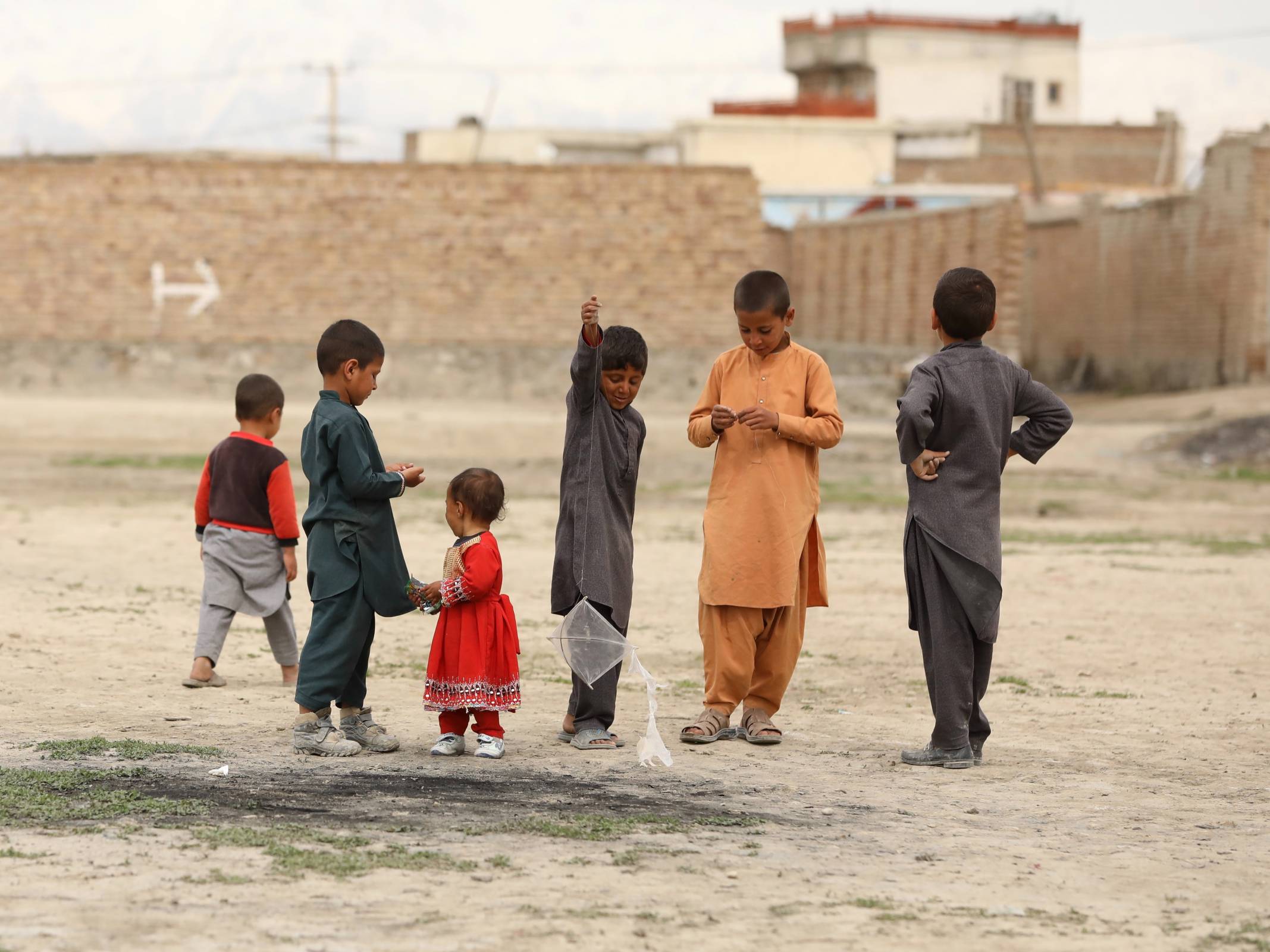
The second national polio immunization campaign of 2021 was launched today by the Ministry of Public Health of Afghanistan, collaborating with UNICEF and the World Health Organization (WHO).
Approximately 9.9 million children under the age of 5 will be targeted against polio during the 5-day campaign across the country.
In 2020, a total of 56 polio cases caused by wild poliovirus type 1, and more than 300 cases of circulating vaccine-derived poliovirus (cVDPV type 2) were reported by the WHO. In 2021, one case caused by wild poliovirus type 1 and 23 cases of cVDPV type 2 has been reported in predominantly inaccessible areas of the country.
Dr. Wahid Majrooh, the acting Minister for Public Health in Afghanistan, stated in a press release, “Approximately 3.3 million children in the areas where bans exist are repeatedly being deprived of the polio vaccine in each round of the campaign, which has caused an increase in polio cases across the country, especially cVDPV type-2."
"If our vaccinators and health workers can reach every child, we can control and eradicate polio in a short period of time," expressed the acting Minister for Public Health on March 29, 2021.
Currently, Afghanistan and Pakistan remain the only 2 polio-endemic countries in the world.
In the USA, the inactivated polio vaccine (IPOL) is most often given since 2000. It is administered by a shot in the arm or leg, depending on the person’s age. IPOL is a sterile suspension of three types of poliovirus: Type 1 (Mahoney), Type 2 (MEF-1), and Type 3 (Saukett). The IPOL vaccine is a highly purified, inactivated poliovirus vaccine with enhanced potency administered intramuscularly or subcutaneously.
The oral polio vaccine is offered in other countries.