Search API
The U.S. CDC issued a Level 2 Travel Alert, Practice Enhanced Precautions, regarding vaccine-derived polio outbreaks in many countries in Africa.
Outbreaks of vaccine-derived poliovirus have been reported in the following African countries map updated by the CDC on April 12, 2021.

The CDC recommends that all travelers to the countries listed above be vaccinated fully against polio.
Although wild-type polio was eradicated in Africa in 2020, vaccine-derived poliovirus can cause outbreaks in low vaccination rates. Polio vaccines protect against both wild-type and vaccine-derived poliovirus. infection.
The CDC's Advisory Committee on Immunization Practices Vaccine Recommendations is published on this webpage.
Adults who were fully vaccinated during childhood should receive an additional (single) lifetime booster dose of a polio vaccine. Even if you were vaccinated as a child or have been sick with polio before, you need a booster dose to make sure you are protected.
And the CDC recommends children in the USA get polio vaccinated to protect against poliomyelitis.
Since 2000, the inactivated polio vaccine is most often given in the USA. It is administered by a shot in the arm or leg, depending on the person’s age, says the U.S. CDC.

The eastern Africa Federal Republic of Somalia’s outbreak of circulating vaccine-derived poliovirus type 3 (cVDPV3) has been declared 'closed' by the Director of Polio Eradication for World Health Organization (WHO) Eastern Mediterranean Region on April 14, 2021.
According to an article published by the Global Polio Eradication Initiative, Dr. Hamid Jafari confirmed a full twenty-eight months have passed since this strain of polio was last detected in Somalia.
However, the U.S. CDC issued a Level 2 Travel Alert on April 12, 2021, stating 'there are vaccine-derived polio outbreaks in many countries in Africa.'
Although wild-type polio was eradicated in Africa in 2020, vaccine-derived poliovirus can cause outbreaks in places where vaccination rates are low, says the CDC.
Outbreaks of vaccine-derived poliovirus have been reported in the African countries highlighted on the CDC map. The WHO recommends that these countries require residents and long-term (4+ weeks) visitors to show proof of polio vaccination before leaving the country.
Furthermore, before traveling to these countries, the CDC recommends adults who completed their routine polio vaccine series as children should receive a single, lifetime adult booster dose of a polio vaccine.
Polio is a crippling and potentially deadly disease that affects the nervous system. Most people with polio do not feel sick.
Some people have only minor symptoms. In rare cases, polio infection causes permanent loss of muscle function (paralysis). Polio can be fatal if the muscles used for breathing are paralyzed or an infection of the brain, says the CDC.

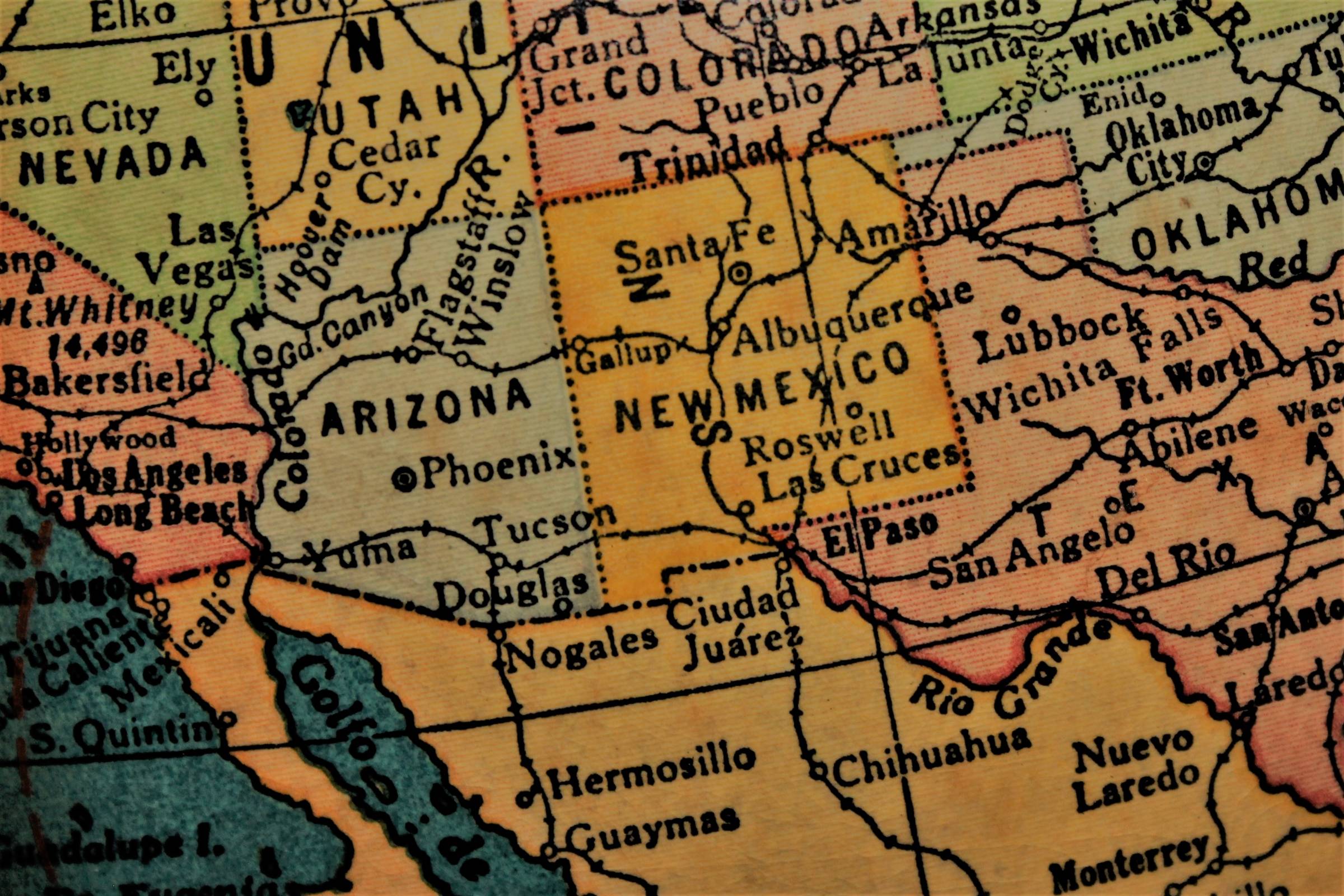
The US Department of State issued a Security Alert for Mexicali and the Mexicali Valley, Baja California, on April 9, 2021.
The State Department Alert says 'travelers should exercise increased caution when traveling in and around Mexicali, the Mexicali Valley, and the western part of the state of Sonora due to the possibility for heightened violence. Members of the US Embassy community have been advised to avoid the Mexicali area until further notice.'
Mexicali is home to about 700,000 residents and is the capital city of the Mexican state of Baja, California.
Mexicali is located at a Junction of major interstates and federal highways. In the past 10 years, the public transport system has improved. Currently, there are over 40 routes across the city and its urban area. The city is linked to various cities by Mexicali International Airport.
As of April 16, 2021, most Mexican states were categorized as yellow and green. Quintana Roo, where Cancun and Playa del Carmen are located, were listed as yellow on this map.
If you are a U.S. citizen traveling to or residing in Mexico, enroll in the Smart Traveler Program to receive safety messages and other travel information. And to access emergency assistance when in Mexico, U.S. citizens can call (55) 8526 2561 from Mexico or 1-844-528-6611 from the USA, states the US Embassy website.
Regarding the COVID-19 pandemic, cases in Mexico continue to decrease after peaking in the first week of January 2021. As of April 15, 2021, Mexican authorities reported widespread community transmission, thousands of cases of infection, and increased numbers of patients requiring hospitalization.
Furthermore, schools remain closed in most Mexican states.
When returning to the USA via air travel, all airline passengers ages two years and older must provide a negative COVID-19 viral test taken within three calendar days of travel.
Alternatively, travelers returning to the USA who have been sick and recovered from COVID-19 in the 90 days preceding travel may provide proof of a positive COVID-19 viral test along with documentation from a licensed health care provider confirming their recovery. This requirement, updated on April 8th, applies to U.S. citizens and foreign nationals, regardless of vaccination status.
This requirement does not currently apply to travelers entering the United States by land or sea or children under two years of age.
'We encourage U.S. citizens residing in Mexico to follow host country developments and guidelines, particularly the Government of Mexico’s national vaccination plan against COVID-19, says the US State Department.
The US Centers for Disease Control and Prevention (CDC) continue to post a Level 4 Travel Alert for Mexico. Check the CDC’s Frequently Asked Questions for additional information regarding suggest travel vaccines and medicines.
The New England Journal of Medicine (NEJM) published a Correspondence submitted by researchers associated with Johnson & Johnson and Janssen Pharmaceuticals on April 16, 2021, Thrombotic Thrombocytopenia after Ad26.COV2.S Vaccination — Response from the Manufacturer.
This letter stated 'At this time, evidence is insufficient to establish a causal relationship between these (adverse) events and the Ad26.COV2.S vaccine (Janssen COVID-19 Vaccine).'
Johnson & Johnson highlighted that out of more than '75,000 participants in the clinical trial program for its vaccine, one case of CVST emerged. And 'It is important to note that the incidence of CVST associated with low platelets is unknown and is considered by the FDA and the CDC to be extremely low.'
'We continue to work closely with experts and regulators to assess the data, and we support the open communication of this information to health care professionals and the public,' concluded this NEJM Correspondence.

The U.S. CDC reported on April 16, 2021, there was one human infection with a novel influenza A virus detected after the person had direct contact with swine in Wisconsin. This person was infected with an influenza A(H1N1) variant (A(H1N1)v) virus.
No human-to-human transmission has been identified in association with this patient.
According to the CDC, this is the first influenza A(H1N1)v virus infection detected in the USA occurring in 2021, and the third novel influenza A virus infection (one A(H3N2)v and two A(H1N1)v viruses) occurring during the 2020-2021 season.
This patient is a child < 18 years of age, was not hospitalized, and has completely recovered from their illness.
Previously, the CDC) reported a variant H1N1 (H1N1v) case involving a North Carolina resident who had daily contact with pigs on March 26, 2021. This person was infected with an influenza A(H1N1) variant (A(H1N1)v) virus in 2020.
The first swine influenza virus was found in pigs in 1918. Historical research indicates a possible avian origin that was then transmitted to pigs. Additional information on influenza in swine, variant influenza infection in humans, and strategies to interact safely with swine can be found on this CDC webpage.
The US Centers for Disease Control and Prevention (CDC) published its Weekly U.S. Influenza Surveillance Report on April 16, 2021. The Key Updates for Week #14, ending April 10, 2021, included 1.1% of patient visits reported were due to Influenza-like Illness (ILI).
This LIL percentage is well below the national baseline of 2.6%.
Between October 2020 and April 10, 2021, FluSurv-NET reported that laboratory-confirmed influenza hospitalizations were much lower than average for this point in the flu season and lower than rates for any season since routine data collection began in 2005, including the low severity 2011-12 season.
The current rate is about one-eighth the rate at this time during the 2011-12 season.
Furthermore, there has been just one influenza-associated pediatric death during the 2020-2021 flu season reported to CDC. This data compares with last flu season when 198 pediatric deaths were confirmed.
The CDC says, 'An annual flu vaccine is the best way to protect against flu and its potentially serious complications.'
An updated flu shot availability listing is published on this webpage.


The Times of Israel reported Health Minister Yuli Edelstein declared 'that starting on April 18, 2021, Israelis will no longer be required to wear masks while outside.'
“The masks are intended to protect us from the coronavirus,” Edelstein said. “After professionals decided this was no longer required in open spaces, I decided to enable taking them off.”
On April 6, 2021, the U.S. CDC stated, 'Correct and consistent mask use is a critical step everyone can take to prevent getting and spreading COVID-19. Masks work best when everyone wears them.'
'Masks should be worn any time you are traveling on a plane, bus, train, or other forms of public transportation traveling into, within, or out of the USA, and in U.S. transportation hubs such as airports and stations.'
'Masks may not be necessary when you are outside by yourself away from others or with people who live in your household.'
'However, some areas may have mask mandates while out in public, so please check the rules in your local area. Additionally, check whether any federal mask mandates apply to where you will be going, says the CDC.

Montana Governor Greg Gianforte issued Executive Order #7-2021 on April 13, 2021, prohibiting the state-sponsored development and required use of so-called vaccine passports.
The executive order prohibits the State of Montana from requiring a vaccine to access state services or facilities, producing, issuing, or funding vaccine passports, and sharing an individual’s vaccination status with any person, company, or governmental entity for purposes of a vaccine passport program.
The executive order also prohibits Montana businesses from requiring patrons and customers to provide documentation of their vaccination status to gain access to, entry upon, or service.
“I strongly encourage Montanans to get a safe, effective COVID-19 vaccine, which is our best path to protect our family and friends and get back to a more normal life,” Gov. Gianforte said in a press release.
“Receiving one is entirely voluntary and will not be mandated by the State of Montana, nor compelled through vaccine passports, vaccine passes, or other compulsory means."
"We are committed to protecting individual liberty and personal privacy," concluded Gianforte.
Montanans elected Greg Gianforte as their state’s 25th governor on November 3, 2020. Montana is a northwestern US state with about 1 million residents defined by its wide-open spaces.
