Search API
The Chicago Department of Public Health (CDPH) recently reported that 900 shelter residents have been successfully vaccinated with the measles, mumps, and rubella (MMR) vaccine.
As of March 11, 2024, these newly vaccinated shelter residents are required to stay at the shelter for 21 days until their immunity from the vaccination reaches full effectiveness.
Chicago intends to continue transferring immune residents and those who need to quarantine in designated hotel spaces in the city.
As of March 13, 2024, reports indicate ten people in Chicago have been diagnosed with measles.
Over 45 measles cases in seventeen jurisdictions have been reported nationwide in 2024.
CDPH is treating this response as a citywide measles outbreak and is calling on all eligible unvaccinated residents to get vaccinated now. MMR vaccines are available at most doctor’s offices and community pharmacies in Chicago.
As long as measles circulates in Chicago, we will continue to proactively protect as many people as possible from this highly infectious disease,” said CDPH Commissioner Olusimbo ‘Simbo’ Ige, MD, MPH, in a press release.
Immunization records recorded in the Illinois immunization registry can be accessed using the Illinois Department of Public Health Vax Verify digital portal.

Merck today announced plans to initiate clinical development of a new investigational multi-valent human papillomavirus (HPV) vaccine designed to provide broader protection against multiple HPV types.
Separately, the company also plans to conduct clinical trials to evaluate the efficacy and safety of a single-dose regimen of GARDASIL®9 compared to the approved three-dose regimen.
“Evidence continues to emerge showing the importance of GARDASIL and GARDASIL 9 to public health,” said Dr. Eliav Barr, senior vice president, head of global clinical development, and chief medical officer, Merck Research Laboratories, in a press release on March 13, 2024.
“These significant investments build upon our leadership and, importantly, provide the opportunity to further impact the global burden of certain HPV-related cancers and diseases.”
Merck announced in February 2024 that GARDASIL/GARDASIL 9 vaccine sales reached about $8.9 Billion;
The World Health Organization (WHO) recommends vaccinating against HPV to prevent infections and associated cancers.
As of March 2024, the WHO has listed six licensed HPV vaccines protect males and females against cancers caused by HPV. These bivalent, quadrivalent, and nonavalent HPV vaccines are available in 140 countries.
Furthermore, the WHO and the United Kingdom have endorsed the single-dose regimen.

During March 2024, many college students will enjoy the warm and friendly South Florida beaches.
However, various diseases also impact those Florida communities.
For week #10, Florida Health's Mosquito-Borne Disease Surveillance reported new dengue and malaria cases.
In 2024, 59 travel-associated dengue cases were reported, mainly by visitors from Cuba.
And four cases of locally acquired dengue have been reported from two counties this year. In 2023, positive samples from 186 humans were reported from five counties.
Also, in 2024, twelve cases of malaria have been reported in individuals with a travel history to a malaria-endemic area, such as Africa.
In 2023, seven locally acquired malaria cases were reported in the Sarasota area.
On the bright side, the agency also communicated that the recent measles outbreak in Broward County has been contained.
No additional measles cases have occurred at Manatee Bay Elementary since Friday, February 16, 2024; thus, the 21-day infection period has ended.
However, due to the contagiousness of measles and the rate of international travel, there is a possibility for more sporadic cases throughout Florida and the United States.
"It's important that public health leaders consider all available data and make decisions that promote health while respecting the rights of individuals," said Florida Surgeon General Dr. Joseph Ladapo in a press release on March 8, 2024.
The State Surgeon General communicated that unprotected people should speak with their healthcare provider about receiving approved vaccines.
As of March 12, 2024, the state of Florida, the U.S. Centers for Disease Control and Prevention, Canada, and the United Kingdom have not issued any vaccination requirements for visitors to Florida.

An observational, cross-sectional cohort study was published on March 5, 2024, investigating the source of an ongoing mpox outbreak in the Democratic Republic of the Congo (DRC).
The study also evaluated how the mpox virus (MPXV) clade I spread in the city of Kamituga. This non-peer-reviewed study included data from 2022 to January 2024.
These researchers reported a staggering 21,630 suspected MPXV cases and 1,003 deaths. Around 85% of the deaths recorded during this period were children under 15 years of age.
This MPXV clade I outbreak marks an important change as transmission routes now appear to be expanding to include heterosexual activity, wrote these researchers.
The DRC reported the first mpox MPXV clade I cases in humans in 1970.
"The mpox situation in the DRC is deeply alarming, and the lack of tests for both mpox and HIV means it's unclear just how bad the mpox situation is and what the underlying comorbidities are," said Dr. Ayoade Alakija, who is Chair of the Board at FIND, in a press release on March 12, 2024.
The May 2022 MPVX clade II global outbreak caused global concern, primarily among men. The outbreak caused 93,497 cases in 118 locations.
As of March 5, 2024, there have been 32,063 confirmed mpox cases and 58 deaths in the U.S.
Throughout the clade II outbreak, the JYNNEOS® ((MVA-BN®, IMVAMUNE®) vaccine has been deployed in most impacted countries.
On December 7, 2023, the U.S. CDC published a Health Alert Network Health Advisory stating that JYNNEOS is expected to have similar vaccine effectiveness (VE) against MPXV clade I, as seen with clade II.
The CDC's vaccine committee reported in October 2023 that JYNNEOS's VE against mpox clade II ranges from 36%–75% for 1-dose vaccination and 66%–89% for 2-dose vaccination.
The European CDC reported in December 2023 that real-world JYNNEOS VE data is lacking.

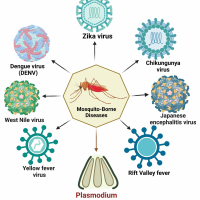
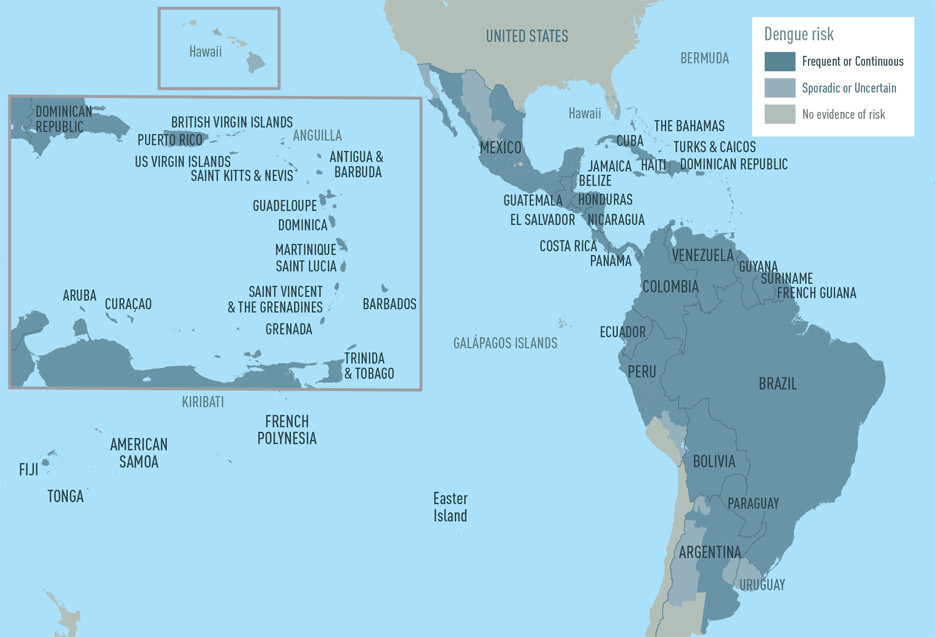
Dengue virus is a severe ongoing concern for many areas of Central and South America, Mexico, and the Caribbean.
If you plan to visit any high-risk areas during Spring Break 2024, don't let dengue fever ruin your trip.
The high-risk destination list includes Argentina, Brazil, Colombia, Costa Rica, French Guiana, Guadeloupe, Guatemala, Haiti, Jamaica, Martinique, Mexico (Cancun), Nicaragua, Panama, Paraguay, Peru, Saint Barthelemy, Saint Martin, Turks and Caicos Islands.
The U.S. Centers for Disease Control and Prevention (CDC) confirmed on February 28, 2024, travelers should protect themselves by taking precautions against mosquito bites. Take the necessary measures to safeguard yourself and enjoy a worry-free trip.
However, be aware the disease can take up to two weeks to develop, and the illness generally lasts less than a week.
Additionally, the CDC says don't disrupt your vacation with this vaccine-preventable illness.
As of March 12, 2024, various government agencies have approved dengue vaccines, and several vaccine candidates are conducting late-stage studies.
In the U.S., Dengvaxia® is approved by the U.S. FDA. On June 30, 2023, the FDA issued a Supplemental Approval letter.
Other countries offer QDENGA®, a WHO-recommended dengue vaccine.
Scientists from Duke-NUS Medical School (Duke-NUS) have developed a new approach using the Zika virus to destroy brain cancer cells and inhibit tumor growth while sparing healthy cells.
Using Zika virus vaccine candidates developed at Duke-NUS, the team discovered how these strains target rapidly proliferating cells over mature cells—making them an ideal option to target fast-growing cancerous cells in the adult brain.
Zika virus is one such option in early development. The Duke-NUS team used Zika virus live-attenuated vaccine (ZIKV-LAV) strains, which are "weakened" viruses with limited ability to infect healthy cells but can still increase and spread within a tumor mass.
"We selected Zika virus because it naturally infects rapidly multiplying cells in the brain, allowing us to reach cancer cells that are traditionally difficult to target. Our ZIKV-LAV strains also replicate themselves in brain cancer cells, making this a living therapy that can spread and attack neighboring diseased cells," said Dr. Carla Bianca Luena Victorio, first author of the paper and Senior Research Fellow at the Cancer & Stem Cell Biology Programme at Duke-NUS, in a press release on March 8, 2024.
Their study's findings, published in the Journal of Translational Medicine in February 2024, potentially offer a new treatment alternative for brain cancer patients who currently have a poor prognosis.
Glioblastoma multiforme is the most common malignant brain cancer, with more than 300,000 patients diagnosed annually worldwide. Survival rates for such patients are poor (around 15 months), mainly due to the high incidence of tumor recurrence and limited treatment options.
For such patients, oncolytic virotherapy—or the use of engineered viruses to infect and kill cancer cells—may address the current therapeutic challenges.
Separately, several Zika vaccine candidates are conducting clinical research as of March 2024.
A preventive vaccine targeting Zika is in demand since 36,738 Zika cases were reported in 2023.
In the Americas, the highest proportion of Zika cases was reported in Brazil (35,041), followed by Bolivia, Belize, Columbia, Paraguay, and Venezuela.

During the recent U.S. Centers for Disease Control and Prevention (CDC) vaccine committee meeting, changes to the adolescent meningococcal vaccination schedule were discussed to optimize protection against meningitis.
These discussions are very important since the number of meningococcal disease cases in the U.S. has increased sharply since 2021. In 2023, there were 416 confirmed and probable cases of meningitis.
Furthermore, outbreaks are unpredictable, and the outcomes can be devastating, according to the CDC.
For example, from June 2022 to March 2024, there have been 35 confirmed cases of meningococcal disease, including six deaths in Virginia.
On February 29, 2024, Jamie Loehr, M.D., the Advisory Committee on Immunization Practices (ACIP) Meningococcal Work Group Chair, led the Introduction session, followed by presentations on 'Revising the Adolescent Meningococcal Vaccine Schedule: Term of Reference and Considerations' and 'GSK Pentavalent MenABCWY Vaccine: Term of Reference.'
Amy B. Middleman, M.D., M.P.H., M.S.Ed., FAAP, liaison from the Society for Adolescent Health and Medicine to ACIP, said a recent discussion showed many did not favor removing vaccine doses from the existing schedule.
"There was pretty clear concern about potentially eliminating the 11- to 12-year vaccination for multiple reasons," said Dr. Middleman in an article.
The ACIP is scheduled to continue these discussions during their June 2024 meeting.
The ACIP develops recommendations on how to use vaccines to control disease in the U.S.
The Committee's recommendations are forwarded to the CDC's Director and, once adopted, become official policy. They are then published in the CDC's Morbidity and Mortality Weekly Report.

The New Jersey Department of Health (NJDOH), which has already confirmed one measles case in 2024, recently announced it is investigating eight suspected mumps cases in Hunterdon County, northwest New Jersey.
Mumps can become very serious and start with fever, headache, muscle aches, tiredness, and loss of appetite. Later, it appears as a swelling of the salivary glands or puffy cheeks and a tender, swollen jaw.
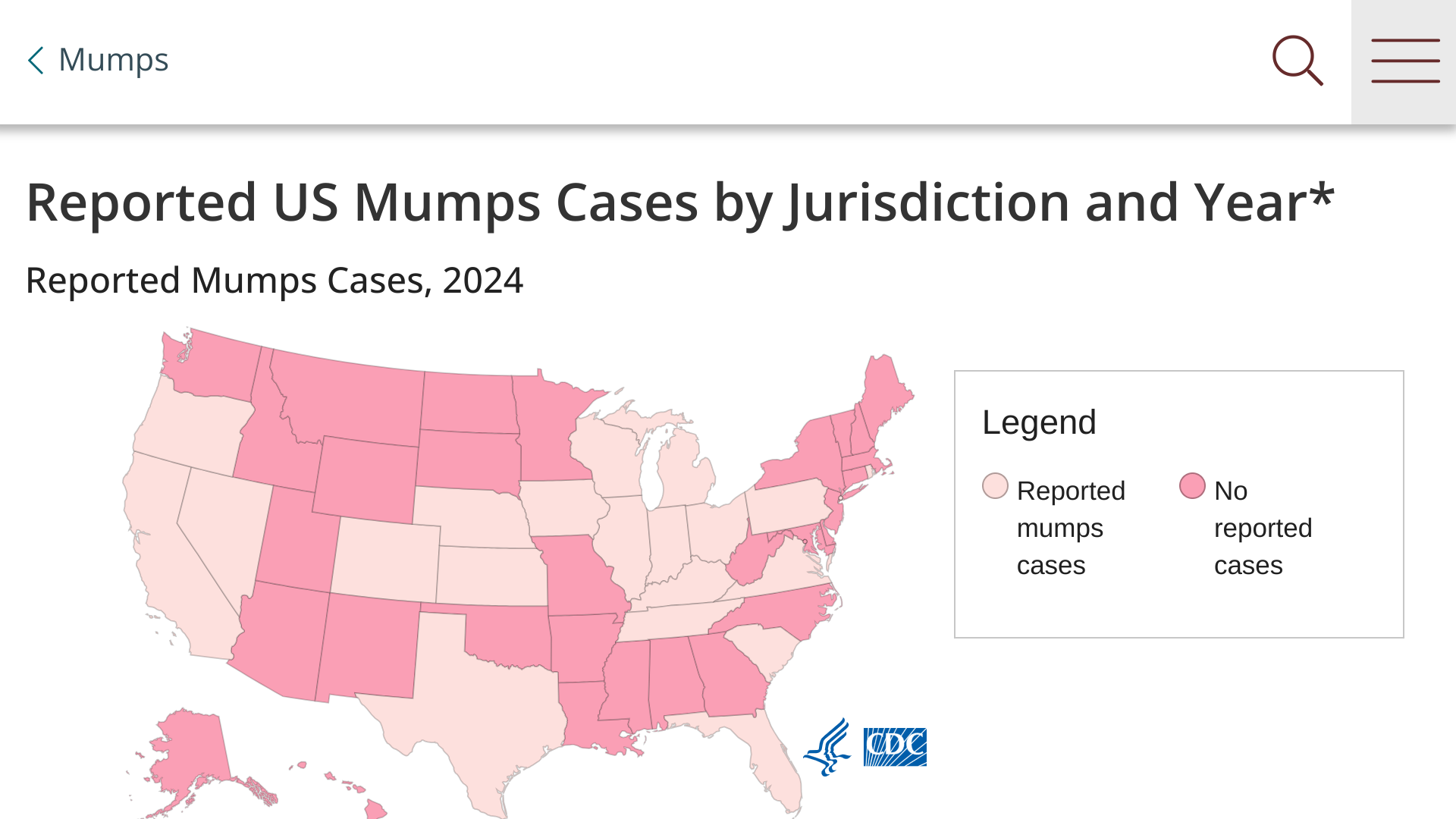
As of February 29, 2024, a total of 50 mumps cases have been reported by 21 U.S. jurisdictions, some related to international travel.
Last year, 436 mumps cases were reported in the U.S.
NJDOH is urging everyone to be aware of the symptoms of these highly contagious viruses and to stay up to date with the measles, mumps, and rubella (MMR) vaccinations.
The MMR vaccine is a very effective way to avoid these illnesses.
“As a physician and mom, I understand what keeping your kids and your family healthy is like. The best way to keep you and your loved ones safe is to get the MMR shot. If you or your family have not gotten the shot, now is the time,” said Acting Health Commissioner Dr. Kaitlan Baston in a press release on March 5, 2024.
“These viruses are incredibly contagious, so if you suspect you may have measles, mumps, or rubella, it is important to call ahead before visiting any health care provider or facility so they can take special precautions.”
The cost of MMR vaccination is generally covered by insurance, and various vaccines are available at community pharmacies.