Search API
A recent analysis of data from a nationwide health survey reveals "concerning" disparities in human papillomavirus (HPV) vaccine uptake among adults.
More than 84% of the 9,440 people aged 27 to 45 years involved in a national sample published by the journal Human Vaccines & Immunotherapeutics on March 27, 2024, had yet to receive a cancer-prevention HPV vaccine.
The lowest vaccine uptake was observed among men, people of Hispanic heritage, and those with lower educational levels.
Specifically, women had over three times greater odds (aOR = 3.58; 95% CI 3.03, 4.23) of HPV vaccine uptake than men.
Dr. Osazuwa-Peters, who led a team of specialists from institutions, commented in a press release on March 28, 2024, "For oropharyngeal cancer, about 75% of new cases are in males."
"As oral HPV is the primary cause of HPV-associated oropharyngeal cancer, providing the HPV vaccine to middle-aged individuals is undoubtedly an essential strategy for decreasing the risk of infection, persistence, and eventual HPV-associated oropharyngeal malignancy.
"While the population benefit of the HPV vaccines in preventing oropharyngeal cancer may not be realized until years later, there are ongoing clinical trials to establish that the current vaccines are effective in the prevention of oral HPV infection."
HPV is a common sexually transmitted virus that can cause cancers later in life, such as cervical, oropharyngeal, anal, penile, vaginal, and vulvar.
Various HPV vaccines are approved and available worldwide in 2024.

According to the World Health Organization, Dengue is endemic in over 100 countries in 2024, including the Republic of Singapore.
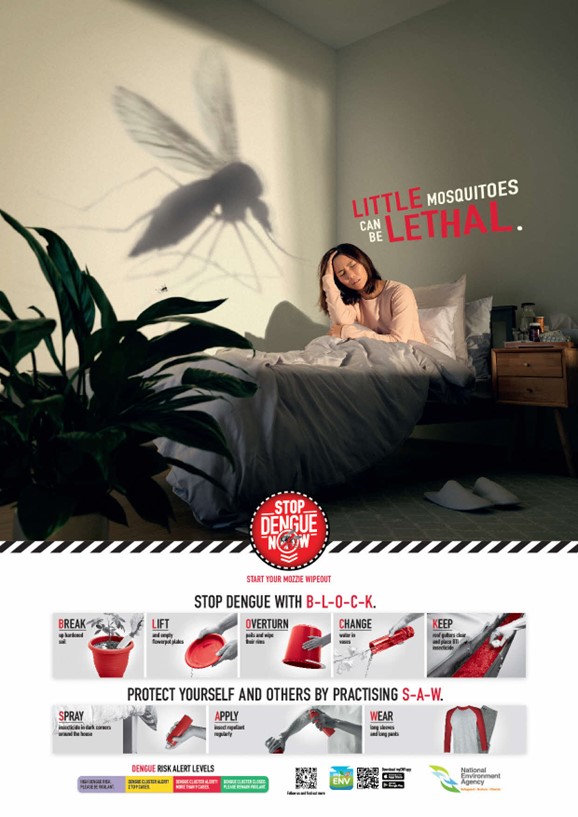
Singapore's National Environment Agency (NEA) today announced it launched the National Dengue Prevention Campaign 2024 ahead of the traditional peak dengue season, which is from May to October.
Over 5,000 dengue cases were reported in the first quarter of 2024, more than double the 2,360 cases reported in the same period in 2023.
As of March 2024, seven dengue deaths due to local dengue infection have been notified in Singapore.
On March 31, 2024, Senior Parliamentary Secretary for Sustainability and the Environment, Mr. Baey Yam Keng, urged collective responsibility and action to fight dengue amidst the ongoing dengue situation.
The Aedes aegypti mosquito population has also remained high, with the number of breeding habitats found at residential premises in January 2024 double that of January 2023.
Our population in Singapore also has low immunity to all four Dengue virus serotypes. The continued presence of all these dengue risk factors may lead to a surge in dengue cases in the coming months if insufficient action is taken, commented Mr. Baey Yam Keng.
NEA will also continue to combat dengue with Project Wolbachia. Regular genetically modified mosquito releases could help mitigate dengue outbreaks, complementing local community efforts to prevent mosquito breeding.
To alert international travelers, the U.S. CDC issued a Travel Health Notice regarding dengue outbreaks in the Asia/Pacific Islands (February 9, 2024).
Dengue is a mosquito-transmitted disease that can be prevented with a U.S. FDA vaccine.
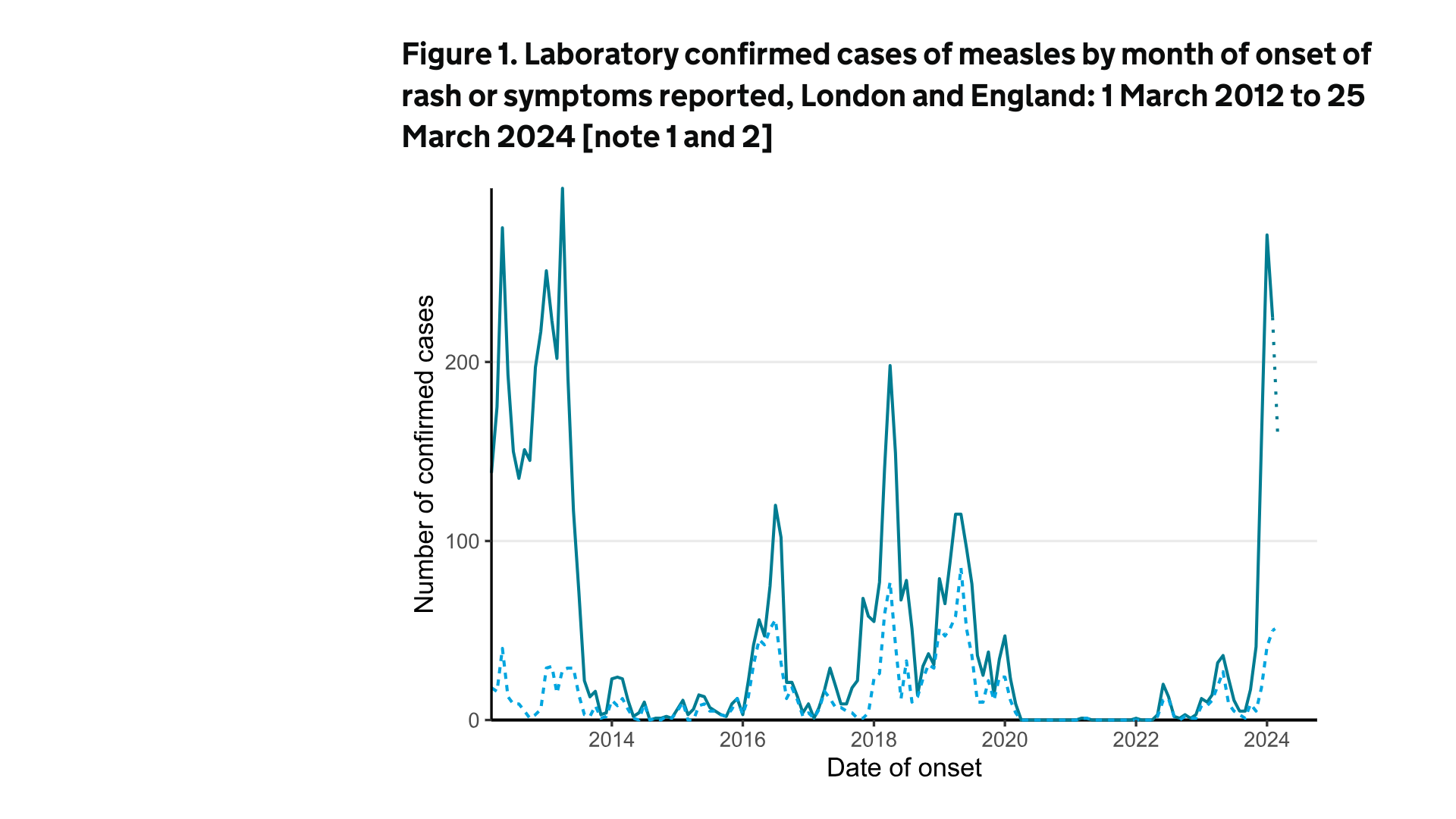
Measles outbreaks are an ongoing health risk worldwide, including in the United Kingdom (U.K.).
The U.K.'s health agency recently confirmed a significant increase in measles cases across England, primarily in the West Midlands, driven by cases in Birmingham.
The U.K. Health Security Agency (UKHSA) reported data from October 2023: 868 laboratory-confirmed measles cases had been reported in England as of March 28, 2024.
There were 182 newly confirmed measles cases with a date of onset in the past four weeks (since February 26).
The highest number of cases continue to be reported from the West Midlands (34%), followed by London (33%), North West (10%), East Midlands (8%), and East of England (6%).
Dr. Vanessa Saliba, UKHSA Consultant Epidemiologist, commented in a UKHSA press statement, "We are continuing to see measles cases in the West Midlands, with numbers in London increasing in recent weeks and smaller clusters in other regions."
"This serves as a reminder of the importance of MMR vaccination."
"It only takes one case to get into a community with low vaccination rates for measles to spread rapidly, especially in schools and nurseries. We know that hundreds of thousands of children around the country, particularly in some inner-city areas, are still not fully vaccinated and are at risk of serious illness or life-long complications."
"Still, measles is completely preventable with vaccination."
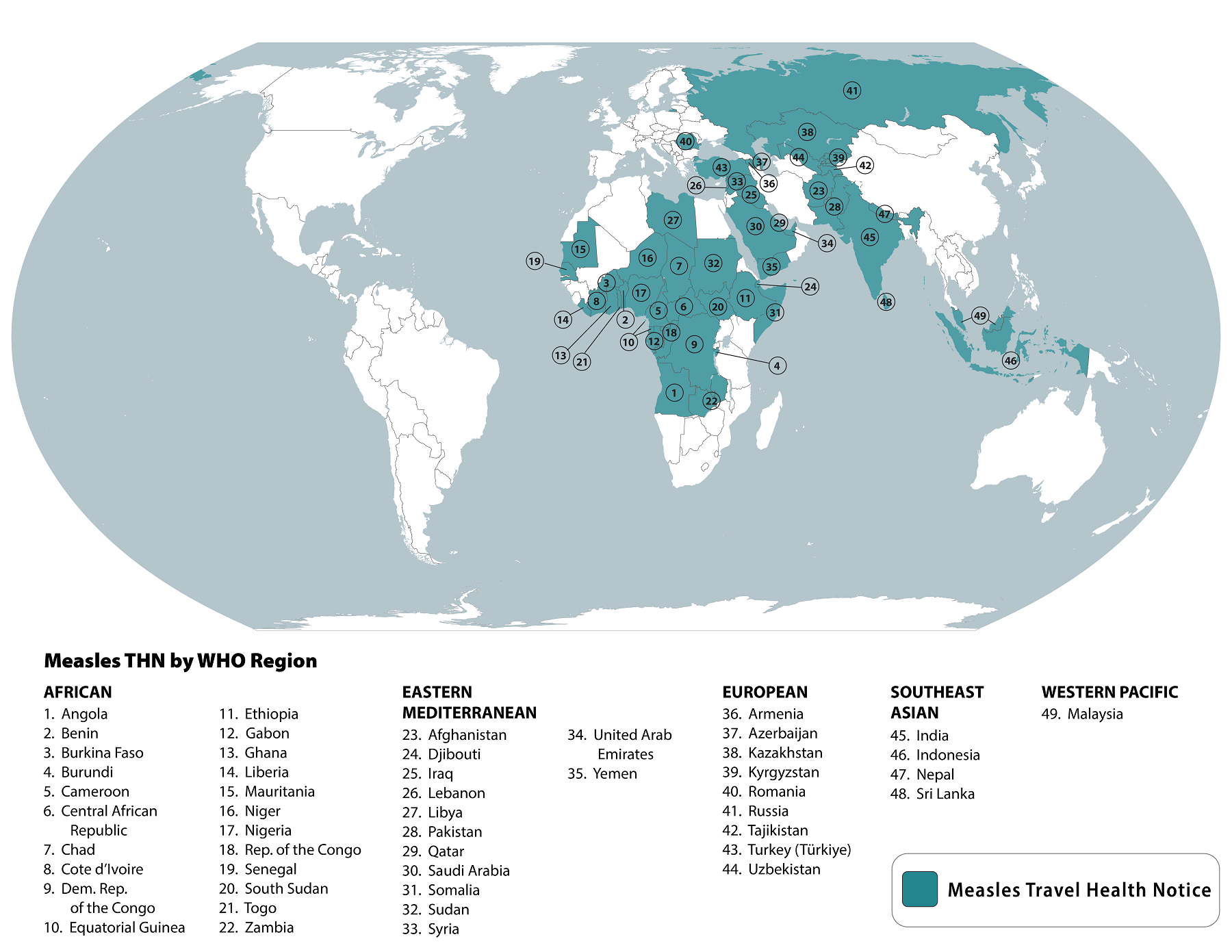
On March 22, 2024, the U.S. CDC updated its global measles travel advisory, listing 49 countries. Measles spreads rapidly and may become a risk to travelers in places not included on the list above.
However, the U.K. was not included on this CDC list.
As of April 1, 2024, the CDC recommends all travelers are fully vaccinated against measles when traveling to any international destination.

Although human infections with Avian Influenza HPAI A(H5N1) virus (Bird Flu) are rare, having unprotected exposure to any infected animal poses a risk of infection.
The U.S. Centers for Disease Control and Prevention (CDC) issued guidelines on March 29, 2024, to prevent exposure to this virus.
These guidelines include using personal protective equipment, testing, antiviral treatment, patient investigations, monitoring exposed individuals, and administering antiviral chemoprophylaxis to those who have been exposed.
Currently, the CDC considers the human health risk to people in the U.S. from Bird Flu viruses to be low.
These CDC recommendations are based on information available as of March 2024 and will be updated as necessary when new information becomes available.
Influenza A viruses infect birds' respiratory and gastrointestinal tracts, causing them to shed the virus in their saliva, mucous, and feces. Human infections with avian influenza A viruses can happen when enough virus gets into a person's eyes, nose, or mouth or is inhaled.
Illnesses in people from HPAI A(H5N1) virus infections have ranged from mild to severe disease, resulting in death, says the CDC.
As of March 31, 2024, the U.S. FDA approved bird flu vaccines for people, such as CSL Seqirus Inc. Audenz™ (aH5N1c), but they are not commercially available.
Additionally, the U.S. government has previously invested in developing various avian influenza vaccines and candidates.
Brazil's health officials are concerned about an unprecedented number of dengue cases reported in early 2024—more than one million. Traditionally, Brazil's dengue cases peak between March and May.
As reported by the AP, Brazil declared public health emergencies in Acre, Minas Gerais, Goias, and the Federal District in February 2024 to increase awareness.
According to the Municipal Health Secretariat of Rio de Janeiro, the "Against Dengue Every Day" campaign included the distribution of repellents, stickers, bandanas, and hats with warnings about the mosquito-transmitted disease.
Rio is a very popular vacation destination for events such as Carnival, receiving about 2 million foreign tourists.
The AP also reported that a section of Rio deployed the Wolbachia technique, also known as the Incompatible Insect Technique, and is seeing initial, positive results.
This biological method uses Wolbachia-infected mosquitoes to reduce the number of mosquitoes that spread vector-borne diseases. This method has been tested in the United States since 2016, initially in Miami, Florida.
In addition to genetically modifying local mosquitoes, Brazil has been offering dengue vaccinations.
Brazil became the first Latin American country to include the second-generation QDENGA® (TAK-003) vaccine in its public health system. The government plans to administer over 5 million doses in 2024.
This dengue vaccine does not require pre-admission testing.
To expand access, Biological E. Limited committed in February 2024 to manufacturing up to 50 million QDENGA doses annually, accelerating the vaccine's owner Takeda's ability to deliver 100 million doses annually by 2030.
As of March 30, 2024, QDENGA is unavailable in the United States.

Measles outbreaks remain an ongoing health risk worldwide, and various health officials are taking action to limit this vaccine-preventable disease.
According to the U.S. Centers for Disease Control and Prevention (CDC), 49 countries are now reporting measles outbreaks.
The CDC stated on March 22, 2024, that travelers to these countries, including the United States, are at risk of measles if they have not been fully vaccinated at least two weeks before departure or have not had measles in the past and travel internationally.
The CDC says the majority of measles cases imported into the United States occur in unvaccinated U.S. residents who become infected during international travel.
For example, the Chicago (Illinois) Department of Public Health has reported 52 measles cases in unvaccinated people at a local shelter this year.
According to the CDC's vaccination recommendations for international travel, all travelers, including most children, should be fully vaccinated against measles with a measles-mumps-rubella vaccine.
Measles vaccines are generally offered at health clinics and community pharmacies in the U.S.