Search API
The California Department of Public Health (CDPH) today announced it had identified the first known case of clade I mpox in the United States. This case was confirmed in an individual who recently traveled from Africa and is related to the ongoing outbreak of clade I mpox in Central and Eastern Africa. Historically, clade I has caused more severe illness than clade II.
The clade II outbreak began worldwide in May 2022, reaching Boston in late May.
As of November 9, 2024, 2,410 clade II cases have been confirmed in the U.S. this year. This is a significant increase compared with last year, when 1,267 mpox cases were reported.
The CDPH stated on November 16, 2024, the affected individual received health care in San Mateo County. The individual is isolating at home and recovering. Public health workers are contacting people who had close contact with this individual.
According to the U.S. CDC, there is no concern or evidence that mpox clade I is spreading between individuals in California or other states.
However, the World Health Organization declared the increasing number of mpox cases reported in the African Region, notably the Democratic Republic of the Congo, a Public Health Emergency of International Concern on August 14, 2024.
Bavarian Nordic's JYNNEOS® (MVA-BN®) mpox/smallpox vaccine has been effective against clade II and is commercially available at clinics and pharmacies in the U.S.

Hookworms infect about half a billion people worldwide and cause more than two billion disability-adjusted life years to be lost. In a recent review, researchers wrote that mass drug administration is the most popular preventive approach but does not prevent reinfection.
The U.S. CDC says people get hookworm infection by walking barefoot on or consuming contaminated soil and passing the parasitic worm's eggs in their feces. And zoonotic hookworms are parasites generally found in animals like dogs or cats. Furthermore, they can also spread to humans through the skin.
This review, published by Talor and Francis online, highlights recent human studies in which vaccination with irradiated larvae and repeated rounds of infection treatment have induced partial protection.
On November 15, 2024, these researchers stated, 'An effective vaccine would be a major public health tool in hookworm-endemic areas.'
'These studies have emphasized the importance of targeting the infective larvae to generate immunity and prevent adult worms from maturing in the gut.'
In summary, these researchers wrote 'that significant recent advances in human challenge vaccine studies should accelerate the process.'

Bavarian Nordic A/S (OMX: BAVA) announced today it's interim financial results and business progress for the third quarter of 2024, highlighting mpox vaccine sales.
Bavarian Nordic stated on November 15, 2024, that it retains sufficient capacity to fulfill the requirement as stated by Africa CDC for at least 10 million doses of MVA-BN® (JYNNEOS®) by the end of 2025 and could even further scale up capacity for future demand if needed.
For 2025, the Company has so far secured revenue from mpox/smallpox vaccine orders of approximately DKK 2,400 million.
Paul Chaplin, President & Chief Executive Officer of Bavarian Nordic, said in a press release, “We have had a busy but highly purposeful and rewarding third quarter, where we have worked intensively to support the efforts to curb the ongoing mpox outbreak in Africa."
In the United States, the government recommends two doses of JYNNEOS to provide more robust protection. However, routine immunization against mpox is not recommended for the general public. The U.S. CDC does not endorse booster doses (3rd).


While the U.S Centers for Disease Control and Prevention (CDC), influenza activity remains low nationally, healthcare providers and pharmacies are well stocked with various flu shots to meet consumer demand.
Physicians, nurses, and pharmacists can offer patients up to nine influenza vaccines for the 2024-2025 flu season.
As of November 15, 2024, the CDC reported that 92.35 million influenza vaccine enhanced for the 2024-2025 flu season had already been distributed in the U.S. According to pharmaceutical manufacturers, they are prepared to deliver tens of millions more as needed this season.
About 158 million flu vaccines were distributed during the 2023-2024 flu season.
The CDC recommends that everyone ages 6 months and older get an annual flu shot; some people may get a second dose later in the season.

The Global Polio Eradication Initiative (GPEI) reported that three countries confirmed additional polio outbreaks this week.
As of November 15, 2024, Pakistan reported three more wild poliovirus type 1 (WPV1) cases from Sindh, Balochistan, and Khyber Pakhtunkhwa, bringing the total number of cases to 48 this year.
Additionally, Nigeria revealed seven more circulating vaccine-derived poliovirus type 2 (cVDPV2) cases, and Chad confirmed two cVDPV2 cases.
In August 2024, the World Health Organization confirmed that the spread of the poliovirus remained a Public Health Emergency of International Concern.
To notify international travelers of this health risk, the U.S. CDC maintains a Global Polio Alert - Level 2, Practice Enhanced Precautions Travel Health Notice, regarding polio outbreaks and poliovirus detections in 37 countries.
The CDC recommends that future travelers to these countries speak with a travel vaccine expert at least one month before departing abroad about immunization options.

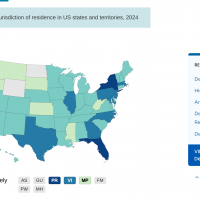
According to new estimates from the World Health Organization (WHO) and the U.S. Centers for Disease Control and Prevention (CDC), there were an estimated 10.3 million cases of measles worldwide in 2023, a 20% increase from 2022.
The new data show that an estimated 107,500 people, primarily children younger than 5 years of age, died due to measles in 2023.
These agencies confirmed on November 14, 2024, that measles is vaccine-preventable. However, an estimated 83% of children received their first dose of measles vaccine last year, while only 74% received the recommended second dose.
“Measles vaccine has saved more lives than any other vaccine in the past 50 years,” said Dr Tedros Adhanom Ghebreyesus, WHO Director-General, in a press release.
Geographically, 57 countries experienced large or disruptive measles outbreaks in 2023.
The CDC maintains a global Watch-Level 1, Practice Usual Precautions, Travel Health Notice, identifying measles outbreaks in 56 countries. The CDC encourages all international travelers to fully immunize against measles before visiting outbreak countries.
In the United States, the CDC reported 59 measles cases in 20 jurisdictions in 2023. Unfortunately, 277 measles cases in 32 U.S. jurisdictions were confirmed in 2024.
The vast majority of measles cases in the U.S. are detected in unvaccinated international travelers.

The U.S. Centers for Disease Control and Prevention (CDC) today reported that in Alaska, nirsevimab (Beyfortus™) was 89% effective in preventing RSV-associated hospitalization for infants in their first RSV season and 76% and 88% effective against medically attended illness for children in their first and second seasons, respectively.
On November 14, 2024, the CDC's MMWR 73(45);1015–1021 stated these findings support current CDC recommendations for all infants in their first RSV season to either receive nirsevimab or be protected through maternal vaccination and for children entering their second season with increased risk for severe RSV illness, including all AI/AN children, to receive nirsevimab.
According to the manufacturer, 50mg and 100mg of Beyfortus injection doses will be available for the 2024-2025 RSV season. And supply is secured for 20 countries.

Tonix Pharmaceuticals Holding Corp. today announced the publication of a paper entitled, “Recombinant Chimeric Horsepox Virus (TNX-801) is Attenuated Relative to Vaccinia Virus Strains in Both In Vitro and In Vivo Models.”
Data published in the peer-reviewed journal mSphere demonstrate that TNX‐801 is less virulent than 20th-century vaccinia vaccines in immune-compromised mice.
The publication describes data in which TNX-801 was compared with older vaccinia vaccine strains used to eradicate smallpox for tolerability in both in vitro and in vivo models.
Together, TNX-801 was shown to be more than 10—to 1,000-fold more attenuated (or less virulent) than the older vaccinia smallpox vaccines.
Combined with the ability of TNX-801 to protect animals against lethal challenge with Clade Ia mpox virus, the Company believes that the new tolerability data support the idea that TNX-801 is a candidate vaccine to control the ongoing mpox Clade Ib and mpox Clade IIb outbreaks.
Previously, single-dose vaccination with TNX-801 was shown to protect animals from a lethal challenge with Clade Ia mpox.
The new Clade Ib mpox is spreading among children in Africa and, so far, has been carried by adult travelers from Africa into non-African countries.
The global mpox outbreak from Clade IIb, which commenced in May 2022, continues in various countries, including the United States.
“Addressing the new Clade Ib mpox outbreak and the ongoing spread of Clade IIb mpox may require a single dose mpox vaccine that provides durable protection,” said Seth Lederman, M.D., Chief Executive Officer of Tonix Pharmaceuticals, in a press release on November 13, 2024.
The current standard of prevention focuses on Bavarian Nordic's JYNNEOS® (MVA-BN®, IMVAMUNE®, IMVANEX®) two-dose vaccine, which is commercially available in the United States.
