Search API
Each year, the American Cancer Society (ACS) estimates the number of new cancer cases and related fatalities in the United States (U.S.). Cancer is the second leading cause of death in the United States, exceeded only by heart disease.
On January 12, 2022, the ACS published a study with good news regarding cervical cancer.
This new ACS study highlights a 65% decrease in cervical cancer incidence from 2012 through 2019 among women in their early 20s.
This is the first cohort to receive the human papillomavirus vaccine (HPV) early in life, which foreshadows steep reductions in the burden of cancer.
This is essential news since there were 12,795 new cases of cervical cancer reported among women, and 4,152 women died of this cancer n 2019.
Surprisingly, cervical cancer herd immunity has also been identified in the U.S. based on data from the National Health Examination Survey from 2003 through 2018.
This data shows reductions in HPV-16 and HPV-18 infection among sexually active females aged 14–24 years, of 90% among those vaccinated and 74% among those unvaccinated.
Sweden was the first to report a population-level reduction in invasive cervical cancer incidence of 78% among women vaccinated before the age of 17 in 2020.
Shortly after that, an 87% reduction in cervical cancer and a 97% reduction in grade 3 cervical intraepithelial neoplasia was demonstrated among women aged 20–29 years who were vaccinated at ages 12 to 13 years in England.
Although up-to-date (three-dose) HPV vaccination coverage in the U.S. has lagged behind other countries, accumulating evidence suggests that a single dose offers substantial protection and may even be preferable in low-income, high-burden populations.
In April 2022, the World Health Organization's Strategic Advisory Group of Experts on Immunization endorsed single-dose vaccination among girls aged 9–14 to address the global shortfall and optimize cancer prevention.
In 2021, 79% of adolescent girls in the United States had received at least one dose, and 64% were fully up to date.
HPV vaccines are generally available at clinics and pharmacies in the U.S.

The State of Kentucky recently announced a panel of the Sixth Circuit U.S. Court of Appeals affirmed a lower court's ruling that said vaccine mandates were unconstitutional. The mandate requires workers contracting with the federal government to wear face masks and be vaccinated for COVID-19.
A federal judge in Louisville, Kentucky, blocked the U.S. government's rule in November 2021 for Kentucky, Tennessee, and Ohio.
"The Sixth Circuit's decision is a resounding victory against federal overreach into the personal medical decisions of Kentuckians," Kentucky Attorney General Daniel Cameron said in a statement on January 12, 2023.
The Fifth Circuit U.S. Court of Appeals issued a similar ruling for Indiana, Louisiana, and Mississippi in December 2022.
The U.S. Centers for Disease Control and Prevention (CDC) says certain workers are at risk for exposure to severe and sometimes fatal diseases.
If you work directly with patients or handle material that could spread infection, you should get appropriate vaccines to reduce the chance that you will get or spread vaccine-preventable diseases.
And protect yourself, your patients, and your family members by ensuring you are up-to-date with recommended vaccines, including COVID-19, says the CDC.

Earlier today, WHO Director-General Dr. Tedros Adhanom Ghebreyesus spoke to the director of China’s National Health Commission, Minister Ma Xiaowei.
The WHO confirmed in a media statement on January 14, 2023; it appreciates this telephonic meeting and the public release of information about the pandemic in the country.
Chinese officials provided information to WHO and in a press conference on various topics, including outpatient clinics, hospitalizations, patients requiring emergency treatment and critical care, and hospital deaths related to COVID-19 infection.
WHO is analyzing this information, which covers early December 2022 to January 12, 2023, and allows for a better understanding of the epidemiological situation and the impact of this wave in China.
The overall epidemiology—reflecting a rapid and intense wave of disease caused by known sub-variants of Omicron with higher clinical impact on older people and those with underlying conditions—is similar to waves of infection experienced by other countries, as is the increased pressure on health services.
Nevertheless, the reported data indicate a decline in case numbers, hospitalizations, and those requiring critical care.
The WHO has requested a more detailed breakdown of data by province over time.
While the Chinese Center for Disease Control and Prevention has earlier reported that Omicron sublineages BA.5.2 and BF.7 are currently circulating, WHO continues to ask that other sequences be shared with open access databases such as GISAID for deeper phylogenetic analyses and continued collaboration with technical groups working on virus evolution, clinical care, and beyond.
The WHO stated it would continue to work with China, providing technical advice and support and analyzing the situation.
Note: The unedited, complete media statement is available at this WHO link.

The World Health Organization (WHO) today called on countries to take urgent measures against measles outbreaks which are on the rise, with nearly nine million children having missed vaccination against the killer disease in the last two years.
Measles outbreaks are declared when the number of cases reported in an area is higher than expected.
"The strong political commitment, determination, focused and concerted efforts, and community support that marked our efforts for polio elimination are now urgently needed to stop and prevent measles outbreaks and accelerate efforts to eliminate the disease," said Dr. Poonam Khetrapal Singh, Regional Director, WHO South-East Asia, in a media release on January 13, 2023.
Measles and rubella elimination is a flagship priority program of the WHO South-East Asia Region. Both are vaccine-preventable.
Between 2014 and 2021, the Region recorded a 73% reduction in measles deaths and a 64% reduction in measles cases.
Five of the 11 countries in the South-East Asia Region – Bhutan, DPR Korea, Maldives, Sri Lanka, and Timor-Leste - have eliminated measles, and two countries - Maldives and Sri Lanka - have eliminated rubella as well.
In addition, governments have been administering two doses of measles vaccines as part of their childhood immunization program, and some are rolling out mass vaccination campaigns.
However, as the pandemic arrived, measles vaccination coverage, which had reached an all-time high of 94% coverage for the first dose and 83% coverage for the second dose by 2019, declined to 86% and 78%, respectively, in 2021.
This inaction left about nine million children unvaccinated for measles.
And around 5.3 million children are partially vaccinated against this highly infectious disease.
"The decline in vaccine coverage, and interruptions and delays in immunization and surveillance activities due to the pandemic, leaves the Region susceptible to large outbreaks and off track for the 2023 target of measles and rubella elimination," the Regional Director added.
"All countries have been taking several initiatives to revive and resume childhood immunization coverage and surveillance activities that were affected by the COVID-19 pandemic," Dr. Khetrapal Singh concluded.
The U.S. CDC says measles is highly contagious, with about 90% of people who are not protected will become following infected exposure to the measles virus.
The CDC's Top 10 Measles Outbreak Country list was updated on January 13, 2023.
International travelers can check CDC's Travel Health Notices to search for measles or other issues that may affect travelers' health. During 2022, the CDC issued various measles-related travel alerts.


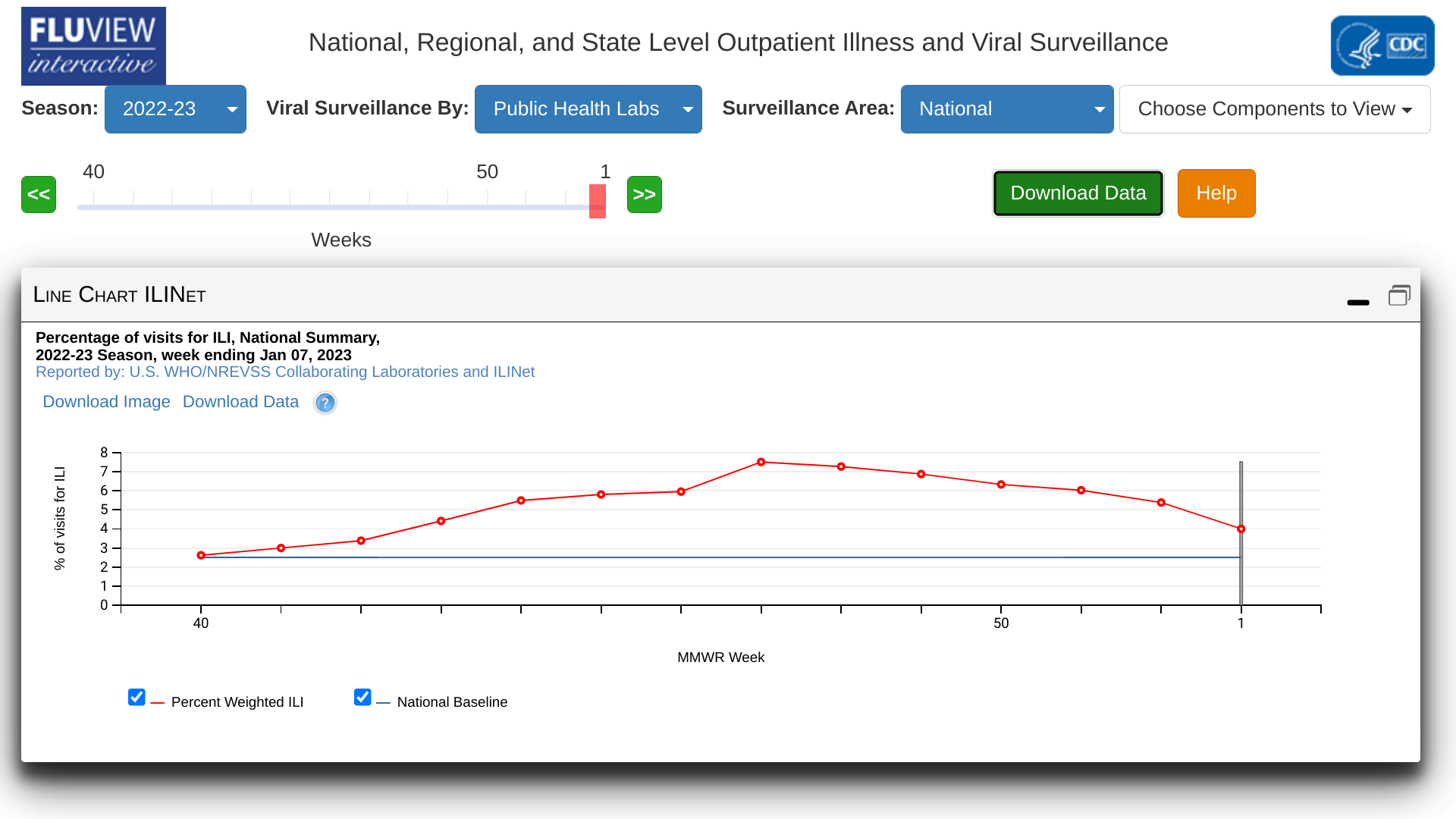
The U.S. Centers for Disease Control and Prevention (CDC) reported today the percentage of specimens testing positive for influenza in clinical laboratories across the nation declined compared to the previous week.
As of January 13, 2023, the CDC's Week #1 Influenza Surveillance Report confirmed the number of flu hospital admissions reported in the HHS Protect system decreased compared to week #52 (Dec. 2022).
And the cumulative hospitalization rate in the FluSurv-NET system was lower than end-of-season hospitalization rates for most pre-pandemic seasons going back to 2010-2011.
The good news reported by the CDC this week was the majority of influenza viruses tested are in the same genetic subclade as and antigenically similar to the influenza viruses included in this season's influenza vaccines.
Additional good news highlighted that over 170 million flu shots had been distributed in the U.S. this flu season, eliminating access concerns.
Most clinics and pharmacies have an ample supply of various flu shots approved for the 2022-2023 season.
The CDC says ab annual flu vaccine is the best way to protect against the health risks posed by an influenza infection.
And vaccination helps prevent infection and serious outcomes in people who get vaccinated but still get sick with the flu.
This CDC advice is very relevant for children, as 79 influenza-associated pediatric fatalities have been reported during the 2022-2023 season.
Furthermore, the CDC continues to recommend that everyone ages six months and older get an annual flu vaccine as long as flu activity continues.
A recent study published by the peer-review journal Nature found that promoting the existence of vaccination incentives had no negative consequences, such as reduced follow-on vaccinations.
Announced on January 11, 2023, these researchers offered study participants in a randomized, controlled trial about $24 to receive a first COVID-19 vaccine dose within 30 days.
They found the small payment increased vaccination uptake by 4% points 30 days after the study ended.
And they found that paying people an initial incentive didn't lower the likelihood of seeking the second or third vaccine dose.
To complement their study's evidence from Sweden with evidence on the effects of large-scale incentive programs implemented by US state governments during the early stages of the pandemic.
In a pre-registered study in the USA (n = 3,062), participants randomly assigned to the incentives condition received detailed information about their state's COVID-19 vaccine incentive program.
In line with the evidence from Sweden, they found no negative impacts of being informed about incentive programs on the willingness of participants to take further doses, morals, trust in the state government, safety and efficacy perceptions of vaccines, or intentions to donate blood or to receive a flu shot.
The authors identified no adverse effects of financial incentives.
A real-world example took place in New York City in May 2021.
Mayor Bill de Blasio announced incentives to encourage New Yorkers to get their COVID-19 vaccine, a free Shake Shack. The mayor 'chowed down' on a burger and fries as he introduced the promotion.
These researchers wrote, 'Despite its limitations, our study has a clear finding: offering modest financial incentives for vaccination has limited, if any, unintended negative consequences.'
'Contrary to prominent warnings in the academic literature and public debate, our work suggests that modest financial incentives for vaccination can be used without worries about grave unintended consequences.'
Disclosures: The Human Subjects Committee of the Faculty of Economics, Business Administration and Information Technology at the University of Zurich approved the study protocols (2022-045). Lund University provided open-access funding, and no industry conflicts were disclosed.

An innovative dual-action cell therapy engineered to eliminate tumors, train the immune system to eradicate primary tumors, and prevent cancer recurrence is progressing.
Cancer vaccines are an active area of research for many labs, but this new approach is distinct.
Scientists in Boston are now harnessing a new way to turn cancer cells into potent, anti-cancer agents.
In the latest work led by Khalid Shah, MS, Ph.D. at Brigham and Women's Hospital, investigators have developed a new cell therapy approach to eliminate established tumors and induce long-term immunity, training the immune system to prevent cancer from recurring.
The team recently announced their dual-action, cancer-killing vaccine candidate in an advanced mouse model of the deadly brain cancer glioblastoma, with promising results.
"Our team has pursued a simple idea: to take cancer cells and transform them into cancer killers and vaccines," said the study's corresponding author Khalid Shah, MS, Ph.D., director of the Center for Stem Cell and Translational Immunotherapy (CSTI) and the vice chair of research in the Department of Neurosurgery at the Brigham and faculty at Harvard Medical School and Harvard Stem Cell Institute (HSCI), in a press release on January 4, 2023.
"Using gene engineering, we are repurposing cancer cells to develop a therapeutic that kills tumor cells and stimulates the immune system to destroy primary tumors and prevent cancer."
Instead of using inactivated tumor cells, the team repurposes living tumor cells, which possess an unusual feature.
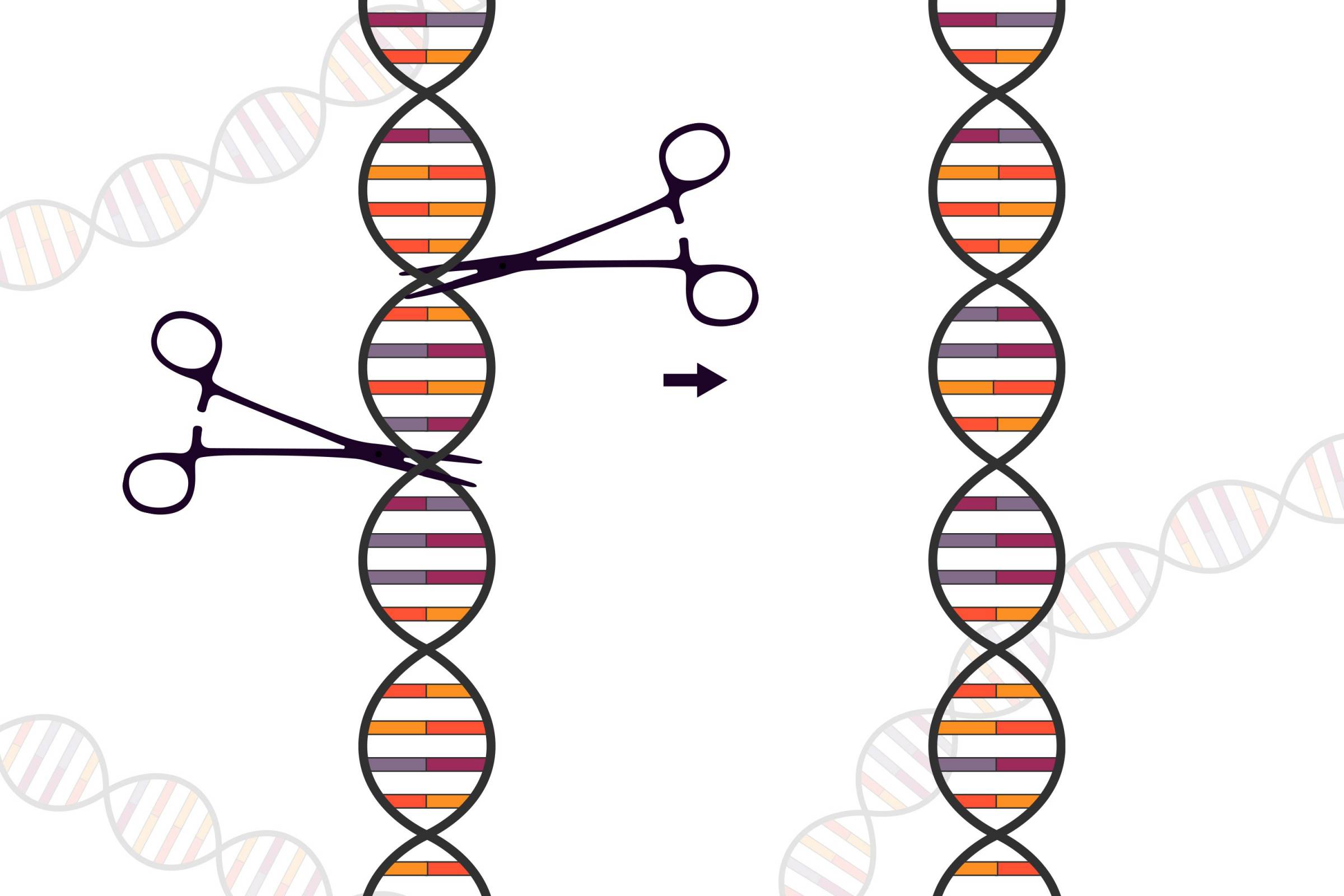
Like homing pigeons returning to roost, living tumor cells will travel long distances across the brain to return to the site of their fellow tumor cells. Taking advantage of this unique property, Shah's team engineered living tumor cells using the gene-editing tool CRISPR-Cas9 and repurposed them to release tumor cell-killing agents.
In addition, the engineered tumor cells were designed to express factors that would make them easy for the immune system to spot, tag, and remember, priming the immune system for a long-term anti-tumor response.
The team tested their repurposed CRISPR-enhanced and reverse-engineered therapeutic tumor cells (ThTC) in different mice strains.
Shah's team also built a two-layered safety switch into the cancer cell, which, when activated, eradicates ThTCs if needed.
This dual-action cell therapy was found safe, applicable, and efficacious in these models, suggesting a roadmap toward therapy.
While further testing and development are needed, Shah's team specifically chose this model and used human cells to smooth the path of translating their findings for patient settings.
"Throughout all of the work that we do in the Center, even when it is highly technical, we never lose sight of the patient," added Shah.
"Our goal is to take an innovative but translatable approach to develop a therapeutic, cancer-killing vaccine that ultimately will have a lasting impact in medicine."
Shah and colleagues note that this therapeutic strategy applies to a broader range of solid tumors and that further investigations of its applications are warranted.
The study's findings are published in Science Translational Medicine on Jan. 4, 2023. Disclosures: Shah owns equity in and is a member of the Board of Directors of AMASA Therapeutics, a company developing stem cell-based therapies for cancer. This work was supported by the U.S. NIH (grant R01-NS121096).