Search API
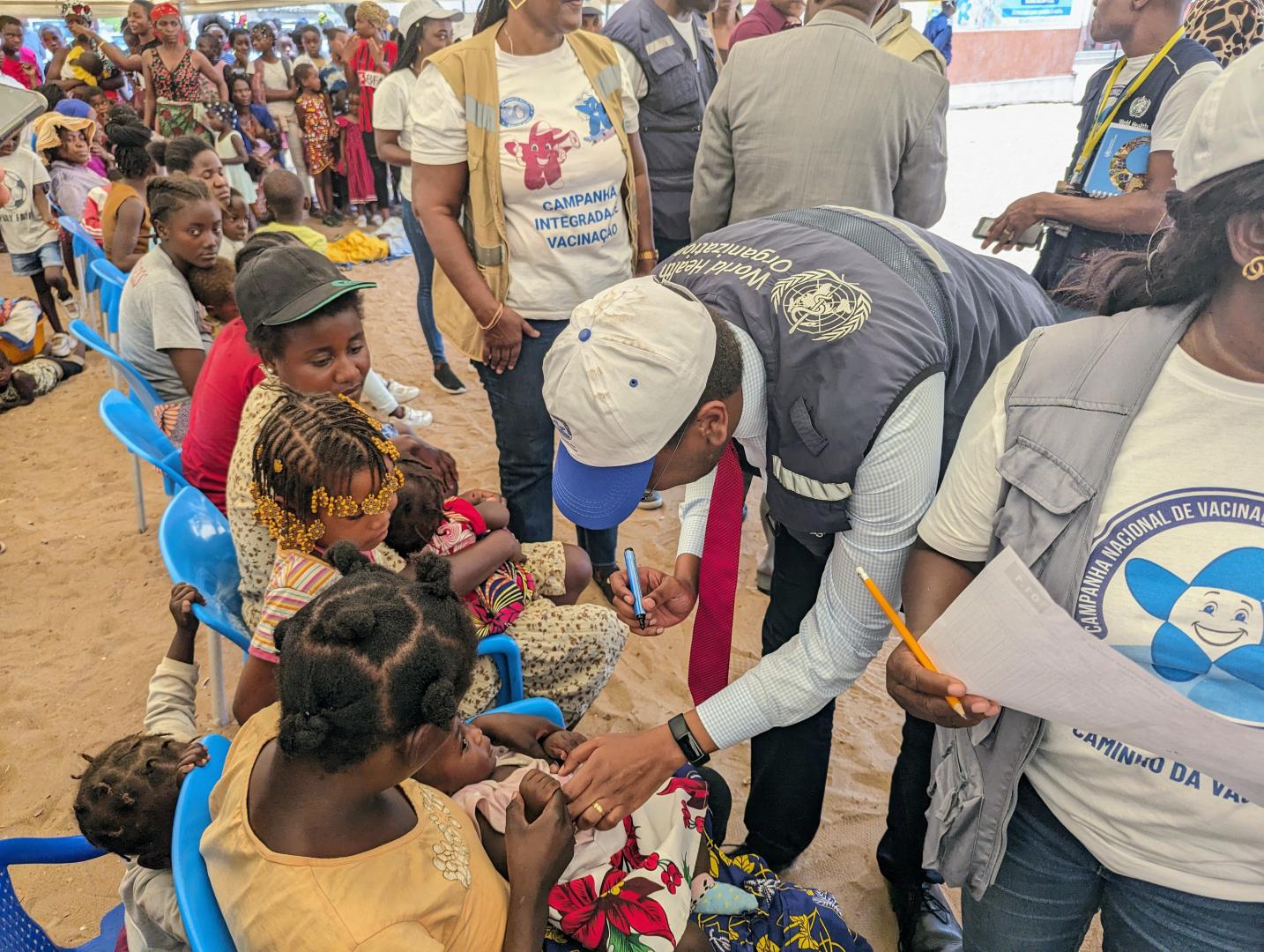
The second round of the Republic of Angolia's national polio campaign was inaugurated in Ondjiva, Cunene last week. The government has deployed personnel in all 18 provinces in the Republic of Angola.
This polio campaign is on a mission to vaccinate more than 5.4 million children under the age of five throughout the southern African country.
The first round took place in early September 2023.
The urgency and significance of the polio vaccination initiative are unmissable, wrote the World Health Organization (WHO) on October 13, 2023. Given the rising cases of polio in the neighboring Democratic Republic of the Congo, this vaccination drive is important.
The DRC recently reported 12 cVDPV1 cases, seven cVDPV2 cases and six cVDPV2-positive environmental samples, bringing the total number of cVDPV1 cases this year to 73 and cVDPV2 cases to 97 in 2023.
Moreover, the WHO is leading on the independent monitoring and Lot Quality Assurance Sampling components, which are crucial for the campaign's success.
Such involvement in the campaign is also possible due to partners such as the Global Polio Eradication initiative, UNICEF and Rotary, who have all played integral roles, fortifying the campaign's efforts in Angola.
These organizations have successfully deployed nOPV2 polio vaccines targeting polio outbreaks in Africa in 2022 and 2023.
An innovator of novel immunotherapies has partnered with one of the largest cancer research in evaluating a CAR T therapy for HIV in an early-stage clinical trial so that one day, more people with Human Immunodeficiency Virus might achieve long-term remission.
Helocyte, Inc. today announced that it executed an exclusive option agreement with the City of Hope for patent rights to use Triplex, a cytomegalovirus (CMV) vaccine, in combination with cytomegalovirus-specific, Anti-Human Immunodeficiency Virus ("HIV") Chimeric Antigen Receptor ("CAR") (collectively, CMV/HIV-CAR) T Cells for the treatment of adults living with HIV.
Additionally, the California Institute for Regenerative Medicine recently awarded a $11.3 million grant to the City of Hope to fund a Phase 1 clinical trial that is expected to enroll up to 12 healthy individuals living with HIV-1 on stable anti-retroviral therapy ("ART") who have maintained viral suppression for at least 48 weeks.
The study will include three dose-escalating cohorts, along with an expansion cohort. Other cohorts will include further vaccination of subjects with Triplex to drive the continued proliferation of the CAR.
Triplex is a universal (non-HLA-restricted) recombinant Modified Vaccinia Ankara viral vector vaccine engineered to induce a robust and durable virus-specific T cell response to three immuno-dominant proteins [UL83 (pp65), UL123 (IE1), UL122 (IE2)] linked to CMV complications in the post-transplant setting.
Triplex was initially developed by the City of Hope and exclusively licensed to Helocyte in 2015.
"City of Hope made a major advancement when our transplant team helped a patient achieve remission for both HIV and leukemia," commented John A. Zaia, M.D., the Aaron D. Miller and Edith Miller Chair for Gene Therapy at City of Hope, in a press release on October 16, 2023.
The clinical study will build upon preclinical data published in Molecular Therapy - Methods & Clinical Development in April 2022, demonstrating the potential efficacy of combining a CMV vaccine and CMV/HIV CAR T cell therapy to eradicate HIV.
The study illustrated the potential long-term durability of the combination therapy, which induced therapeutic immune cells to take hold in bone marrow.
This approach aims to target and eradicate latent viral T cell reservoirs in immune cells to achieve complete HIV clearance.
To date, the engineering of T cells to express HIV-specific CAR T cells has failed to demonstrate meaningful clinical benefits. This is believed to be partly due to the effectiveness of highly active ART, which reduces HIV viral load to a level that prevents the activation of CAR T cells.
The use of Triplex is believed to stimulate CMV/HIV-CAR T cells to proliferate within patients' bodies.
In the preclinical study, CAR T cells were engineered to target and kill cells tagged with a particular protein called gp120, expressed in all HIV viruses, frequently with mutations that cause the virus to evade natural immunity without affecting healthy cells.
Lindsay A. Rosenwald, M.D., Fortress' Chairman and Chief Executive Officer and Chairman of Helocyte, Inc., added, "We look forward to building upon the data that continue to be generated relating to the use of Triplex in the treatment of HIV, including an ongoing Phase 2 clinical trial evaluating the safety and efficacy of Triplex in eliciting a CMV-specific immune response and reducing CMV replication in adults co-infected with HIV and CMV."
Helocyte, Inc., a subsidiary company of Fortress Biotech, Inc. For additional information regarding the grant, please see https://www.cirm.ca.gov/our-progress/awards/evaluation-safety-and-feasib....
As of October 16, 2023, there are no approved HIV prevention vaccines in the U.S.


The U.S. Department of Health and Human Services (HHS) today confirmed the selection of initial next-generation vaccine candidates and more than $500 million in awards for Project NextGen.
Announced on October 13, 2023, the three next-generation vaccine selections are distinct, targeting stronger, broader, or longer-lasting immune responses.
Intranasal vaccines have the potential to stop viruses at the site of infection, and self-amplifying mRNA and additional antigens may generate a stronger immune response than current vaccine technologies.
The awards announced today will support companies as they prepare their vaccine candidates for Phase 2b clinical evaluation:
$8.5 million to CastleVax for a vector-based intranasal vaccine candidate,
$10 million to Codagenix for a live-attenuated intranasal vaccine candidate,
$10 million to Gritstone Bio for a self-amplifying mRNA vaccine candidate.
“The vaccine selections and funding announced today are important steps forward for Project NextGen – with vaccine and therapeutics candidates moving quickly to clinical trials that will start in the coming months,” said Assistant Secretary for Preparedness and Response Dawn O’Connell in a press release.
To support these and all future Project NextGen clinical studies, the U.S. Biomedical Advanced Research and Development Authority (BARDA) awarded over $240 million, including investments in cold-chain sample management, genomic sequencing, and increased central laboratory capacity for sample testing.
Finally, BARDA is awarding over $241 million to support new technologies to improve national preparedness for future COVID-19 outbreaks and patient access. These technologies have the potential to enable shorter development timelines for monoclonal antibodies through mRNA, increased efficiency in virus testing, and alternate routes for vaccine administration:
The over $500 million announced today builds on the over $1.4 billion awarded in August – accelerating products toward clinical trials and potential commercial availability.
To view the complete list of awards and learn more about Project NextGen, please visit medicalcountermeasures.gov/nextgen/.

While there are no herpes vaccines available in the United States, the government recently issued a substantive financial award to accelerate herpes research.
Massachusetts-based Rational Vaccines (RVx) announced on October 13, 2023, that the U.S. National Institute of Health (NIH) recently awarded it three grants totaling $2.8 million to help further its research to diagnose, treat, and prevent the spread of Herpes Simplex Virus (HSV).
These grants are essential since about half the human population harbors a life-long latent HSV infection, a sexually transmitted disease (STD).
The first grant is to help develop a new diagnostic test suitable for routine population-based screening. Current screening methods are limited to detecting active infections in people with high viral loads, often making them unreliable.
RVx is developing a novel HSV type-specific test that will provide improved sensitivity and reduce instances of false-negative diagnosis.
The second grant funds a live-attenuated herpes simplex virus 1 (HSV-1) strain, "VC2" to prevent and treat ocular herpes.
A live-attenuated virus is a weakened virus that can multiply within the host to a limited extent and is engineered to be unable to cause any disease.
This is a critical study because HSV-1 can result in irreparable cornea damage and is a significant cause of blindness worldwide.
The third undertaking is developing and manufacturing a prophylactic and therapeutic HSV vaccine that will be essential to curbing the spread of herpes.
Through an exclusive license with Louisiana State University (LSU), RVx is developing a novel immunomodulatory vaccine engineered to help the body recognize and eliminate the HSV without making the person sick.
A 2018 study by Brent Stanfield and colleagues at LSU examined the immune response generated by intramuscular injection of the VC2 vaccine in guinea pigs.
"We have always known how chronically debilitating herpetic diseases can be, especially for marginalized communities that are disproportionately affected. It is very encouraging that the U.S. National Institute of Allergy and Infectious Diseases is supporting our live attenuated approach to herpetic disease treatment and prevention," commented Agustin Fernandez, RVx Chief Executive Officer, in a press release.
"After many decades of failure with recombinant protein subunit-based vaccine approaches, we are convinced that our proprietary limited replication-competent mutants are the only way to defeat this virus."
"Our mission at Rational Vaccines remains the same as it has been since our inception — to rid the world of HSV. This brings us one step closer."
To advance herpes vaccine research, the U.S. NIH established the Strategic Plan for Herpes Simplex Virus Research for 2023-2028.
Effective prevention of HSV requires a multi-pronged effort building upon advances in HSV research, says the NIH.
Promising HSV prevention strategies must be comprehensively tested in diverse populations and age groups and must be paired with enhanced strategies for diagnosis to target and treat high-risk groups.
This is particularly important for infected pregnant women at high risk for vertical transmission to the child.
This new plan aligns with ongoing national efforts, including the Sexually Transmitted Infections National Strategic Plan.

UNICEF recently announced an agreement to secure supplies of the R21/Matrix-M™ malaria vaccine. The long-term agreement signed with Serum Life Sciences for 2024 – 2028 is conditional on vaccine pre-qualification from the World Health Organization.
Under the four-year agreement, UNICEF expects to begin delivering the R21/Matrix-M vaccine in mid-2024.
This procurement agreement will help boost the global malaria vaccine supply and accelerate equitable access for children and families.
“It is heartbreaking and unacceptable that almost half a million children die of malaria every year. This agreement is a critical step towards protecting more children from this deadly disease,” said the Director of UNICEF Supply Division, Leila Pakkala, in a press release on October 12, 2023.
The R21/Matrix-M vaccine includes Novavax AB proprietary saponin-based Matrix-M adjuvant and is licensed to and manufactured by the Serum Institute of India Private Ltd.
The R21 was created by the University of Oxford Jenner Institute.
The R21/Matrix-M and RTS,S (Mosquirix™) malaria vaccines are the first vaccines developed against a parasitic disease. Both act against Plasmodium falciparum, the deadliest malaria parasite globally and the most prevalent in Africa.
UNICEF is the world’s largest single vaccine buyer, procuring more than two billion doses of vaccines annually for routine child immunization and outbreak response on behalf of nearly 100 countries.
Although malaria was eliminated in the United States in the mid-1950s, approximately 2,000 malaria cases are imported into the country from regions with endemic disease transmission each year, according to the U.S. CDC.
Anopheles mosquito species can transmit malaria. However, locally acquired mosquito-transmitted cases have not been identified in the U.S. since 2003.
In mid-2023, eight malaria cases (Plasmodium vivax) were identified in Florida and Texas. In both states, the locally-acquired cases occurred in the vicinity of an imported malaria case.
The U.S. reports about 1,900 travel-related malaria cases annually.
The CDC has issued various malaria outbreak alerts for endemic countries, including Costa Rica.

With the respiratory season arriving in the United States, a seldom-mentioned disease surpassed both COVID-19 and Influenza mortality last week.
According to the U.S. National Center for Health Statistics Mortality Surveillance reporting on October 13, 2023, there were 1,226 pneumonia deaths last week, exceeding 549 related to COVID-19 and 10 for influenza.
And no influenza-associated pediatric deaths occurred during the first week of the 2023-2024 flu season. Last flu season, there were 178 influenza-associated pediatric deaths.
Furthermore, the U.S. CDC reported outpatient respiratory illness was below baseline in all 10 HHS regions, and flu-related hospital admissions remained low nationally.
The good news is ample supplies of vaccines are available for the 2023-2024 respiratory season in the U.S. There are over 110 million flu shots and updated COVID-19 vaccines available today.
Regarding pneumonia, which is an infection of the lungs that can cause mild to severe illness in people of all ages, the CDC says various immunizations can help prevent disease by some of the bacteria and viruses that can cause pneumonia.
These immunizations include but are not limited to COVID-19, Influenza, Measles, Pertussis, Pneumococcal, Respiratory syncytial virus, and Varicella.
These immunizations are safe, but side effects can occur, most of which are mild, and dissipate on their own within a few days, says the CDC. These vaccines are generally available at health clinics and pharmacies in the U.S.

The draft agenda for the upcoming U.S. Centers for Disease Control and Prevention (CDC) two-day meeting of the Advisory Committee on Immunization Practices (ACIP) was published on October 11, 2023.
On October 25, 2023, the ACIP's agenda includes discussions and presentations on child and adolescent immunization schedules, adult immunization schedules, influenza, chikungunya, COVID-19, meningococcal, mpox, pneumococcal, and respiratory syncytial virus vaccines.
Additionally, Dr. Gabriela Paz-Bailey (CDC/NCEZID) will lead a Takeda dengue vaccine (QDENGA) update.
Furthermore, ACIP recommendation votes are scheduled for these vaccines, and a Vaccines for Children vote on meningococcal and mpox vaccinations.
The ACIP develops recommendations for immunizations, including ages when vaccines should be given, number of doses, time between doses, and precautions and contraindications. These recommendations are submitted to the CDC's Director, Mandy K. Cohen, MD, MPH, for final approval.
Interest persons may submit comments identified by Docket No. CDC-2023-0079, by Federal eRulemaking Portal: https://www.regulations.gov, or by mailing Ms. Stephanie Thomas, ACIP Meeting, Centers for Disease Control and Prevention, 1600 Clifton Road, NE, Mailstop H24-8, Atlanta, Georgia 30329-4027. Attn: Docket No. CDC-2023-0079.
For more information on ACIP, please visit the ACIP website: https://www.cdc.gov/vaccines/acip/index.html.