Search API
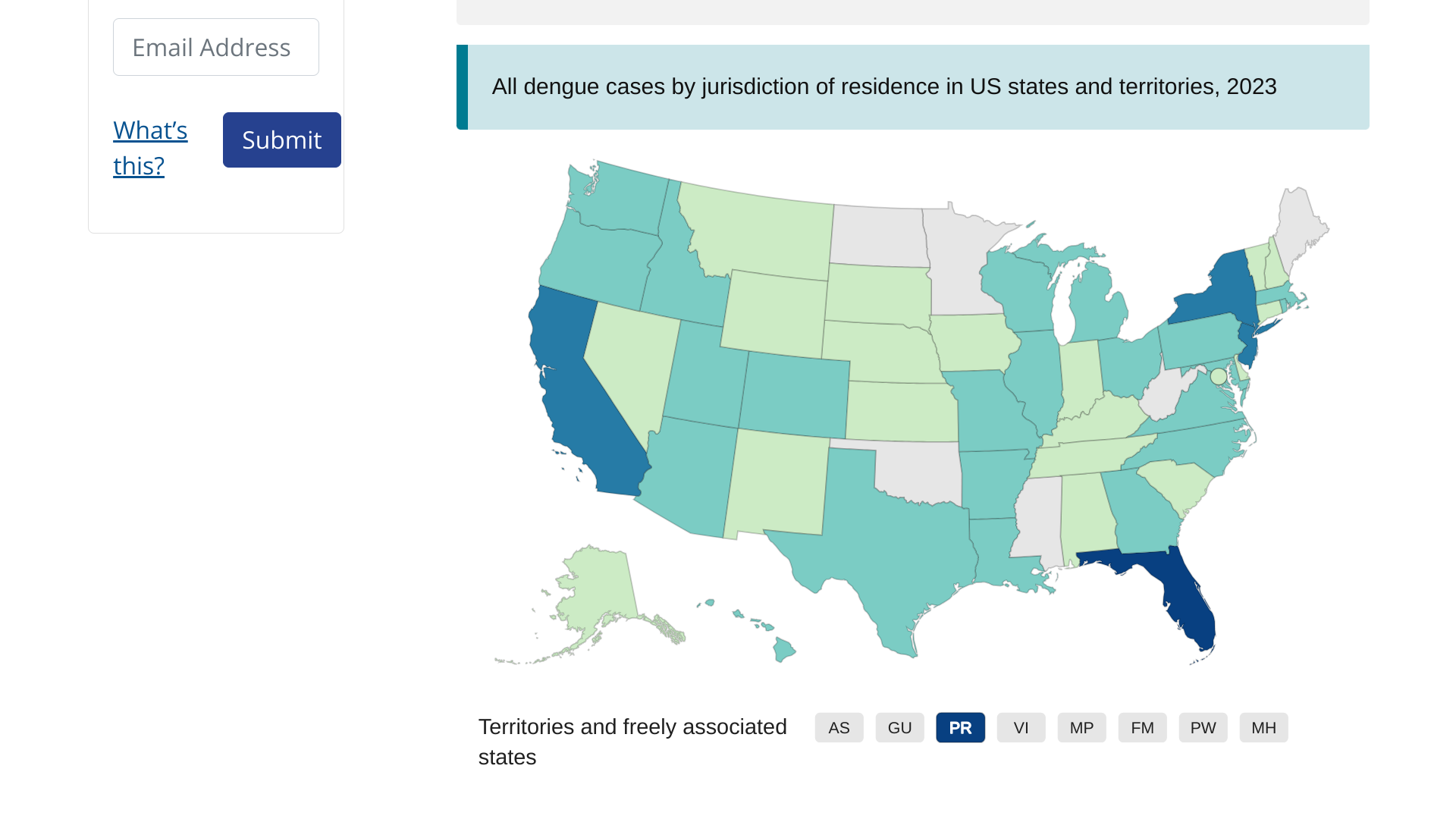
As the global dengue virus outbreak continues in about 80 countries with over 4.5 million dengue cases and over 4,000 dengue-related deaths, new data from Florida indicates there may be fewer cases this year.
Florida Health's Mosquito-Borne Disease Surveillance Report #46 confirmed 458 travel-associated dengue cases and 142 locally acquired dengue cases in 2023.
As of November 18, 2023, most of the travel-related dengue cases have been associated with visitors from Cuba (272).
And Miami-Dade Country has confirmed the most local dengue cases (133).
In 2022, Florida reported 903 travel-associated and 68 locally-acquired dengue cases.
From a prevention perspective, the U.S. FDA-approved Dengvaxia® vaccine is available but is seldom administered because of required diagnostic testing.
Dengvaxia (CYD-TDV) is a live attenuated tetravalent chimeric vaccine made using recombinant DNA technology.
Recently, the FDA extended Dengvaxia's approval to include children aged 9–16 years with laboratory-confirmed previous dengue virus infection and living in areas where dengue is endemic.
However, the vaccine is not approved for use in U.S. travelers who are visiting but not living in an area where dengue is common.
Endemic areas can include some U.S. territories and freely associated states.
A new dengue vaccine, QDENGA®, has recently been approved in various countries, without a pre-administration test requirement.
QDENGA (TAK-003) prevents dengue fever and/or severe dengue caused by any of the four serotypes.
In response to the ongoing Highly Pathogenic Avian Influenza (HPAI) outbreak in the western United States, ten vaccinated juvenile California condors will be released in the San Simeon mountains from November 28 to December 12, 2023.
The Condors were vaccinated with a killed, inactivated product conditionally licensed by the Center for Veterinary Biologics in 2016. The U.S. Fish and Wildlife Service has tested HAPI vaccine candidates on vultures in North Carolina for months.
This 'bird-flu' vaccine is designed to protect birds, not humans.
The U.S. government has already approved a bird flu vaccine for people and continues to invest in newer avian influenza vaccine candidates.
On November 23, 2023, John Fitzrandolph reported for The San Luis Obispo Tribune that 21 condors died from HAPI infections in Arizona earlier in 2023. Currently, the total population of condors is estimated at 347 birds in the wild spread across California, Arizona, and Baja, Mexico.
The California Condor Recovery Program is an international multi-entity effort to recover the endangered California condor.was last updated in November 2023.
The program aims to take steps toward recovery by establishing two geographically distinct, self-sustaining populations, each with 150 birds in the wild and at least 15 breeding pairs, with a third population of condors retained in captivity.
California condors, members of the vulture family Cathartidae, are one of the largest flying birds in North America, with a wingspan of nearly 10 feet.
In the wild, California condors may live up to 60 years. They mate for life and are attentive parents.
Avian influenza (Bird Flu) is a disease caused by influenza type A viruses that occur naturally among birds. The U.S. Centers for Disease Control and Prevention reported in June 2023, confirming the overall risk to human health associated with the ongoing HAPI outbreak in wild birds and poultry remains low.

The Denpasar City Agriculture Service recently announced villages/sub-districts in Bali Province to form a Rabies Alert Team to suppress cases of rabies transmission in the capital city of Bali Province.
It is estimated that there are 82,195 rabies-transmitting animals in Denpasar City, Indonesia, as of September 2023.
Announced on November 21, 2023, the Head of the Denpasar City Agriculture Service, A.A. Bayu Brahmasta, informed reporters, “The Rabies Alert Team will be tasked with providing education and outreach to the community.”
This news comes from TheBaliSun, which reported two additional residents who live near Keramas Beach were bitten by a dog that has gone on to test positive for rabies.
According to the U.S. CDC, dog rabies outbreaks have been active in Bali since 2008.
Bali is an often-visited destination, hosting over 4.8 million international visitors over the past year.
Each year throughout the world, rabies, a viral disease of mammals, kills approximately 50,000 people, primarily children. It is almost always spread by an animal bite but can also be spread when a rabid animal’s saliva gets directly into the eyes, nose, mouth, or broken skin.
The primary source of human infection worldwide is dogs. However, in the U.S., bats are the source of most rabies infections in 2023.
The CDC says that if your activities bring you into contact with animals, you should consider pre-exposure rabies vaccination, a multi-dose series given before departure overseas.
Even if you receive pre-exposure vaccination, you will still need immediate medical treatment if you are bitten or scratched by an animal.
The good news is human rabies is rare in the U.S., averaging about three cases annually since 2000.
In the U.S., rabies vaccines are available in 2023.


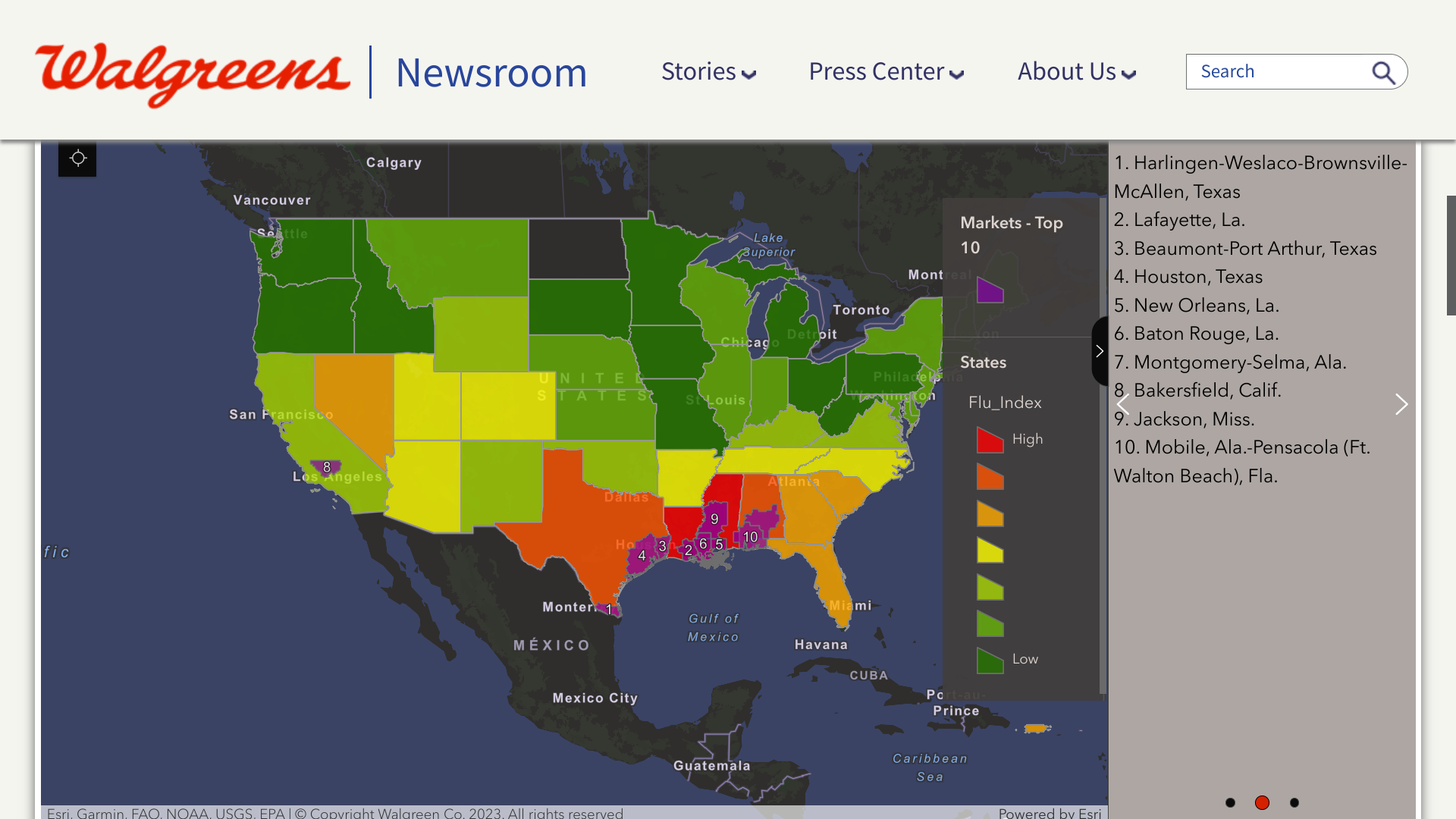
The Walgreens Flu Index® recently coded the top 10 United States cities experiencing the most influenza detections. The Index shows flu activity is 50% higher than last week.
As of November 18, 2023, the updated listing includes cities primarily located in the south-central U.S.:
- Harlingen-Weslaco-Brownsville-McAllen, Texas
- Lafayette, La.
- Beaumont-Port Arthur, Texas
- Houston, Texas
- New Orleans, La.
- Baton Rouge, La.
- Montgomery-Selma, Ala.
- Bakersfield, Calif.
- Jackson, Miss.
- Mobile, Ala.-Pensacola (Ft. Walton Beach), Fla.
While various flu shots are readily available at most clinics and pharmacies in October 2023, about 15% of individuals who received their flu shot at Walgreens were millennials, and only 9% were Gen Z.
The Walgreens Flu Index® is an online, interactive tool showing the most significant increases in flu activity week-over-week.
Shanghai Ark Biopharmaceutical Co., Ltd. (ArkBio) today announced that it had received IND approval from the National Medical Products Administration in China for a novel monoclonal antibody AK0610 that was bioengineered based on a respiratory syncytial virus (RSV) infection.
AK0610 specifically targets the RSV pre-F protein.
It demonstrated potent neutralizing effects against RSV both in vitro and in vivo. With a prolonged half-life, it holds promise as a next-generation long-acting antibody for RSV prevention.
Dr. Jim Wu, chairman and CEO of ArkBio, commented in a press release on November 23, 2023, "We are excited with the IND approval of AK0610 and its great potential in the field of RSV prevention."
"...We will strive to provide very needed RSV high-risk population and patients with efficacious prevention and treatment solutions."
The discovery and pre-clinical characterization have been published in hLife jointly by Professor George Fu Gao and his team from the Institute of Microbiology, Professor Zhengde Xie and his team from Beijing Children's Hospital, Capital Medical University, National Center for Children's Health, China, and ArkBio R&D team.
China has one of the highest rates of lower respiratory tract infection in children caused by RSV, accounting for 18-27% of all hospitalizations in children under five years old due to RSV infections.
ArkBio licensed AK0610 intellectual properties from the Institute of Microbiology, Chinese Academy of Sciences and Beijing Children's Hospital, Capital Medical University, National Center for Children's Health, China, followed by further engineering and optimization at ArkBio.
Currently, there is no approved drug for preventing RSV infection in China.
In the United States, RSV antibody passive immunization products have been U.S. FDA-approved since 1998.
Recently, AstraZeneca and Sanofi co-developed Beyfortus™ monoclonal antibody, which was approved by the FDA to protect infants through their first and second RSV season.

SK bioscience today announced it is partnering with Hilleman Laboratories Singapore to develop a low-cost, improved manufacturing process, second-generation Ebola-Zaire vaccine.
Currently, Ebola vaccines have been authorized and used in Africa since 2019.
On November 22, 2023, SK bioscience confirmed it will acquire unique expertise and know-how for the use of recombinant Vesicular Stomatitis Virus Vector (rVSV) technology platform in close collaboration with Hilleman Laboratories to potentially jointly develop other vaccines against a variety of viral infectious diseases.
Jaeyong Ahn, CEO of SK bioscience, commented in a press release, "Developing a vaccine to prevent viruses causing diseases with a high fatality rate, such as Ebola-Zaire, is essential for us to protect humanity."
"By cooperating with Hilleman Laboratories for a successful development of the second-generation Zaire Ebolavirus vaccine, we will contribute to overcoming the Ebola Zaire disease burden and expand our cooperation with global companies and institutions."
In 2014, the World Health Organization declared an international public health emergency during the Ebola outbreak and encouraged the development of the vaccine when the virus was spreading rapidly in West Africa.
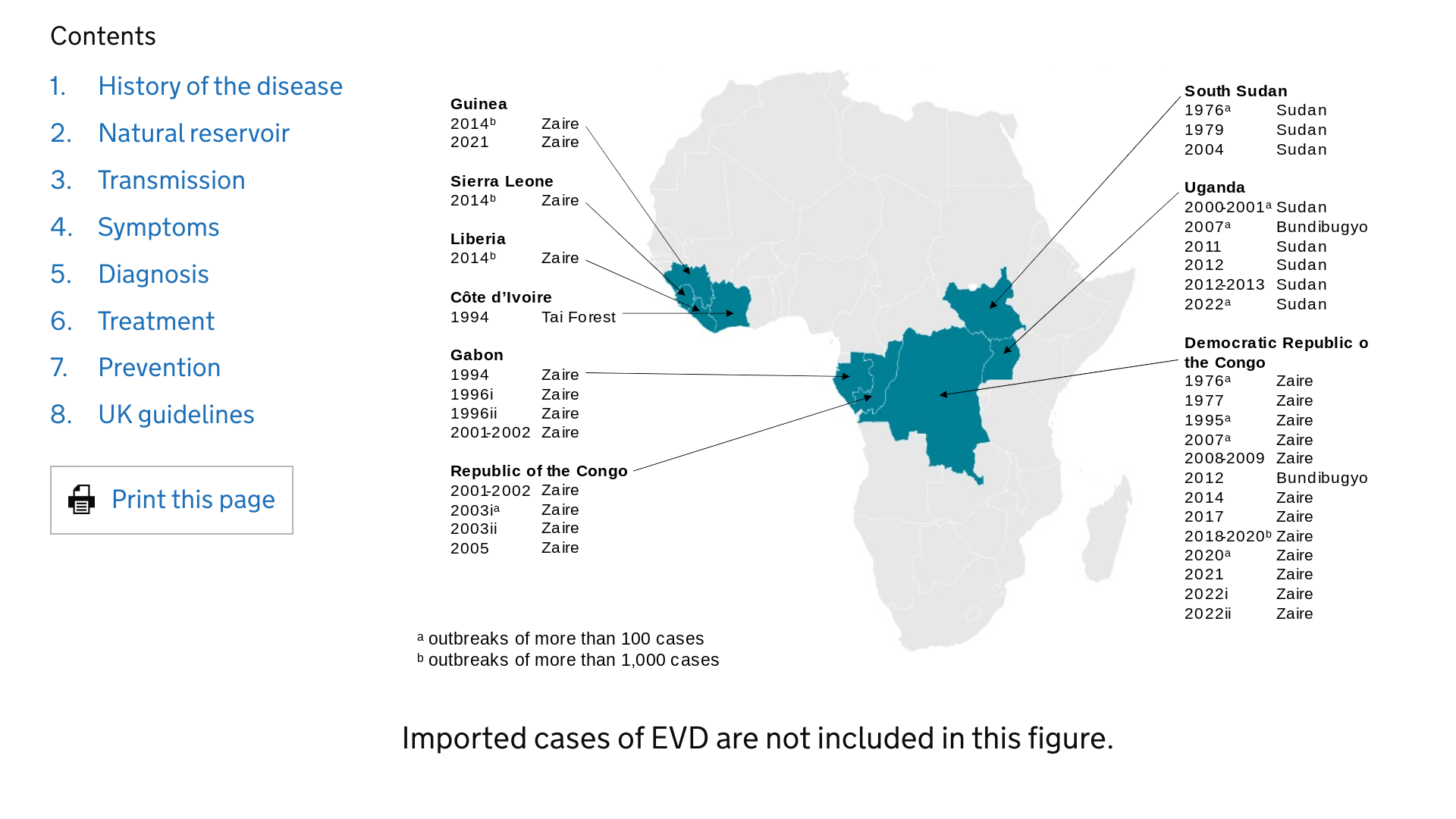
Ebola Virus Disease is a rapidly progressive, severe, and transmissible hemorrhagic illness caused by infection with one of the Ebola Virus (EBOV) species. While there are six identified EBOV species, the Zaire Ebola virus strain has been the leading cause of outbreaks over the last 20 years.
Ever since the Ebola virus was first discovered in 1976, there have been multiple outbreaks resulting in significant loss of lives (50% mortality rate) and economic impact.
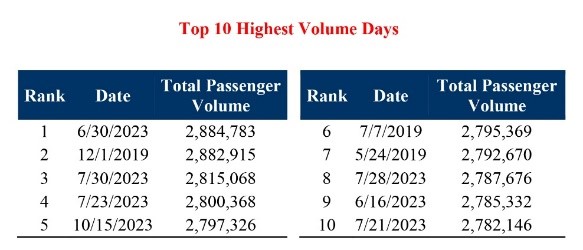
The U.S. Transportation Security Administration (TSA) has screened a record number of passengers in 2023 and anticipates airport security checkpoints nationwide will be busier than ever this holiday travel season.
The season kicked off with Thanksgiving travel, which concludes November 28, 203.
Historically, the Sunday following Thanksgiving will likely be the busiest travel day. The TSA expects to screen 30 million passengers this season.
TSA Administrator David Pekoske recently stated, "We are ready for the anticipated volumes and are working closely with our airline and airport partners to ensure we are prepared for this busy holiday travel season."
"We will also do our best to maintain wait time standards of under 10 minutes for TSA PreCheck® lanes and under 30 minutes for standard screening lanes."
"I am grateful for our dedicated employees who remain vigilant and focused on the mission during this holiday travel season and beyond."
The U.S. Department of State and the U.S. CDC publish notices to alert international travelers to various risks.
Furthermore, certain travel vaccinations are recommended before visiting disease outbreak areas, such as Dengue and Zika.
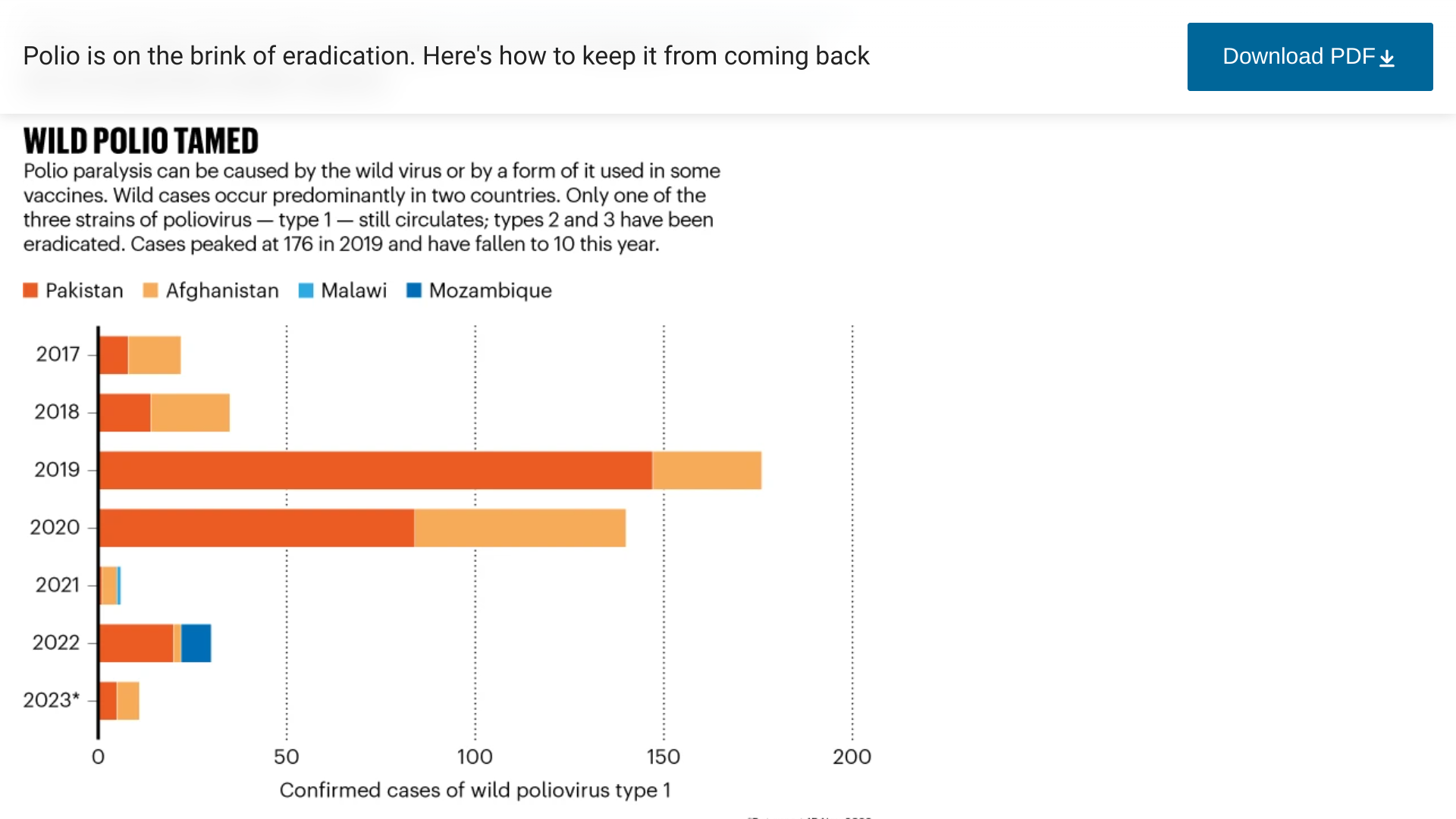
The campaign to eradicate polio could succeed in the next few years. But that's just the beginning of a new challenge, keeping it away forever, wrote Aisling Irwin in an article published by the journal Nature on November 21, 2023.
With the demise of the poliovirus in sight, health authorities are planning what happens next.
In 1988, the World Health Organization (WHO) passed a resolution to eradicate polio.
However, a WHO committee announced in August 2023 that although encouraged by the reported progress, the risk of the international spread of poliovirus remains a Public Health Emergency of International Concern, and the extension of Temporary Recommendations for a further three months was recommended.
The WHO committee urged the polio program to strengthen all aspects of surveillance, noting that significant gaps remain in many affected countries.
That conclusion may be because achieving polio eradication is not extinction.
Polio could lurk in testing labs and manufacturing facilities — from which it has previously leaked — and even in some people. Mistakes years after eradication could let polio into an unprotected population where it could "wreak havoc.
The end of polio is only the beginning of another effort: developing the resilience to keep it away, says Liam Donaldson, a public health specialist at the London School of Hygiene & Tropical Medicine, UK, and the lead author of a series of independent reports on the campaign's progress.
"People have signed up for polio eradication, but they've not signed up for the longer journey."
The WHO's 6th Report of the Polio Transition Independent Monitoring Board is posted at this link, and current polio outbreaks are listed by Precision Vax.
The World Health Organization (WHO) today announced that 331,200 doses of Mosquirix™ RTS, S/AS01, arrived in the Republic of Cameroon.
Mosquirix is a recombinant malaria vaccine with the P. falciparum circumsporozoite protein.
The delivery on November 21, 2023, is the first to a country located on the Gulf of Guinea not previously involved in the WHO malaria vaccine pilot program and signals that scale-up of vaccination against malaria across the highest-risk areas on the African continent will begin shortly.
A further 1.7 million doses of Mosquirix are expected to arrive in Burkina Faso, Liberia, Niger, and Sierra Leone in the coming weeks, with additional African countries set to receive doses in the months ahead.
Since 2019, Ghana, Kenya, and Malawi have been administering the vaccine in a schedule of 4 Mosquirix doses from around five months of age in selected districts as part of the pilot program known as the Malaria Vaccine Implementation Programme (MVIP).
More than 2 million children have been reached with the malaria vaccine in three African countries through MVIP – resulting in a 13% drop in all-cause mortality in children age eligible to receive the vaccine and substantial reductions in severe malaria illness and hospitalizations.
Nearly every minute, a child under five dies of malaria in Africa.
In 2021, there were 247 million malaria cases globally, which led to 619,000 deaths in about 84 countries.
Of these deaths, 77% were children under five years of age.
Approximately 95% of global malaria cases and 96% of related deaths in 2021.
The U.S. Centers for Disease Control and Prevention (CDC) has issued various alerts for malaria-endemic countries, including Costa Rica.
The CDC has recently confirmed autochthonous (local) malaria cases in Florida (seven), Texas, Maryland, and Arkansas.
As of November 22, 2023, malaria vaccines are unavailable in the U.S.