Search API
As of February 22, 2021, all travelers, with limited exceptions, whether entering Canada by air or land, must use ArriveCAN, said the government of Canada. To help provinces and territories protect their citizens, Canada's Government has moved to a safer and faster paperless process. Paper forms can be incomplete or inaccurate and can take days to process.
This is part of Canada's efforts to reduce the spread of COVID-19 and prevent importation.
As of March 9, 2021, Canada had experienced a significant decrease in COVID-19 related cases. Ontario and Quebec have reported the vast majority of Canada's coronavirus cases (67.7%) and fatalities (78.8%).
Travelers will need to submit the following information electronically before they board their flight or before arrival at a land border crossing: travel and contact information, quarantine plan (unless exempted from the mandatory requirement to quarantine set out in the emergency order under the Quarantine Act), and COVID-19 symptom self-assessments.
It’s an offense under the Quarantine Act to violate any instructions provided to you when entering Canada or failing to provide accurate information. An offense could lead to any or all of the following tickets of up to $3,000, admission into a federally designated quarantine facility, 6 months in prison, and/or a maximum of $750,000 in fines.

To update its 2013 recommendation, the US Preventive Services Task Force (USPSTF) commissioned a systematic review on the accuracy of screening for lung cancer with low-dose computed tomography (LDCT) and on the benefits and harms of screening for lung cancer, reported a study published by the JAMA on March 9, 2021.
The USPSTF announced it now recommends annual screening for lung cancer with LDCT in adults aged 50 to 80 years who have a 20 pack-year smoking history and currently smoke or have quit within the past 15 years.
Furthermore, screening should be discontinued once a person has not smoked for 15 years or develops a health problem that substantially limits life expectancy or the ability or willingness to have curative lung surgery.
The USPSTF concluded with moderate certainty that annual screening for lung cancer with LDCT has a moderate net benefit in persons at high risk of lung cancer based on age, total cumulative exposure to tobacco smoke, and years since quitting smoking.
Lung cancer is the second most common cancer and the leading cause of cancer death in the US. In 2020, an estimated 228 820 persons were diagnosed with lung cancer, and 135 720 persons died of the disease.1
The most important risk factor for lung cancer is smoking.2,3 Smoking is estimated to account for about 90% of all lung cancer cases, with a relative risk of lung cancer approximately 20-fold higher in smokers than in nonsmokers.3 Increasing age is also a risk factor for lung cancer. The median age of diagnosis of lung cancer is 70 years.
Lung cancer has a generally poor prognosis, with an overall 5-year survival rate of 20.5%. However, early-stage lung cancer has a better prognosis and is more amenable to treatment.
Indianapolis-based Eli Lilly and Company announced new data on March 10, 2021, from the BLAZE-1 Phase 3 study, demonstrating bamlanivimab (LY-CoV555) 700 mg and etesevimab (LY-CoV016) 1400 mg, together, significantly reduced COVID-19 related hospitalizations and deaths in high-risk patients recently diagnosed with COVID-19.
These results provide additional efficacy and safety data that support the use of the dose recently granted both Emergency Use Authorization by the U.S. Food and Drug Administration and a positive scientific opinion by the European Medicines Agency's Committee for Medicinal Products for Human Use.
Daniel Skovronsky, M.D., Ph.D., Lilly's chief scientific officer and president of Lilly Research Laboratories, stated in a press release, "The consistent results observed in multiple cohorts of this trial over several months, even as new strains of COVID-19 have emerged, indicate bamlanivimab with etesevimab maintains its effects against a range of variants, particularly those circulating in the U.S."
Lilly continues to engage with global regulators to make bamlanivimab alone and bamlanivimab and etesevimab together available around the world. Bamlanivimab alone and bamlanivimab with etesevimab together are authorized under special/emergency pathways, in the context of the pandemic, in the U.S. and the European Union. In addition, bamlanivimab alone is authorized for emergency use in Canada, Panama, Kuwait, the UAE, Israel, Rwanda, Morocco, and numerous other countries.
Eli Lilly and Company is a global healthcare leader that unites caring with discovery to create medicines that make life better for people around the world.

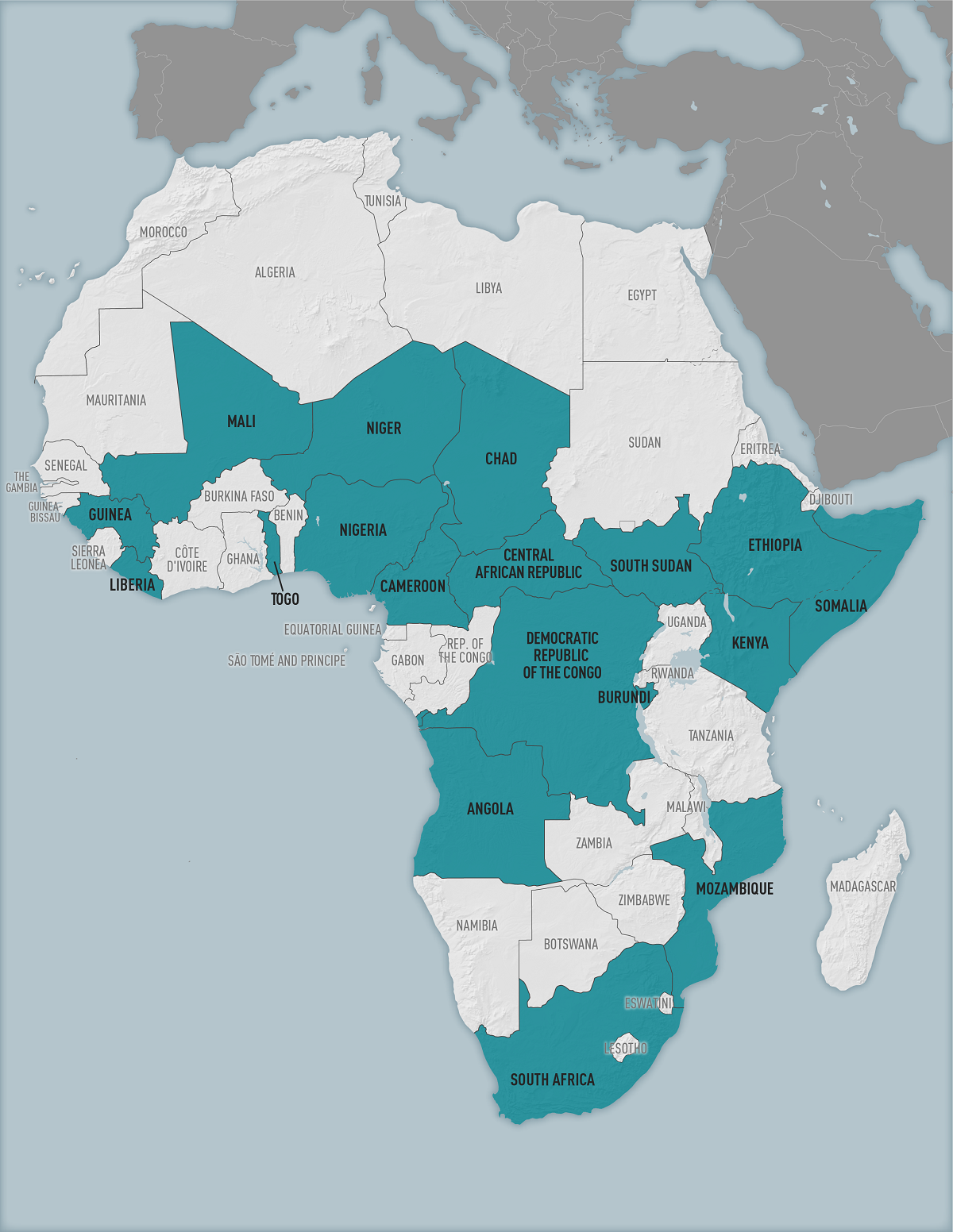
The U.S. Centers for Disease Control and Prevention (CDC) announced on March 1, 2021, health officials in certain African countries have reported the number of measles cases is higher than normal.
Measles is caused by a highly contagious virus and spreads between people by breathing, coughing, or sneezing. People can spread measles up to 4 days before and 4 days after they have a rash. Measles can lead to serious complications, such as pneumonia and even death, says the CDC.
The CDC's Level 1 Travel Alert says 'all travelers to Africa, including infants and pre-school-aged children, should be fully protected against measles.'
'Keep in mind that destinations reporting measles outbreaks are not the only places where the infection is a risk. Locations where measles is common may have many cases but not be considered to have an outbreak. Measles can also spread in airports, on public transportation, and at tourist attractions.
There are two measles-containing vaccines available in the USA: measles, mumps, and rubella (MMR) for those aged 6 months and older, and measles, mumps, rubella & varicella (MMRV) vaccine for children aged 1 through 12 years, says the CDC.
If you don’t think you can safely receive a measles-containing vaccine, talk to your healthcare provider and consider making alternative travel plans.

Massachusetts-based Affinivax Inc. announced it had received funding to develop a new vaccine that will prevent Staphylococcus aureus (S. aureus) bacterial infections, healthcare-associated infections that are a major health threat to high-risk and older patients.
The CARB-X award is worth up to $3.5 million and could provide up to $18.5 million more if it successfully progresses through certain development milestones and events.
No vaccine exists currently to prevent S. aureus infections. There are limited treatment options, particularly with the spread of multidrug-resistant strains of the pathogen, often described as methicillin-resistant S. aureus (MRSA).
Erin Duffy, with CARB-X, a global non-profit partnership led by Boston University, stated in a press release, “There have been significant scientific challenges with earlier approaches to bring a S. aureus vaccine forward to approval. The Affinivax approach, if successful, could potentially transform the way we protect ourselves against dangerous pathogens such as S. aureus.”
The company is using its Multiple Antigen Presenting System (MAPS™) technology to develop the vaccine.
The vaccine will include multiple staphylococcal protein antigens designed to elicit a robust immune response to address the complexity of the infection process of S. aureus. Leveraging the distinctive capability of the MAPS™ platform, the vaccine is designed to induce protective B‑cell (antibody) responses and Th17 and Th1 cell-mediated immune responses essential to the technology against each of the protein antigens included in the vaccine. This approach offers the potential for effective and broad protection against mucosal colonization by the bacteria, which is often the first step in developing infections and against invasive staphylococcal infections.
“To date, attempts at developing S. aureus vaccines have not been successful, with approaches based on the premise that antibody responses are sufficient to provide protection,” said Richard Malley, MD, Senior Physician in Medicine, Infectious Diseases, at Boston Children’s Hospital, Professor of Pediatrics at Harvard Medical School, and a scientific founder of Affinivax.
“Data from our group and others support the view that, in addition to antibodies, Th1 and Th17 responses to S. aureus proteins are critical to achieving broad protection against this pathogen. Our MAPS™ technology is ideally suited for this purpose.”
Affinivax is a clinical-stage biopharmaceutical company pioneering the development of a novel class of vaccines designed to induce a broad and robust protective immune response to both disease-relevant polysaccharides and disease-relevant proteins in a single vaccine.

The Annal of Internal Medicine published the fifth update alert on March 9, 2021, for a living rapid review on the use of masks for the prevention of respiratory virus infections, including SARS-CoV-2, in health care and community settings.
This Alert found the strength of evidence for any mask use versus nonuse in community settings remains low. Other strength-of-evidence ratings related to mask use in community settings were unchanged because of no new evidence.
The comparison of N95 mask only use versus surgical mask use favored the N95, but the difference was not statistically significant (odds ratio, 0.60 [CI, 0.31 to 1.15]). Based on disclosed study limitations and because of inconsistent results across studies, evidence for N95 versus surgical mask use and other comparisons involving mask use and risk for SARS-CoV-2 infection in health care settings remains insufficient.
Furthermore, as with prior updates, there were no new studies on the effectiveness and safety of mask reuse or extended use.
The U.S. CDC announced on March 8, 2021, if you’ve been fully vaccinated with an experimental COVID-19 vaccine, you should still take steps to protect yourself and others in many situations, like wearing a mask, staying at least 6 feet apart from others, and avoiding crowds and poorly ventilated spaces.

The US Centers for Disease Control and Prevention (CDC) issued announced Public Health Recommendations for Fully Vaccinated People on March 8, 2021. The CDC says fully vaccinated people can:
- Visit with other fully vaccinated people indoors without wearing masks or physical distancing,
- Visit with unvaccinated people from a single household who are at low risk for severe COVID-19 disease indoors without wearing masks or physical distancing,
- Refrain from quarantine and testing following a known exposure if asymptomatic.
For this new CDC guidance, people are considered fully vaccinated for COVID-19 ≥2 weeks after receiving the second dose of the Pfizer-BioNTech or Moderna vaccines or ≥2 weeks after they have received a single-dose vaccine Johnson and Johnson - Janssen COVID-19 vaccine.
The CDC stated it would continue to evaluate and update public health recommendations for vaccinated people as more information, including new virus variants, becomes available. Further information on evidence and considerations related to these recommendations is available in the new Science Brief.
Rochelle Walensky, the CDC's new director, stated, “There are some activities that fully vaccinated people can begin to resume now in the privacy of their own homes. Everyone, even those who are vaccinated, should continue with all mitigation strategies when in public settings," reported NPR.

Finland-based Rokote Laboratories Finland Ltd. announced it is working to introduce a nasal spray vaccine against COVID. The vaccine candidate uses gene transfer technology developed at the University of Eastern Finland by Academy Professor Seppo Ylä-Herttuala's research group.
The vaccine uses a safe adenovirus carrier that contains a cloned DNA strand, which causes nasopharyngeal cells to produce the virus protein, which, in turn, produces a response to the vaccine. There is no actual SARS-CoV-2 virus in the vaccine.
"Even if we were able to vaccinate the entire population, at least people in medical risk groups will still need new vaccines against new variants in the upcoming years," stated Professor of Virology Kalle Saksela from the University of Helsinki.
According to a press statement issued on March 8, 2021, the technology has already been successfully used in several clinical trials using gene therapy to treat cardiovascular diseases and cancer. Preliminary results show that the vaccine has performed well in animal studies, and clinical testing in humans will start within a few months.
Nasal delivery was chosen as the new vaccine's method of administration because the virus is also naturally transmitted through the airways.
"Vaccines injected intramuscularly produce IgG antibodies in the bloodstream, but nasal vaccines also produce an IgA response that protects mucous membranes. We assume that this can also prevent those who have received the vaccine from transmitting the virus," commented Academy Professor Seppo Ylä-Herttuala from the University of Eastern Finland.
The University of Eastern Finland is an international, participatory, and inclusive scientific community.