Search API
Announced on June 3, 2021, results from the OlympiA Phase III trial showed AstraZeneca and MSD’s Lynparza (olaparib) demonstrated a statistically significant and clinically meaningful improvement in invasive disease-free survival (iDFS) versus placebo in the adjuvant treatment of patients with germline BRCA-mutated (gBRCAm) high-risk human epidermal growth factor receptor 2 (HER2)-negative early breast cancer.
OlympiA is a Phase III, double-blind, placebo-controlled, multicentre trial testing the efficacy and safety of Lynparza tablets versus placebo as adjuvant treatment in patients with gBRCAm, high-risk, HER2-negative early breast cancer, who have completed definitive local treatment and neoadjuvant or adjuvant chemotherapy.
In the overall trial population of patients who had completed local treatment and standard neoadjuvant or adjuvant chemotherapy, results showed Lynparza reduced the risk of invasive breast cancer recurrences, second cancers, or death by 42% (based on a hazard ratio [HR] of 0.58; 99.5% confidence interval [CI] 0.41-0.82; p<0.0001).
At three years, 85.9% of patients treated with Lynparza remained alive and free of invasive breast cancer and second cancers versus 77.1% on placebo.
Lynparza also demonstrated a statistically significant and clinically meaningful improvement in the key secondary endpoint of distant disease-free survival (DDFS) in the overall trial population. Lynparza reduced the risk of distant disease recurrence or death by 43%.
At the time of this initial data cut-off, fewer deaths had occurred in patients receiving Lynparza, but the difference in overall survival (OS) did not reach statistical significance. The trial will continue to assess OS as a secondary endpoint.
An estimated 2.3 million people were diagnosed with breast cancer worldwide in 2020, and BRCA mutations are found in approximately 5% of breast cancer patients, reports the World Health Organization.
Sue Friedman, Executive Director, Facing Our Risk of Cancer Empowered and member of the OlympiA trial steering committee, said in a press release, “While there have been great strides in the early treatment of breast cancer, the fear of cancer returning is still at the forefront of patients’ minds."
"New targeted treatment approaches are needed in the adjuvant setting that can help keep cancer and that fear at bay.”
The results will be presented during the plenary session of the 2021 American Society of Clinical Oncology Annual Meeting on June 6, 2021 (abstract LBA#1) and were published in The New England Journal of Medicine.
In July 2017, AstraZeneca and Merck & Co., Inc., Kenilworth, NJ, known as MSD outside the USA and Canada, announced a global strategic oncology collaboration to co-develop and co-commercialize Lynparza, the world’s first PARP inhibitor, and Koselugo (selumetinib), a mitogen-activated protein kinase (MEK) inhibitor, for multiple cancer types.
Lynparza (olaparib) is a first-in-class PARP inhibitor and the first targeted treatment to block DNA damage response (DDR) in cells/tumors harboring a deficiency in homologous recombination repair (HRR), such as mutations in BRCA1 and/or BRCA2. Inhibition of PARP with Lynparza leads to the trapping of PARP bound to DNA single-strand breaks, stalling of replication forks, their collapse, and the generation of DNA double-strand breaks and cancer cell death. Lynparza is being tested in a range of PARP-dependent tumor types with defects and dependencies in the DDR pathway.

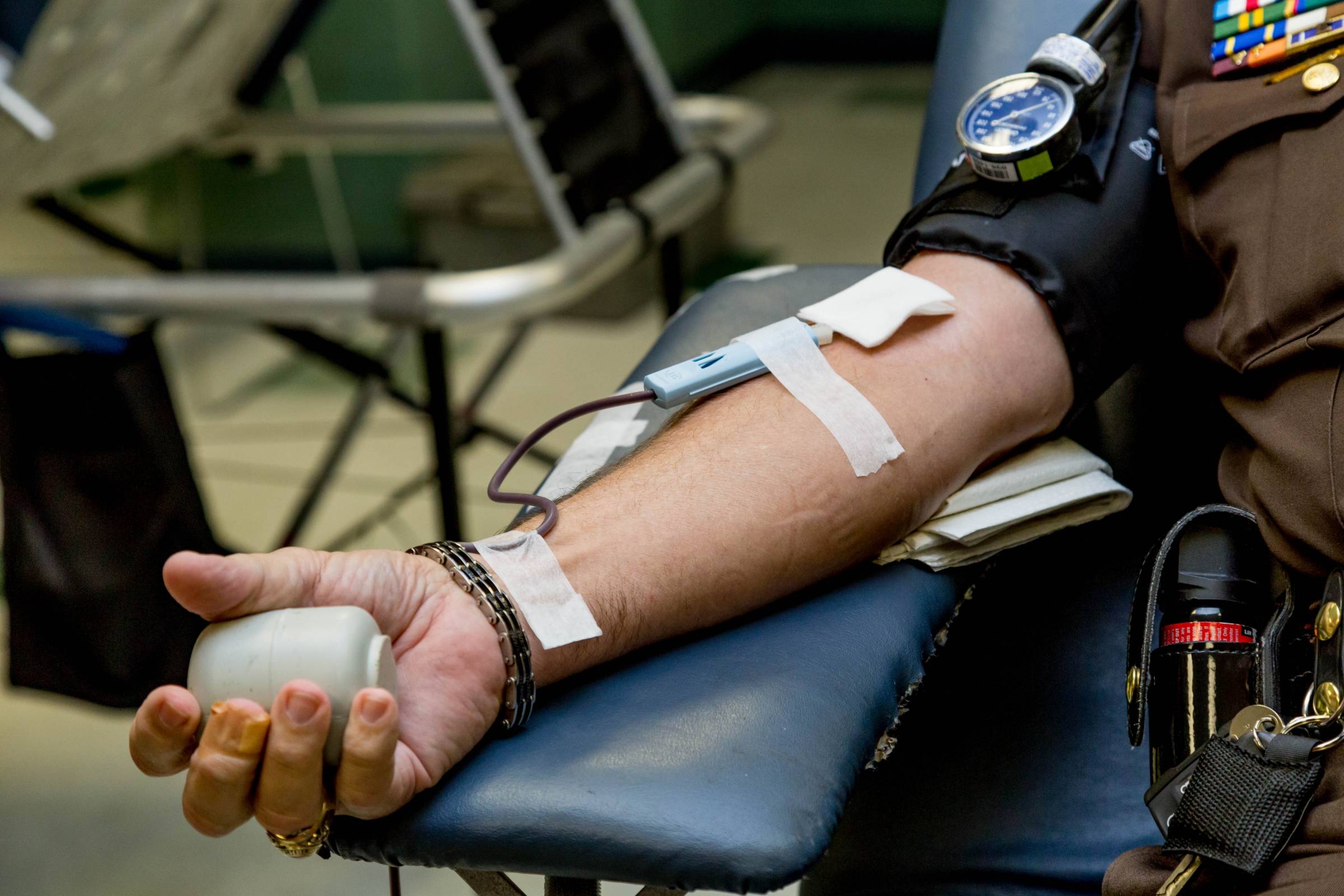
A new study by researchers at the National Institutes of Health (NIH) and their colleagues found the SARS-CoV-2 beta coronavirus that causes COVID-19 does not appear to pose a threat to the safety of the nation’s blood supply.
These NIH researchers concluded the likelihood of a transfusion recipient receiving blood with trace amounts of SARS-CoV-2 was approximately .001% – a little over 1 in 100,000 – and that the likelihood of SARS-CoV-2 transmission by blood transfusion was insignificant compared to airborne transmission.
The analysis, published in Transfusion on May 27, 2021, supports current donor screening guidelines, including those used by the U.S. Food and Drug Administration, that do not require testing blood samples for the SARS-CoV-2 virus but do require that donors be screened for physical symptoms of COVID-19 and for infections that occurred within 14 days of the blood donation.
However, blood donors with recent COVID-19 infections or who develop infections after recent donations cannot be used.
After reviewing test results for the presence of SARS-CoV-2 in thousands of blood donations across the country, these researchers found 'no reason to alter the current blood donor screening practices that are in place because of the COVID-19 pandemic.'
“This finding is good news for thousands of patients who may need a blood transfusion because of surgery or a disease that causes anemia, such as a rare blood-related condition or leukemia,” said Simone Glynn, M.D., M.P.H., chief of the Blood Epidemiology and Clinical Therapeutics Branch at the National Heart, Lung, and Blood Institute, which conducted the study along with National Institute of Allergy and Infectious Diseases, in a press statement issued on June 1, 2021.
The new analysis is based on 17,995 pools of donated blood, representative of 257,809 single blood donations collected between March and September 2020 from six U.S. metropolitan regions.
Previously, the American Red Cross stated on April 16, 2021, 'As the country adjusts to a new phase of the ongoing COVID-19 pandemic, prioritizing the availability of the U.S. blood supply is paramount. Blood is an essential part of the nation’s health care system and relied upon for medical treatments for millions of patients.'
'With the COVID-19 vaccine rollout ongoing nationwide, the blood community reminds individuals that the U.S. FDA blood donation eligibility criteria do not require a deferral for individuals who have received a vaccine authorized in the U.S., including those manufactured by Johnson & Johnson (Janssen), Moderna, and Pfizer (BioNTech).
'Vaccinated individuals are encouraged to bring their vaccination card to the blood collection site at the time of donation and will be asked which type of vaccine they received. Individuals who do not know which manufacturer produced the vaccine they received, or who received a vaccine outside of the U.S., may be asked to wait two weeks before giving blood.'

New Jersey-based Janssen Pharmaceutical Companies announced today that the U.S. Food and Drug Administration (FDA) had granted Breakthrough Therapy Designation (BTD) for teclistamab to treat relapsed or refractory multiple myeloma.
This distinction for teclistamab, an off-the-shelf, T-cell redirecting, a bispecific antibody targeting both B-cell maturation antigen (BCMA) and CD3 receptors, follows a PRIME designation from the European Medicines Agency received earlier in 2021.
“We are pleased to have received Breakthrough Therapy and PRIME Designations for our novel bispecific antibody, teclistamab,” said Peter Lebowitz, M.D., Ph.D., Global Therapeutic Area Head, Oncology, Janssen Research & Development, LLC., in a press release.
Multiple myeloma is an incurable blood cancer that affects a type of white blood cell called plasma cells, says Cancer.net. When damaged, these plasma cells rapidly spread and replace normal cells with tumors in the bone marrow. In 2021, it is estimated that nearly 35,000 people will be diagnosed, and more than 12,000 will die from the disease in the USA.
The FDA grants BTD to expedite the development and regulatory review of an investigational medicine intended to treat a serious or life-threatening condition and is based on preliminary clinical evidence that demonstrates the drug may have substantial improvement on at least one clinically significant endpoint over available therapy.
The Breakthrough and PRIME designations are supported by data from the Phase 1 MajesTEC-1 study, an open-label, multicenter clinical trial evaluating the safety and efficacy of teclistamab in adults with measurable multiple myeloma that is relapsed or refractory to established therapies or be intolerant of those established multiple myeloma therapies.
Janssen Research & Development, LLC is one of the Janssen Pharmaceutical Companies of Johnson & Johnson. Learn more at www.janssen.com.
Barcelona-based Grifols announced the commercialization of HyperHEP B, a new formulation of its hepatitis B immune globulin for hepatitis B postexposure prophylaxis.
HyperHEP B is the newest version of Grifols’ current HBIG, HyperHEP B S/D, which is presently prescribed globally in over 20 countries.
The new formulation, approved by the U.S. Food and Drug Administration (FDA) in December 2020, uses a unique caprylate chromatography process, which significantly reduces procoagulant activity and IgG aggregates. It also includes FDA labeling for the capacity to remove pathogenic prions.
“Since the launch of the first version of HyperHEP B 45 years ago, millions of patients worldwide have relied on this critical product to decrease risks associated with hepatitis B exposure,” said Bill Zabel, President, Grifols North America Sales and Commercial Operations, in a press release.
"With a continued commitment to improving the lives of patients, we’re establishing new purification standards around this critical treatment. This new formulation increases the long-standing confidence physicians have in Grifols’ market-leading hyperimmune portfolio.”
For patients who have not been previously vaccinated, the Advisory Committee on Immunization Practices and Centers for Disease Control and Prevention recommends immediate prophylaxis following exposure to hepatitis B, including both HBIG and hepatitis B (HepB) vaccine as soon as possible after exposure.
Please see Important Safety Information for HyperHEP B below and refer to the full Prescribing Information or visit www.HyperHEPB.com.
“HBIG for use in prophylaxis is an important treatment choice for our patients who are exposed to the hepatitis B virus. HyperHEP B gives us the flexibility we need with three different presentations, including a pre-filled neonatal syringe,” commented Mike Cushner, Director of Inventory, SUNY Upstate Medical Center in Syracuse, NY.
Grifols, in partnership with Direct Relief, donated six million international units of HyperHEP B S/D to various underserved countries around the world in 2021.
Grifols is a global healthcare company that, since 1909, has enhanced the health and well-being of people around the world.


Norway-based Ultimovacs ASA announced that a peer-reviewed article on the ongoing NIPU Phase II trial of the Company’s universal cancer vaccine, UV1, in malignant pleural mesothelioma (MPM) was published. Journal of Translational Medicine.
This article outlines the mechanistic rationale for using the combination of UV1 with two checkpoint inhibitors, ipilimumab and nivolumab.
The dual-use of ipilimumab and nivolumab was recently approved as first-line therapy in MPM, where few therapeutic options are currently available.
However, as Haakensen et al. explains in the article, observed response rates with checkpoint inhibitors have been moderate in MPM compared to documented performance for the combination of checkpoint inhibitors in other cancers, suggesting that checkpoint inhibitors alone may be insufficient to trigger an immune response.
Earlier phase I/II studies have shown that UV1 is safe on its own and when used in combination with checkpoint inhibitors and that it induces vaccine-specific immune response associated with survival.
UV1 is a peptide-based vaccine inducing a specific T cell response against the universal cancer antigen telomerase. UV1 is being developed as an “off-the-shelf” therapeutic cancer vaccine which may serve as a platform for use in combination with other immunotherapy, which requires an ongoing T cell response for their mode of action.
To date, UV1 has been tested in four phase I clinical trials in a total of 82 patients and maintained a positive safety and tolerability profile as well as encouraging signals of efficacy.
“The NIPU trial is important in understanding the potentially synergistic activities of checkpoint inhibitors and our universal cancer vaccine, UV1,” stated Jens Bjørheim, Chief Medical Officer at Ultimovacs, in a press release.
“Malignant pleural mesothelioma is a challenging disease to treat even with checkpoint inhibitors that have been effective in other types of cancer. The article published today explains how we think UV1 may help in meeting that challenge.”
NIPU is a randomized, multi-center, open-label, proof of concept study comparing the efficacy and safety of nivolumab and ipilimumab with or without UV1 in patients with inoperable malignant pleural mesothelioma after first-line platinum-based chemotherapy.
Article details: Haakensen, V.D., Nowak, A.K., Ellingsen, E.B. et al. NIPU: a randomized, open-label, phase II study evaluating nivolumab and ipilimumab combined with UV1 vaccination as second-line treatment in patients with malignant mesothelioma. J Transl Med 19, 232 (2021).
About Ultimovacs: Ultimovacs seeks to become a leader in developing immune-stimulatory vaccines to treat a broad range of cancers. For further information, please see www.ultimovacs.com.

The US Centers for Disease Control and Prevention (CDC) reissued a Level 4 Travel Alert for the Caribbean island country of Haiti on June 1, 2021. The CDC stated this Alert was issued 'because of the current situation in Haiti even fully vaccinated travelers may be at risk for getting and spreading COVID-19 variants and should avoid all travel to Haiti.'
If you must travel to Haiti, get fully vaccinated before travel, says the CDC. The CDC recently updated its recommendations for fully vaccinated travelers.
Separately, the US Department of State reissued its Level 4, Do Not Travel, to Haiti due to kidnapping, crime, civil unrest, and COVID-19 on June 1st. There have been reports of recent kidnappings, ongoing gang activity, and continued police operations in the Laboule 12 neighborhood (located between Petionville and Kenscoff).
U.S. government personnel are discouraged from walking in Port-au-Prince and other neighborhoods. Only adult family members over 18 are permitted to accompany U.S. government employees assigned to the U.S. Embassy in Port-au-Prince.
If you decide to travel to Haiti, See the U.S. Embassy's web page and enroll in the Smart Traveler Enrollment Program to receive Alerts and make it easier to locate you in an emergency.
Previously, the CDC issued a Level 2 Travel Alert that stated 'rabies in dogs is increasing in Haiti. To prevent rabies, travelers should avoid contact with dogs and cats (including puppies and kittens) while in Haiti.
Because the human rabies vaccine is in limited supply in Haiti, if you are bitten, scratched, or licked by an animal, you may be unable to get appropriate care (called postexposure prophylaxis). Consider getting vaccinated against rabies before travel.
Haiti's 11 million residents share the island of Hispaniola with the Dominican Republic to its east and such smaller islands as Gonâve, Tortue, Grande Caye, and Vache. The capital is Port-au-Prince, reports Britannica.

The US Transportation Security Administration (TSA) reported airport security passenger screening volume remained about 25% less than before the COVID-19 pandemic began in 2019.
During the end of May 2021, including the Memorial Day weekend, the TSA's average number of daily screened travelers was about 1.8 million people. This compares with May 2019's volume of 2.4 million.
The peak day was recorded on May 28, 2021.
However, compared to May 2020's average passenger volume of less than 320,000 per day, it looks like the airline travel industry is on the road to recovery!
As of June 1, 2021, the U.S. CDC and State Department continue to discourage both domestic and international air travel.

The six-in-one combination vaccine for Diphtheria and Tetanus Toxoids and Acellular Pertussis, Inactivated Poliovirus, Haemophilus b Conjugate, and Hepatitis B Vaccine known as VAXELIS is now available in the USA.
VAXELIS was approved for use as a 3-dose series in children 6 weeks through 4 years of age (before the 5th birthday).
On February 11, 2021, the U.S. Centers for Disease Control and Prevention (CDC) Advisory Committee included VAXELIS as a combination vaccine option in the CDC’s Recommended Child and Adolescent Immunization Schedule.
This pediatric combo vaccine was developed from a partnership between Merck and Sanofi Pasteur.
“Given the potential to reduce the number of shots by as many as three in the first six months of life, as compared to pentavalent vaccines plus hepatitis B or Haemophilus influenzae type b vaccines, VAXELIS represents an important option for healthcare professionals and parents,” said Joanne Monahan, SVP, U.S. Vaccines, Merck, in a press release issued on June 1, 2021.
VAXELIS will be widely available in the USA through traditional public and private channels, including directly from Sanofi Pasteur.
Do not administer VAXELIS to anyone with a history of severe allergic reaction to a previous dose of VAXELIS, any ingredient of VAXELIS, or any other diphtheria toxoid, tetanus toxoid, pertussis-containing vaccine, inactivated poliovirus vaccine, hepatitis B vaccine, or H. influenzae type b vaccine, anyone with a history of encephalopathy within 7 days of a pertussis-containing vaccine with no other identifiable cause, or anyone with a history of a progressive neurologic disorder until a treatment regimen has been established and the condition has stabilized.
With more than 100,000 people in 100 countries, Sanofi is transforming scientific innovation into healthcare solutions around the globe.
For more information, visit www.merck.com.