Search API
Singapore's Ministry of Health (MOH) reported on June 4, 2021, about 4.2 million COVID-19 vaccine doses have been administered. However, there are about 32,000 individuals who are not able to take the mRNA vaccines due to severe allergies.
There are also approximately 2,000 individuals who had developed anaphylaxis or allergic reactions (hives, face/ eyelid/ lip/ throat swelling, generalized rash) within 7 days after vaccination due to the first dose of an mRNA COVID-19 vaccine.
The MOH says, 'This group should not receive an mRNA-based vaccine again.'
To protect them against COVID-19, the MOH is evaluating and will bring into Singapore non-mRNA vaccines that are more suitable for them.
Since the MOH has 200,000 doses of the CoronaVac vaccine in stock, the MOH will invite private healthcare institutions licensed under the Private Hospitals and Medical Clinics Act to apply to be providers for the Sinovac-CoronaVac vaccine.
The CoronaVac COVID-19 Vaccine is based on an inactivated pathogen made by growing the whole virus in a lab and then killing it. Furthermore, CoronaVac is a 2-dose β-propiolactone-inactivated, aluminum hydroxide-adjuvanted COVID-19 vaccine administered on a 0/14-28-day schedule to prevent COVID-19 disease.

Moderna, Inc. announced that it has submitted for authorization of its COVID-19 vaccine in adolescents with Health Canada. The Company also plans to submit for an emergency use authorization with the U.S. Food and Drug Administration (FDA) to expand the authorized use of its vaccine to adolescents.
“We are pleased to announce that we have submitted for authorization of our COVID-19 vaccine for use in adolescents with Health Canada,” said Stéphane Bancel, CEO of Moderna.
“We are encouraged that the Moderna COVID-19 vaccine was highly effective at preventing COVID-19 and SARS-CoV-2 infection in adolescents. We have filed for conditional marketing approval with the European Medicines Agency, and we will file for an Emergency Use Authorization with the U.S. FDA and regulatory agencies around the world for this important younger age population."
In May 2021, the Company announced that the Phase 2/3 TeenCOVE study of Moderna’s COVID-19 vaccine in adolescents met its primary immunogenicity endpoint, successfully bridging immune responses to the adult vaccination.
On December 18, 2020, the U.S. FDA issued authorization enabling the COVID-19 Vaccine Moderna to be distributed in the USA for use in individuals 18 years of age and older. As of June 7, 2021, the COVID‑19 Vaccine Moderna has not been Approved or licensed by the FDA.

Massachusetts-based Translate Bio announced it had achieved a manufacturing milestone under the collaboration with Sanofi Pasteur related to its influenza mRNA vaccine program.
Translate Bio will receive a $50 million payment from Sanofi Pasteur for the successful manufacture, release, and delivery of clinical drug products to supply Sanofi Pasteur’s Phase 1 influenza clinical trial, which is anticipated to begin in the coming weeks.
The Phase 1 clinical trial will evaluate a monovalent influenza vaccine candidate and will inform the next steps of the mRNA-based influenza vaccine program.
“Since beginning our collaboration in June 2018, the development of mRNA vaccines for infectious diseases, including an mRNA vaccine candidate for influenza, has been a key focus of the joint development team at Translate Bio and Sanofi Pasteur, a world leader in influenza vaccines,” stated Ronald Renaud, CEO, Translate Bio.
In June 2018, Translate Bio entered into a collaboration and exclusive license agreement with Sanofi Pasteur to develop mRNA vaccines for up to five infectious disease pathogens. The agreement was first expanded in March 2020 to include developing a novel mRNA vaccine for COVID-19.
In June 2020, the two companies built upon the existing collaboration to pursue novel mRNA vaccines to address current and future infectious diseases broadly.
On June 5, 2021, WalesOnline reported that First Minister Mark Drakeford described how he believed people in Wales are very happy to continue following social distancing guidelines of 2m.
And social distancing will likely remain in Wales for the rest of 2021
Speaking at a press conference on Friday, Mr. Drakeford described social distancing as the "strongest defense" against the virus, adding that he does not believe people in Wales want to see it gone.
The government of Wales published the updated rules that are effective on June 7, 2021. These rules include:
- Regulated events allowed outdoors with up to 10,000 people seated or up to 4,000 people standing (subject to risk assessment)
- Extended households can be formed between 3 households
- Up to 30 people can meet in any outdoor area, including private gardens, public spaces, and outdoor regulated premises such as cafes, restaurants, and bars.
In England, the social distancing rules were changed on May 17, 2021.
The new guidance from the UK government 'on meeting friends and family emphasizes personal responsibility rather than government rules. Instead of instructing you to stay 2m apart from anyone you don’t live with, you are encouraged to exercise caution and consider the guidance on risks associated with COVID-19 and actions you can take to help keep you and your loved ones safe.'

New York-based Regeneron Pharmaceuticals, Inc. announced the U.S. Food and Drug Administration (FDA) updated the Emergency Use Authorization (EUA) for REGEN-COV™, lowering the dose to 1,200 mg (600 mg casirivimab and 600 mg imdevimab), which is half the dose originally authorized.
The revised Fact Sheet updates remove the previously authorized 2,400 mg IV REGEN-COV dose.
As part of the updated EUA, REGEN-COV should be administered by intravenous infusion (IV).
Regeneron states, 'subcutaneous injections are an alternative when IV infusion is not feasible and would lead to a delay in treatment.'
REGEN-COV is a combination of monoclonal antibodies casirivimab and imdevimab, explicitly designed to block the infectivity of SARS-CoV-2, the beta coronavirus that causes COVID-19.
"Despite the increased use of vaccines, thousands of patients are still becoming infected every day, with many at high risk of serious complications from COVID-19. Unfortunately, to date, only a fraction of patients eligible for antibody treatments have received them, which we hope will change based on this updated FDA authorization," stated George D. Yancopoulos, M.D., Ph.D., President, and Chief Scientific Officer at Regeneron, in a press statement.
"REGEN-COV has also demonstrated potency against the main variants of concern to date in vitro and is the only antibody therapy currently available across the USA, including in states where variants first identified in Brazil and South Africa are circulating at a higher rate."
Consequently, REGEN-COV remains available for use in all 50 states.
REGEN-COV is authorized for use under a EUA to treat mild-to-moderate COVID-19 in adults and pediatric patients (12 years of age and older weighing ≥40 kg) with positive results of direct SARS-CoV-2 viral testing and who are at high risk for progression to severe COVID-19, including hospitalization or death.
More than 9,000 people have received IV REGEN-COV in clinical trials in hospitalized and non-hospitalized settings.
Regeneron expects to submit a full Biologics License Application (BLA) for REGEN-COV in non-hospitalized outpatients with COVID-19 later in 2021. In addition to outpatients, REGEN-COV is also being evaluated in prevention and certain hospitalized COVID-19 patient settings.
Furthermore, the company announced the U.S. government would purchase all REGEN-COV doses delivered by June 30, 2021, and may accept additional doses through September 30, 2021, at its discretion, up to a maximum amount of 1.25 million doses.
Regeneron expects to deliver at least 1 million REGEN-COV doses to the U.S. government in the second quarter of 2021. The specific quantity of doses delivered will be impacted by the timeliness of manufacturing operations.
REGEN-COV has not been Approved by FDA but has been authorized for emergency use. This use is authorized only for the duration of the declaration that circumstances exist justifying the authorization of the emergency use under section 564(b)(1) of the Act, 21 U.S.C. § 360bbb-3(b)(1) unless the authorization is terminated or revoked sooner.
The development and manufacturing of REGEN-COV have been funded in part with federal funds from the Biomedical Advanced Research and Development Authority, part of the U.S. Department of Health and Human Services' Office of the Assistant Secretary for Preparedness and Response, under OT number: HHSO100201700020C.

Nationwide during week #21, the US Centers for Disease Control and Prevention (CDC) confirmed 1.1% of patient visits reported through ILINet were due to Influenza-like Illness (ILI). This percentage is below the national baseline of 2.6% for this time of year.
The percentages of visits decreased for one age group (0–4 years) and remained stable for the remaining age groups compared with week #20.
Furthermore, during the 2020-2021 flu season, just (1) influenza-associated pediatric death has been reported to CDC.
This compares with 199 influenza-associated deaths during the 2019-2020 flu season.

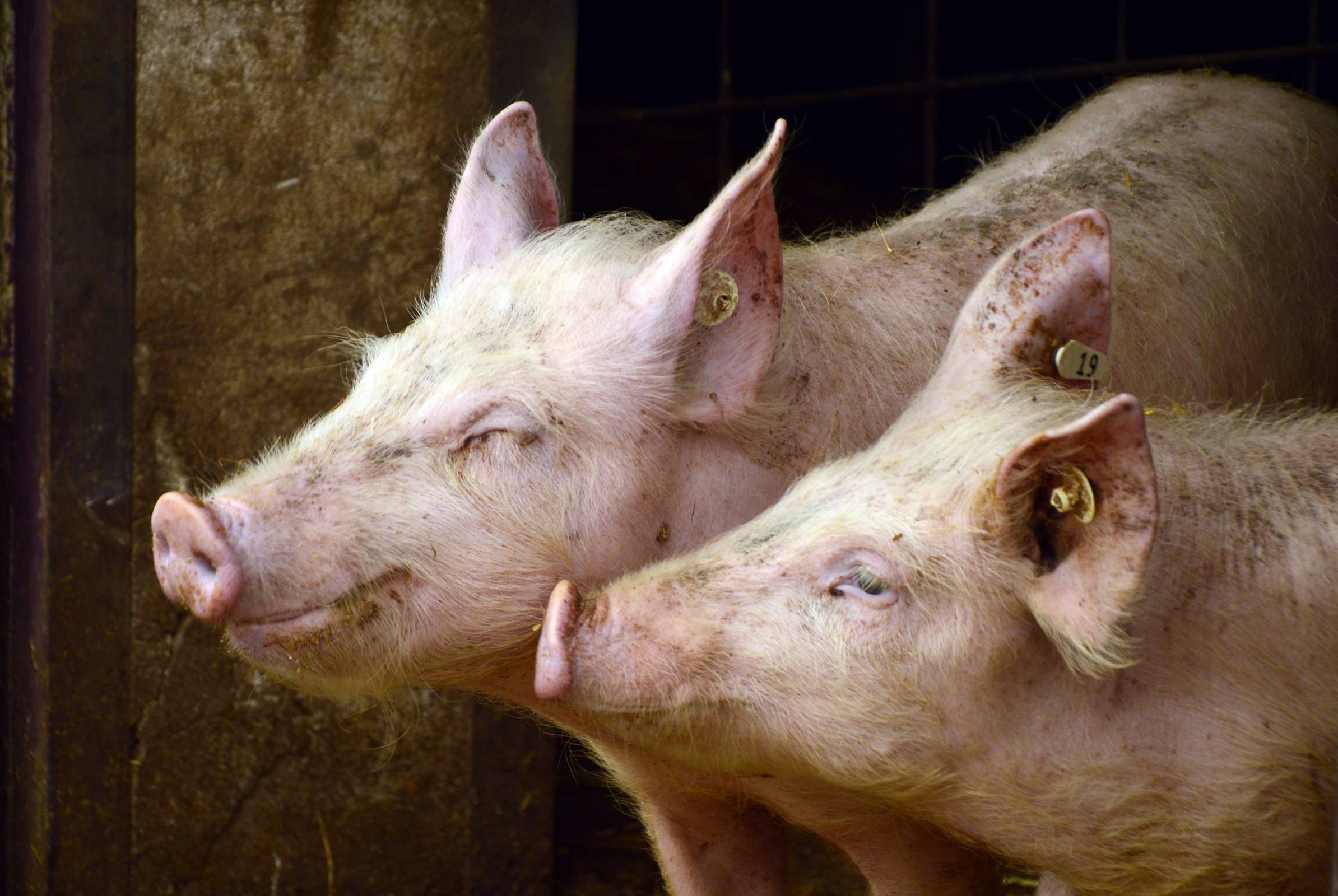
The US Centers for Disease Control and Prevention (CDC) reported on June 4, 2021, one human infection with an influenza A(H1N1) variant (A(H1N1)v) virus was reported by Iowa.
The patient is an adult, was not hospitalized, and has completely recovered from their illness.
Investigation into the source of the infection revealed that the patient works on a farm with swine present. No human-to-human transmission of A(H1N1)v virus has been identified associated with this patient.
This is the second influenza A(H1N1)v virus infection identified in the USA that occurred in 2021.
Five human infections with a novel influenza A virus have been reported in the United States this season, including one H3N2v (WI), one H1N2v (OH), and three H1N1v (IA, NC, WI) infections. Three infections have occurred in children, and two have occurred in adults. All cases either had direct contact with swine or lived on a property with swine present, says the CDC.
When an influenza virus that normally circulates in swine (but not people) is detected in a person, it is called a “variant influenza virus.”
The WHO says Zoonotic influenza diseases are caused by animal influenza viruses, such as Bird Flu and Swine Flu. People can be infected with avian influenza virus subtypes A(H5N1) and A(H9N2) and swine influenza virus subtypes A(H1N1) and (H3N2).
The New York Times reported on June 3, 2021, a 25-year-old student from India who is supposed to start a master’s degree program at Columbia University’s School of International and Public Affairs has a COVID-19 vaccine conflict.
Although fully vaccinated with two doses of India's Covaxin vaccine, Columbia had informed this prospective student to be revaccinated with a different COVID-19 vaccine when on the New York City campus, wrote Rukmini Callimachi.
This is not a unique situation.
Since March 2021, about 400 colleges and universities in the USA have announced requiring students to be immunized against the coronavirus that causes COVID-19.
According to the U.S. CDC on May 14, 2021, 'Some people may have received a COVID-19 vaccine that is not currently authorized in the USA.'
As of June 4, 2021, there are thirteen other COVID-19 vaccines being administered globally that are not authorized in the USA.
The CDC says 'In exceptional situations in which the mRNA vaccine product given for the first dose cannot be determined or is no longer available, any available mRNA COVID-19 vaccine may be administered.'
And 'Patients who receive the Janssen (J&J) COVID-19 vaccine after a dose of an mRNA COVID-19 vaccine should be considered to have received a valid, single-dose Janssen vaccination and are considered fully vaccinated after two weeks of receipt of the single dose of the Janssen vaccine.'
'No data are available on the safety or efficacy of receiving a COVID-19 vaccine currently authorized in the USA after receipt of a non-FDA-authorized COVID-19 vaccine. However, in some circumstances, people who received a COVID-19 vaccine not currently authorized in the USA may be offered revaccination with a U.S. FDA-authorized vaccine.'
Furthermore, these conflicts may increase in the future.
And GAVI reports 102 other COVID-19 vaccine candidates are in various stages of development.

Pennsylvania-based Ocugen, Inc. and Bharat Biotech announced that they had amended their Co-development, Supply, and Commercialization Agreement to expand Ocugen’s exclusive territory to commercialize the COVAXIN™ vaccine to include Canada.
Ocugen’s existing rights to commercialize COVAXIN are in the United States.
"We believe COVAXIN has the potential to play a key role in saving lives from COVID-19 in the USA and Canada, as well as across the globe, due to the strong immune response it generates against multiple antigens,” said Dr. Shankar Musunuri, Chairman of the Board, CEO, and Co-founder of Ocugen, in a press release issued on June 3, 2021.
COVAXIN is a highly purified and inactivated vaccine manufactured by India-based Bharat Biotech using a Vero cell manufacturing platform.
Ocugen, Inc. is a biopharmaceutical company focused on discovering, developing, and commercializing gene therapies to cure blindness diseases and developing a vaccine to save lives from COVID-19.